
A clear paper trail is the best place to start when a used-car purchase goes wrong. According to UK legislation, the Consumer Rights Act 2015 requires a car bought from a business in the UK to be of satisfactory quality, fit for purpose and as described. Knowing how to resolve disputes with a used car dealer means setting out the problem clearly, keeping evidence and following the right complaint route.
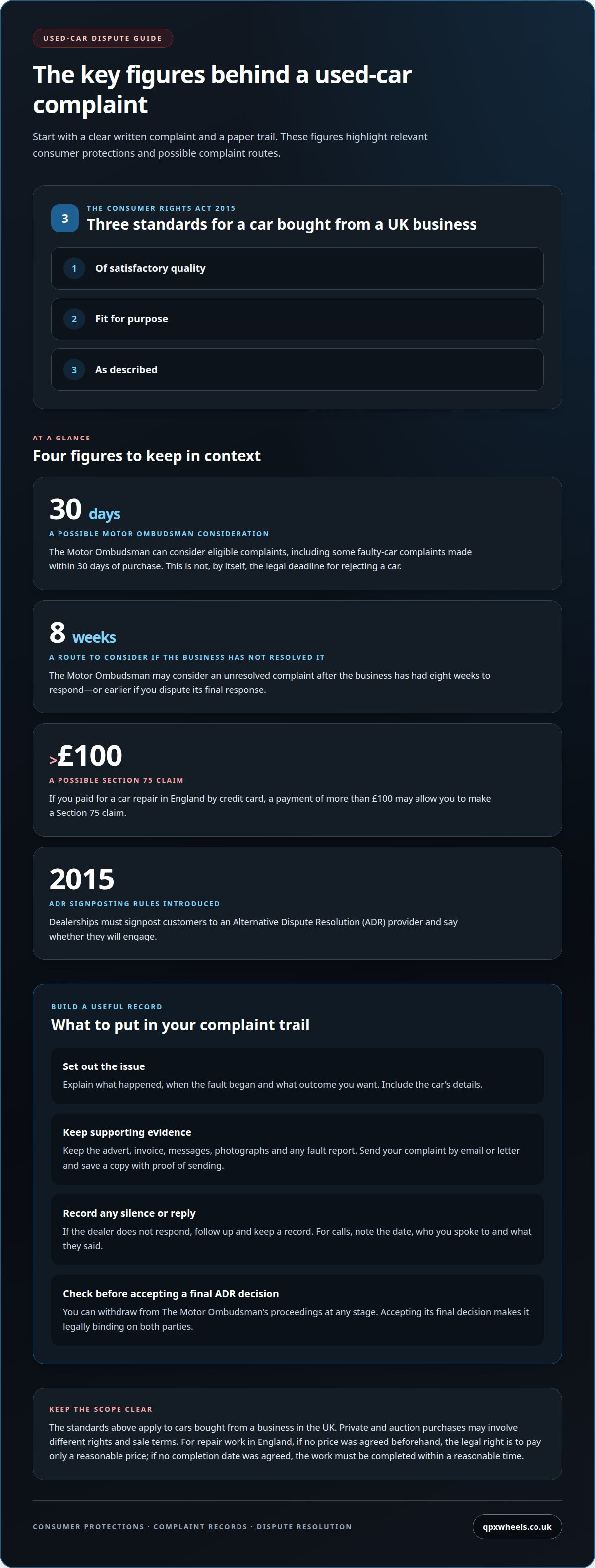
It’s understandable to feel stuck if a dealer won’t engage, especially when you’re unsure whether to seek mediation or take the matter further. The Motor Ombudsman can consider eligible complaints, including some faulty-car complaints made within 30 days of purchase.
This guide explains how to make a complaint, what to do if the dealer does not respond, the possible outcomes and how to check whether a dealership is accredited. It also explains when independent dispute resolution may help, so you can choose your next step with a clearer understanding of your options.
Key Takeaways
- Use the Consumer Rights Act 2015 to understand the standards a used car bought from a business must meet.
- Set out your complaint clearly to the dealer, keep copies of your evidence and note any response or lack of response.
- Before accepting a dispute-resolution decision, understand whether it will be legally binding and what that means for taking the complaint further.
- Check whether the dealership follows a recognised code of practice, and ask about its trade association membership.
What is the Consumer Rights Act?
To understand how to resolve disputes with a used car dealer, first identify who sold you the car and what was agreed. Then compare the car or repair work with the relevant consumer protections.
Review Consumer Rights Act protections
Check your advert, invoice and messages against the car’s condition and description. UK legislation, the Consumer Rights Act 2015, requires cars bought from a business in the UK to be of satisfactory quality, fit for purpose and as described.
- Record the fault, when you noticed it and how it differs from the description. Keep photographs, reports and messages as evidence.
- For repair work in England, check whether you agreed a price beforehand. UK legislation, the Consumer Rights Act 2015, gives you the legal right to pay only a reasonable price if no price was agreed before the work was done.
- Check whether you agreed a completion date for repair work in England. If not, UK legislation, the Consumer Rights Act 2015, gives you the legal right to have the work completed within a reasonable time.
- If you paid for a car repair in England by credit card, a payment of more than £100 may allow you to make a Section 75 claim under UK legislation.
For help with a consumer complaint, call the Citizens Advice consumer helpline on 0808 223 1133.
A complaint process may consider how soon after purchase you raised a faulty-car complaint. That is not itself the legal deadline for rejecting a car, so don’t confuse the two.
Compare rights across purchase routes
Identify whether you bought from a dealer, a private seller or at auction. The Consumer Rights Act standards described above apply to cars bought from a business; private and auction purchases may involve different rights and sale terms.
For a private or auction sale, check the seller’s identity and the terms you accepted. For a dispute with a used car dealer, keep the advert and sales documents as evidence of what the dealer described.
What if the dealership refuses to engage?
Knowing how to resolve disputes with a used car dealer starts with a written complaint and a clear record. If the dealer does not respond, preserve your evidence and consider the next available route for your complaint.
Make a complaint before escalating
Write to the dealership’s complaints contact. Explain the problem, when it began and what outcome you want. Include the car’s details and relevant evidence, such as the advert, invoice, photographs or a fault report. A dated, factual account helps the dealer understand the issue and creates a record of your request.
- Send your complaint by email or letter, and save a copy with proof of sending. State the outcome you’re seeking, such as a response to the reported fault.
- If the dealer stays silent, send a follow-up referring to your first message. Record calls with the date, the person spoken to and any response.
- Ask which Alternative Dispute Resolution (ADR) provider the dealership uses and whether it will participate. Alternative Dispute Regulations introduced in 2015 require dealerships to signpost customers to an ADR provider and say whether they’ll engage.
Keep your ADR request and any reply, including a refusal or lack of response. This record may help if the dispute later goes to court.
Consider taking the dispute to court
Before considering court action in England and Wales, organise the documents that support your complaint. Gather the sales agreement, advert, correspondence and evidence of the fault or loss. Set out what happened, why you believe the dealer is responsible and what outcome you want. This will help you present your case clearly.
- Consider whether ADR may be available first. The Motor Ombudsman can consider an unresolved complaint after the business has had eight weeks to respond, or earlier if you dispute its final response.
- Prepare a dated chronology and keep copies of documents you may need to rely on.
- Explain how each piece of evidence supports your complaint and requested outcome. A careful record is central to how to resolve disputes with a used car dealer if informal discussions fail.
Possible dispute outcomes and binding decisions
Decide what outcome would resolve your complaint before accepting a proposal. In the UK, small-claims limits and court fees depend on the jurisdiction, claim value and claim type, so identify the relevant court route before filing.
Review possible dispute outcomes
Write down the practical outcome you want, such as an agreed response to the fault or resolution through an independent process. Compare any proposal with your complaint and evidence, then record the terms in writing. A clear written agreement helps both sides understand what has been accepted and what remains unresolved.
- Read the proposed outcome carefully and check that it addresses the specific points in your complaint.
- Keep the dealer’s offer, your reply and any agreed next steps together with your purchase documents.
- If the proposal doesn’t settle the issue, explain which points remain open before choosing another route.
For court action, establish the correct jurisdiction and claim value first. Filing fees depend on the claim and court process, so account for them separately from the amount you are seeking.
Consider binding ADR decisions
Before starting The Motor Ombudsman’s process, understand what accepting its final decision means. The Motor Ombudsman assesses eligible complaints impartially against its Codes of Practice and relevant consumer law, including the Consumer Rights Act 2015. You can withdraw from its proceedings at any stage, but accepting the final decision makes it legally binding on both parties.
- Read the proposed decision and identify exactly what it requires from you and the business.
- Consider the consequences before accepting: doing so may prevent you from taking the complaint elsewhere.
- If you don’t accept the final decision, keep your complaint records and consider the remaining routes available to you.
Keep the decision and related correspondence with your case documents. This record makes it easier to understand the outcome and what you agreed to accept.
Checking whether a dealer is accredited
Check the dealership’s membership before relying on an independent complaint route. Accreditation can affect which organisation is able to consider your dispute.
- Search for the dealership’s exact trading name and check its own website, purchase paperwork and complaints information. Compare the address and business identity shown there with the details on your sales documents, so you’re checking the right business.
- Check whether the dealer is signed up to a Motor Ombudsman Code of Practice. The Motor Ombudsman can handle a dealership dispute only if that business has signed up to one of its Codes of Practice. Membership therefore matters when deciding whether to refer your complaint there.
- Ask the dealer in writing which code or scheme it belongs to and which ADR provider handles complaints. Keep the reply with your complaint records. A business that is a member of a relevant scheme must offer consumers Alternative Dispute Resolution when a dispute arises.
- Ask whether the garage belongs to a trade association. Some associations provide free help with disputes involving member garages, so record the association’s name and the response to your enquiry.
- If the dealer says it is accredited, compare the named business and membership details with the information published by the relevant organisation. Don’t rely only on a logo or a general claim of membership; the specific dealership must be covered.
- If the dealership isn’t signed up to a Motor Ombudsman Code, that route cannot handle your complaint. Keep the dealer’s response and continue using the complaint records and other routes relevant to your case.
These checks help you understand which dispute process may apply, rather than assuming every dealer belongs to the same scheme. If you’re considering another vehicle, browse used cars at QPX Wheels.
QPX Wheels: Used Vans
Once your dispute is resolved, QPX Wheels offers used vans for drivers considering another vehicle. If your needs have changed, you can also explore used cars and compare your options before deciding.
If you’re selling your current vehicle, QPX Wheels’ Vehicle Valuation Service can help you understand its value. Hire Purchase (HP) Finance is an option if you’re considering spreading the cost of vehicle ownership.
Take time to consider your requirements, review the vehicle details and choose an option that suits your circumstances. When you’re ready to look for your next vehicle, visit qpxwheels.co.uk to explore QPX Wheels’ used vans and cars.
Choose your next step with confidence
Resolving a dealer dispute can help you decide what you need from your next vehicle purchase. Keep your priorities clear, whether you’re replacing a car, choosing a van or selling your current vehicle. Knowing how to resolve disputes with a used car dealer can also help you make informed decisions once the complaint is settled.
QPX Wheels sells used cars and vans and offers a Vehicle Valuation Service for people considering a sale. Explore these options at your own pace while keeping the requirements that matter most to you in mind.
For a calm next step, contact QPX Wheels about your vehicle needs. A considered decision can make the road ahead feel clearer.
Frequently Asked Questions
Can you help with disputes involving new and used cars?
QPX Wheels sells used cars and vans, not new vehicles. The complaint steps in this guide focus on purchases from a business. For a new-car dispute, identify the business that sold you the vehicle: check the seller’s name on your order form and invoice so you can address the complaint to the right business.
What do I do if a car dealership sells me a faulty car?
Write to the selling dealer, describe the fault and state the outcome you’re seeking. For example, explain when a warning light appeared and include a photograph of the dashboard. Keep the advert and sales documents together. Do not rely on a phone conversation alone: a written account helps you track what you reported and how the dealer responded.
What evidence do I need to provide?
Gather documents that link the car, the seller and the fault. Useful evidence includes the advert or vehicle description, invoice, payment record, dated photographs, messages with the dealer and any relevant diagnostic report. Add a short timeline of when you bought the car, noticed the problem and contacted the dealership. Keep the original files and send copies with your complaint.
What is Alternative Dispute Resolution?
Alternative Dispute Resolution (ADR) is a way to try to settle a complaint without starting court proceedings. An ADR provider considers information from both sides and assesses whether the complaint fits its scheme. The Motor Ombudsman handles dealership disputes only when the business has signed up to one of its Codes of Practice, so check this before referring your case.
What consumer rights apply when buying a used car from a dealer in the UK?
A used car bought from a business must meet the standards set by the Consumer Rights Act 2015. Keep the sales description and your order documents, then compare them with the car and the issue you’ve found. The seller’s status matters: a purchase from a private individual is different from buying from a dealership acting as a business.
What remedies can I claim under the Consumer Rights Act 2015 for a faulty used car?
Tell the dealer what outcome you want and explain how the fault relates to the car’s condition or description. The Act sets the required standards, but the appropriate response depends on the complaint and evidence. Distinguish a fault with the car from a problem with repair work: rights relating to repair services address matters such as skill, care and agreed terms.


