
A dashboard light can work while the air conditioning still fails to cool. When checking vehicle electronics and air conditioning in a used car, an inspection can operate the cabin controls, assess the airflow and cooling, and compare the temperatures of the air-conditioning hoses. For a basic performance check, the engine is held at 2500 rpm for one minute before hose temperatures are assessed.
It’s understandable to want more than a button that lights up when weighing up a used car. The controls, air from the vents and hose temperatures can all offer clues, but they won’t reveal every hidden fault or prove the system is leak-free.
This guide explains which electrical controls and air-conditioning warning signs to check, how hose temperatures can help assess performance, and where these checks have limits. You’ll have a clearer idea of what the results mean before deciding what to do next.
Key Takeaways
- Operate the air-conditioning controls and check that the settings respond, airflow is steady and the air cools as expected.
- Weak airflow, warm air, unusual noises or repeated recharging can point to faults that a simple recharge may not resolve.
- For a basic hose-temperature check, the engine is held at 2500 rpm for one minute before temperatures are assessed.
- These non-invasive checks offer useful clues, but they cannot confirm that the system is leak-free or identify every underlying fault.
Vehicle electrical controls checked during the inspection
During an inspection, operate each air-conditioning control and check whether it responds as expected. Try the fan at different speeds, switch between face-level and windscreen vents, and test the recirculation and temperature controls. Check that the display, buttons and indicator lights respond, and listen for the cabin fan starting without rattling. These checks can reveal faults in electrical components, but they won’t establish the cause.
An HVAC control module processes input from switches and sensors, then signals components such as the blower and air-mix actuators. A faulty module, connector or sensor can cause settings to behave unpredictably, such as airflow changing without input. Diagnostic equipment can read stored fault codes and help distinguish an electronic issue from a mechanical failure. A visual inspection alone cannot provide that diagnosis.
UK consumer rights depend on whether you bought the car from a trader or a private seller, as well as the circumstances of the fault. Keep the advert and purchase documents, and make a dated record of symptoms to support any discussion with the seller.
Repair costs for common electrical faults depend on the diagnosis and the components involved. A failed switch, damaged wiring and a control-module fault require different repairs, so there’s no single reliable cost for every case.
Check that dashboard warning lights illuminate during the ignition self-check, then go out as expected after starting. Pay attention to the battery, engine-management and airbag symbols. A light that stays on or never appears needs investigation.
To assess the battery, alternator and starter, note whether the engine turns over promptly, the dashboard lights dim sharply during starting, or the battery warning stays lit while the engine is running. These observations offer clues, but they aren’t component-level tests.
A UV leak check uses fluorescent contrast agent circulating in the air-conditioning system. A UV lamp can reveal traces around accessible hose joints, seals or the condenser. Dye can identify a leak area, but not necessarily its full cause. Recharging alone won’t repair a leak. Warranty cover for electrical or air-conditioning faults depends on the warranty’s terms and exclusions, so read the component and claim conditions before relying on it.
Inspection limitations and non-invasive checks
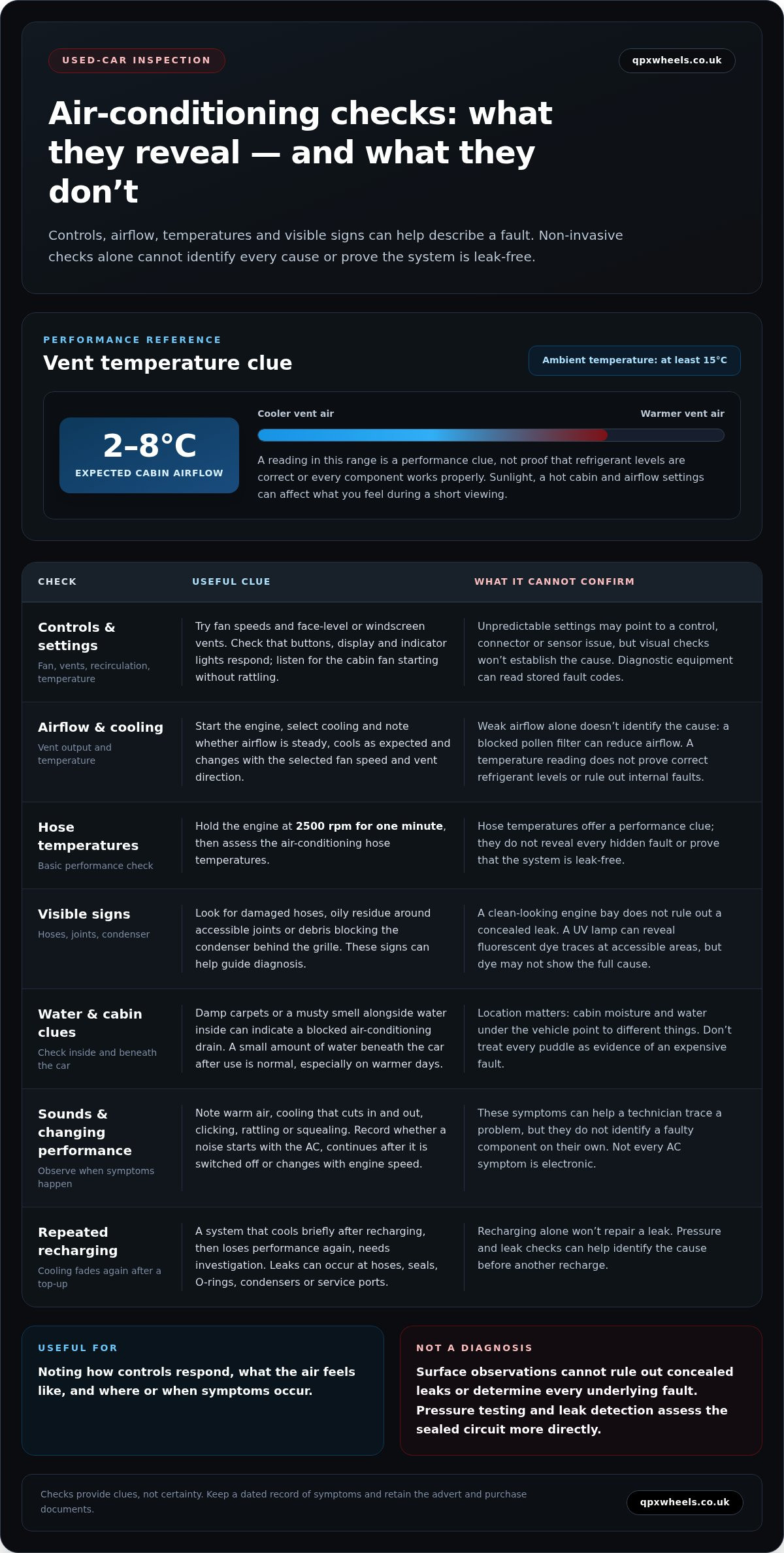
A used-car inspection can assess cooling without opening the air-conditioning circuit. Start the engine, select cooling, set the fan and note the air coming from the vents. A functioning system is expected to deliver cabin airflow at 2-8°C when the ambient temperature is at least 15°C. This reading is a performance clue, not proof that refrigerant levels are correct or that every component works properly. Sunlight, a hot cabin and airflow settings can also affect what you feel during a short viewing.
Visual checks provide useful context. Look for damaged hoses, oily residue around accessible joints, or debris blocking the condenser behind the grille. These signs can help guide diagnosis, but a clean-looking engine bay doesn’t rule out a concealed leak. Refrigerant may escape from hoses, seals, O-rings, condensers or service ports. Finding the precise source requires suitable automotive testing. Topping up refrigerant without fixing a leak can leave the cooling fault unresolved.
Check the cabin and the ground after operating the system. Water collecting inside the vehicle can indicate a blocked air-conditioning drain, particularly if the carpets are damp or there’s a musty smell. By contrast, a small amount of water beneath the car after using the air conditioning is normal, especially on warmer days. The location matters: cabin moisture and water under the vehicle point to different things, so don’t treat every puddle as evidence of an expensive fault.
A pollen filter can also affect airflow without a refrigerant fault. If it’s blocked, less air moves through the vents, so weak airflow alone doesn’t identify the cause. Note whether the fan produces a steady stream at different settings and whether each vent responds to the selected direction. A visual inspection can record these symptoms and measure vent temperature, but it can’t rule out internal faults. Pressure testing and leak detection assess the sealed circuit more directly than a surface check.
Warning signs of electronic AC faults
Warm air, weak airflow and cooling that cuts in and out are useful clues when viewing a car. Note whether the problem changes when you adjust the temperature, fan speed or vent direction. A control that ignores an input may suggest an electrical fault, while steady airflow that never cools can have other causes. These symptoms help describe the problem, but don’t identify a faulty component on their own. They’re useful observations when checking vehicle electronics and air conditioning in a used car.
Listen for clicking, rattling or squealing when the air conditioning operates. Clicking or rattling can indicate a problem with components such as the compressor, drive belt or pulley. A squeal that changes as the system starts can also help a technician trace the source. Note whether the noise begins when the AC is switched on, continues after it’s switched off, or changes with engine speed. That detail gives a technical diagnosis a clearer starting point.
Repeated recharging is a warning sign, not a lasting solution. Low refrigerant can reduce cooling and may reduce compressor-oil circulation, increasing wear over time. Too little refrigerant can damage the compressor. Leaks can occur at hoses, seals, O-rings, condensers or service ports, so pressure and leak checks can help identify the cause before recharging. If the system cools briefly after a recharge, then loses performance again, it needs investigation rather than another top-up.
Not every AC symptom is electronic. Moisture formed during operation can create conditions for bacteria to develop, producing a musty smell even when the controls respond. Cleaning and sanitisation can often resolve odours caused by bacteria or mould. By contrast, controls that fail to change settings, intermittent operation, or cooling that stops unexpectedly call for electrical diagnosis. Modern AC electronics can be challenging for DIY fault-finding because sensors, control signals and refrigerant pressure can all affect operation. When checking vehicle electronics and air conditioning in a used car, describe each symptom and when it occurs. That record can help narrow down possible causes.
Air-conditioning hose temperature checks
Hose temperatures provide a comparison of how the air-conditioning system moves heat, not a diagnosis on their own. For a basic performance check, the engine is held at 2500 rpm for one minute before temperatures are assessed. This gives the conditioning system time to operate under a consistent engine speed. The check should be made with the air conditioning switched on and airflow settings kept steady, so changing controls don’t distort the comparison.
A technician can use a temperature instrument to measure accessible hoses and compare the pipes carrying refrigerant to and from the system. Their temperatures should differ as refrigerant circulates and transfers heat. The size and pattern of that difference need to be interpreted alongside vent cooling, ambient conditions and system design. One reading cannot show whether a fault comes from low refrigerant, restricted flow, a sensor or another component. Nor can a temperature comparison confirm the circuit is leak-free.
To test a used car’s air conditioning and heating, select cooling and check the vent airflow, then switch to heat and confirm the temperature changes. Try different fan speeds and vent directions, noting delays, inconsistent output or unusual sounds. A hose check adds useful evidence, but complements rather than replaces these cabin checks.
In the UK, the cost of an air-conditioning service or repair depends on the work required. A recharge, leak repair, electrical diagnosis and component replacement involve different tasks. The fault, parts and labour determine the final cost. If refrigerant is leaking, a recharge alone won’t address the cause, so identifying and repairing the leak affects the work involved.
Use hose and vent observations to describe the symptoms clearly when comparing used cars. To continue your search with those inspection points in mind, explore used-car options.
QPX Wheels: Used Vans
QPX Wheels offers used vans and used cars for buyers ready to move from inspection findings to choosing a vehicle. Notes on electrical controls, cabin cooling and hose temperatures can help you compare options and decide what to ask before purchasing. If you’re also selling your current vehicle, QPX Wheels’ Vehicle Valuation Service can support that next step. Hire Purchase (HP) Finance is available if you’re considering finance for your purchase.
Use inspection findings to guide your decision, not as proof that every hidden fault has been ruled out. If a cooling or electrical symptom needs further diagnosis, factor that uncertainty into your choice. To explore used vehicles or discuss a purchase, contact QPX Wheels or visit qpxwheels.co.uk.
Make your next decision with confidence
Use your inspection notes to make a considered choice, rather than treating one reassuring result as a guarantee of the vehicle’s overall condition. If a control behaves inconsistently or cooling performance concerns you, include that in your decision and discuss it before committing. Checking vehicle electronics and air conditioning in a used car is one part of assessing whether it suits your needs. Your priorities, intended use and overall budget matter too.
QPX Wheels can help you explore its used cars and vans as you decide what to view next. If you’re replacing a vehicle, its Vehicle Valuation Service offers a related next step. Take the time you need to weigh up the information and choose a vehicle that feels right for you.
Contact QPX Wheels about your next vehicle and move forward at your own pace.
Frequently Asked Questions
Is your car’s air conditioner trying to tell you something?
Yes, changes in comfort can offer clues about how the system is working. For example, if the windows keep misting despite using the air conditioning, the system may not be removing cabin moisture effectively. Note when the mist appears, which settings are selected and whether it clears. This gives an inspection a specific symptom to investigate, rather than relying on a general impression.
What does an electronic AC fault actually feel like from the driver’s seat?
An electronic fault may show up as inconsistent controls: the selected vent direction doesn’t hold, the temperature changes unexpectedly, or the fan setting doesn’t match the airflow. Note whether this happens from the first start or develops during a drive. A repeatable pattern can help distinguish an intermittent control problem from a one-off response.
What does a vehicle inspection cover?
The scope depends on the inspection arranged, so check what it includes before relying on the result. A used-car assessment may record visible condition, operate accessible controls and note concerns that need further investigation. Ask for the findings in writing, including any areas that weren’t examined. This helps you compare the report with the vehicle’s advert and decide what needs clarification before purchase.
How do you check a used car’s electrical systems before buying?
Test electrical features individually and note anything that responds slowly or inconsistently. Try the horn, wipers, washers, heated rear window and adjustable mirrors, then check each seat adjustment if fitted. Operate them more than once, as an intermittent fault may not show up immediately. Compare the results with the controls and features listed in the vehicle’s specification or advert.
How do you inspect a used car’s infotainment, lights, windows and central locking?
With the car stationary, switch on the infotainment system and test the audio, screen response and available connections. Check each exterior light from outside, using a companion if needed, then raise and lower every electric window. Lock and unlock the doors with the key and interior controls. Note any failed function, warning message or unusual delay, and include the specific door or control in your notes.


