
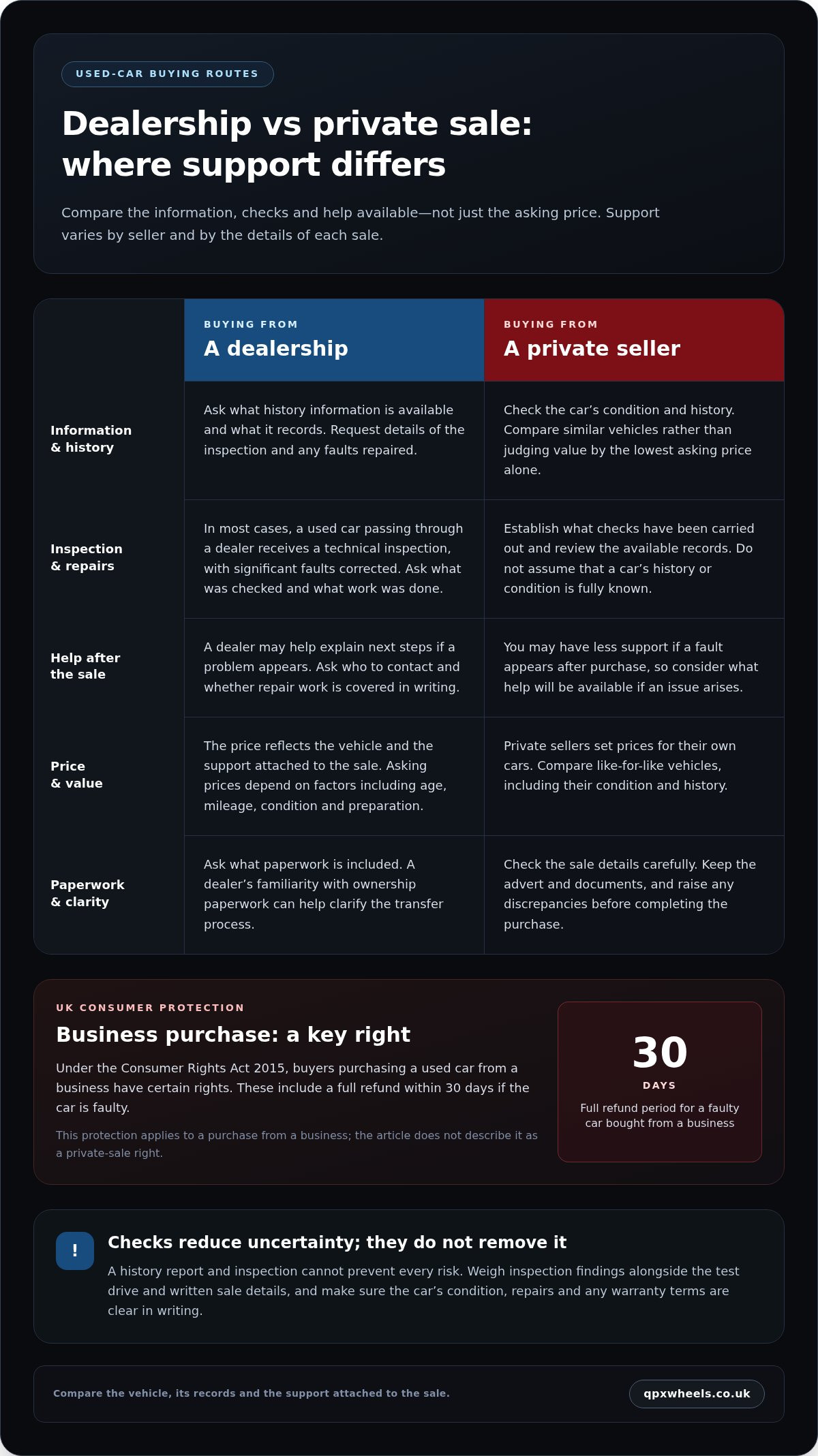
A dealership purchase can reduce some of the uncertainty around a used car. The advantages of buying a used car from a reputable dealership include access to vehicle inspections, clearer paperwork and support if problems arise. In the UK, the Consumer Rights Act 2015 gives buyers certain rights when purchasing a used car from a business, including a full refund within 30 days if the car is faulty, according to The National Archives.
It’s sensible to weigh up the car’s condition and history, not just its price. A private sale may seem straightforward, but buyers can have less support if a fault appears after the purchase.
This article explains how dealership inspections can help identify issues, what warranties and repair guarantees may cover, and which consumer protections apply. It also sets out the limits of these safeguards, so you can make a more informed decision about your next used car.
Key Takeaways
- Compare the support and information available from a dealership with what a private sale offers before deciding how to buy.
- Learn what a vehicle inspection can reveal and why significant faults matter when assessing a used car.
- Find out why repair guarantees and warranties should be understood in writing, including what they cover.
- According to The National Archives, the Consumer Rights Act 2015 provides certain rights when buying a used car from a business, including a full refund within 30 days if the car is faulty.
Reduced risks compared with private sales
Buying from a dealership can give you access to more information and support than a private sale. The advantages depend on the checks, paperwork and after-sales help provided with the car.
After-sales support from dealers
After-sales support is help from the dealer when questions or issues arise after purchase. It matters because a fault or paperwork query can be difficult to resolve alone. For example, a dealer may help explain the next steps if a problem appears. Ask who to contact, what support is available and whether any repair work is covered in writing.
There is no single UK price comparison: asking prices depend on a car’s age, mileage, condition and preparation. A dealership’s price reflects the vehicle and the support attached to the sale, while private sellers set prices for their own cars. Compare similar vehicles, including their condition and history, rather than treating the lowest price as the best value.
Before buying, ask the dealer what history information is available and what it records. Ask what inspection the car received, which faults were repaired, and whether repair work has a written guarantee. Also check what paperwork is included and what after-sales support is available. Clear answers help you understand what the price covers.
A dealer can make comparisons easier by presenting several cars in one place. A test drive lets you assess how a specific car feels on the road, while the dealer’s familiarity with ownership paperwork can help clarify the transfer process. These practical advantages are useful when weighing up more than one vehicle.
Risks that can still remain
Checks and support cannot prevent every risk. A history report and inspection can inform your decision, but they do not remove all uncertainty about a used car’s condition. A fault could emerge after purchase, or the car may not suit your driving needs. Consider the inspection findings alongside your test drive and the written sale details.
Before agreeing to buy, make sure the car’s condition, any repairs included and warranty terms are clear in writing. Keep the advert and sale documents, and raise discrepancies before completing the purchase. A reputable dealership can reduce uncertainty, but careful comparison remains important.
Used-car inspections and repairs
A dealer’s inspection can identify faults before a used car is offered for sale. The findings help you understand its condition and any work completed.
Inspection and refurbishment
Inspection and refurbishment are checks and repairs carried out before a car is sold. They matter because a vehicle’s condition can affect its safety, reliability and suitability for your needs. In most cases, a used car passing through a dealer receives a technical inspection, with significant faults corrected. Ask what the inspection covered and which repairs were completed. For example, clarify whether a noted fault was fixed or remains outstanding.
Checking a car’s history and records
A history check brings together information about a car’s past, while its MOT record shows test outcomes. These records can highlight details that need explaining. Ask for a vehicle history report covering accidents and major repairs, then compare the vehicle identification details with the car and its paperwork. Review MOT dates, test results, advisories and failures. Ask the dealer to explain any gaps or entries that concern you.
To check outstanding finance, ask the dealer to explain the vehicle’s finance status and how it is addressed in the sale paperwork. Make sure the registration details match across the car, history report and documents. If a report shows previous damage or a repair, ask what work was done and whether supporting records are available. The answers provide context for the inspection, rather than leaving you to interpret a record alone.
An MOT record is useful, but it is not a complete assessment of a car’s current condition. A test result relates to the vehicle at the time of the test, while a dealer inspection examines the car separately. Compare both with the car’s service history and your test-drive observations. For instance, ask about an advisory that appears repeatedly or a repair noted in the history report.
Once the vehicle’s condition and records meet your needs, consider how you’ll fund the purchase. You can explore Hire Purchase (HP) Finance and PCP finance as part of that decision.
Written guarantees for repairs
A written guarantee records which repair work is covered and the conditions for making a claim. It gives you a reference if the same fault returns after the dealer’s repair. Ask for the document before agreeing to buy, and compare it with the invoice or repair record. A verbal assurance alone can leave important details unclear.
Used-car buyers can request a written guarantee for repairs carried out by the dealer. Check that it identifies the work completed, the parts involved and the period of cover. For example, if a repair addressed a noisy clutch, make sure the paperwork describes that work rather than simply stating “vehicle repaired”. Keep the guarantee with your sale documents.
A car warranty is different from a repair guarantee. A repair guarantee relates to specified work, while a vehicle warranty may cover certain mechanical issues during its stated term. Dealerships often provide warranties or guarantees that may help with unexpected mechanical problems. The written terms determine what is covered, any exclusions and how to make a claim.
Before relying on either document, check the claim process, whether approval is required and who is responsible for arranging repairs. Check whether parts and labour are included, and whether faults linked to wear or existing damage are excluded. If a term is unclear, ask for its meaning in writing before purchase. Keep copies of messages, invoices and inspection notes relating to the fault.
An approved used-car scheme is a dealer’s named sales programme, with conditions set out by that scheme. In the UK, there is no single package that every scheme must include, so the details can differ. Read the terms for specific inspection criteria, warranty cover, vehicle history checks or exchange arrangements, and distinguish scheme benefits from a separate repair guarantee.
For example, a scheme may describe an inspection, but the paperwork should explain what it covered. Check whether the warranty applies to the fault you are concerned about, and note any exclusions or claim steps. Clear documents let you compare the protection on offer rather than relying on the scheme name alone.
Consumer legal protections
Buying from a business gives UK consumers legal protections separate from any warranty or repair guarantee. Knowing the difference helps you understand which rights come from law and which depend on written terms. Keep your advert, invoice and messages together so you can refer to what was said about the car.
In the UK, the Consumer Rights Act 2015 provides certain consumer rights when buying a used car from a business, including the right to a full refund within 30 days if the car is faulty, according to The National Archives. This is a specific statutory right, not simply a benefit offered through a dealership scheme or warranty.
If a problem appears, record the fault and when you first noticed it. Contact the business in writing with the purchase details, a clear description and relevant evidence, such as a warning light or repair report. Keep copies of your correspondence and note the response. A dated record can help you explain the issue clearly.
Read the sale paperwork closely before signing. Check that the car’s description and any statements about its condition match the documents. If a particular repair or feature influenced your decision, make sure the relevant details are recorded. For example, retain written information about a replaced component rather than relying on a conversation alone.
Legal rights and warranty cover are not interchangeable. A warranty sets out additional cover and its terms, whilst the Consumer Rights Act 2015 provides statutory consumer rights for purchases from a business. A warranty document should explain its claim process and exclusions. Keep it alongside the invoice, inspection records and any repair guarantee.
When raising a concern in writing, include the car’s registration, purchase date and supporting documents. State the outcome you are seeking and keep a copy of the exchange. If the issue involves a fault, describe how it affects the car rather than simply saying it is unsatisfactory.
Explore used-car options at QPX Wheels as you consider your next purchase.
QPX Wheels: Used Vans
QPX Wheels offers used vans for buyers who need a vehicle for work or everyday use. If you are comparing dealership options after considering inspections, paperwork and consumer rights, browsing the available vehicles is a practical next step.
QPX Wheels also offers used cars, a Vehicle Valuation Service and Hire Purchase (HP) Finance. A valuation can help if you are assessing your current vehicle, while HP finance is an option to consider when planning a purchase. Compare each vehicle’s details with your needs and budget before deciding.
Browse the used vans and other available vehicles at qpxwheels.co.uk, or contact QPX Wheels to discuss your options.
Make your next car decision with confidence
Choosing a used car also means deciding what will suit your routines, priorities and plans. Before committing, consider how you will use the vehicle, which features matter most and what information you need to feel comfortable with your choice. A clear set of priorities makes comparisons more useful than browsing without direction.
The advantages of buying a used car from a reputable dealership matter most when they help you choose a vehicle that fits your circumstances. Consider the car and the purchase terms together, rather than focusing on one detail alone. This thoughtful approach can help you move forward with a clearer sense of what you are choosing.
If you’re ready to discuss your next step, contact QPX Wheels today. A considered choice is a good place to start.
Frequently Asked Questions
What are the advantages of buying a used car from a reputable dealership in the UK?
The advantages of buying a used car from a reputable dealership include access to vehicle information and a clear business point of contact. You can compare cars and vans in one place, and some dealerships offer finance or nationwide delivery. QPX Wheels offers nationwide delivery at competitive rates, which can be useful if travelling to view a vehicle is inconvenient.
What checks and inspections do reputable UK used-car dealers carry out before sale?
Checks vary, so look at the specific inspection details and vehicle records rather than assuming every dealer follows the same process. QPX Wheels states that each vehicle undergoes a 39-Point Inspection and is HPI-clear. Its vehicles also receive a fresh MOT if the existing MOT is due within the next six months. Compare these details with the vehicle’s paperwork before deciding.
What warranty or consumer protection comes with a used car bought from a UK dealer?
Warranty cover depends on the written terms, while statutory consumer rights apply separately. The National Archives states that the Consumer Rights Act 2015 provides certain rights when buying a used car from a business, including a full refund within 30 days if the car is faulty. QPX Wheels includes a Free 3-Month Warranty with every car; extended warranties are also available as an optional extra.


