
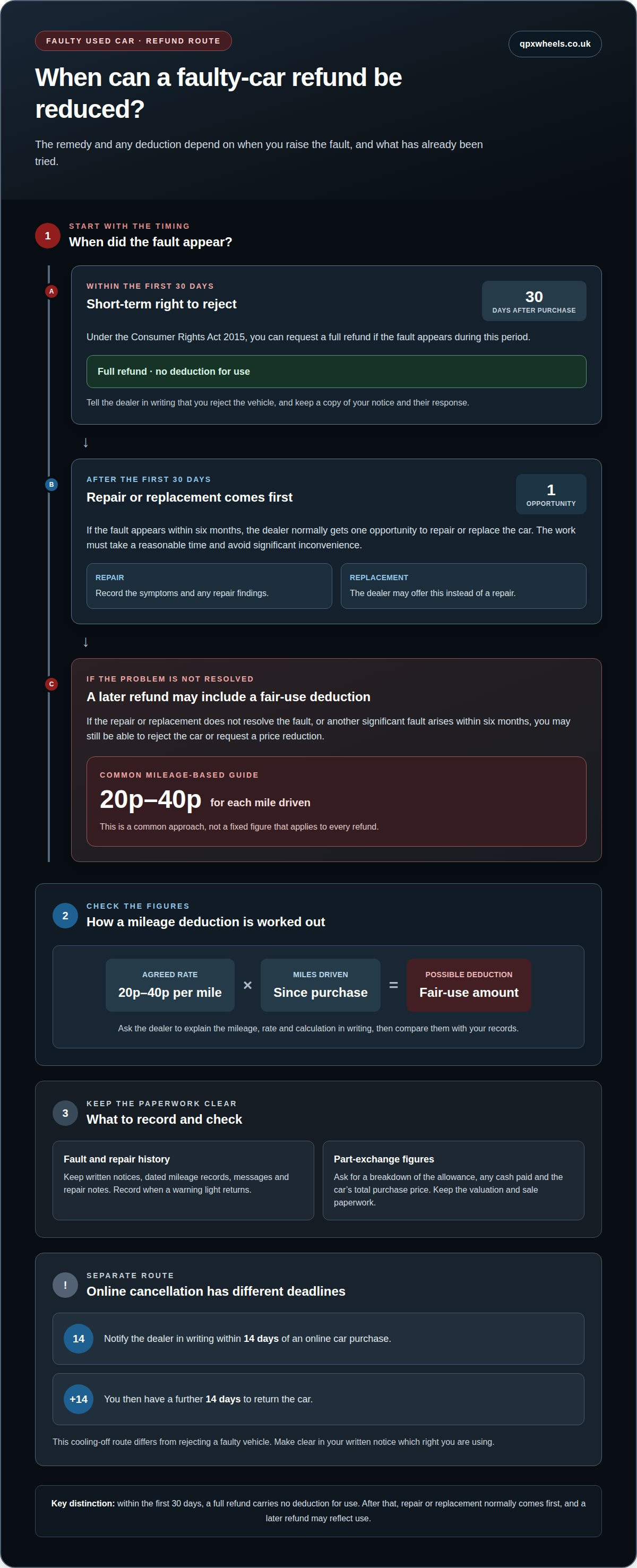
Yes, returning a faulty used car to a dealership can lead to a refund, but the timing matters. Under the Consumer Rights Act 2015, if a fault appears within the first 30 days, you can use the short-term right to reject. According to the UK Government, this entitles you to a full refund without a deduction for use. After that, the dealer normally gets one opportunity to repair or replace the car, and a later refund may reflect your use.
A fault soon after buying a car can leave you unsure whether to insist on a refund or accept a repair; mileage can make the amount feel even less clear. This guide explains how the rules differ before and after the first 30 days, when repair or replacement comes first, and how a refund may be reduced for use. A common way to work out that deduction is 20p to 40p for each mile driven. It also covers what changes when the car is on finance, including when the finance company may need to be involved, so you can understand your options before deciding how to raise the issue.
Key Takeaways
- For an online purchase, the cancellation deadlines are distinct: notify the dealer in writing within 14 days, then return the car within a further 14 days, according to UK Government, legislation.gov.uk.
- A refund after the initial rejection period may include a deduction for use; a common guide is 20p to 40p for each mile driven.
- If a fault appears after six months, evidence that it was present when you bought the car can be important to your claim.
- With a finance agreement, the finance company may also be involved in resolving a faulty-car complaint.
Refund calculation and mileage-based depreciation
A refund depends on when the fault is raised and what remedy has already been tried. If the car is rejected within the first 30 days, the buyer can request a full refund without a deduction for use. According to UK Government, legislation.gov.uk, a buyer who finds a fault within that period can use the Consumer Rights Act 2015 short-term right to reject.
After the first 30 days, the dealer normally has one opportunity to repair or replace the vehicle before a refund is considered. If the fault remains after that attempt, or another significant fault arises within six months, the buyer may still seek a refund. The dealer may deduct a fair-use amount to reflect the miles driven before rejection.
A common way to calculate that deduction is 20p to 40p for each mile driven. For example, a written calculation might multiply the agreed per-mile amount by the mileage since purchase. This is a common approach, not a fixed figure that applies to every refund. Ask the dealer to explain the mileage, rate and calculation in writing, then compare them with your records.
Can a dealership charge for repairs or deductions when you return a faulty used car? A statutory repair or replacement is the remedy before rejection after 30 days; a later refund may include a fair-use deduction. A refund within the first 30 days carries no deduction for use.
Part-exchange can make the figures harder to follow. Ask for a breakdown showing the allowance, any cash paid and the car’s total purchase price. Keep the valuation and sale paperwork so you can compare the amounts and clearly raise any discrepancy.
Online cancellation follows separate deadlines. According to UK Government, legislation.gov.uk, a buyer cancelling an online car purchase must notify the dealer in writing within 14 days and has a further 14 days to return the car. This cooling-off route differs from rejecting a faulty vehicle, so make clear in your written notice which right you are using.
Repair or replacement after the initial rejection period
According to UK Government, legislation.gov.uk, a buyer who finds a fault with a dealership-purchased used car within the first 30 days can use the Consumer Rights Act 2015 short-term right to reject and request a full refund. The rules for returning a faulty used car to a dealership depend on the fault and whether the car meets the required standard. Set out the problem clearly in writing and keep a copy of your notice.
How long is the 30-day right to reject a faulty used car in the UK? It covers the first 30 days after purchase. If you’re using this right, tell the dealer in writing that you reject the vehicle and keep their response.
After that period, the dealer normally gets one opportunity to repair or replace the car if the fault appears within six months of purchase. The work must take a reasonable time and avoid significant inconvenience. Describe the symptoms in writing and keep repair notes. If a warning light returns after a repair, record when it reappears and explain how the vehicle behaves.
If the repair or replacement doesn’t resolve the fault, you may be able to reject the car or request a price reduction. A final refund after the first 30 days may include a fair-use deduction. Keep dated records of mileage, messages and repair findings. These can help show whether the original fault remains or another problem has developed. Before returning a faulty used car to a dealership, organise these records so your complaint and requested remedy are clear.
Where can you get help with a dispute over a faulty used car dealer in the UK? Start by making a written complaint to the dealer. If the issue remains unresolved, Alternative Dispute Resolution can help settle a consumer dispute without going to court. The Motor Ombudsman provides this service for complaints about automotive businesses accredited to its Codes of Practice.
What Happens After 30 Days?
After the initial rejection period, the car’s age, mileage and fault history can shape your claim. The key difference is who must show whether the fault existed when you bought the vehicle.
Faults found within six months
If a fault appears within the first six months, it is presumed to have been present when you bought the car. According to UK Government legislation at legislation.gov.uk, the selling business must provide evidence to show otherwise. This presumption means you do not initially have to establish the fault’s original cause yourself.
Describe the symptoms in writing and keep dated records, such as warning-light photographs, repair notes and mileage readings. The dealer normally has one opportunity to repair or replace the vehicle after the first 30 days. If the repair fails, you may have grounds to reject the car or request a price reduction. The agreement, advert and service history can help explain whether its condition met satisfactory quality for its age and mileage.
Faults found after six months
After the first six months, you must show that the cause of the fault existed when you bought the car. A problem that appears later does not, on its own, prove the vehicle was faulty at the time of sale. This changes the evidence you need to support a request for a refund or repair.
Gather evidence linking the defect to the car’s condition when you bought it, rather than to later use or wear. An independent inspection or report can help explain the likely cause. Compare its findings with the mileage, service records and any earlier symptoms. Explain your complaint and the remedy you want in writing, then give the dealer a chance to respond and repair the car.
You may take action for a breach of the Consumer Rights Act for up to six years after the contract date, or five years in Scotland. This time limit does not remove the need to prove, after six months, that the fault existed at the time of sale. Buying on credit does not change this evidential requirement, although the finance arrangement may affect who handles your complaint.
Finance-company involvement in a faulty-car claim
Buying with finance does not remove your consumer rights if the vehicle is faulty. The type of agreement affects whom to contact and what ending the finance agreement may involve.
Returning a car bought on finance
With Hire Purchase, Conditional Sale or PCP, the finance company may be treated as the vehicle’s seller. Include it in your written complaint, describe the fault and say whether you are seeking repair, replacement or rejection. The finance company can assess the claim alongside the dealership. Keep the credit agreement, advert, purchase records and repair correspondence together to show how the vehicle’s condition relates to the sale.
Return rights with car finance
Consumer rights still apply to a car bought on finance, including the short-term right to reject within the first 30 days. The finance company’s involvement doesn’t automatically mean the agreement ends when you hand back the vehicle. Keep making payments unless the lender agrees otherwise, and ask for its position in writing. This helps separate the faulty-car remedy from your ongoing payment obligations under the agreement.
Withdrawing from finance is different from rejecting a faulty car. Under the UK Distance Marketing Regulations, you may be able to withdraw within 14 days of signing the agreement. That step doesn’t itself resolve the vehicle purchase, so explain in writing whether your issue concerns the finance, the fault, or both.
Early settlement is another separate route. For a credit agreement exceeding £8,000, compensation is capped at 1% of the amount repaid early when at least one year remains, or 0.5% when less than one year remains.
Voluntary termination of regulated Hire Purchase, Conditional Sale or PCP requires you to have paid or pay at least 50% of the total amount owed, including interest and fees. It isn’t the same as a faulty-car rejection. If you’re exploring finance for another vehicle, review Hire Purchase (HP) Finance as one available option.
QPX Wheels: Used Vans
If you’re considering a different vehicle after resolving a faulty-car claim, QPX Wheels offers used cars and vans to compare when your current vehicle no longer suits your needs.
If you’re replacing a car, QPX Wheels’ Vehicle Valuation Service can help you understand its value as part of your next-vehicle decision. Hire Purchase (HP) Finance is another way to spread the cost of a vehicle through a finance agreement. Keep your current complaint separate from any replacement purchase so the terms of each transaction remain clear.
For a straightforward next step, consider which vehicle type and finance arrangement suit your plans, then contact QPX Wheels to discuss your options.
Choose your next step with confidence
If you’re considering returning a faulty used car to a dealership, keep your complaint separate from plans to buy another vehicle. First, decide what outcome you’re asking the seller or finance company to provide. Then consider what transport would suit your needs if you move on from the car. Keeping these decisions distinct helps you focus on the fault claim without rushing into another purchase.
For your next decision, QPX Wheels offers used cars, used vans and a Vehicle Valuation Service. These may suit you if you’re replacing your current vehicle or assessing its value as part of your plans. Take time to consider which vehicle type and arrangement fit your circumstances.
Contact QPX Wheels for help exploring your next vehicle options. A considered decision can help you move forward with greater clarity.
Frequently Asked Questions
Can I return a car?
Yes. If a car bought from a dealership has a fault that breaches your consumer rights, you can pursue a remedy. Changing your mind alone does not qualify for faulty-car remedies. A separate cancellation right can apply if you completed the entire purchase online and had no opportunity to see or discuss the car in person. First establish how you bought the vehicle and what is wrong with it.
Can you get a refund from a car dealership for a faulty vehicle?
Yes, a refund may be a remedy when a dealership car is faulty, but your right to reject it depends on when the problem arises and what action has already been taken. Keep the advert, sales paperwork and messages, then describe how the fault affects the car’s use. These records help distinguish a genuine defect from a feature or condition disclosed before the sale.
Can you replace a faulty car or get it repaired?
Yes, repair or replacement may be the appropriate remedy after the initial rejection period. For example, if the engine warning light comes back after repair work, tell the dealer which warning appeared, when it returned and whether the car’s behaviour changed. Keep the repair paperwork and avoid authorising unrelated work as part of the complaint. These records help establish whether the original fault remains unresolved.
How is the refund calculated?
A refund calculation starts with the amount paid and may include permitted deductions for use, where applicable. Ask for an itemised breakdown showing the purchase amount, any mileage deduction and how any part-exchange was treated. Compare it with your contract, payment records and odometer readings. If the figures differ from your documents, explain the discrepancy in writing and keep the dealer’s response.
I bought a car from a car dealer and it's faulty, what are my rights?
The Consumer Rights Act 2015 requires a dealership car to be of satisfactory quality, match its description and be fit for purpose, considering its age and mileage. Compare the fault with the advert and any statements made during the sale. A problem disclosed and fully explained before purchase is treated differently from an undisclosed defect. Save evidence showing what the seller represented.
What Counts as a Valid Reason to Return?
A fault may justify a remedy if the car is damaged, does not work properly or differs from its description. For example, a feature shown in the advert but missing from the vehicle may support a complaint. In England, a fault you caused, one clearly explained and accepted before purchase, or ordinary wear consistent with use generally does not qualify. A visible issue you inspected before buying, such as a dent, also matters.


