
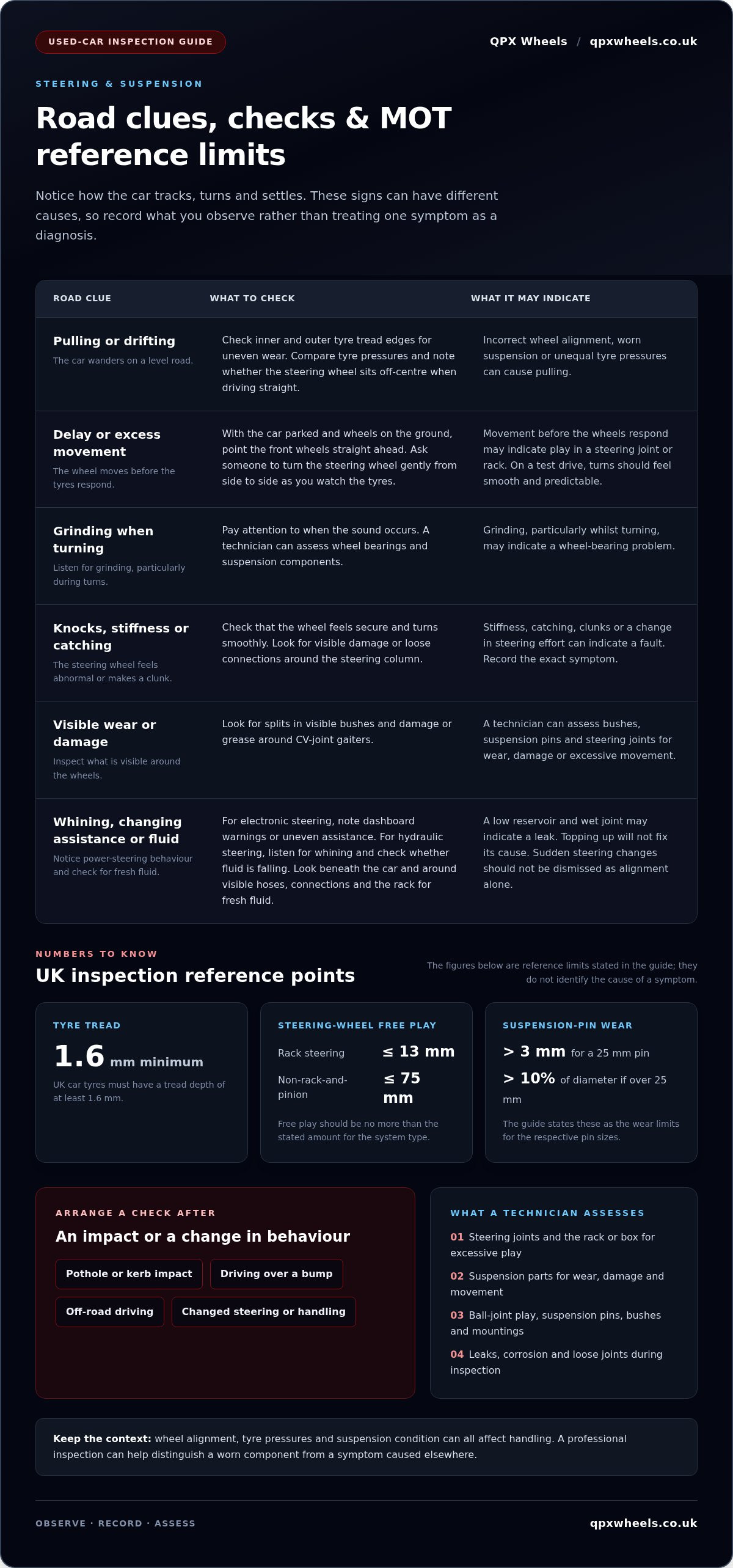
Uneven tyre wear, a car that pulls to one side, knocking noises or difficulty turning are warning signs that call for a steering and suspension check. To understand how to check suspension and steering on a second-hand car, start by noticing how it behaves on the road and looking for visible tyre wear or damage. In UK MOT checks, steering-wheel free play should be no more than 13 mm on rack steering or 75 mm on non-rack-and-pinion systems.
It’s understandable to want reassurance before buying a used car. These signs can have different causes, but spotting them early helps you decide whether the vehicle needs a closer inspection.
This guide explains when to book a check, what warning signs to watch for and how a technician assesses steering and suspension components. You’ll also learn what to look for during a test drive, so you can make a more informed decision about the car.
Key Takeaways
- If the car pulls to one side, check for uneven tyre wear and changes in handling; several different issues can cause these symptoms.
- Arrange a steering and suspension check after an impact with a pothole or kerb, or if the car’s handling changes.
- A technician assesses steering joints and the rack or box, alongside suspension parts such as shock absorbers and bushes.
- Listen for knocking or creaking, and notice whether the car sits unevenly, bounces repeatedly or leans excessively when cornering.
Pulling to one side whilst driving?
A practical starting point for how to check suspension and steering on a second hand car is to notice how it tracks and responds. Check the tyres and visible steering parts, then look for symptoms during a careful test drive.
Wheel alignment and tyre wear
If the car drifts on a level road, wheel alignment may be incorrect; worn suspension or unequal tyre pressures can also cause pulling. Check inner and outer tread edges for uneven wear, and compare pressures before drawing conclusions. According to the Driver and Vehicle Standards Agency, UK car tyres must have a tread depth of at least 1.6 mm. A steering wheel that sits off-centre whilst driving straight is another clue to record.
Checking wheel play
With the car parked and the wheels on the ground, point the front wheels straight ahead. Ask someone to turn the steering wheel gently from side to side while you watch the tyres. Note whether the steering wheel moves before the wheels respond, as this may indicate play in a steering joint or rack. During a test drive, check that turns produce a smooth, predictable response without excessive movement or delay.
Bearings, bushes and CV joints
Listen for grinding, particularly whilst turning, as this may indicate a wheel-bearing problem. Inspect visible bushes for splits and CV-joint gaiters for damage or grease. A technician can assess suspension pins for wear: according to the Driver and Vehicle Standards Agency, the limit is more than 3 mm for a 25 mm diameter pin. For pins over 25 mm, the limit is more than 10 % of the pin diameter.
Steering wheel and column condition
Knowing how to check suspension and steering on a second hand car also means checking the steering wheel and column. The wheel should feel secure and turn smoothly, without catching, stiffness or clunks. Look for visible damage or loose connections around the column. Note if the wheel stays off-centre when the car travels straight, and describe the exact symptom to a technician.
When should I book a Steering and Suspension Check?
Arrange an inspection after hitting a pothole or kerb, driving over a bump or travelling off-road. Changes in steering effort, pulling to one side or handling also warrant attention.
There’s no single repair cost: the total depends on which part has failed, the parts needed, access and labour. Wheel alignment is different from replacing a steering rack or suspension component, so the fault and work required determine the cost.
Handling and power steering fluid
During a test drive, check whether the car turns smoothly and holds its direction on a level road. Compare the steering effort at low speed with its response while moving. Stiffness, noise or pulling can indicate a fault, although wheel alignment and suspension condition can also affect handling. Consult the handbook for the correct power steering fluid and inspection method. New fluid is red, while old fluid is brown.
If the reservoir has a sight glass, check the fluid level through it without removing the cap. Arrange an inspection after a pothole or bump if the steering behaviour changes.
Power steering system faults
Hydraulic and electronic power steering systems can show faults in different ways. With electronic power steering, note any dashboard warning and whether assistance changes or feels uneven. With a hydraulic system, listen for whining as you turn the wheel and check whether the fluid level is falling. Power steering failure can make the wheel harder to turn, so don’t dismiss a sudden change as an alignment issue.
Power steering leaks
Look beneath the car and around visible hoses, connections and the steering rack for fresh fluid. A low reservoir level together with a wet joint may indicate a leak. Topping up won’t fix the cause. In a UK MOT inspection, a power steering fluid leak leads to rejection only if a component, joint or seal has failed. Arrange an assessment if you find fluid or the level keeps dropping.
Technician inspection of steering and suspension components
A UK MOT checks steering joints, the rack or box for excessive play, and suspension components for wear or damage. It also assesses ball-joint play, suspension pins and mountings that may allow excessive movement.
Inspection on lifts or in pits
With the car raised or positioned over a pit, a technician can inspect parts that are difficult to see from ground level. They check for loose joints, damage, leaks, corrosion and movement while assessing the wheels and steering. The inspection method depends on the suspension layout: a lower component that carries the load must be supported; otherwise, the suspension is allowed to hang, as with a MacPherson strut. This helps reveal defects without mistaking normal movement for a fault.
Rubber bushes and bonded mountings
Rubber bushes cushion movement between suspension components and the vehicle body. A technician looks for splits, deterioration, separation from the metal sleeve or movement that allows parts to shift excessively. Suspension-pin wear and deteriorated rubber bushes can be relevant when assessing excessive movement. For a 25 mm diameter pin, the Driver and Vehicle Standards Agency gives a wear limit of more than 3 mm; for pins over 25 mm, it is more than 10 % of the pin diameter.
Benefits of a professional inspection
A professional inspection can distinguish a worn component from a symptom caused elsewhere. For example, excess movement at a bush can affect the suspension’s position, while play at a steering joint can affect the steering response. A technician assesses how the parts work together, identifies the cause of a defect and explains which repairs or replacement parts are needed. This gives you clearer information about the car’s condition before you decide whether to proceed with the purchase or arrange further assessment.
Warning signs of steering or suspension problems
Small changes in how a second-hand car sits, turns or settles can point to worn parts. Look for patterns across the tyres, the car’s stance and its behaviour on the road, rather than judging a single symptom in isolation.
Park on level ground and compare the gap between each tyre and its wheel arch. If one corner sits noticeably lower, a spring may be worn or damaged, although unequal tyre pressures can also cause the car to lean. Check each tyre with a pressure gauge and compare the readings with the vehicle’s recommended pressures. If the car still sits unevenly, note which corner is low for a closer inspection.
During a test drive, notice how the car moves when braking, accelerating and turning. Nosediving under braking, squatting backwards on acceleration or leaning noticeably through a bend may indicate a problem with the struts or shock absorbers. After a bump, watch how quickly the body settles. If it bounces two or three times or more before stabilising, a spring may be weakened or broken.
Listen as well as watch. Creaking may point to worn suspension bushes, while grinding, particularly when turning, may indicate a worn ball joint or a wheel-bearing problem. A clunk over an uneven road can help you pinpoint when the noise occurs: note whether it happens as the wheels cross a bump or as the steering turns. These details help identify which components need assessment.
Inspect all four tyres for inner-edge, outer-edge or patchy tyre wear. Uneven wear may relate to suspension trouble, wheel alignment or incorrect inflation, so check pressures before drawing conclusions. If the steering wheel sits off-centre while the vehicle travels straight, or handling changes alongside unusual noises, record the conditions and arrange an inspection. Review used-car details before deciding if a vehicle’s warning signs leave you uncertain.
QPX Wheels: Used Vans
QPX Wheels can help you move from checking a car’s condition to exploring your next used vehicle. If you’re comparing options after assessing a second-hand car’s steering and suspension, browse the used cars and vans to find a vehicle that suits your needs.
Use the warning signs in this guide as part of your assessment, and consider whether any faults you notice affect your decision. QPX Wheels also offers Hire Purchase (HP) finance to help with vehicle ownership. The right option depends on the vehicle and your circumstances, so weigh up its condition, suitability and finance arrangement together.
To explore used cars or vans, contact QPX Wheels.
Make your next vehicle decision with confidence
Knowing how to check suspension and steering on a second-hand car helps you make your next decision with clearer priorities. If the car’s condition has changed what you’re looking for, write down the features you need and any concerns you want to avoid. This gives you a practical starting point when comparing options.
If you’re considering a different vehicle, browse the used cars and vans at QPX Wheels. If you’re planning to sell your current car, the Vehicle Valuation Service can help you assess its value. Take time to consider suitability and condition alongside your budget.
Contact QPX Wheels to discuss your next vehicle and take the next step when you’re ready.
Frequently Asked Questions
What happens if I drive with steering or suspension issues?
Steering or suspension faults can make a car harder to control and reduce braking efficiency. A fault may also cause tyre wear, increasing the risk of uneven contact with the road. If the car’s response changes during a journey, avoid abrupt manoeuvres and stop somewhere safe. Arrange an assessment before continuing to use a car that feels difficult to control.
How to inspect suspension and steering when viewing a used car in the UK?
To check suspension and steering on a second-hand car, start with it parked on level ground and the front wheels pointing straight ahead. Look for damage beneath the wheel arches, then take a test drive on a familiar, safe route. Accelerate and brake gently, noting any changes in direction, steering effort or noise. Record where each symptom occurs so you can describe it clearly.
How to check for worn shock absorbers, springs and suspension bushes?
Look through each wheel arch for a visibly damaged spring, fluid on a shock absorber or a bush that appears split or detached. Compare the car’s stance from both sides while it’s on level ground. A torch can help you see visible components, but never crawl beneath a car supported only by a jack. Treat a visual check as a first look, not proof that hidden parts are sound.
What noises or warning signs indicate suspension or steering problems?
Clunks over road imperfections, creaks during low-speed manoeuvres and grinding that changes as the car turns can help indicate where a fault occurs. Note whether a sound appears during braking, over a bump or while steering: the timing is useful information. Also record any changes in steering effort or the car’s response. A short written record is more useful than trying to identify a failed part by sound alone.
When should a used-car buyer get a mechanic or pre-purchase inspection?
Arrange an inspection before committing to a purchase if the test drive reveals an unusual steering response, repeated noises or inconsistent handling. An inspection is also sensible after a visible impact or if you can’t explain a tyre wear pattern. A mechanic can examine parts that aren’t accessible during a viewing and explain which findings need attention, helping you make a better-informed decision.
What are the safety risks of driving with faulty suspension or steering?
The main risks are impaired handling and control, reduced braking efficiency and tyre wear. These can make it harder to keep the car stable through a turn or respond smoothly when traffic changes. If the steering becomes unusually difficult or the car behaves unpredictably, stop somewhere safe rather than continuing the journey. A prompt assessment can help establish whether it’s safe to drive further.


