
You might think choosing between a used Audi and a BMW is simply a matter of picking your favourite badge, but the smarter choice often depends on your daily commute and your appetite for maintenance. Most UK buyers we talk to feel a genuine sense of dread when weighing up a used audi vs bmw; they worry about expensive repair bills or getting lost in a sea of confusing engine codes and trim levels. It is a significant decision, especially when the average used car price in the UK has reached £17,018 and standard road tax now sits at £200 per year for most post-2017 models.
Our goal is to give you total peace of mind by showing you exactly how these two giants compare in 2026. You will discover which brand truly suits your lifestyle, whether you value the all-weather stability of Audi's Quattro system or the driver-focused engagement of a BMW. We provide a clear roadmap for a safe purchase, comparing everything from the latest iDrive software to long-term reliability and ownership costs. By the time you finish reading, you'll have the confidence to choose a premium vehicle that fits your budget without any nasty surprises.
Key Takeaways
- Decide between Audi's Quattro all-weather stability and BMW's signature rear-wheel-drive engagement to match your local driving conditions and style.
- Contrast Audi’s minimalist Virtual Cockpit with BMW’s tactile iDrive system to find the technology that feels most intuitive for your daily commute.
- Compare the long-term reliability and maintenance expectations of a used audi vs bmw to ensure your choice remains a sound investment over the years.
- Get a clear breakdown of real-world fuel economy and road tax implications for the most popular UK engine variants and trim levels.
- Discover how to secure a high-quality vehicle through a professional 39-point inspection, giving you the confidence of a main dealer without the premium price tag.
Used Audi vs BMW: Understanding the Premium Landscape in 2026
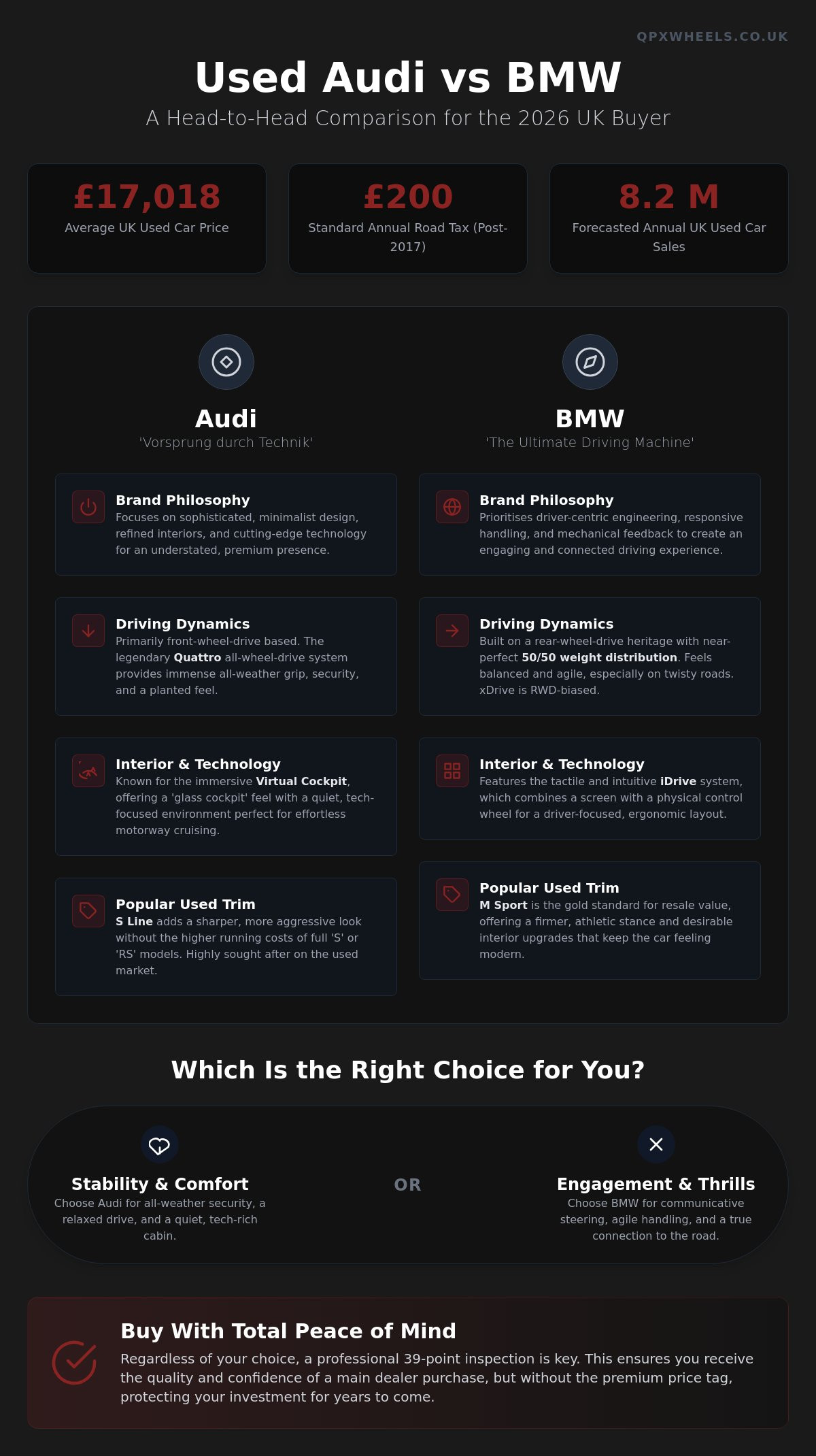
Audi and BMW are more than just car manufacturers; they are symbols of status and engineering excellence that dominate British motorways. In 2026, the UK used car market is thriving, with forecasted sales reaching 8.2 million units. This high volume means that luxury icons, which once cost a small fortune, are now far more accessible to the average buyer. Depreciation is your best friend here. While a brand-new model might carry a hefty price tag, a well-maintained three or four-year-old vehicle offers the same prestige for a fraction of the cost. Choosing between a used audi vs bmw often comes down to how you want to feel behind the wheel, rather than just what you can afford.
Audi prides itself on 'Vorsprung durch Technik', focusing on minimalist design, refined interiors, and cutting-edge lighting technology. It is the choice for those who want a sophisticated, understated presence on the road. On the other hand, BMW's history and brand is built on the promise of being the 'Ultimate Driving Machine'. Their philosophy prioritises driver-centric engineering and mechanical feedback. Both brands hold their value well, particularly in popular trims, but they cater to very different personalities and driving needs.
Audi: The Master of All-Weather Sophistication
Audi's Quattro all-wheel-drive system is a major draw for UK buyers, especially during our unpredictable, wet winters. It provides a level of grip and security that many front-wheel-drive competitors struggle to match. Used buyers often hunt for the 'S Line' trim because it adds a sharper, more aggressive look without the punishing running costs of a full 'S' or 'RS' model. It is a perfect match for the tech-savvy professional who values a quiet, 'glass cockpit' environment and effortless motorway cruising. This understated luxury ensures you arrive at your destination feeling relaxed and refreshed, regardless of the weather outside.
BMW: Engineering for the Enthusiast
If you enjoy the act of driving, BMW's legacy of rear-wheel drive and near-perfect 50/50 weight distribution is hard to ignore. This setup offers a level of balance and steering feedback that feels alive on a twisty B-road. In the pre-owned market, 'M Sport' models are the gold standard for resale value. They offer a firmer, more athletic stance and interior upgrades that keep the car feeling modern long after the initial purchase. BMW attracts those who want to feel connected to the tarmac, prioritising engagement over pure isolation. Deciding on a used audi vs bmw involves looking past the badge to see how the previous owner maintained these high-performance machines.
Driving Dynamics: Quattro Stability vs Rear-Wheel Drive Thrills
The core difference between a used audi vs bmw lies in how the power reaches the road. Most Audi models, such as the A3 or A4, are built on a front-wheel-drive foundation, which provides a safe, predictable feel for everyday driving. BMW, however, remains committed to a rear-wheel-drive heritage. This setup pushes the car from behind, allowing the front wheels to focus entirely on steering. When comparing the driving dynamics of the A4 and 3 Series, you will notice that the BMW feels more eager to turn into corners, whilst the Audi feels more planted and stable.
British weather is notoriously unpredictable, making all-wheel-drive systems a popular choice on the used market. Audi’s Quattro system is legendary for its mechanical grip, providing immense confidence during wet autumn commutes or on greasy B-roads. BMW’s xDrive system is equally capable but operates differently; it maintains a rear-wheel bias to preserve that sporty feel, only sending power to the front when it detects a loss of traction. Both systems are excellent, but Quattro often feels more "always-on," which is reassuring for drivers who prioritises security over tail-end playfulness.
Steering and ride quality also divide these two giants. Audi typically uses a lighter, more effortless steering rack that makes city parking and motorway cruising a breeze. BMW steering is traditionally heavier and more communicative, letting you feel exactly what the front tyres are doing. If you are looking at used models with larger alloy wheels, be mindful of the suspension. Audi’s S Line and BMW’s M Sport trims both feature firmer setups. However, many used BMWs come with run-flat tyres, which can make the ride feel slightly "crashy" over UK potholes. Choosing a used car that has been properly vetted for suspension wear is vital for maintaining that premium feel.
Real-World Performance: Engines and Gearboxes
In the used market, Audi’s S-Tronic (DSG) dual-clutch gearbox offers lightning-fast shifts that are perfect for spirited driving. Conversely, the ZF 8-speed automatic found in most BMWs is widely considered the gold standard for smoothness, especially in heavy traffic. For high-mileage commuters, the Audi 2.0 TDI and BMW 2.0d engines both offer exceptional fuel economy. If you prefer petrol, the Audi TFSI and BMW B48 engines are the current favourites, offering a great balance of punchy performance and modern efficiency without the complexity of older powerplants.
Handling in UK Conditions
Confidence is key when driving in the UK. Audi's Quattro provides a safety net that makes even the most treacherous winter morning feel manageable. On a dry summer evening, however, the "fun factor" of a BMW 3 Series is hard to beat. The balance provided by its 50/50 weight distribution makes it a joy to drive on winding country lanes. Just remember that your choice of tyres will significantly impact these traits; switching from run-flats to standard tyres on a BMW can often transform a stiff ride into something far more supple and forgiving.
Interior Quality and Technology: Virtual Cockpit vs iDrive
Stepping inside a premium German car should feel like an event. When comparing a used audi vs bmw, you are choosing between two distinct philosophies of cabin design. Audi is the master of the "glass cockpit," offering a minimalist, horizontal layout that feels incredibly spacious and modern. Every button click feels engineered to a high standard, and the integration of materials like brushed aluminium and soft-touch plastics is seamless. BMW takes a different approach by angling the dashboard towards the driver. This creates a cockpit-like feel that reinforces the brand's focus on the person behind the wheel. Both brands use high-quality materials, but after 60,000 miles of use, BMW interiors often show slightly less wear on high-traffic areas like seat bolsters and steering wheel leather.
Technology is often the deciding factor for modern buyers. Audi’s Virtual Cockpit remains the industry benchmark for digital instrument clusters. By 2026, the "Virtual Cockpit Plus" with its 12.3-inch HD display has become standard on many models, offering crystal-clear navigation maps directly in your line of sight. BMW’s iDrive system counters this with a focus on usability. Whilst newer models have moved towards touchscreens and Operating System 9, many used BMWs retain the physical rotary controller. This dial is often safer and more intuitive to use whilst driving than poking at a screen. It allows you to navigate menus by feel, keeping your eyes on the road ahead.
Living with the Tech: Infotainment and Connectivity
Connectivity is essential for the modern commute. Most used models from both brands now support Apple CarPlay and Android Auto, but you should check if a "Tech Pack" was originally fitted on older vehicles. Audi is known for its crisp Bang & Olufsen sound systems, which offer a bright, clinical audio profile. BMW often features Harman Kardon setups that provide a warmer, bass-heavy experience favoured by many. When viewing a car, always check for "dead pixels" on the screens or slow software response times, as these can be expensive to rectify outside of a warranty.
Practicality and Space
If you have a growing family, small differences in dimensions matter. In the battle of the estates, the Audi A4 Avant often feels slightly more "squared-off" and easier to pack than the BMW 3 Series Touring. Rear passenger legroom is comparable in both, though the Audi’s flatter floor makes it slightly more comfortable for a middle-seat passenger. Look out for clever touches that make daily life easier, such as BMW’s separate opening rear glass on the Touring models or Audi’s beautifully integrated storage bins and cup holders. These small details often determine which car fits your lifestyle best.
Used Reliability and Running Costs: What to Expect
Buying a premium German car doesn't have to lead to financial ruin, but it does require a shift in how you view maintenance. When researching a used audi vs bmw, you'll find that both brands demand strict adherence to servicing schedules. A Full Service History (FSH) isn't just a "nice to have"; it is your proof that the previous owner didn't cut corners. On average, an Audi A4 is estimated to cost around £49,850 over five years of ownership, whilst a BMW 3 Series sits slightly higher at £52,200. This difference often comes down to Audi's ability to share components with the wider Volkswagen Group, which can keep parts prices more competitive for common repairs.
Running costs extend beyond the garage. You should budget for the standard £200 annual Vehicle Excise Duty (VED), though be wary of the "Expensive Car Supplement." If your chosen car had an original list price over £40,000, you will pay an extra £440 per year for the first five years. Insurance is another factor where the brands diverge. BMWs often sit in higher insurance groups, particularly for younger drivers, due to their performance-oriented image and rear-wheel-drive setup. Real-world fuel economy remains impressive for both, with 2.0-litre diesel variants from 2021 onwards easily achieving 50 to 60 MPG on a steady motorway run.
Common Mechanical Watchpoints
Audi owners should pay close attention to timing chain tensioners on older TFSI petrol engines and ensure the S-Tronic (DSG) gearbox has had its vital oil change every 38,000 miles. For BMW, the cooling system is a known weak point; plastic housings can become brittle over time, leading to leaks. Always listen for "knocking" sounds over speed bumps during a test drive. These usually signal that suspension bushes or control arms are reaching the end of their life, which can be an expensive fix if several need replacing at once.
Long-Term Ownership Reality
You can often halve your servicing costs by using a reputable independent specialist instead of a main dealer. These experts have the same diagnostic tools but much lower hourly rates. However, the best way to avoid "money pit" anxiety is to choose a vehicle that has already been through a rigorous vetting process. Every car we sell includes a 39-point inspection and a three-month warranty to protect you from immediate repair risks. If you are ready to find a reliable premium car, you can browse our current stock of used cars today. Resale values for both brands remain strong, particularly for M Sport and S Line models, ensuring you get a fair price when it's time to trade in.
Making the Final Choice: How to Buy with Confidence
Deciding on a used audi vs bmw ultimately comes down to your personal "must-haves." If you crave mechanical engagement and steering feedback, the BMW is your winner. If you prefer a tech-heavy, minimalist cabin that feels like a sanctuary, the Audi is likely the better fit. Once you've picked your side, the focus shifts to ensuring the specific vehicle you've found is actually a sound investment rather than a looming repair bill. With the average used car price in the UK sitting at £17,018, taking a methodical approach to your purchase is the best way to protect your hard-earned money.
Financing a premium vehicle is a popular route for many UK buyers. Hire Purchase (HP) finance allows you to spread the cost over several years, eventually leading to full ownership. With competitive HP rates often sitting around 10.9% for those with good credit, it's a manageable way to step into the luxury market without a massive upfront outlay. Our team has 16 years of industry experience helping drivers find the right balance between a monthly budget and their dream car specification.
The QPX Wheels Difference
We understand the anxiety that comes with buying a pre-owned luxury car. That is why we act as a bridge between the risks of private sales and the high prices of main dealers. We focus on transparency and professional care at every stage of the journey.
- 39-point vehicle inspection: Every car undergoes a rigorous check that goes far beyond a standard MOT. We look at mechanical integrity, fluid levels, and electronic health to ensure the car meets our high standards.
- Free three-month warranty: We provide this as standard to give you immediate peace of mind and protection against "money pit" anxieties.
- Transparent valuations: Our vehicle valuation service ensures you get a fair and honest price for your part-exchange, making the transition to your next car seamless.
Your Pre-Purchase Checklist
Before you sign on the dotted line, follow these essential steps to ensure you are buying a quality vehicle:
- Step 1: Verify the V5C and HPI status to confirm the car's history and ensure there is no outstanding finance or hidden damage.
- Step 2: Inspect the interior for excessive wear that doesn't match the mileage. Check the seat bolsters and steering wheel for signs of heavy use.
- Step 3: Test every button. From the air conditioning to the electric windows and the Virtual Cockpit or iDrive software, everything should operate smoothly.
- Step 4: Finalise your purchase. Whether you prefer nationwide delivery to your doorstep or visiting our centre in person, we make the final steps simple and stress-free.
Choosing between these two German giants is an exciting milestone. By prioritising reliability and professional vetting, you can enjoy the prestige of a luxury brand with the confidence that your new car is ready for the road ahead.
Ready to Drive Your Next Premium Car?
Deciding the winner in the used audi vs bmw debate depends entirely on your priorities as a driver. If you value the all-weather security of Quattro and the sleek, modern design of the Virtual Cockpit, an Audi is a fantastic companion for British roads. On the other hand, if you want a car that feels alive in your hands with signature rear-wheel-drive balance, a BMW remains the enthusiast's choice. Both brands offer exceptional luxury and performance, provided you choose a vehicle with a verified history and a clean bill of mechanical health.
We are here to make that choice easier and safer for you. Every vehicle in our collection passes a rigorous 39-point inspection to ensure its integrity before it reaches your driveway. We also include a free 3-month warranty for total peace of mind, with nationwide delivery available across the UK. You don't have to navigate the complexities of the used market alone.
Explore our latest range of inspected used Audi and BMW models at QPX Wheels and find the perfect match for your lifestyle today. We look forward to helping you get behind the wheel of a car you can truly trust.
Frequently Asked Questions
Is a used Audi more reliable than a used BMW?
Reliability is largely a tie in 2026, though Audi often has a slight edge on repair costs. Because Audi shares many mechanical components with Volkswagen and Skoda, finding affordable replacement parts is often easier. BMW has made great strides with its B-series engines, which are proving very robust. Ultimately, the reliability of a used audi vs bmw depends more on how the previous owner treated the car than the badge itself.
Which is cheaper to service, an Audi or a BMW?
Audi is typically the more cost-effective choice for routine maintenance and servicing. This is because many of its filters, brake pads, and sensors are common across the wider Volkswagen Group, keeping prices lower at independent garages. BMW uses more bespoke parts for its rear-wheel-drive platforms, which can lead to higher bills. Choosing an independent specialist over a main dealer is the best way to keep costs down for both brands.
Does BMW xDrive perform as well as Audi Quattro in the snow?
Both systems provide exceptional grip, but they deliver power differently. Audi's Quattro is a permanent system that feels incredibly stable and "locked-in" on slippery surfaces. BMW's xDrive remains rear-biased to keep the car feeling sporty, only sending power to the front wheels when it detects a slip. In deep snow, both will perform brilliantly, provided you have fitted a set of high-quality winter or all-season tyres.
What should I look for in the service history of a used German car?
You should prioritise a Full Service History (FSH) that shows consistent maintenance at the correct intervals. Look specifically for evidence of major tasks, such as DSG gearbox oil changes every 38,000 miles for Audis or cooling system checks for BMWs. A gap in the history is a red flag, as these high-performance engines don't respond well to neglected oil changes or old coolant. Always check for receipts alongside the stamps.
Are high-mileage used Audis and BMWs worth buying?
High-mileage models can be excellent value if they have been used primarily for motorway cruising. Modern German engines are designed to last well beyond 100,000 miles if they have been serviced correctly. When looking at a used audi vs bmw with higher mileage, focus on the condition of the suspension and the interior wear. A car with 80,000 motorway miles often has less wear than one with 30,000 miles of stop-start city driving.
Which brand has better infotainment, Audi or BMW?
Audi wins on visual appeal, whilst BMW leads on ease of use whilst driving. Audi's Virtual Cockpit is a stunning piece of technology that puts everything you need right in front of your eyes. However, BMW's iDrive system, with its physical rotary controller, is much less distracting to operate on the move. Your choice depends on whether you prefer a sleek, all-digital touchscreen experience or tactile, physical controls that you can navigate by feel.
What is the benefit of a 39-point inspection for a used car?
A 39-point inspection offers a level of professional vetting that a standard MOT simply cannot match. Whilst an MOT only checks basic roadworthiness, our inspection dives deeper into the mechanical and electrical health of the vehicle. We check fluid quality, diagnostic fault codes, and wear levels on components like bushes and bearings. This process ensures that you are buying a car that is ready for the long term, providing immediate peace of mind.
Can I get finance on a used luxury car at QPX Wheels?
Yes, we provide Hire Purchase (HP) finance options for our entire range of used vehicles. This allows you to spread the cost of your luxury car over a fixed term that suits your monthly budget. Our team can guide you through the application process and help you understand the total cost of ownership. We aim to make the financial side of your purchase as transparent and stress-free as possible, avoiding any hidden fees.


