
A fault appearing after 30 days doesn’t automatically end your rights. What constitutes a major fault in a recently bought used car depends on whether it fails to meet the standards of satisfactory quality, fitness for purpose or description. Under the Consumer Rights Act 2015, according to The National Archives, a qualifying fault can give you the right to reject the car for a full refund during the first 30 days after purchase. After that, the seller has one opportunity to repair it; for a fault found within six months, the seller must prove it wasn’t present when the car was sold.
It’s understandable to feel unsure when a problem appears soon after buying a car, especially when the cause isn’t clear. How serious the fault is matters, but so do the car’s age, mileage and condition, as well as what you were told before purchase.
This guide explains what may count as a major fault, how your rights change after 30 days and six months, and how to record the problem and report it to the dealer clearly.
Key Takeaways
- Separate a potentially serious fault from expected wear by considering the car’s age, mileage, condition and what the dealer disclosed.
- Understand how your options can change after the first 30 days, including the dealer’s opportunity to repair the car.
- Keep a clear record of symptoms, dates and mileage so you can explain the issue and support your account.
- Learn how QPX Wheels’ used cars and vans may help when you’re considering another vehicle.
What Happens If a Fault Appears After 30 Days?
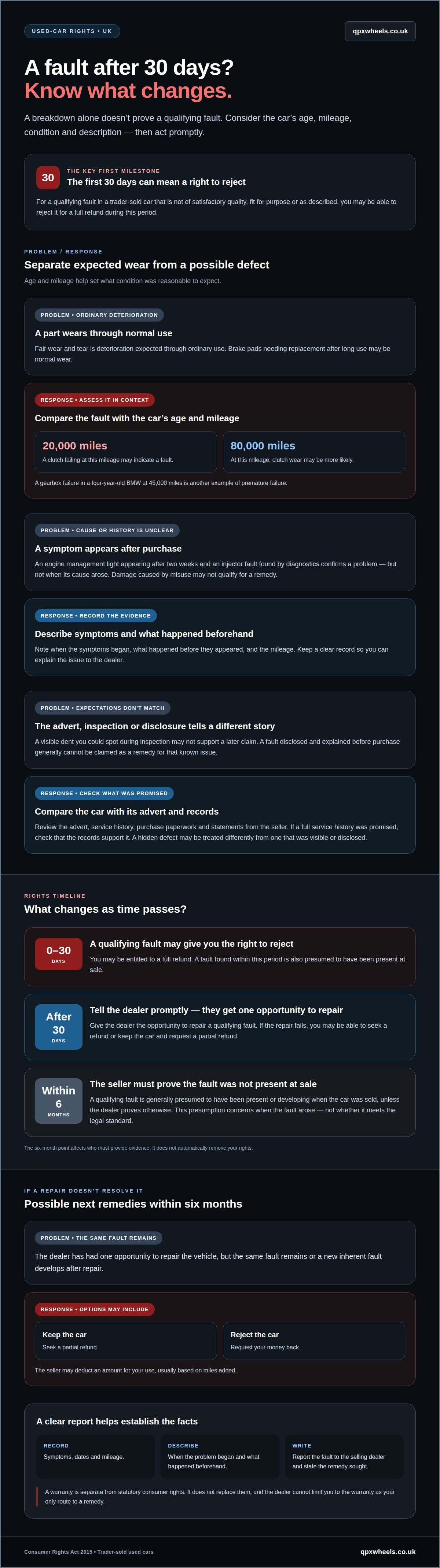
After the first 30 days, the dealer has one opportunity to repair a qualifying fault. The difference between a major fault and normal wear depends on the car’s age, mileage, condition and purchase description.
Wear, disclosed faults and major defects
Fair wear and tear is deterioration expected through ordinary use, while a major defect seriously affects the car’s condition or performance. Brake pads needing replacement after long use may be normal wear, but a clutch failing at 20,000 miles may indicate a fault; at 80,000 miles, wear may be more likely. A gearbox failure in a four-year-old BMW at 45,000 miles is another example of premature failure. If the dealer disclosed a fault and explained its meaning before purchase, you generally can’t claim a remedy for that known issue. The distinction matters because age and mileage help show what condition was reasonable to expect.
Faults arising after purchase
A fault you cause after purchase is different from a defect that was already present or developing when the car was sold. Damage caused by misuse, for example, may not qualify for a remedy. If an engine management light appears after two weeks and diagnostics identify an injector fault, that confirms a problem, but not when its cause arose. Describe the symptoms clearly and note what happened before they appeared.
Before buying, compare the advert and service history with the car’s condition. A dent you could see during inspection may not support a later claim, while a hidden defect may be treated differently. If the advert promises a full service history, check that the records support that description.
For a fault arising after 30 days, tell the dealer promptly and give them the opportunity to repair it. If the repair fails, you may be able to seek a refund or keep the car and request a partial refund. Buyers using hire purchase or a credit card also have Consumer Credit Act protections. With PCP finance, retain your agreement and report the fault to the selling dealer in writing.
What are Consumers Legal Rights When Buying a Used Car in the UK?
For a used car bought from a trader, the Consumer Rights Act 2015 sets standards. The seller’s obligations depend on the car’s condition, description and intended use.
Dealer sales and statutory protections
The Consumer Rights Act 2015 sets standards for vehicles sold by traders in the UK, according to The National Archives (legislation.gov.uk). According to The National Archives (legislation.gov.uk), the Act allows a buyer to reject a car if it isn’t of satisfactory quality, fit for purpose or as described. During the first 30 days, a qualifying fault may give the buyer the right to reject the dealer-sold car for a full refund. These standards matter because buying from a trader gives a consumer protections that don’t apply to every sale.
Assess quality in context: a ten-year-old car with 100,000 miles isn’t expected to perform like a two-year-old car with 20,000 miles. A car advertised with a full service history but missing three years of stamps may not match its description. The advert, purchase paperwork and any statements from the seller can help establish what you were promised.
Warranties and statutory rights
A warranty is separate from your statutory consumer rights and does not replace them. If a qualifying fault appears, the dealer cannot limit you to the warranty as your only route to a remedy. Read the warranty terms to understand their coverage, then describe the fault to the seller in writing and state what remedy you’re seeking under your consumer rights.
Extended warranty options may provide additional cover, but they don’t remove statutory protections.
Some problems do not give you a right to reject the car or obtain a remedy. These can include fair wear and tear, a defect clearly disclosed and explained before purchase, damage you caused, or an issue you should have spotted during inspection, such as a dent. Changing your mind about a car that is otherwise as expected is not, by itself, a reason to reject it under the Act.
The Consumer Rights Act protections described here do not apply to cars bought from private sellers or at auction, according to The National Archives (legislation.gov.uk). A private seller is not selling as a trader, so the standards for dealer sales do not apply in the same way. Check who sold the car and keep the advert and receipt, which can help clarify the nature of the transaction.
Do Your Rights Change After Six Months?
The six-month point affects who must provide evidence about a qualifying fault. It does not automatically remove your rights, and a breakdown alone does not prove that a fault qualifies.
The six-month fault presumption
A qualifying fault found within six months of purchase is generally presumed to have been present or developing when the car was sold, unless the dealer proves otherwise. This initially puts the burden of evidence on the seller. For example, if an engine problem emerges during that period, the dealer must show that it arose later, rather than relying only on the fact that it appeared after handover. This presumption concerns when the fault arose, not whether it meets the legal standard.
Within 30 days, a fault is also presumed to have been present at sale. That shorter period sits within the six-month window.
Repair or replacement within six months
Within six months, you can request a repair or replacement for a qualifying fault. Report the problem promptly in writing, describe the symptoms and when they began, and state the remedy sought. After the first 30 days, the dealer has one opportunity to repair the vehicle. If the same fault remains or a new inherent fault develops after repair, you may seek a partial refund while keeping the car, or reject it and request your money back. The seller may deduct an amount for your use, usually based on miles added.
Faults found after six months
After six months, the presumption no longer applies. Generally, you must prove the fault existed when the car was sold. A diagnostic report, service records, repair findings or an independent inspection can help link later symptoms to an earlier defect. A fault that appears after this point is not automatically excluded, but evidence must establish its origin and show that it breached the standards reasonably expected for that vehicle. Keep invoices and dated messages, and explain why ordinary ageing or later damage does not account for the problem.
Recording faults and notifying the dealer
A clear record helps explain the problem and supports your consumer rights. After the first 30 days, the dealer has one opportunity to repair a qualifying fault, so report it promptly and keep each response.
For an intermittent fault, record the date, time and mileage each time it occurs. Note what the car was doing, any warning lights, noises or changes in performance, and whether the problem stopped by itself. For example, record whether the engine warning light came on during a journey and whether it stayed on after you restarted the car.
- Photograph dashboard warnings and visible damage, including the date where possible.
- Keep the advert, purchase documents, service history and messages with the dealer together.
- Save diagnostic results, inspection reports and repair paperwork as evidence.
Write to the dealer with a concise account of when you bought the car, when the fault began, how it affects the vehicle and what remedy you’re requesting. Include the relevant mileage and attach copies, not originals, of your evidence. Keep the message factual. Explain why the problem may mean the car was not of satisfactory quality, rather than relying only on the phrase “major fault”.
If the dealer disputes the fault, ask for its position and repair findings in writing. An independent inspection report can provide evidence about the car’s condition and the likely cause. Keep the report and diagnostic results, then compare them with the dealer’s explanation. If the dispute remains unresolved, businesses must provide consumers with details of an alternative dispute resolution service.
Give the dealer a reasonable chance to respond and arrange its repair opportunity after the first 30 days. Don’t authorise another repair before agreeing how the dealer will assess the fault, as this may complicate evidence about its cause. Keep a dated log of calls, messages, inspection findings and proposed repairs. A timeline helps show how the problem developed and what action followed.
QPX Wheels: Used Vans
QPX Wheels offers used vans and used cars for drivers considering another vehicle after resolving a dispute about their current car. If your needs have changed, comparing vehicle types and intended use can help narrow your search. QPX Wheels also offers a Vehicle Valuation Service and Hire Purchase (HP) Finance, which may be relevant when reviewing your next purchase and how to fund it. These options are separate from a dealer’s responsibility to address a qualifying fault, so keep any complaint about your current car on its own track. Take time to consider what you need from your next vehicle and the finance arrangement that suits your circumstances. Contact QPX Wheels to discuss your vehicle options.
Choose your next step with clarity
Understanding what constitutes a major fault in a recently bought used car can help you make a considered decision instead of feeling rushed. Keep your records organised and decide what outcome you’re seeking before your next conversation with the dealer. A calm, clear account of the issue gives you a practical starting point.
If you’re considering a different vehicle, QPX Wheels sells used cars and vans and offers a Vehicle Valuation Service. These options may be useful if your plans have changed after dealing with a fault. Consider which vehicle type suits your needs and what information you want to have ready before deciding.
Contact QPX Wheels for help exploring your next step. You can move forward at your own pace, with a clearer sense of what matters to you.
Frequently Asked Questions
How Can You Reduce the Risk of Problems Before Buying?
Before agreeing to buy, compare the car’s advert, service records and physical condition. Check that claims such as service history match the documents, and note any disclosed damage or faults in writing. During an inspection, look carefully for visible issues such as dents, and write down any questions for the seller. Keeping the advert and purchase paperwork gives you a clear reference if details later differ.
Must the Car Be Fit for Purpose?
A car sold by a dealer must be fit for a purpose you made clear to the seller, as well as meet other consumer standards. For example, if you explained that you needed the car for a particular use, keep any written messages describing that requirement. If the vehicle cannot meet the purpose discussed, those messages can help show what you relied on when deciding to buy.
Must the Car Be as Described?
Yes. A car sold by a trader should match important claims made in its advert or during the sales discussion. Compare the wording with the vehicle and its records, including statements about service history, condition or features. If a description seems inaccurate, save a copy of the advert and identify the specific difference. This helps distinguish a genuine mismatch from a later change of preference.
Must the Car Be of Satisfactory Quality?
Understanding what constitutes a major fault in a recently bought used car starts with assessing the vehicle in context, not comparing it with a new car. Its age, mileage, price and description shape reasonable expectations. For example, an older, high-mileage car is not expected to match a newer, low-mileage model. When explaining your concerns, note how the problem affects the car’s use, reliability or condition.
What Actually Counts as a "Fault" When Rejecting a Car?
To assess what constitutes a major fault in a recently bought used car, consider whether the issue means the vehicle fails a consumer standard. Not every inconvenience or sign of use justifies rejection. A mechanical problem may affect quality, while inaccurate sales information may mean the car was not as described. Keep the advert and purchase documents together, and explain the specific issue behind your decision.
What Does the Consumer Rights Act 2015 Mean for Used Car Buyers?
The Consumer Rights Act 2015 sets standards for cars sold by traders and allows rejection when a vehicle isn’t of satisfactory quality, fit for purpose or as described, according to The National Archives (legislation.gov.uk). A qualifying fault may give you the right to reject a dealer-sold car for a full refund during the first 30 days. The protections described don’t apply to private or auction purchases.


