
Have you ever wondered why a simple "car park scuff" on a modern bumper can suddenly result in a repair bill exceeding £500? It's a common frustration for drivers across the country who value their vehicle's pristine condition. You likely agree that parking technology should provide peace of mind, not add to your repair list. Finding reliable used cars with parking sensors UK wide shouldn't feel like a gamble on whether the equipment actually works or if it's an aftermarket modification that might complicate your insurance.
We promise to help you approach this market with confidence. You'll discover how to identify high-quality integrated systems, verify their reliability during a test drive, and secure a vehicle backed by a warranty that covers these essential electrical components. This guide breaks down the differences between basic audible beepers and advanced 360-degree cameras, whilst looking at how flexible finance options can help you afford a higher-spec model that protects your car's future resale value. Our goal is to ensure you drive away with a car that makes every tight manoeuvre feel effortless and safe.
Key Takeaways
- Learn why parking sensors are now essential for maintaining your car's resale value and reducing insurance claims in the UK.
- Understand the technical differences between ultrasonic and electromagnetic systems to choose the technology that best suits your driving habits.
- Discover how to identify high-quality used cars with parking sensors UK wide whilst avoiding the common pitfalls of unreliable aftermarket installations.
- Master a simple physical inspection checklist to verify sensor functionality and detect hidden dead zones before you commit to a purchase.
- Explore how nationwide delivery and flexible finance options make it easier to secure a professionally inspected vehicle with the latest safety technology.
The Essential Role of Parking Sensors in the UK Used Car Market
In the past, proximity alerts were a luxury feature reserved for high-end executive saloons. This has changed rapidly. Today, used cars with parking sensors UK wide are sought after because they address the practical realities of our narrow streets and compact parking bays. These sensors have transitioned into essential safety equipment that many buyers now consider a non-negotiable requirement. When searching for reliable used cars with parking sensors UK motorists should prioritise systems that offer clear, consistent feedback to ensure maximum safety.
The primary benefit is the significant reduction in low-speed insurance claims. Minor bumps while reversing account for a large portion of UK accidents. By providing audible or visual warnings, these systems help drivers avoid the "car park scuffs" that lead to expensive bodywork repairs. Beyond the financial aspect, there is a clear psychological advantage. Sensors alleviate the anxiety often felt when navigating tight multi-storey car parks or reversing into a busy high street space, making the driving experience far more composed and confident.
Rear vs Front Sensors: Determining Your Requirements
While rear sensors are the industry standard for eliminating blind spots, front-mounted sensors offer specific benefits depending on the vehicle type. If you are looking at long-bonneted SUVs or luxury saloons, front sensors help judge the distance to a wall or another vehicle's bumper where visibility is limited. For larger family vehicles, a 360-degree 'birds-eye' view system provides a complete digital reconstruction of the car's surroundings. This level of technology is particularly useful for those who frequently park in older, narrower urban environments where every centimetre counts.
Impact on Insurance and Valuation
Choosing a car with integrated technology can have a positive effect on your long-term ownership costs. Many UK insurers recognise Advanced Driver Assistance Systems (ADAS) as a factor in reducing risk, which can sometimes influence premium calculations for certain vehicle groups. From a valuation perspective, vehicles with factory-fitted sensors generally command a higher price during part-exchange. Dealerships prefer these models because they are easier to sell and typically show fewer signs of cosmetic damage. The "invisible" cost of ownership is often lower too; avoiding just one minor paintwork repair can save you hundreds of pounds over the life of the vehicle.
Understanding Sensor Technology: Ultrasonic vs Electromagnetic
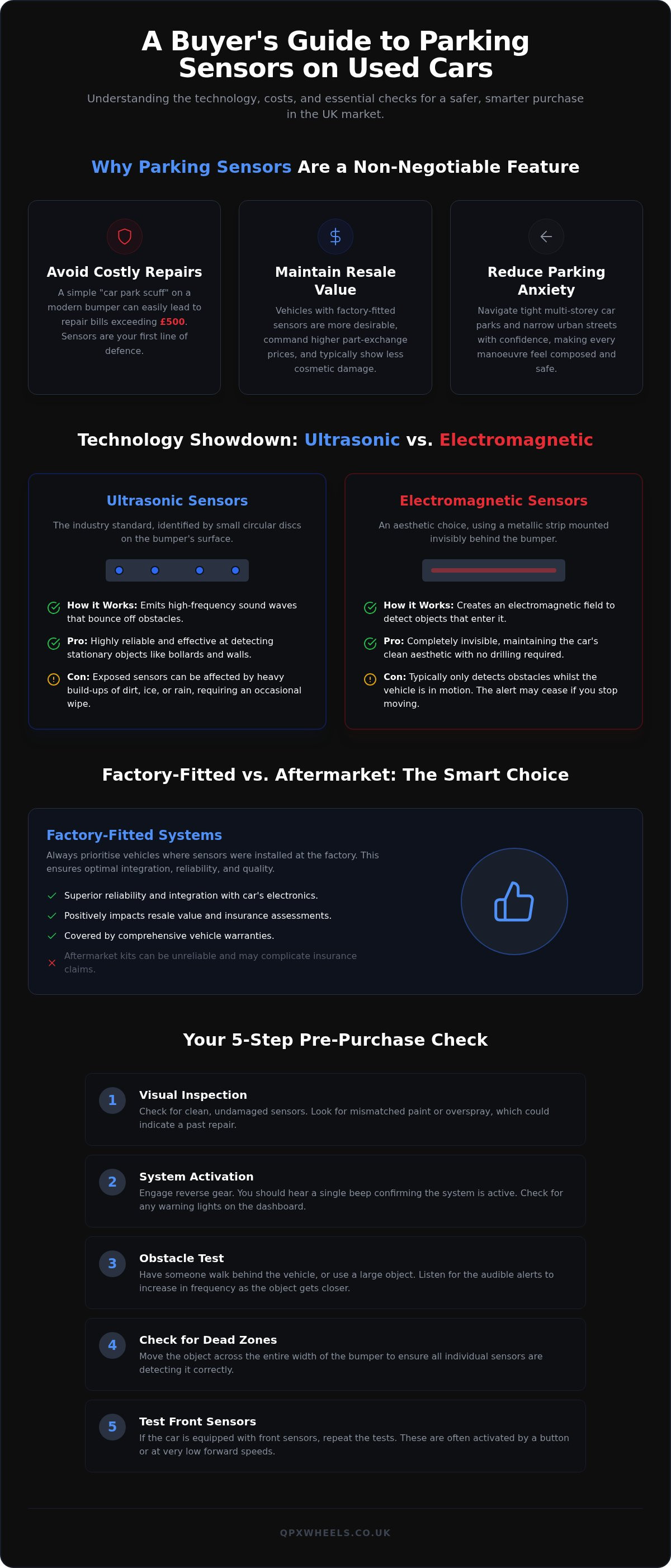
Parking sensors function by emitting either high-frequency sound waves or creating an electromagnetic field around the vehicle. This technology identifies obstacles whilst you manoeuvre into tight spaces. When browsing for used cars with parking sensors UK wide, you'll mostly encounter ultrasonic systems. They've become the dominant choice for major manufacturers because of their consistent performance in various weather conditions and their ability to detect objects even when the car is stationary.
Electromagnetic sensors offer a different approach. These use a flexible metallic strip mounted behind the bumper, creating an elliptical electromagnetic field. Since they sit inside the plastic, they require no drilling and remain completely invisible. This technology is often favoured by owners who want to maintain a clean aesthetic. Keep in mind that these systems typically only detect obstacles when the vehicle is in motion. If you stop moving, the alert may cease. This is a vital detail to understand when comparing used cars with parking sensors UK buyers might find on the market.
Ultrasonic Sensors: The Industry Standard
You can identify these by the small, circular "pills" integrated into the bumper's surface. They function by sending out high-frequency sound pulses that bounce off objects and return to the sensor. The car's computer then calculates the distance based on the time the signal takes to return. These systems are incredibly effective at detecting solid objects like bollards, walls, and other vehicles. However, they do have minor limitations. Because the sensors are exposed to the elements, they are sensitive to build-ups of road grime, ice, or heavy rain. A quick wipe with a soft cloth usually resolves any "ghost" alerts caused by dirt.
Visual vs Acoustic Feedback Systems
The most common interface is the acoustic "beeper." These systems increase the frequency of the tone as you get closer to an object, eventually turning into a continuous sound when you're roughly 30cm away. Many modern vehicles now supplement this with visual feedback. This might involve simple LED bars or detailed graphics on the infotainment screen that highlight specific zones around the car. The most effective setup combines these sensors with a reversing camera, providing a "belt and braces" approach to safety. This synergy ensures you have both a visual reference and a technical warning. If you're looking for a specific tech setup, browsing professionally inspected used cars allows you to test these different feedback styles to see which one feels most intuitive for your driving style.
Factory-Fitted vs Aftermarket Sensors: Making the Right Choice
When you begin your search for used cars with parking sensors UK wide, you'll quickly notice a distinction between factory-fitted systems and aftermarket additions. A factory-fitted system is engineered into the vehicle's architecture from day one. These sensors communicate directly with the car's Electronic Control Unit (ECU), which allows for seamless functionality. For instance, selecting reverse gear will automatically trigger the sensors, often accompanied by a temporary reduction in the radio volume so you can hear the alerts clearly. In many modern models, these systems also project a visual map of the car's surroundings onto the dashboard display.
Aftermarket sensors are a popular choice for older vehicles or base-trim models that originally lacked this technology. Whilst they provide the same basic safety benefit, the aesthetic and functional integration can vary significantly. Factory sensors are typically flush-mounted and colour-coded to the bumper, making them almost invisible. In contrast, some aftermarket kits use bulkier black plastic heads that can look out of place on a light-coloured vehicle. However, a professionally installed aftermarket system can be just as reliable as an OEM (Original Equipment Manufacturer) unit if the work is done to a high standard.
Identifying a Quality Aftermarket Installation
If you're considering a car with a third-party system, pay close attention to the details. A high-quality installation should feature sensors that are perfectly colour-matched to the bodywork. Open the boot and look behind the trim panels; the wiring should be neatly routed and secured, not left dangling or spliced into the rear lights with messy tape. It's also worth checking if the system includes a dedicated volume control or a mute button. These small features indicate that the previous owner invested in a premium kit rather than a budget alternative.
Warranty and Reliability Considerations
Reliability is a major concern for buyers of used cars with parking sensors UK. OEM components are designed to withstand years of exposure to salt, grit, and jet washes. Cheap aftermarket kits often fail after a few winters due to poor sealing. There's also the question of the vehicle's electrical warranty. Incorrectly installed sensors can cause "ghost" faults in the car's lighting or battery systems. At QPX Wheels, we prioritise vehicles with fully functional, manufacturer-standard technology. Every car undergoes a professional inspection to ensure that all assistance systems, whether factory or high-end aftermarket, operate exactly as they should, giving you total peace of mind.
Checklist: Testing Parking Sensors on a Used Car
Don't assume the technology is perfect just because there's a button on the dashboard. When you're viewing used cars with parking sensors UK, a hands-on verification is the only way to guarantee the system hasn't been compromised. Minor bumps or electrical gremlins can often go unnoticed until you're in a tight spot. A systematic approach ensures you aren't left with an expensive repair bill shortly after purchase.
The Static Obstacle Test
Find a safe, soft obstacle like a large cardboard box. It's much safer than using a wall or another vehicle for testing. Place the box roughly two metres behind the car and slowly reverse. Listen for the change in rhythm. The intermittent beeps should become faster as you approach, eventually turning into a solid, constant tone when you are approximately 30cm away. This continuous sound is your "stop" signal. Repeat this process for each individual sensor across the bumper to ensure there are no "dead zones" at the corners.
- Ghost alerts: Check if the system beeps when the area is completely clear. This often indicates a sensor is faulty or dirty.
- Audio clarity: Ensure the alerts are loud enough to be heard over the engine. Check the infotainment settings to see if the volume is adjustable.
- Dashboard warnings: Look for messages like "Parking Assist Unavailable." These often point to a failed sensor or a wiring fault.
Physical Inspection of the Bumper
Get down to eye level with the sensors. Each "pill" should be seated perfectly flush within its housing. If a sensor is recessed or protruding, it may have been pushed in by a minor impact, which can cause it to detect the ground instead of obstacles. Look closely at the surface of the sensor for cracks or stone chips. Even a tiny hairline fracture can allow moisture to seep in, leading to intermittent failure during wet weather.
Pay attention to the paint finish. When evaluating used cars with parking sensors UK drivers should check for signs of a poor respray. A thick layer of paint or clear coat can dampen the ultrasonic waves. This reduces the system's sensitivity and makes it unreliable. At QPX Wheels, we perform these technical checks on every vehicle so you don't have to. If you're looking for peace of mind, you can buy cars from our stock that have passed a rigorous multi-point inspection of all safety electronics.
Securing Your Next Car with QPX Wheels
Finding the right vehicle requires more than a quick glance at the bodywork. At QPX Wheels, we've spent over 16 years building a foundation of trust and reliability. We understand that the sophisticated technology in modern vehicles must be as dependable as the engine itself. Every car in our inventory undergoes a rigorous multi-point inspection. This process ensures that all safety systems, including the proximity alerts we've discussed, are fully operational before the vehicle reaches its new owner. We prioritise transparency, moving away from aggressive tactics toward a supportive, customer-centric atmosphere that alleviates the anxieties of the secondary market.
Our commitment to quality means we only sell cars that are HPI clear. This verification provides an essential layer of security, confirming the vehicle's history and ensuring there are no hidden surprises like outstanding finance or previous accidents. When you browse our selection of used cars with parking sensors UK wide, you can do so with the confidence that the technical specifications have been professionally verified. Our experts use their decades of knowledge to simplify the process, positioning our business as a partner that handles the technical complexities so you can focus on the drive.
Nationwide Delivery and Remote Buying
High-tech specifications can sometimes be difficult to find in your immediate local area, especially if you are looking for a specific combination of features. Our nationwide delivery service removes this barrier, allowing you to secure the exact trim level and sensor configuration you desire from anywhere in the country. We treat remote buying with the same level of care as an in-person transaction. Each vehicle receives a final electrical and mechanical check before being transported to your door. This proactive approach ensures that your new car arrives in the condition you expect, providing peace of mind for customers purchasing vehicles with advanced safety tech.
Finance Solutions for Your Next Vehicle
We offer flexible finance solutions to help you afford the higher-trim models that often feature advanced sensor technology. Our team acts as a brokerage for both Hire Purchase (HP) and Personal Contract Purchase (PCP) deals, tailoring the monthly budget to your specific needs. HP is often preferred by those who wish to own the car outright at the end of the term. PCP can offer lower monthly payments and more flexibility at the end of the agreement. Securing reliable used cars with parking sensors UK drivers can trust is our priority, which is why we also offer extended warranties. These warranties specifically cover sophisticated electronic components, protecting you from the high costs associated with technical repairs. You can Browse our current stock of used cars with parking sensors to find a vehicle that fits both your budget and your technical requirements.
Driving Forward with Confidence and Clarity
Finding high-quality used cars with parking sensors UK doesn't have to be a stressful experience. You've learned how to distinguish between factory-fitted ultrasonic systems and aftermarket additions whilst mastering the static obstacle test to verify functionality. These steps are vital for ensuring your next vehicle protects both your bodywork and your budget. By focusing on integrated technology and professional verification, you can avoid the common pitfalls of faulty sensors and hidden repair costs.
At QPX Wheels, we take the guesswork out of your purchase. Every vehicle in our stock is HPI clear and undergoes a professional inspection to ensure all safety electronics are in peak condition. Our expert finance brokerage helps you secure the best deal, and our national delivery service brings your chosen car directly to your door. We handle the technical complexities so you can enjoy the peace of mind that comes with a safer driving experience.
Ready to find your perfect match? View our range of used cars with parking sensors and nationwide delivery today. We look forward to helping you find a vehicle that makes every parking manoeuvre feel effortless.
Frequently Asked Questions
Can I add parking sensors to a used car that doesn't have them?
Yes, you can install aftermarket parking sensors on almost any vehicle. These kits range from basic audible beepers to advanced systems with visual displays. Whilst DIY kits exist, we recommend professional installation to ensure the sensors are flush-mounted and the wiring is hidden behind the boot trim. This prevents electrical interference and maintains the aesthetic of the car. It's an effective way to upgrade a base-spec model.
Do parking sensors require any regular maintenance?
Maintenance is minimal but essential for consistent performance. You should regularly wipe the sensor faces with a soft, damp cloth to remove road grime, salt, or mud. Avoid pointing high-pressure jet washes directly at the sensors from close range, as the force can compromise the waterproof seals. If you notice the system behaving erratically, checking for physical obstructions is always the best first step to take.
Will parking sensors detect all types of obstacles, including low kerbs?
Parking sensors are highly effective but have physical limitations. They may struggle to detect very low kerbs, thin poles, or mesh fences that don't bounce sound waves back effectively. Most systems are calibrated to ignore the ground, which means an object shorter than a few inches might fall into a blind spot. You should always use your sensors as a secondary aid alongside your mirrors and physical observations.
Are parking sensors covered under a standard used car warranty?
Coverage varies significantly between different providers. Basic mechanical warranties often exclude electrical accessories like proximity sensors. However, at QPX Wheels, our extended warranties are designed for modern drivers and typically include sophisticated electronic components. It's vital to check the specific terms of any agreement to ensure the sensors and their associated control modules are protected against unexpected electrical failure or component degradation.
What is the difference between parking sensors and a reversing camera?
Sensors provide acoustic or visual distance alerts, whereas a reversing camera provides a live video feed of the area behind you. Many used cars with parking sensors UK motorists choose feature both systems for a "belt and braces" approach. Sensors are excellent for detecting objects you can't see, whilst the camera helps you judge the exact distance to a wall or identify small objects on the ground.
Why are my parking sensors beeping when there is nothing there?
Constant beeping without an obstacle is usually caused by a "ghost" alert. This often happens if a sensor is covered in heavy rain, ice, or thick mud. Other common culprits include a loosely fitted number plate, a recently installed tow bar, or even a sensor that has been pushed slightly into the bumper. Cleaning the sensors usually resolves the issue; otherwise, it may indicate a wiring fault within the system.
How much does it typically cost to fix a faulty parking sensor in the UK?
The cost depends on whether the fault lies with a single sensor, the wiring loom, or the control module. Genuine manufacturer parts for used cars with parking sensors UK owners often cost more than generic aftermarket versions. Labour times also vary, as some bumpers must be completely removed to access the sensors. We recommend getting a professional diagnostic check to identify the specific part required before committing to any repairs.
Do parking sensors work in heavy rain or snow?
They do work in most conditions, but extreme weather can sometimes interfere with the ultrasonic waves. Heavy downpours or thick snowflakes can occasionally trigger a false alert if they pass directly in front of a sensor. If snow or ice builds up on the bumper, the system might beep continuously as if you've hit an obstacle. Simply clearing the bumper face will return the system to its normal, reliable operation.


