
What if you could eliminate the stress of squeezing into narrow British parking bays forever? We've all felt that spike of anxiety when reversing into a tight spot whilst worrying about hidden bollards or low walls. It's a common frustration for many drivers, especially as modern car designs often lead to smaller rear windows and larger blind spots. If you're searching for used cars with reversing camera UK dealerships offer, you likely prioritise both safety and convenience. You aren't alone in wanting that extra layer of digital protection to keep your vehicle and pedestrians safe.
This guide will help you find the perfect high-spec vehicle that fits your budget without compromising on technology. We'll explore why factory-fitted systems are superior to cheap aftermarket alternatives and which models offer the clearest displays. You'll learn how to verify the reliability of these electronic features so you can buy with total confidence. From understanding different camera types to spotting the best value in the current market, we've got you covered. This approach ensures you find a car that makes every journey simpler and safer.
Key Takeaways
- Discover why reversing cameras are now considered an essential safety aid rather than a luxury for navigating tight UK parking spaces.
- Compare different levels of technology, from standard rear-view displays to advanced bird's-eye systems, to find the right setup for your driving needs.
- Learn how to source the best used cars with reversing camera UK by distinguishing between reliable factory-fitted systems and potentially problematic aftermarket kits.
- Follow a practical inspection checklist to verify image clarity and check for common issues like lens condensation or physical damage during a viewing.
- Understand the importance of choosing a vehicle that has undergone a thorough electronic verification to ensure your safety tech remains dependable for the long term.
The Rise of Reversing Cameras in the UK Used Car Market
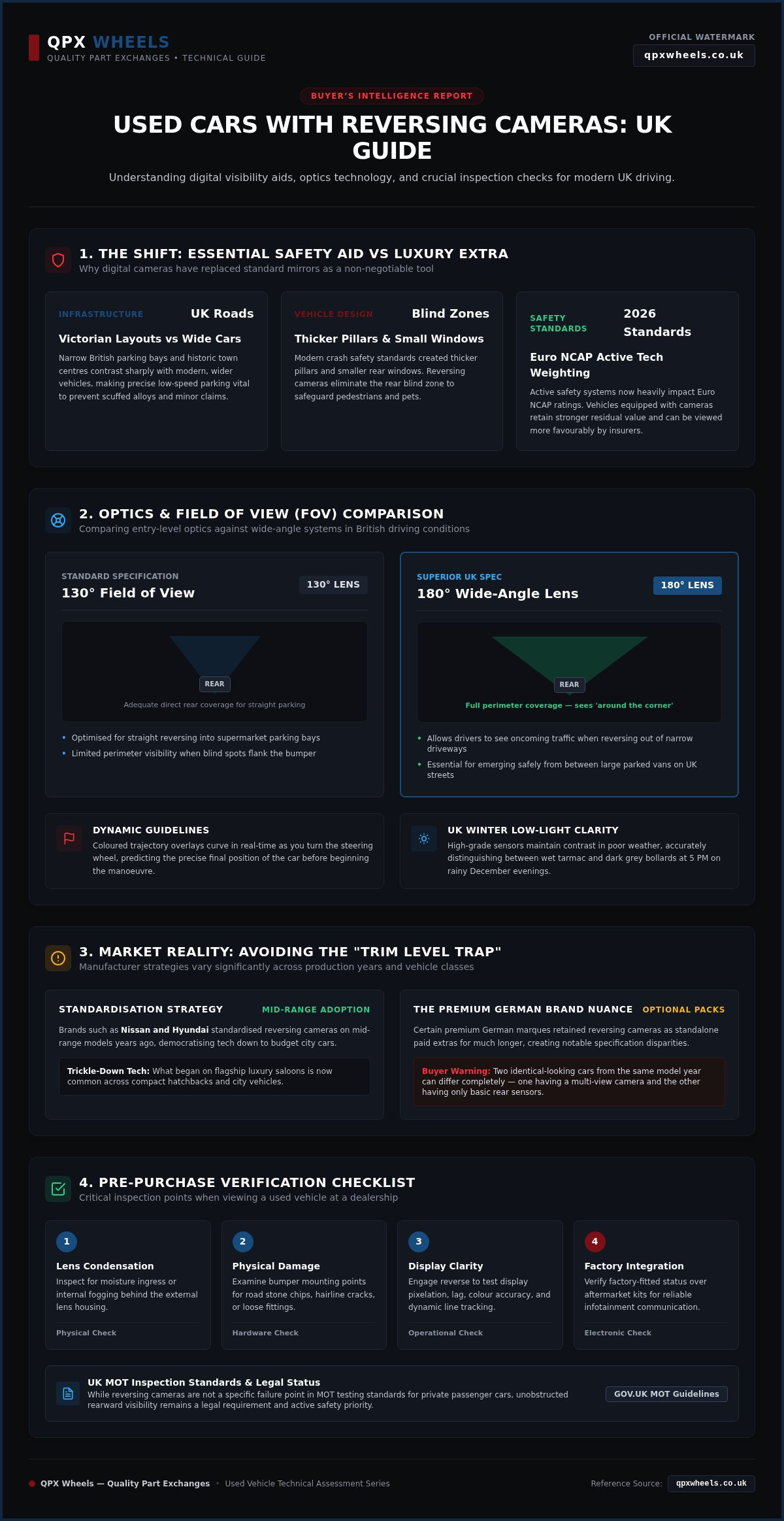
Reversing cameras have transitioned from high-end gadgets to essential safety aids for the modern driver. In the UK, where narrow Victorian streets meet increasingly wide modern vehicles, the demand for used cars with reversing camera UK has reached an all-time high. These systems provide a digital eye where your mirrors can't reach, significantly reducing the risk of low-speed collisions in car parks and driveways. As cars have grown in size to meet crash safety standards, rear visibility has often suffered due to thicker pillars and smaller windows. Advances in reversing camera technology have solved this problem, making it easier to navigate tight spaces with absolute precision.
British consumer behaviour has shifted markedly towards tech-heavy safety features. Drivers now view a camera as a non-negotiable tool rather than a luxury extra. This change is driven by the practical reality of UK life. Historic town centres weren't designed for modern SUVs, and a camera provides the confidence needed to park without the fear of scuffing expensive alloy wheels or hitting a hidden bollard. By providing a clear, wide-angle view of the area behind the bumper, these systems help prevent the most common types of minor insurance claims.
Why Reversing Cameras are No Longer a Luxury
The evolution of safety standards has played a major role in making cameras a standard expectation. By 2026, Euro NCAP safety ratings heavily weight the presence of active safety tech, which has pushed manufacturers to include cameras across their entire ranges. For a used car buyer, this means a vehicle with a camera often holds its value better and may even be looked upon more favourably by certain insurance providers. These systems effectively eliminate the 'blind zone' behind larger hatchbacks and SUVs, protecting pedestrians and pets whilst making every journey less stressful.
Standard Equipment vs Optional Extras
When you're browsing the used market, don't fall into the 'trim level' trap. Whilst many UK brands like Nissan and Hyundai began including cameras as standard on mid-range models years ago, some premium German brands kept them as expensive optional extras for longer. It's common to find two identical-looking cars from the same year where one has a full camera system and the other has nothing but basic sensors. This technology has successfully trickled down from premium saloons to budget-friendly city cars, but verifying the specific equipment list is still a vital step for any savvy buyer.
Understanding Camera Technology: From Standard Views to 360-Degree Systems
When you start looking for used cars with reversing camera UK, you'll quickly realise that the hardware varies significantly between different makes and models. A basic system might just show a pixelated view of the ground, whilst a premium setup offers high-definition clarity that rivals a modern smartphone. Understanding these technical differences helps you avoid the disappointment of a grainy screen that becomes almost useless the moment the sun goes down or the rain starts to fall. High-quality sensors ensure that the image remains sharp, providing the professional assurance you need when navigating tight spots.
Resolution and sensor quality are particularly important for UK drivers during the dark, rainy winter months. A camera with poor low-light performance will struggle to distinguish between a dark grey bollard and a wet tarmac road at 5 PM in December. Whilst cameras aren't a specific failure point in all UK Government MOT inspection standards for private vehicles, maintaining clear rearward visibility is a legal and safety priority for every road user. Modern high-spec systems also include dynamic guidelines. These coloured overlays on the screen curve in real-time as you turn the steering wheel, predicting your trajectory and showing exactly where the car will finish its manoeuvre before you even move an inch.
Standard Rear-View vs Wide-Angle Cameras
Many entry-level systems offer a standard 130-degree field of view. This is perfectly adequate for straight reversing into a supermarket bay, but wide-angle 180-degree lenses are a superior fit for the UK's unique road layout. These lenses allow you to see 'around the corner' when pulling out of narrow driveways or from between large parked vans on a busy street. You should be aware of the 'fisheye' effect, though. This slight lens distortion makes objects at the very edges of the screen look further away than they actually are. It's a technical trade-off for the extra visibility, so it's always best to use the digital display in tandem with your physical mirrors to maintain a true sense of distance.
360-Degree 'Bird’s-Eye' Surround View
For those considering larger luxury SUVs or used vans, a 360-degree system is a genuine game-changer for daily usability. This setup uses four separate cameras hidden discreetly amongst the front grille, door mirrors, and rear tailgate. The vehicle's onboard computer 'stitches' these individual feeds together to create a seamless, top-down view of the entire car. This technology is incredibly helpful for avoiding expensive kerb damage to alloy wheels, as it allows you to see the exact distance between your tyres and the pavement. If you're looking for a vehicle that takes the guesswork out of difficult parking, you can find many high-spec used cars in our current inventory that feature these advanced surround-view systems.
Factory-Fitted vs Aftermarket Cameras: What Used Car Buyers Need to Know
When searching for used cars with reversing camera UK, you'll encounter two distinct categories: factory-fitted systems and aftermarket additions. Whilst an add-on camera might seem like a budget-friendly solution, the difference in long-term reliability and integration is significant. A factory system is designed as an integral part of the car's electronic architecture. It communicates directly with the onboard computer and the parking sensors, ensuring a seamless experience every time you shift into reverse. This level of professional engineering provides a foundation of trust that third-party kits often struggle to match.
The impact on a vehicle's electrical warranty is a major consideration for any savvy buyer. Aftermarket installations can sometimes complicate or even void sections of a vehicle's warranty, especially if the installer has spliced into the original wiring loom. Beyond the legalities, factory tech is built to last. These components are specifically weather-sealed to survive harsh British winters and salty coastal air, ensuring the lens doesn't cloud over after just one season of road grit and rain. Choosing a car with original manufacturer equipment also protects your resale value; future buyers and dealerships often view non-standard electrical modifications with suspicion.
The Benefits of OEM (Original Equipment Manufacturer) Integration
OEM systems offer a level of polish that generic kits rarely match. Integration is the key advantage here. When you engage reverse, the infotainment screen automatically switches to the camera feed, often overlaying data from the ultrasonic parking sensors (PDC). This unified view allows you to see the obstacle and hear the warning pips simultaneously, providing a logical progression of safety information. The aesthetic finish is also vastly superior, with the camera lens usually tucked discreetly away near the boot handle rather than being bolted onto the exterior as an afterthought.
Identifying Aftermarket Systems in Used Listings
Spotting a non-factory system in online photos requires a keen eye. Look for red flags such as a small secondary screen suction-cupped to the dashboard or a lens that looks 'stuck on' near the number plate light. Exposed wiring running along the headlining or through the boot trim is another clear sign of a third-party installation. These kits can be problematic; poor-quality wiring often leads to parasitic battery drain or intermittent signal loss. Because these kits are often generic, finding replacement parts for a broken lens or a failed control box can be nearly impossible, leaving you with a dead screen and a costly repair bill.
A Buyer’s Checklist: How to Inspect Reversing Cameras During a Viewing
Finding high-quality used cars with reversing camera UK drivers can trust involves more than just looking at a spec sheet. You need to verify that the hardware functions exactly as intended under real-world conditions. Just as you would check the tread on the tyres or the oil level, the camera system requires a methodical inspection to ensure it hasn't been compromised by age or poor maintenance. A faulty camera can be an expensive fix, so taking five minutes to run through these checks provides essential peace of mind.
The Physical Lens Check
Start your inspection outside the vehicle. Look closely at the camera lens, which is usually found just above the rear number plate or tucked under the boot lid lip. You're looking for any signs of 'milky' or cloudy glass. This often happens over time if road grit and salt have scoured the surface, or if harsh chemicals from car washes have reacted with the plastic. A scratched lens will permanently blur the image, making it difficult to spot small obstacles like low kerbs.
- Check for condensation behind the glass, which indicates a failed weather seal.
- Ensure the housing is tight and hasn't been knocked out of alignment by a previous minor bump.
- Wipe the lens with a soft cloth to see if any blurriness is just surface dirt or permanent damage.
The Screen and Software Test
When testing used cars with reversing camera UK buyers should pay close attention to the dashboard display. Turn on the ignition and engage reverse gear. The transition should be almost instantaneous. If the screen flickers, shows static, or takes several seconds to load, there may be a loose connection or a failing control module. Watch the image quality whilst the car is stationary. Dead pixels or vertical lines on the display are signs of hardware fatigue that will only get worse over time. If you can, test the car in different lighting conditions; a good camera should adjust its exposure automatically when moving from bright sunlight into a shaded area.
Check the accuracy of the guidelines by lining the car up with a known straight object, like a parking bay line. Turn the steering wheel from lock to lock whilst in reverse. The dynamic guidelines should move smoothly without lagging or jumping. If the camera feed cuts out or the screen turns black when you turn the wheel, it often points to a frayed wiring loom in the boot hinge. To ensure you're getting a vehicle that has already passed these rigorous checks, you can buy cars from our vetted inventory where every electronic feature is thoroughly verified.
Finding Your Perfect Used Car with QPX Wheels
Securing a vehicle that combines safety with value requires a partner who understands the intricacies of modern car technology. We simplify that search. When you search for used cars with reversing camera UK, you aren't just looking for a screen; you're looking for a system you can rely on every single day. At QPX Wheels, we specialise in sourcing high-spec vehicles that feature these premium safety aids as standard. Our team focuses on transparency, ensuring you understand exactly what tech is included before you make a commitment.
Every vehicle in our inventory undergoes a comprehensive 39-point inspection. This process isn't just about the engine and tyres; it includes a full verification of the electronic safety systems we've discussed in this guide. We check the camera clarity, the alignment of the guidelines, and the integrity of the weather seals. This methodical approach allows us to act as your dependable guide, handling the technical complexities so you don't have to. We believe in building long-term satisfaction through honest advice and verified quality.
Why Buy from QPX Wheels?
With over 16 years of industry experience, we've seen how automotive tech has evolved from a luxury perk to a daily necessity. Our seasoned team uses this knowledge to curate a selection of cars and vans that offer the best balance of features and price. We move away from aggressive sales tactics, preferring a supportive, customer-centric atmosphere where your needs come first. Whether you're looking for a budget-friendly hatchback or a luxury SUV, we provide expert guidance on which specifications will best suit your driving habits whilst staying within your budget.
We also understand that flexibility is key when making a significant purchase. That's why we offer tailored finance options, including Hire Purchase (HP) and PCP finance. As an FCA-regulated finance brokerage, we can help you find a payment plan that makes a higher-spec vehicle more accessible. This often allows our customers to secure a car with a 360-degree camera or advanced driver aids that might have otherwise felt out of reach.
National Delivery and Comprehensive Support
You don't need to live nearby to benefit from our high standards. Our nationwide delivery service ensures that your next high-spec car or van can be delivered directly to your doorstep anywhere in the UK. This service is designed to be as stress-free as the parking sensors we've been talking about, with clear communication at every stage of the journey. To further protect your investment, we offer extended warranties that provide ongoing support long after the initial sale is complete.
Ready to find a vehicle that takes the stress out of reversing? Browse our range of used cars with reversing cameras and discover how our commitment to quality and transparency makes the buying process simpler for everyone.
Drive with Confidence in Your Next High-Spec Vehicle
Choosing the right vehicle means looking beyond the bodywork to ensure the technology inside supports your daily needs. By prioritising factory-fitted systems over aftermarket kits, you protect both your car's electrical integrity and its future resale value. Our guide has shown that a methodical inspection of the lens and display is the best way to secure used cars with reversing camera UK drivers can depend on for years to come. Whether you're navigating narrow city streets or backing into a busy driveway, having a verified system makes every manoeuvre safer and less stressful.
At QPX Wheels, we use our 16+ years of industry expertise to source only the finest high-spec vehicles. We handle the technical verification so you can focus on the joy of driving. With flexible HP and PCP finance options available, upgrading to a better-equipped car is more accessible than ever. We even offer nationwide UK delivery to bring your perfect car directly to you. Discover high-spec used cars with nationwide delivery at QPX Wheels today and start your next journey with total peace of mind. We look forward to helping you find a vehicle that perfectly matches your lifestyle.
Frequently Asked Questions
Can I add a reversing camera to a used car that doesn't have one?
Yes, you can install an aftermarket kit, but it's often a complex process. These systems usually don't integrate with your existing dashboard display as cleanly as factory-fitted versions. You might end up with extra screens or visible wiring that clutters the interior. If you're looking for used cars with reversing camera UK wide, it's often more cost-effective to buy a vehicle that already has the technology built-in and fully verified.
Are reversing cameras mandatory on used cars in the UK?
Reversing cameras aren't a mandatory legal requirement for used vehicles in the UK. Whilst they've become standard on many new models since 2022, older cars aren't required to have them for an MOT pass. They are purely a safety and convenience feature. Most drivers find them indispensable for modern life, especially when navigating narrow streets or busy supermarket car parks where visibility is often restricted by larger vehicle designs.
What is the difference between parking sensors and a reversing camera?
Parking sensors provide an audible beep that increases in frequency as you approach an obstacle. A reversing camera gives you a visual representation of what's behind you. Sensors are excellent for judging distance, but they can't show you exactly what the obstacle is. Many used cars with reversing camera UK dealerships sell combine both features. This allows you to hear the distance warnings whilst seeing exactly where your bumper is.
Do reversing cameras work at night or in heavy rain?
Modern systems are built to handle the challenging British weather. Most use high-sensitivity sensors that brighten the image in dark conditions, whilst some premium models include infrared LEDs for total darkness. Rain can occasionally cause droplets to sit on the lens, blurring the image. A quick wipe with a soft cloth usually fixes this. Some high-end vehicles even have tiny hidden washers that spray the camera lens automatically when you wash your rear window.
Will a reversing camera help lower my car insurance in the UK?
Most UK insurers don't offer a specific discount for having a reversing camera. However, the technology helps you maintain a clean driving record by preventing minor accidents and parking prangs. Avoiding these small claims is the most effective way to keep your long-term insurance premiums low. By using a camera to navigate tight spots safely, you're protecting your no-claims bonus and ensuring your vehicle remains in top condition for years to come.
Which used car brands have the most reliable reversing cameras?
Japanese manufacturers like Nissan and Toyota are well-known for their reliable electronic components and intuitive camera interfaces. Korean brands such as Kia and Hyundai also offer excellent systems with high-definition clarity on their used models. At QPX Wheels, we carefully select vehicles from brands with proven track records for electronic longevity. We ensure every camera system is fully functional, providing you with the professional assurance that your new car's safety tech is dependable.
How do I clean a reversing camera lens without scratching it?
You should always use a clean microfibre cloth and a little water or dedicated lens cleaner. Never use your shirt sleeve or a dry tissue, as trapped road grit can easily scratch the plastic lens. These tiny scratches will permanently blur the image over time. A gentle, circular motion is all that's required to remove salt, mud, or road film. Regular cleaning ensures you get the best possible view from your vehicle's safety system.
What should I do if the reversing camera image is blurry?
A blurry image is often caused by dirt or road salt on the exterior lens. If cleaning it doesn't work, there might be moisture trapped inside the camera housing, which usually requires a replacement unit. Occasionally, a software reset of the car's infotainment system can fix a fuzzy display. If you notice persistent blurriness during a viewing, it could be a sign of a failing sensor or a poor-quality aftermarket installation that has degraded.


