
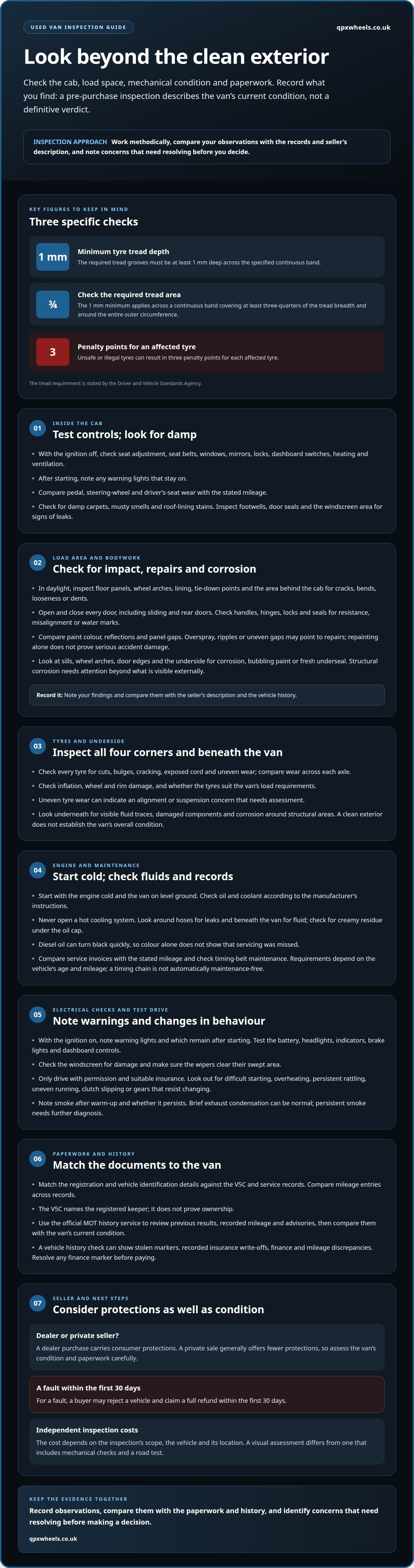
A polished van can still hide problems where they matter most. A used van inspection checklist in the UK should cover the cab, signs of water ingress, bodywork and load-area damage, as well as the engine, paperwork and a test drive. The Driver and Vehicle Standards Agency states that tyre tread must be at least 1 mm across the required part of the tyre.
When considering a used van, look beyond its clean appearance. Wear, damp patches and uneven body panels can offer useful clues, while a checklist helps you assess the vehicle calmly and consistently.
This guide explains what to check before buying a used van, from seats and controls to repairs and damage in the load space. It also covers paperwork and test drives, so you can record concerns and make a more informed decision.
Key Takeaways
- Look for damp, unusual wear and signs of repair in the cab and load area, not just obvious damage.
- Check fluid condition and service records to understand whether engine and timing-system maintenance has been kept up.
- Review the van’s paperwork alongside its bodywork, tyres and load space to build a fuller picture of its condition.
- Use your inspection findings to identify concerns that need resolving before you decide whether to buy.
Cab condition, water ingress and load-area damage
Start in the cab with the ignition off, then test each control methodically. Check seat adjustment, seat belts, windows, mirrors, locks, dashboard switches, heating and ventilation. After starting, note any warning lights that stay on. Compare wear on the pedals, steering wheel and driver’s seat with the stated mileage. Damp carpets, a musty smell or stains on the roof lining may indicate water ingress. Check the footwells, door seals and area around the windscreen for marks left by leaks.
Inspect the load area in daylight. Look for cracked floor panels, bent wheel arches, damaged lining, loose tie-down points and dents behind the cab, which may indicate heavy or poorly secured loads. Test the rear doors and locks, and check around the door seals for water marks. Outside, compare the paint colour and panel gaps on both sides. Overspray on rubber seals, ripples or uneven gaps may point to repairs, but a repainted panel alone does not prove serious accident damage.
Check every tyre for cuts, bulges, cracking, exposed cord and uneven wear, which can indicate a suspension or alignment issue. The Driver and Vehicle Standards Agency says a tyre fails the tread-depth requirement if its grooves are less than 1 mm deep across a continuous band covering at least three-quarters of the tread breadth and around the entire outer circumference. Check inflation and whether the tyres suit the van’s load requirements.
Is it better to buy from a dealer or private seller in the UK? A dealer purchase carries consumer protections; a private sale generally offers fewer protections, so assess condition and paperwork carefully. For a fault, a buyer may reject a vehicle and claim a full refund within the first 30 days.
How can you check MOT history and advisories online? Enter the registration in the official MOT history service and review previous results, recorded mileage and advisories. Compare those entries with the van’s current condition.
How do you verify service history, mileage and ownership? Match service records and mileage entries, and compare the registration and vehicle identification details. The V5C names the registered keeper, but doesn’t prove ownership.
How can you check theft, write-off status or outstanding finance? Use a vehicle history check to look for stolen markers, recorded insurance write-offs, finance and mileage discrepancies. Resolve any finance marker before paying.
What is a vehicle inspection check before purchase?
A pre-purchase inspection records a van’s current condition; it is not a repair manual or a definitive verdict. A used van inspection checklist UK buyers can use helps organise checks of the engine, electrical systems and records. Start with the engine cold and the vehicle on level ground. Check the oil and coolant according to the manufacturer’s instructions, and never open a hot cooling system. Look beneath the van for fluid and around hoses for leaks, and check for creamy residue under the oil cap.
Diesel oil can turn black quickly, so colour alone does not show that servicing was missed. Compare service invoices with the stated mileage and check for timing-belt maintenance. Requirements depend on the vehicle’s age and mileage; a timing chain is not automatically maintenance-free. Use your used van inspection checklist UK to note what the records show alongside your observations.
With the ignition on, note the warning lights and check which remain after starting. Test the battery, headlights, indicators, brake lights and dashboard controls. Check the windscreen for damage and make sure the wipers clear their swept area. On a permitted test drive with suitable insurance, note persistent rattling, difficult starting, uneven running or smoke after warm-up.
How much does an independent used van inspection cost in the UK? The cost depends on the inspection’s scope, the vehicle and its location. A visual assessment is different from one that includes mechanical checks and a road test.
What warning signs should you look for during a test drive? Watch for overheating, persistent smoke, rattling, uneven running, clutch slipping or gears that resist changing. Get permission and suitable insurance before driving.
What documents and vehicle details should you check? Match the registration and vehicle identification numbers against the V5C and service records. Compare mileage entries; the V5C identifies the registered keeper, not proof of ownership.
What diesel faults and emissions issues deserve attention? Persistent smoke, uneven running and rattling need further diagnosis. Brief exhaust condensation can be normal, so note whether smoke continues after warm-up.
After reviewing the condition and paperwork, consider how you’ll fund the purchase. Hire Purchase finance is one option to consider alongside your budget.
Inspecting bodywork and the load area
Walk around the van in daylight and view each panel from different angles. Check the sills, wheel arches, door edges and underside for corrosion, bubbling paint or fresh underseal. Structural corrosion needs attention because it can affect areas beyond what is visible externally. Record your findings on an inspection document and compare them with the seller’s description and the vehicle history.
- Compare panel gaps, paint colour and reflections across adjacent panels. Ripples or uneven gaps can indicate previous repairs, although repainting alone doesn’t prove serious accident damage.
- Open and close each door, including sliding and rear doors, and check their handles, hinges and locks. Resistance or misalignment can point to damage or worn components.
- Inspect tyres and wheels for cuts, bulges, cracking, uneven wear and rim damage. Uneven wear can indicate an alignment or suspension concern that needs assessment.
- Look beneath the vehicle for visible fluid traces, damaged components and corrosion around structural areas. A clean exterior doesn’t establish the van’s overall condition.
Tyres matter for more than appearance: unsafe or illegal tyres can result in three penalty points for each affected tyre. Check that they suit the van’s load requirements, not just the tread. Compare wear across each axle. A noticeably different tyre may offer a clue about use or maintenance.
How do I inspect a used van’s engine, gearbox, clutch and brakes? Start the engine and listen for persistent rattling or uneven running, then check for oil leaks. On a permitted test drive with suitable insurance, assess the steering response, gear changes, clutch engagement and braking. Juddering, slipping or pulling can signal faults.
Before buying or committing to payment, compare the visible condition with the seller’s account and the ownership documents. Treat any mismatch as something to resolve, not proof of a particular fault. Carefully assessing the bodywork, tyres and mechanical behaviour gives you a clearer basis for your decision.
Checks included in a used van inspection
A useful inspection brings together records, visible condition and how the van behaves. A vehicle history report summarises recorded events, while your notes describe its condition now. A used van inspection checklist UK buyers can follow helps keep these checks organised. Use the registration to review official MOT history and DVLA vehicle details, then compare them with the van.
- Paperwork: Match registration and vehicle identification numbers against the V5C and service records. Compare mileage entries and ensure any outstanding finance has a documented resolution before payment.
- Service and history: Review MOT results, advisories and invoices for maintenance or repairs. Check whether the dates and recorded mileage form a consistent sequence.
- Write-off history: Look for recorded insurance write-off categories. Category A or B vehicles should not return to the road. For Category S or N, review repair evidence and seek an independent assessment.
- Mechanical and electrical checks: Test dashboard indicators, battery and lights. During a permitted test drive, note unusual noises or warning signs; persistent smoke or uneven running in a diesel needs diagnosis.
- Bodywork and load: Record damage, corrosion, door operation and load-area condition. Consider whether the payload meets your needs, including the weight of fitted equipment.
An MOT certificate records the vehicle’s condition at the time of testing; it is not a full mechanical inspection or proof of current roadworthiness. Treat advisories as prompts for closer attention. If checks reveal structural corrosion, unexplained mileage, unresolved finance, overheating or a major drivetrain fault, pause the purchase until you have satisfactory evidence or a specialist assessment.
Use a used van inspection checklist in the UK to record each finding and distinguish your observations from information in documents. This makes it easier to compare the van with its history and your requirements. Once your checks are complete, explore Hire Purchase or PCP finance as possible ways to fund your purchase.
QPX Wheels: Used Vans
QPX Wheels offers used vans for buyers ready to move from inspection to choosing a vehicle. Your checks can help you compare a van’s condition, records and suitability for your day-to-day needs, including the load space and payload your work requires.
If you’re replacing a vehicle, QPX Wheels also offers a Vehicle Valuation Service. Hire Purchase (HP) Finance is available if you’re considering finance as part of your purchase. These options may be useful once you’ve inspected the van and decided it meets your requirements.
Use your inspection findings to plan your next step. For information about QPX Wheels’ used vans or to discuss a purchase, contact QPX Wheels.
Make your next vehicle decision with confidence
Use your used van inspection checklist UK as a decision-making tool, not just a record of faults. Compare each finding with how you plan to use the vehicle, then decide what needs resolving before you commit. If a van does not suit your needs, adjusting your search is a practical next step, not a setback.
QPX Wheels offers used vans and cars, giving you different vehicle options to consider. Its Vehicle Valuation Service can also help if you’re replacing a vehicle and want to include its value in your purchase plans.
Once you’ve settled on what you need, take the next step at your own pace. Explore QPX Wheels’ vehicles and get in touch to discuss your requirements. A careful decision now can help you choose a vehicle that works for your plans.
Frequently Asked Questions
Viewing a used car, what should I check?
Check that the vehicle’s equipment matches your needs and the advert’s description. Try each key, test the air conditioning and heated screens if fitted, and look for a spare wheel or repair kit. Make sure the boot opens and closes properly. Note any missing items before agreeing to buy, so it is clear what comes with the vehicle.
What happens if any defects are found?
Before paying, note each defect and ask the seller to respond in writing. Use your findings to decide whether to proceed, request an agreed issue be resolved or walk away. If you’ve already bought from a dealer, contact them promptly with a clear description and supporting records. Keep the advert, invoice and inspection notes together.
What should I ask the seller before I book?
Ask whether the vehicle will be available to view, whether you can see it with the engine cold, and whether a test drive is permitted with suitable insurance. Ask what comes with it, such as keys, load restraints or a repair kit, and whether any warning lights or faults have appeared recently. Request the registration to review its history beforehand.
What should I check on a used van’s exterior, bodywork and tyres?
View the van in daylight. Check that the doors open smoothly, the tyres suit its load requirements and the wheel rims have no visible damage. Read the tyre age markings as well as checking the tread: the guide advises replacing tyres over six years old, regardless of tread depth. Compare bodywork concerns with the seller’s explanation and note them before deciding.


