
Did you know that UK van drivers are now spending an average of £780 every year just on Clean Air Zone fees and penalties? When you are searching for a new work vehicle, the last thing you want is a bargain that ends up costing you thousands in daily charges or unexpected repairs. It's completely understandable to feel a bit of pressure when assessing a potential purchase, especially with the complexities of VAT status and the heavy wear that commercial vehicles often endure.
This guide is designed to help you master exactly what to check when buying a used van UK so your next vehicle remains a reliable asset for years to come. We'll help you navigate the essential mechanical inspections to spot signs of heavy loading, clarify financial details like HP and PCP options, and ensure your van meets the latest 2026 ULEZ standards. By following this methodical checklist, you can move forward with the confidence that your new workhorse is HPI clear, legal, and ready to get the job done without any hidden surprises.
Key Takeaways
- Verify the V5C logbook's watermark and cross-reference the VIN with the chassis plate to confirm the vehicle's legal history and identity.
- Look beyond cosmetic damage by inspecting wheel arches and sills for structural rust that could compromise the van's long-term reliability.
- Learn exactly what to check when buying a used van UK regarding Euro 6 compliance to prevent expensive daily charges in ULEZ and Clean Air Zones.
- Listen for engine knocking during a cold start and test the brakes on a dual carriageway to ensure the mechanical vitals are sound before you commit.
- Assess whether a van is VAT-qualifying and explore HP or PCP finance options to protect your business's monthly cash flow and manage costs.
Verifying the Paperwork: V5C, Service History, and MOT
Before you even lift the bonnet, you must scrutinise the paperwork. A van might look pristine, but its documents tell the real story of its past life. Ensure the V5C logbook is original. You should look for the official DVL watermark by holding the page up to the light. There are currently two valid versions in circulation: the older blue-green style and the newer red-pink version. Don't be alarmed if you see the older type, provided the watermark is present and there are no signs of chemical erasure or tampering.
Cross-referencing the Vehicle Identification Number (VIN) is vital. You'll find this 17-digit code on the logbook, and it must match the chassis plate on the vehicle exactly. Depending on the different types of vans you are considering, this plate is usually located at the base of the windscreen, on the driver’s door pillar, or stamped directly onto the chassis frame under the bonnet. If these numbers don't align, or if the plate looks like it has been removed and refixed, walk away immediately.
Use the government's online portal to check the MOT history. This is a crucial part of what to check when buying a used van UK because it reveals recurring "advisory" items. If you see the same warning about suspension bushes or brake wear appearing year after year, it suggests the previous owner only did the bare minimum to pass the test rather than properly maintaining the vehicle. Consistent advisories for tyres or lights often point to a broader culture of neglect.
The Importance of a Full Service History
Vans used by large fleets often boast superior service records because maintenance is managed by strict corporate schedules. Gaps in the service book are a major red flag; they often signal that oil changes were missed, which is the primary cause of premature turbo or engine failure in modern diesels. For vans with over 80,000 miles, look for receipts proving the cambelt and water pump have been replaced. These are essential maintenance tasks that can prevent a catastrophic engine failure.
Spotting Odometer Fraud and VIN Discrepancies
"Clocking" remains a concern in the used market. Compare the mileage on the dashboard with the MOT records and the general condition of the interior. If a van shows only 40,000 miles but the steering wheel is worn smooth and the rubber on the pedals is gone, the odometer might have been tampered with. Buying a van with mismatched paperwork or falsified mileage isn't just a financial risk; it can leave you with a vehicle that is legally difficult to sell or insure later on.
Physical Inspection: Bodywork, Rust, and the Load Area
Once you've satisfied yourself with the paperwork, it's time for a hands-on assessment. Understanding what to check when buying a used van UK means looking beyond the surface level paintwork and focusing on structural integrity. UK roads are often treated with salt in winter, which makes a thorough inspection of the wheel arches and sills essential. Structural rust in these areas isn't just a cosmetic issue; it's a safety concern that can lead to expensive repair bills during your next inspection.
Don't forget to look up. Roof damage is frequently overlooked but can be a sign of a van that has been driven under low bridges or fitted with overloaded roof racks. Check for dents or poorly sealed holes from previous equipment that could lead to leaks. Similarly, ensure all doors, including the sliding side doors and rear barn doors, operate without resistance. If a door doesn't align perfectly or requires a heavy slam to lock, it might indicate that the van's frame has been twisted through heavy use or a previous accident.
The load area is the heart of any commercial vehicle. If the van has ply-lining, try to lift a section to inspect the metal floor underneath. You are looking for heavy impact damage or signs of significant corrosion. While some scratches are expected, deep gouges or a floor that bows significantly suggest the vehicle has been mistreated. At QPX Wheels, we understand that your business relies on a solid foundation, which is why we offer quality used vans that have already undergone these rigorous structural checks.
Identifying Signs of Heavy Payload Stress
Chronic overloading leaves permanent scars that aren't always obvious. Look closely at the rear body panels for subtle "kinks" or ripples in the metal. These often appear just above the rear wheel arches and suggest the chassis has been under extreme stress. Check the rear suspension leaves or coils; if they appear flattened or asymmetrical, the van has likely spent most of its life carrying more than its legal limit. If a tow bar is fitted, inspect the hitch for excessive wear or scoring, as frequent heavy towing puts immense strain on the engine and gearbox.
Tyres and Suspension: The Hidden Costs
Knowing what to check when buying a used van UK involves looking at the rubber as much as the metal. Tyres are a significant running cost for any business. Ensure all four tyres are commercial-rated, which you can verify by looking for a "C" marked on the sidewall. These are specifically designed to handle the weight of a loaded vehicle. Check for uneven tread wear; if the inner or outer edges are balding, it usually indicates poor wheel alignment or worn suspension bushes. You can Check the MOT history to see if suspension issues have been a recurring problem, which helps confirm what you're seeing on the ground. Finally, perform a simple bounce test by pushing down on each corner. It should settle immediately; any repeated bouncing suggests the shock absorbers need replacing.
Mechanical Vital Signs: Engine, Gearbox, and Clutch
Always insist on a cold start. If you arrive and the engine is already warm, the seller might be trying to mask a difficult start or a smoky exhaust. Understanding what to check when buying a used van UK starts with the engine's initial fire-up. When you turn the key, watch the tailpipe closely. Blue smoke suggests the engine is burning oil, whilst thick white smoke often indicates a coolant leak or a failing head gasket. Listen carefully for any rhythmic knocking or rattling sounds whilst the engine is idling. These noises often signal wear in the bearings or injectors, which can be incredibly costly to rectify if left unaddressed.
Testing the clutch and gearbox is the next step in your mechanical assessment. A clutch that only engages at the very top of its travel is likely worn and will soon need replacing. Whilst driving, ensure the gearbox moves smoothly through all ratios without crunching. Pay particular attention to the higher gears on a dual carriageway; if the van "pops out" of gear under load, the synchromesh is likely failing. This is a common issue for vehicles that have spent their lives as heavily loaded workhorses.
Diesel Engine Specifics: DPF and Turbo Health
Most used vans in the UK are diesel-powered, making the Diesel Particulate Filter (DPF) a critical component to inspect. If the van has been used primarily for short town journeys, the DPF may be clogged, as it requires longer motorway runs to regenerate. Check the dashboard for warning lights and listen for a high-pitched "whine" from the turbocharger, which often precedes a failure. You should also Check a van's MOT history to see if it has previously failed on emissions, as this often points to underlying engine health issues.
The Underside Inspection
After your test drive, park on a dry patch of ground and wait a few minutes. Check for fresh oil or fluid leaks dripping from the engine bay or gearbox. Whilst you're down there, inspect the exhaust system for excessive soot or heavy corrosion. Use a torch to check the condition of the brake discs through the wheel spokes. If the discs have a significant "lip" or deep scoring, you'll need to factor in the cost of a full brake service shortly after purchase. Every vehicle at QPX Wheels undergoes a professional inspection to ensure these mechanical vitals meet our high standards before sale.
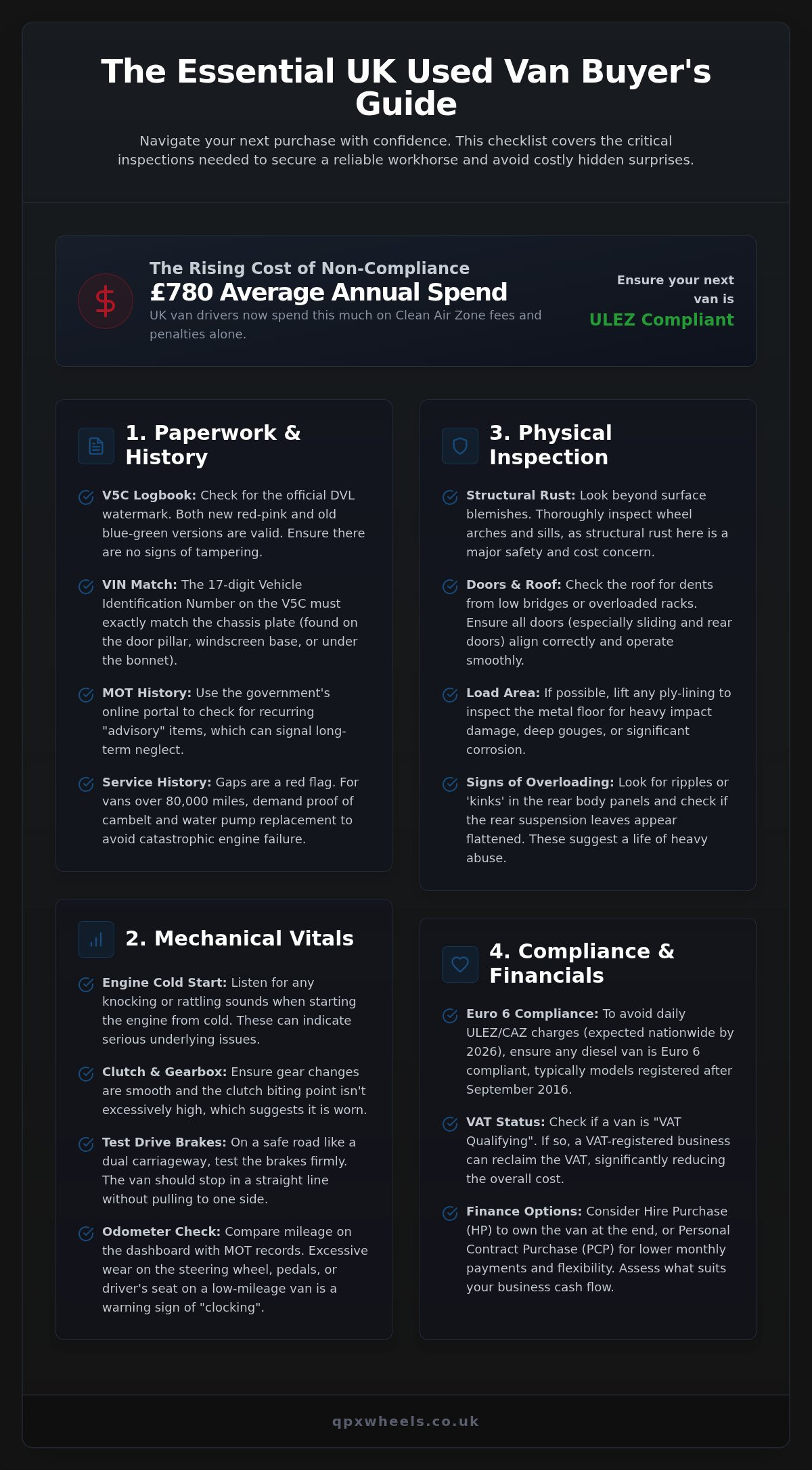
Compliance and Financial Verification for UK Buyers
Beyond the engine and bodywork, you must ensure your purchase makes financial sense in the current regulatory environment. A vital part of what to check when buying a used van UK is the vehicle's history report. Always run a comprehensive HPI check to confirm the van isn't subject to outstanding finance or recorded as an insurance write-off. You should also verify the number of previous owners. A van that has changed hands five times in three years often suggests a recurring problem that previous owners were keen to pass on. Fewer owners generally indicates a vehicle that has been a reliable asset rather than a liability.
ULEZ and Clean Air Zone Future-Proofing
In 2026, environmental compliance is a primary operational cost. With non-compliant vans facing daily charges of £12.50 in the Ultra Low Emission Zone (ULEZ) and similar charges in other Clean Air Zones (CAZs) across the UK, the wrong choice is expensive. Recent data shows UK van drivers spend an average of £780 annually on these fees, with costs rising significantly for those operating frequently within these zones. To avoid these costs, ensure any diesel van meets Euro 6 standards. Whilst Euro 7 regulations are the new benchmark for 2026, Euro 6 remains the minimum requirement for zone entry. Battery electric vans accounted for 11.5% of registrations in June 2026, making them a viable second-hand option for urban trades looking to eliminate these daily charges entirely. You can verify any van's status instantly on the government website using only the registration number.
Understanding VAT and Finance Options
VAT-registered business owners must identify if a van is "VAT-qualifying". If the vehicle was previously a fleet or lease van, you can usually reclaim the 20% VAT on the purchase price. Conversely, "No VAT" sales often involve vehicles previously owned by private individuals, meaning there is no tax to reclaim. Spreading the cost is often the smartest way to protect your business cash flow. Hire Purchase (HP) is a popular choice, allowing you to pay in fixed instalments until you own the vehicle outright. Alternatively, PCP finance offers lower monthly payments with a final balloon payment, which is ideal for businesses that prefer to refresh their fleet every few years. At QPX Wheels, we offer tailored HP and PCP finance options designed to help you secure a reliable workhorse while keeping your monthly costs predictable.
The Test Drive and Final Purchase Steps
The test drive is your final opportunity to verify everything you have inspected on paper and under the bonnet. A short trip around the block is rarely enough to reveal the true state of a commercial vehicle. You should insist on driving the van on a variety of road surfaces, including a dual carriageway. Reaching motorway speeds is essential; certain vibrations, wheel balancing issues, or turbocharger whistles only become apparent when the vehicle is working harder at 60 or 70mph. Whilst you are driving, keep the radio off to listen for any suspension knocks or unusual wind noise from the door seals.
Pay close attention to the braking system. Find a safe, quiet stretch of road and apply the brakes firmly. The van should stop in a straight line without pulling to one side or causing a vibrating sensation through the pedal. These symptoms often point to seized calipers or warped discs. Inside the cabin, take five minutes to test every electronic component. Check the air conditioning, Bluetooth connectivity, and sat-nav systems. Modern van cabins are complex, and repairing a faulty infotainment screen or a broken heater matrix can be a significant unexpected expense shortly after purchase. If you feel unsure about your own technical assessment, requesting a professional pre-purchase inspection is a sensible investment for peace of mind.
The Dealer Advantage: Warranties and Delivery
Deciding where to buy is just as important as knowing what to check when buying a used van UK. Buying from a private individual often means you have very little recourse if the vehicle develops a fault the next day. In contrast, reputable dealers must comply with the Consumer Rights Act, which provides a legal safety net. Choosing a dealer that offers comprehensive extended warranties ensures that your business isn't hit with a massive repair bill in the first six months. Many business owners now value the convenience of nationwide delivery, allowing them to source the best quality stock from across the country without losing a day of work to travel.
Closing the Deal and Part-Exchange
When you are ready to commit, ensure all the loose ends are tied up. Most professional dealerships provide a vehicle valuation service, which makes it easy to use your current van as a part-exchange to lower the cost of your new one. Before you drive away, confirm that the seller has handed over all sets of keys. Replacement modern transponder keys can cost upwards of £200, so a missing spare is a valid point for negotiation. Check that the service book is present and has been stamped to reflect the history you verified earlier. Once you are satisfied with the condition and the paperwork, you can move forward with confidence. Browse our range of quality used vans with nationwide delivery to find a reliable partner for your business.
Secure Your Business Future with the Right Van
Purchasing a commercial vehicle is a significant step for any business. By following this structured approach to what to check when buying a used van UK, you can avoid common pitfalls like hidden structural rust or expensive ULEZ non-compliance fees. Remember to prioritise a transparent service history and ensure the mechanical vitals are sound through a rigorous test drive. When you focus on these essential details, your van becomes a dependable asset that supports your growth rather than a drain on your finances.
We're here to make that process as straightforward as possible. At QPX Wheels, we pre-inspect every vehicle to take the guesswork out of your purchase. We provide comprehensive extended warranties for long-term security, alongside flexible HP and PCP finance deals to help manage your cash flow effectively. With our nationwide UK delivery service, your next workhorse is never out of reach. Find your next reliable used van at QPX Wheels today and drive away with the confidence that your business is in safe hands. We look forward to helping you get on the road.
Frequently Asked Questions
How many miles is too many for a used van?
There is no single "too many" figure, but a well-maintained van can easily exceed 150,000 miles. You should prioritise a complete service history over a low odometer reading. A van with 100,000 motorway miles is often in better mechanical health than one with 40,000 miles of heavy-load stop-start city driving. Always check for recent cambelt and water pump replacements on high-mileage units to avoid immediate repair costs.
What is the difference between a VAT-qualifying van and a non-VAT van?
A VAT-qualifying van is one where the 20% VAT can be reclaimed by a VAT-registered business because it has never been owned by a private individual. If a van was previously part of a fleet or a lease agreement, it usually remains VAT-qualifying. Non-VAT vans are those where the tax has already been paid and cannot be recovered. This distinction is a key part of what to check when buying a used van UK to ensure your budget is accurate.
Is it better to buy a used van from a dealer or a private seller?
Buying from a dealer is generally safer because you are protected by the Consumer Rights Act 2015. Dealers are legally required to sell vehicles that are of satisfactory quality and fit for purpose. Private sales are "buyer beware", meaning you have very little recourse if a fault develops later. Dealers like QPX Wheels also offer benefits that private sellers cannot, such as flexible finance options, professional valuations, and extended warranties for long-term peace of mind.
Can I get finance on a used van over 10 years old?
You can certainly get finance on older vans, though the choice of lenders might be more limited than for newer models. Many specialist providers offer Hire Purchase (HP) agreements for vehicles over a decade old, provided they are in good condition. At QPX Wheels, we work with a range of lenders to find finance solutions for various ages and budgets. This allows you to spread the cost and preserve your business cash flow even when buying an older workhorse.
What are the most reliable used van models in the UK for 2026?
The Ford Transit, Volkswagen Transporter, and Mercedes-Benz Sprinter remain the most reliable choices for 2026, provided they meet Euro 6 standards. These models benefit from extensive parts availability and a wide network of specialists across the UK. When considering what to check when buying a used van UK, look for models with proven diesel engines that have been serviced according to the manufacturer's schedule. Reliability in the second-hand market depends heavily on how the previous owner managed maintenance.
Does a used van come with a warranty?
Used vans do not automatically come with a warranty when bought privately, but most reputable dealers provide a standard period of cover. At QPX Wheels, we offer comprehensive extended warranties on our vehicles to protect you against unforeseen mechanical or electrical failures. This is a significant advantage over private sales, as it ensures that your business operations aren't halted by a sudden repair bill shortly after you've invested your hard-earned capital into the vehicle.
What happens if I buy a van with outstanding finance?
If you buy a van with outstanding finance, the finance company remains the legal owner, and they can repossess the vehicle at any time. This is why running a comprehensive HPI check is the most important step before handing over any money. If the check reveals an active Hire Purchase agreement, you should insist that the seller settles the balance and provides proof of clearance before you proceed. Buying through a dealer eliminates this risk entirely.
How do I check if a van is ULEZ compliant?
You can check a van's compliance by entering the registration number into the official government or Transport for London (TfL) checkers. For 2026, most diesel vans must meet Euro 6 emissions standards to avoid the daily £12.50 charge in London. Petrol vans generally need to meet Euro 4. If you frequently drive in urban centres, verifying this status is essential to avoid spending an average of £780 a year on penalty fees and zone charges.


