
Could a clean, freshly painted car be hiding more than a few cosmetic repairs? Checking for rust and body damage on second hand cars can feel uncertain when you’re not sure where to look or which marks matter. A visual check won’t reveal everything, but it can help you spot warning signs and ask useful questions before you commit.
Look beyond the shine. Small scratches and isolated surface rust aren’t automatically reasons to walk away, whilst bubbling paint, uneven panel gaps or corrosion around structural areas deserve closer attention. If something doesn’t look right, pause and ask the seller for a clear explanation rather than relying on appearance alone.
This guide takes you through a repeatable inspection, from common rust-prone areas to signs that bodywork may have been repaired or repainted. You’ll learn how to distinguish everyday cosmetic wear from concerns that need further investigation, and when to seek an independent professional assessment.
Key Takeaways
- Inspect in daylight with dry bodywork, and allow enough time to spot details that may be hard to see in poor conditions.
- When checking for rust and body damage on second hand cars, compare matching areas on both sides. Treat bubbling paint or flaking coatings as clues to investigate, not proof of a serious fault.
- Look across neighbouring panels for uneven gaps, edges or reflections that may prompt questions about previous repairs.
- Photograph marks and note questions for the seller, then consider their answers alongside what you’ve observed.
- Pause and seek an independent professional assessment if you find unresolved signs that could indicate structural damage.
Checking a second hand car for rust and body damage: start with the right conditions
A calm, systematic walk-around can reveal useful clues about a car’s condition, but it can’t confirm every hidden defect. The aim is to notice anything that needs an explanation or closer assessment, not to diagnose the vehicle yourself. Good viewing conditions make your initial check more reliable.
Arrange to see the car in daylight. In dim light, scratches, uneven paint and subtle changes in panel colour can be difficult to spot. Dry bodywork is easier to assess than wet paint, which can disguise marks and alter reflections. If the car is dirty, ask whether it can be presented clean, but remember that a clean finish doesn’t prove the bodywork is sound.
How to prepare for a used-car bodywork inspection
Allow enough time to look carefully, and ask the seller for permission to inspect the exterior and use a torch. Bring a notebook and phone camera so you can record marks and questions rather than relying on memory. A torch can help illuminate visible recesses, such as door openings, but don’t force access to concealed areas. Check only what you can see safely during a viewing.
- Torch: to help you see into accessible, shaded areas.
- Notebook: to keep a clear list of observations and questions.
- Phone camera: to photograph marks for later comparison.
- Permission: agree with the seller what you may inspect or photograph.
Don’t crawl beneath the vehicle or remove trim, covers or fittings. A viewing isn’t the place to dismantle anything, and a visual check has limits. If an area can’t be assessed safely, or a concern may affect the structural integrity of the vehicle, note it and consider asking an independent professional to assess it.
Which parts of the car should you inspect first?
Start with one full walk-around before examining individual marks. Stand back and check the car’s overall stance and whether the panels appear to line up consistently. Then move around it in a set sequence so you’re less likely to overlook a section or compare unlike areas.
Check one side from front to rear, then repeat on the other. Look over the roof, bonnet and boot, as well as the visible wheel areas. Note anything that stands out, such as an unusual gap or a difference between corresponding panels. These are observations to follow up, not proof of damage.
Write down questions as they arise. If an area looks different, record where it is and ask the seller about its history. This gives you a clear starting point for the closer checks that follow.
Where to look for rust on a second hand car
Rust can begin where moisture and road dirt collect, but a surface mark doesn’t automatically mean there’s serious corrosion underneath. When checking for rust and body damage on second hand cars, treat bubbling paint, flaking coatings and discolouration as clues to investigate. Look at the whole area and compare it with the corresponding part on the other side.
Common exterior areas to check for corrosion
Move around the car methodically and pay particular attention to lower edges and joins, where chips or worn paint may leave the underlying metal exposed. Check:
- Wheel arches: Look along the visible inner lips for blistered paint, flaking or unusual staining.
- Door bottoms and sills: Examine the visible edges for bubbling or patches that look different from the surrounding finish.
- Boot opening and bonnet edges: Check visible seams and painted edges for discolouration or lifting paint.
- Lower bodywork and stone-chip areas: Note chips, scratches or coating damage, especially if there are signs of corrosion around them.
Compare the left and right wheel arches, door bottoms and other matching areas. A difference in colour, texture or visible corrosion is a reason to ask what may have happened, not proof of a fault. Don’t pull back fitted trim or reach into concealed spaces during a viewing.
What paint bubbles, seams and fresh coatings can tell you
Bubbling paint may be associated with corrosion beneath the finish, but it can also have other causes. Flaking coating or a rusty-looking stain also deserves attention, although neither confirms the extent of any damage. Photograph the area and ask the seller whether it has been repaired, repainted or treated, and whether they can explain the work.
Look across adjacent panels and compare similar sections on the opposite side. Changes in paint colour, texture or reflected light may suggest that a panel has been repainted or repaired. A fresh coating or underseal can make the visible surface harder to assess, but its appearance alone doesn’t establish that damage is being concealed. Ask for a clear explanation of any work and supporting information where available.
A visual check can’t show what lies beneath paint or underseal, or behind inaccessible trim. A small mark may be cosmetic, whilst an unexplained area around a seam or lower panel may warrant closer investigation. If you can’t establish what you’re looking at, or have concerns about the bodywork’s condition, pause and consider an independent professional assessment. When you’re ready to continue your search, you can browse used cars and ask specific questions about a vehicle’s bodywork.
How to compare body damage, panel gaps and signs of previous repairs
Compare neighbouring panels and matching areas on opposite sides rather than judging one mark in isolation. Look at panel gaps, edges and the way light reflects across the paint. A difference may reflect a repair, age-related wear or normal variation, so treat it as a prompt for questions, not proof of a collision or unsafe work.
How to spot paint differences and possible repair work
View each panel from different angles. Changes in colour, gloss or texture may become clearer as the light moves across the surface. Check edges for paint overspray or an uneven finish, then ask the seller whether the area has been repaired and whether the work is documented. Compare the explanation with what you can see, without assuming that a repaired panel is automatically a problem.
A paint-thickness gauge may show differences between panels, but readings need context. The original finish can vary, and a single measurement can’t establish why a reading is high or low, or confirm the quality of a repair. Use it as one observation, not a verdict.
When panel alignment or dents deserve follow-up
Check whether the gaps around the doors, bonnet and boot appear reasonably consistent with the neighbouring panels. Notice edges that don’t seem aligned, or a door or panel that sits unevenly when closed. Record dents, creases and damaged paint by location. Don’t guess at their cause from appearance alone.
This simple guide can help you decide what to do next:
| What you notice | Useful next step |
|---|---|
| Small surface scuff or isolated shallow dent, with otherwise consistent finish | Ask whether it’s been repaired and note it as a cosmetic mark. |
| Different paint shade, texture or panel reflection | Ask what work was carried out and whether there’s a record. |
| Uneven gaps, misaligned edges, several creases or damage that doesn’t fit the account given | Pause and consider an independent professional assessment. |
When checking for rust and body damage on second hand cars, the aim is to gather clues and see whether the vehicle’s appearance matches its history. No single gap, paint variation or dent confirms collision damage. If concerns seem substantial, remain unexplained or conflict with the seller’s account, seek an independent assessment before deciding whether to proceed.
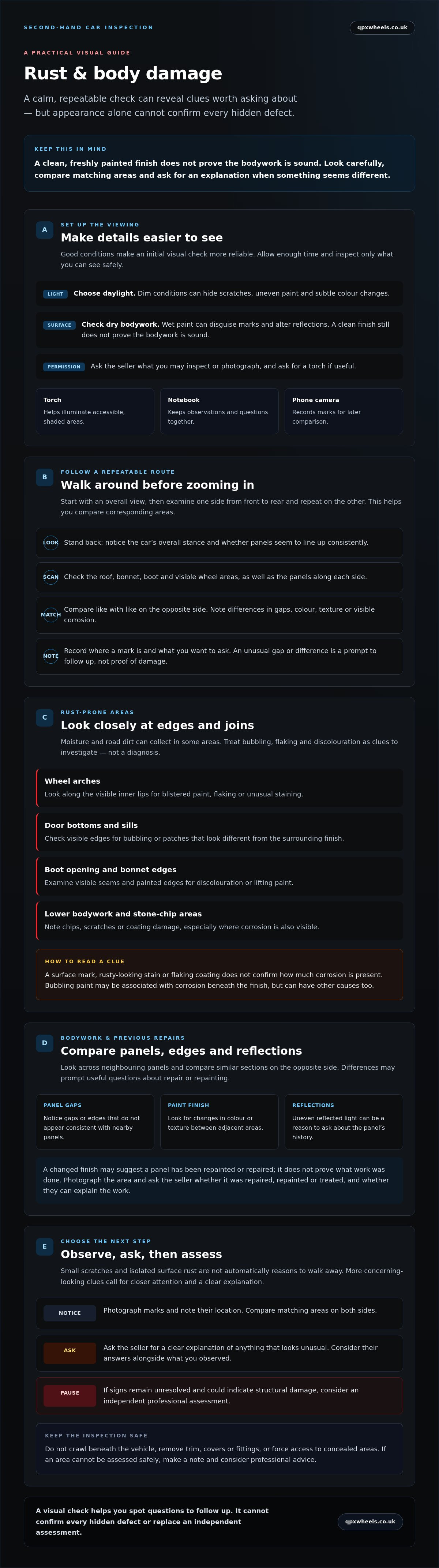
A practical checklist for checking for rust and body damage on second hand cars
A set route makes it easier to check the whole car and keep your observations clear. Describe what you can see rather than guessing how it happened. For example, note “paint bubbling on the left rear arch” instead of concluding that the car has hidden structural corrosion.
A step-by-step exterior inspection sequence
Work through the following walk-around in order. Photograph relevant marks and add their locations to your notes so you can discuss them accurately with the seller afterwards.
- Step back first: Walk around the car and look at its overall stance, panel alignment and any areas that stand out.
- Check each side: Follow the panels from front to rear, comparing corresponding sections for differences in gaps, paint colour, finish or visible corrosion.
- Look at edges and openings: Inspect accessible wheel arches, sills, door bottoms, the boot opening and bonnet edges. Don’t remove trim or reach beneath the vehicle.
- Record visible marks: Note dents, scratches, bubbling paint, flaking coatings and uneven finishes by location. Take photos with the seller’s permission.
- Compare notes with the description: Ask about repairs or damage where your observations raise questions, and check whether the explanation matches information available about the car’s history.
Keep evidence separate from interpretation. A mismatched finish is something you’ve seen; the reason for it still needs explaining. Clear notes help you avoid overlooking a concern or treating a minor cosmetic mark as proof of a serious problem.
What to do when the check raises concerns
Ask neutral, specific questions. For example: “Has this panel been repainted?” or “Can you tell me what caused this damage and whether it was repaired?” Ask whether records or other information about the work are available. If the answer is unclear, note that too. You don’t need to decide while you’re still inspecting the car.
Pause before proceeding if damage appears substantial, the explanation doesn’t fit what you can see, or you’re unsure whether corrosion or a repair affects the vehicle’s condition. An independent professional assessment can help clarify concerns that a walk-around cannot resolve. A visual check alone can’t establish roadworthiness or mechanical condition, so don’t treat a tidy exterior as a full assessment.
Once you’ve noted your questions and know what you want to clarify, you can explore used cars as part of your search.
Use your inspection findings to choose a second hand car with confidence
Your walk-around is one part of deciding whether a car is right for you. Checking for rust and body damage on second hand cars can highlight questions to resolve, but it can’t confirm what lies beneath a repair or establish the vehicle’s overall condition. Weigh what you observed against the seller’s explanation and any records they can provide.
A documented cosmetic repair, such as a repaint after a minor scrape, may be easier to assess than bubbling corrosion or panel damage with no clear explanation. Neither a repair nor a tidy appearance automatically proves that a car is safe or unsuitable. If the details don’t add up, pause rather than relying on guesswork.
Questions to ask before agreeing to buy
Keep questions calm and specific. Ask what caused visible rust, dents or repainting, what work was carried out and whether repair details or records are available. Then check that the car’s condition matches its description and the information in its paperwork. If an answer is vague, ask for clarification; take the time you need to understand what you’re considering.
Review the vehicle’s history and MOT information separately from your bodywork check. These can provide useful context, but they don’t replace examining the car or resolving concerns about repairs. Make a note of anything you still need to verify before deciding.
When to proceed, pause or walk away
- Proceed with your checks complete: The visible condition, seller’s explanation and available records make sense to you, and you’re comfortable with any cosmetic wear.
- Pause for advice: Corrosion, repairs or possible structural concerns remain unclear. Ask an independent professional to assess the vehicle before deciding.
- Walk away if needed: You’re not satisfied with the answers, can’t verify important details or feel pressured to commit before your concerns are resolved.
These findings help you decide what to ask and whether to continue, but they’re not a professional assessment. Don’t let urgency replace checks you consider important. A seller’s response is also part of the picture: clear information can help you make a more informed choice, whilst unanswered questions are a reason to take more time.
When you’re ready to continue your search, you can browse QPX Wheels’ used cars or ask about a vehicle’s condition and available information.
Make your next viewing a more confident one
Checking for rust and body damage on second hand cars is about spotting clues, comparing similar areas and asking clear questions, not diagnosing a vehicle from appearance alone. A methodical walk-around can help you distinguish cosmetic wear from concerns that need further investigation. If the seller’s explanation or available records don’t resolve an issue, pause and consider an independent professional assessment.
Review the car’s history and MOT information separately, and take time to decide whether the condition and answers make sense to you. There’s no need to rush a significant purchase.
When you’re ready to continue your search, QPX Wheels is an independent used-vehicle dealership with over 16 years of industry experience. It offers used cars and vans with nationwide delivery. Optional extended warranties may be available, so check current availability and terms when asking about a vehicle.
Browse QPX Wheels’ available used cars and take your next step with clear questions and confidence.
Frequently Asked Questions
How can I check a second hand car for rust?
Inspect the car in daylight with dry bodywork, following a consistent route around the exterior. Look for bubbling paint, flaking coatings, discolouration and visible corrosion, then compare similar areas on both sides. Check accessible wheel arches, door bottoms, sills, panel edges and the boot opening. Photograph anything concerning and ask the seller about it. A visual check can identify clues, but it can’t confirm what lies beneath paint or inaccessible trim.
Where does rust usually appear on a used car?
Common places to check include wheel arches, door bottoms, sills, lower bodywork, panel edges and visible seams around the boot and bonnet. Stone chips and scratches also deserve a closer look if the paint has been damaged. Compare corresponding areas on the left and right sides. These are useful inspection points, not proof that corrosion is present or that any visible rust is structural.
Is surface rust on a second hand car a deal-breaker?
Not necessarily. A small visible mark may be a cosmetic concern, but its appearance alone can’t establish how far corrosion extends or what caused it. Note the location and size, ask the seller for an explanation and check whether repair information is available. If rust is extensive, appears around important seams or remains unexplained, pause before buying and consider an independent professional assessment.
How can I tell if a used car has had bodywork repairs?
Look for differences in paint colour, gloss or texture, overspray on visible edges, uneven reflections and inconsistent gaps between panels. Compare neighbouring panels and matching areas on opposite sides. These are clues to ask about, not proof of a collision or poor-quality work. Ask the seller what repairs were carried out and whether records are available, then compare the explanation with the vehicle description and paperwork.
Can a visual inspection reveal hidden rust or accident damage?
No. A visual inspection can reveal signs that warrant questions, but it can’t confirm what lies beneath paint, underseal or inaccessible trim. Panel gaps or mismatched finishes alone can’t establish accident history either. Record what you can see and ask for relevant information. If damage seems substantial or its significance is unclear, seek an independent professional assessment. Review vehicle history and MOT information separately from your bodywork check.
Should I buy a second hand car with mismatched paint?
Mismatched paint isn’t automatically a reason to reject a car. It may indicate a repair or repaint, but appearance alone doesn’t show why the work was done or how well it was completed. Ask which panels were painted, what prompted the work and whether details or records are available. Consider whether the explanation matches the car’s description and paperwork. If important questions remain unanswered, pause and get independent advice before deciding.
What should I do if I find rust or body damage during a viewing?
Photograph the area with permission and write down exactly what you observed, without guessing at the cause. Ask the seller neutral questions about the damage, any repairs and available records. If the explanation is clear and the issue appears cosmetic, weigh it alongside the rest of your checks. If concerns remain serious, inconsistent or unexplained, don’t feel pressured to proceed. Consider an independent professional assessment before making your decision.


