Did you know that a neatly organised folder of paperwork could boost your vehicle's resale value by as much as 20%? While many sellers focus on a quick wash and wax, the documents needed to sell a car UK are actually your most powerful tools for securing a better price. It's completely natural to feel a bit anxious about sharing sensitive information or getting confused by the various sections of a V5C logbook. You might even be worried about how to handle a sale if there's still outstanding finance on the vehicle.
We understand that you want a smooth, secure transaction without any legal hiccups or the fear of being scammed. This guide provides a comprehensive 2026 checklist to ensure you're fully prepared, covering everything from the £25 V5C replacement fee to the latest £200 VED rates for zero-emission cars. We'll walk you through how to notify the DVLA correctly whilst ensuring you don't share sensitive data prematurely. This breakdown gives you the confidence to manage your paperwork like a seasoned expert, ensuring your sale is both legally sound and financially rewarding.
Key Takeaways
- Learn why the V5C logbook is the most critical document for a legal transfer and how to correctly handle the 'New Keeper' slip.
- Discover how a comprehensive service history can boost your vehicle's value and which specific maintenance receipts are most attractive to buyers.
- Master the full list of documents needed to sell a car UK, even if you have outstanding finance or a personalised number plate to retain.
- Understand how to protect your personal data whilst providing proof of maintenance by correctly sanitising your old service receipts.
- Explore how selling directly to a professional dealer can remove the stress of paperwork by letting experts handle the DVLA and finance settlements.
The Legal Essentials: V5C Logbook and MOT Requirements
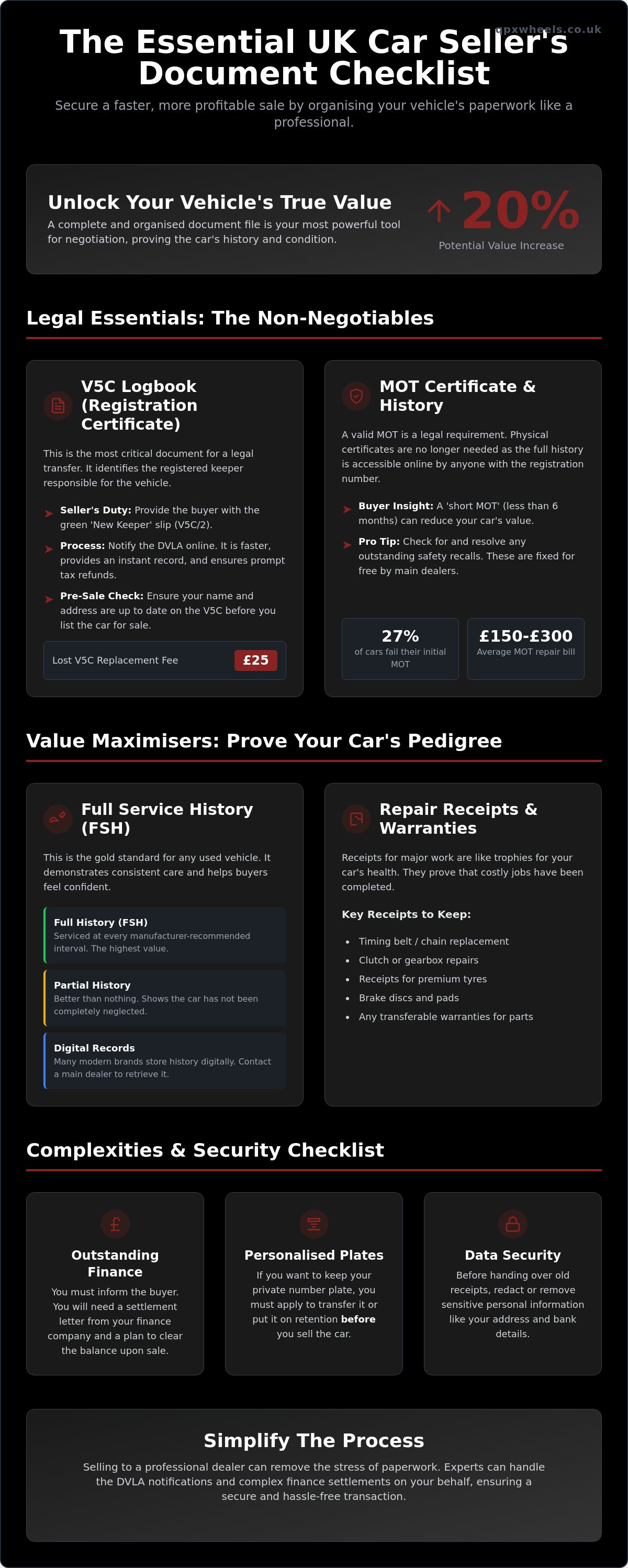
Getting your paperwork in order is the first step toward a successful sale. Without the right legal documents, you cannot officially transfer ownership, and you might remain liable for future fines or tax. The most vital piece of the puzzle amongst the documents needed to sell a car UK is undoubtedly the V5C, often referred to as the logbook. It is a common misconception that this document proves you own the car; in reality, it identifies the registered keeper responsible for taxing and insuring the vehicle.
When you find a buyer, you must provide them with the 'New Keeper' slip, known as the V5C/2. This small green section is the buyer's temporary proof of keepership whilst they wait for the DVLA to post a fresh logbook in their name. For a safe transaction, don't forget to verify who you are dealing with. Asking to see a buyer's driving licence is a sensible precaution. It ensures the name they provide matches their identity, which protects you against potential scams or vehicle cloning issues.
Mastering the V5C Logbook
The V5C logbook has undergone several design changes over the years. You'll primarily need to focus on the section for 'Selling or transferring your vehicle to a new keeper'. If you have moved house or changed your name since purchasing the car, you must update these details with the DVLA before you start the sale process. Selling a car with an outdated address can lead to delays and confusion for the buyer.
While you can still post the logbook to the DVLA, using the online notification service is much faster. It provides an instant record update and ensures you receive any tax refunds promptly. If you've misplaced your logbook, the DVLA charges a £25 fee for a replacement. It's usually best to secure this before listing your car, as many buyers are wary of purchasing a vehicle without seeing the original V5C.
MOT Certificates and History
A valid MOT is a non-negotiable requirement for roadworthiness and builds immediate trust with a buyer. You don't actually need to provide a physical paper certificate anymore. Since the DVSA moved to a digital-first system, buyers can check your car's entire MOT history online using just the registration number. This transparency is helpful, but it also means you cannot hide previous failures or 'advisories'.
Statistics show that approximately 27% of cars fail their initial MOT test. If your car has a 'Short MOT' (typically less than six months remaining), it may decrease your vehicle's valuation. Buyers often factor in the risk of upcoming repair bills, which average between £150 and £300 for a failed test. Before selling, it's also wise to check for outstanding safety recalls. These are free to fix at a main dealer and ensuring they are cleared makes your car far more attractive to professional buyers and private individuals alike.
Maximising Value: Service History and Maintenance Records
While legal papers keep you on the right side of the law, your maintenance records keep your bank balance healthy. A car with a missing history is often viewed with suspicion by buyers, who might fear hidden mechanical problems. Collecting the right documents needed to sell a car UK includes more than just the registration certificate; it involves proving the car has been loved and looked after. As we touched on earlier, a complete history can bolster your price by up to 20% compared to a vehicle with no records at all.
Organising your 'paper trail' is a vital part of preparing the documents needed to sell a car UK if you want to maximise your final sale price. If you are looking for a fair price, having these receipts ready helps you get a reliable vehicle valuation service from experts who appreciate the maintenance you've put in. Once the deal is done, you'll need to use the official government portal to finalise the transfer and stop your legal responsibility for the vehicle.
Full vs Partial Service History
Full Service History (FSH) is the gold standard for any used vehicle. It means the car has visited a workshop at every single interval recommended by the manufacturer. If you've missed a stamp, don't panic. Many modern brands now store records in digital clouds rather than physical booklets. You can often retrieve these missing logs by visiting a main dealer or logging into their owner portals to print a summary. Even a partial history is better than nothing, as it shows a buyer that the car hasn't been entirely neglected.
Repair Receipts and Warranties
Receipts for major work are like trophies for your car's health. If you've replaced a cambelt, fitted a new clutch, or bought a fresh set of premium tyres, keep those invoices at the front of your folder. They provide peace of mind that the buyer won't face these 'big ticket' expenses shortly after the purchase. Even receipts for DIY parts can reassure a skeptical buyer that you've used quality components.
Don't forget the original glovebox pack, which includes the owner's handbook and any details for transferring remaining warranties. Whether it's a five-year manufacturer guarantee or an aftermarket policy, being able to pass this protection to the new keeper is a massive selling point. This extra layer of security often makes the difference for buyers choosing between two similar vehicles.
Handling Complexities: Finance, Private Plates, and EVs
Selling a standard petrol hatchback is one thing, but what if your car still belongs to a finance company or carries a sentimental personalised registration? Managing these unique hurdles requires a more specific set of documents needed to sell a car UK. If you feel overwhelmed by the extra steps, checking a comprehensive car selling checklist can help you stay organised whilst you tackle these complexities. These additional layers of paperwork are essential for ensuring the transaction is legal and that you don't lose money or your favourite number plate in the process.
Outstanding Finance and Settlement Letters
Legally, you cannot sell a car with outstanding Hire Purchase (HP) or PCP finance to a private individual because you don't actually own the vehicle yet; the lender does. To move forward, you must request a 'Settlement Figure' from your finance provider. This document confirms exactly how much is left to pay and is valid for a specific period, usually 12 days. Once you have this figure, you can pay off the balance yourself or find a buyer willing to settle it for you. Whilst private buyers often avoid the risk of finance, professional dealerships like QPX Wheels have deep expertise in handling HP finance settlements directly, settling the balance with the lender as part of the purchase to give you total peace of mind.
Personalised Number Plates (V317)
If you've invested in a personalised registration, you'll need the V317 form to ensure it doesn't leave with the vehicle. You must apply to the DVLA to 'retain' the plate before you hand over the V5C logbook. If you wait until after the sale, the plate technically stays with the car and becomes the property of the new owner. There is a standard £80 fee to put a plate on retention, which provides you with a certificate valid for ten years. It's best to start this process at least two weeks before you plan to sell, as you'll need to wait for a replacement V5C showing the car's original or age-related registration number.
For electric vehicle (EV) owners, 2026 buyers are increasingly focused on long-term reliability. Providing a battery health certificate, often called a 'State of Health' (SoH) report, offers vital transparency about the battery's remaining capacity. Additionally, ensure you have the original purchase receipts for any included charging cables. For older petrol or diesel cars, having proof of ULEZ or Clean Air Zone (CAZ) compliance is a significant asset. Whilst most modern cars are automatically compliant, having the documentation ready can reassure buyers in urban areas that they won't face daily charges.
Security and Sales Paperwork: Protecting Your Data
Handing over the keys is the final hurdle, but the paperwork you leave behind matters just as much for your long-term security. Protecting your personal information is a vital part of managing the documents needed to sell a car UK. You've spent time organising your folder to maximise value, but now you must ensure that sensitive details don't end up in the wrong hands. A secure sale is about more than just receiving the payment; it's about ensuring a clean break from the vehicle's legal and financial responsibilities.
The Private Sale Receipt Template
A clear, written receipt is your best protection against future disputes. Unlike a professional dealer sale, a private transaction is generally 'sold as seen', but you still need a formal record to prove when the transfer happened. Your receipt should include the date, the agreed price, the vehicle's VIN, and the mileage at the point of handover. Both you and the buyer should sign two identical copies so that everyone has a permanent record of the agreement. Keep your copy for at least six years. This is particularly helpful if you ever need to prove to the authorities that you weren't the registered keeper at the time of a later speeding fine or parking ticket.
Fraud Prevention and Document Safety
Be extremely cautious when showing your V5C logbook to potential buyers. A common scam involves 'cloners' who ask to photograph the document under the guise of 'checking the history'. They only need the 11-digit reference number to order a fraudulent copy or to change the vehicle's keeper details online without your knowledge. Always keep this specific number covered with your thumb whilst the buyer inspects the document. Additionally, always verify the buyer’s driving licence before allowing a test drive. This ensures they are legally permitted to be behind the wheel and helps you identify exactly who you are dealing with before they start the engine.
Before you hand over service history folders, take a moment to redact your home address or phone number from old invoices using a dark marker. The buyer needs to see the mechanical work was completed, but they don't need your private contact details. Once the sale is complete, you must notify the DVLA immediately to trigger your tax refund. Remember that road tax is non-transferable. For the 2026/27 tax year, the standard VED rate is £200, and you will receive an automatic refund for any full remaining months once the DVLA processes the change of keeper. Don't forget to cancel your insurance policy immediately to avoid paying for a vehicle you no longer own.
If the thought of managing these security risks and redacting years of paperwork feels daunting, you can skip the stress entirely. At QPX Wheels, we provide a secure vehicle valuation service and handle every aspect of the administrative transition, ensuring your data remains protected and your finance is settled correctly from start to finish.
Simplifying the Process: Selling Directly to QPX Wheels
Organising the documents needed to sell a car UK can feel like a full-time job. Between redacting sensitive data from old receipts and shielding your V5C from potential cloners, the administrative burden is significant. Whilst the checklist we have covered provides a clear path for private sales, there is a much simpler alternative. Choosing a professional dealer like QPX Wheels removes the stress of paperwork entirely, allowing you to enjoy a seamless transition to your next vehicle without the typical hurdles of a private transaction.
The Dealer Advantage
The primary benefit of selling to us is that we act as your administrative partner. You won't need to worry about the complexities of V317 plate transfers or chasing lenders for finance letters. We guide you through the entire process with the expertise gained from 16 years of industry experience. Instead of spending hours organising a perfect paper trail, you can rely on our transparent 39-point vehicle inspection. This rigorous check ensures we understand the true value of your car or van, even if your service history is partial or some receipts have gone missing over the years.
Security is another major factor where the dealer route excels. You won't have to host strangers for viewings at your home or worry about the 'reference number' rule on your logbook. We handle the DVLA notifications instantly and ensure all finance settlements are managed correctly. This professional approach protects your reputation and your bank balance, providing an instant payment and a guaranteed sale that private listings simply cannot match.
Next Steps: Getting Your Valuation
If you are ready to avoid the time-wasters and the headache of sales receipts, the next steps are incredibly straightforward. We pride ourselves on a welcoming, community-oriented service that puts your peace of mind first. You don't need to be a car expert to get a fair deal; we handle the technical and legal details so you don't have to. When you visit us for an appraisal, simply bring the following items to help us finalise the deal:
- Your V5C logbook (the most recent version)
- Any service history or maintenance records you have collected
- A form of photo identification, such as a driving licence or passport
- The latest settlement letter if your vehicle has outstanding finance
- Both sets of keys and the owner's handbook pack
We are dedicated to an honest, customer-first philosophy that makes selling your vehicle a positive experience. You can start the process right now by using our online tools to see what your vehicle is worth. Sell your car fast with QPX Wheels and let our team of seasoned professionals take the administrative weight off your shoulders today.
Take the Next Step Toward a Successful Sale
Selling your vehicle doesn't have to be a source of stress. By gathering the right documents needed to sell a car UK, you've already done the hard work of protecting your legal interests and maximising your car's value. Whether you are navigating the complexities of an outstanding finance settlement or simply organising your service history folder to prove your vehicle's maintenance, being prepared ensures you remain in control of the transaction from start to finish. A well-organised folder is often the difference between a quick sale and a long, drawn-out process.
If you would prefer to skip the administrative hurdles and security risks entirely, our team is here to help. With over 16 years of automotive experience, we provide nationwide support and take care of all the tricky DVLA and finance paperwork on your behalf. We pride ourselves on transparency and reliability, ensuring you get a fair deal without the typical private sale pitfalls. Get a fair valuation and sell your car today at QPX Wheels. We look forward to helping you move on to your next journey with total peace of mind and confidence.
Frequently Asked Questions
Can I sell my car without a V5C logbook in the UK?
Yes, you can legally sell a car without a logbook, but it's significantly more difficult to find a buyer. Most private buyers and professional dealerships are wary of vehicles without a V5C because it's the primary way to verify the registered keeper. If you've lost your document, the DVLA charges a £25 fee for a replacement. It's usually best to organise this before listing your vehicle to avoid devaluing your sale.
What documents do I need to give the buyer specifically?
You must give the buyer the 'New Keeper' slip, which is Section 2 of the V5C logbook. This allows them to tax the vehicle immediately. You should also provide a signed sales receipt that includes the date, price, and vehicle details. Whilst not a legal requirement, handing over the service history and owner's handbook is a standard part of the documents needed to sell a car UK that helps the new owner maintain the vehicle properly.
Do I need to provide the original MOT certificate?
No, you don't need to provide a physical paper MOT certificate to the buyer. Since the DVSA moved to a digital system, all MOT records are stored online and can be accessed by anyone using the vehicle's registration number. However, it's helpful to show the buyer the digital record to prove the car is roadworthy. This is particularly important given that approximately 27% of cars fail their initial MOT test.
How do I notify the DVLA that I have sold my car?
The most efficient way to notify the DVLA is through their online service, which updates the vehicle's record instantly. You'll need the 11-digit reference number from your V5C logbook to complete the process. If you prefer the traditional route, you can fill in the relevant section of the paper logbook and post it to the DVLA in Swansea. Notifying them promptly ensures you aren't held responsible for any future fines the new owner might incur.
What happens to my car insurance and road tax when I sell?
Your road tax and insurance don't transfer to the new owner. Once you notify the DVLA of the sale, they will automatically trigger a refund for any full remaining months of tax. For the 2026/27 tax year, the standard VED rate is £200, so this can result in a helpful payment back to you. You must also contact your insurance provider to cancel or transfer your policy as soon as the keys change hands.
Should I give the buyer my service history receipts?
Yes, giving the buyer your maintenance receipts is a great way to prove the car has been cared for. These documents can significantly increase the vehicle's value by showing a clear timeline of repairs and servicing. Before you hand them over, make sure you redact your home address and phone number with a dark marker. This ensures the buyer sees the mechanical history without compromising your personal data privacy.
Is a 'Sold as Seen' receipt legally binding in a private sale?
In a private sale, a 'Sold as Seen' receipt generally means the buyer accepts the car in its current condition with no warranties. It's legally binding in the sense that the buyer has less protection than they would with a dealer. However, the car must still match the description you gave and must be roadworthy. Having both parties sign two copies of a clear receipt is the best way to prevent future disputes.
What extra documents are needed for selling an electric car (EV)?
Selling an EV in 2026 requires a few extra items to satisfy modern buyers, such as a battery health certificate. This report provides transparency regarding the battery's remaining capacity and longevity. You should also include purchase receipts for charging cables and any information regarding battery warranties or lease agreements. These are essential documents needed to sell a car UK when you're dealing with zero-emission technology.


