
What if the "perfect" car you just found online is actually a mechanical nightmare waiting to happen? With the average price of a used car in the UK reaching over £17,000 in 2026, the stakes have never been higher for your bank balance. It's completely normal to feel a bit of a wobble when you're standing on a stranger's driveway, wondering if you've missed a smoking engine or a dodgy V5C logbook. We know that the pressure from a seller can make even the most confident buyer overlook a serious red flag.
That's why we've created this expert-backed used car inspection checklist PDF to give you total peace of mind. We believe that every buyer deserves to feel like a pro, so we're sharing the exact steps we use to ensure our own stock is reliable and safe. By downloading this guide, you'll gain the confidence to spot hidden faults and know exactly when it's time to walk away from a bad deal. We'll walk you through everything from checking the legal 1.6mm tyre tread depth to performing a rigorous "behavioural" test drive. You'll learn how to verify paperwork and understand which issues are minor fixes and which ones are absolute deal-breakers.
Key Takeaways
- Learn how to verify a vehicle's identity and history by decoding the V5C logbook and identifying patterns in the MOT history.
- Discover the techniques for spotting hidden accident repairs and mechanical leaks that could lead to costly future bills.
- Download our expert used car inspection checklist PDF to ensure you systematically test every interior electronic system and cabin feature.
- Master the "behavioural" test drive to evaluate engine performance, clutch health, and gearbox transitions like a professional.
- Gain the confidence to walk away from a deal by understanding the significance of HPI clearance and calculating potential repair costs.
The Paperwork Foundation: Verifying Identity and History
Before you even pop the bonnet, you need to be certain that the person selling the vehicle actually has the legal right to do so. Paperwork isn't just a formality; it's your legal shield. Whilst the global used car market has become increasingly digital, the physical logbook remains the gold standard for UK buyers. If a seller can't produce the original documents, it's usually time to walk away. Using a used car inspection checklist PDF helps you tick off these essential documents before you spend a single penny.
The V5C and Legal Ownership
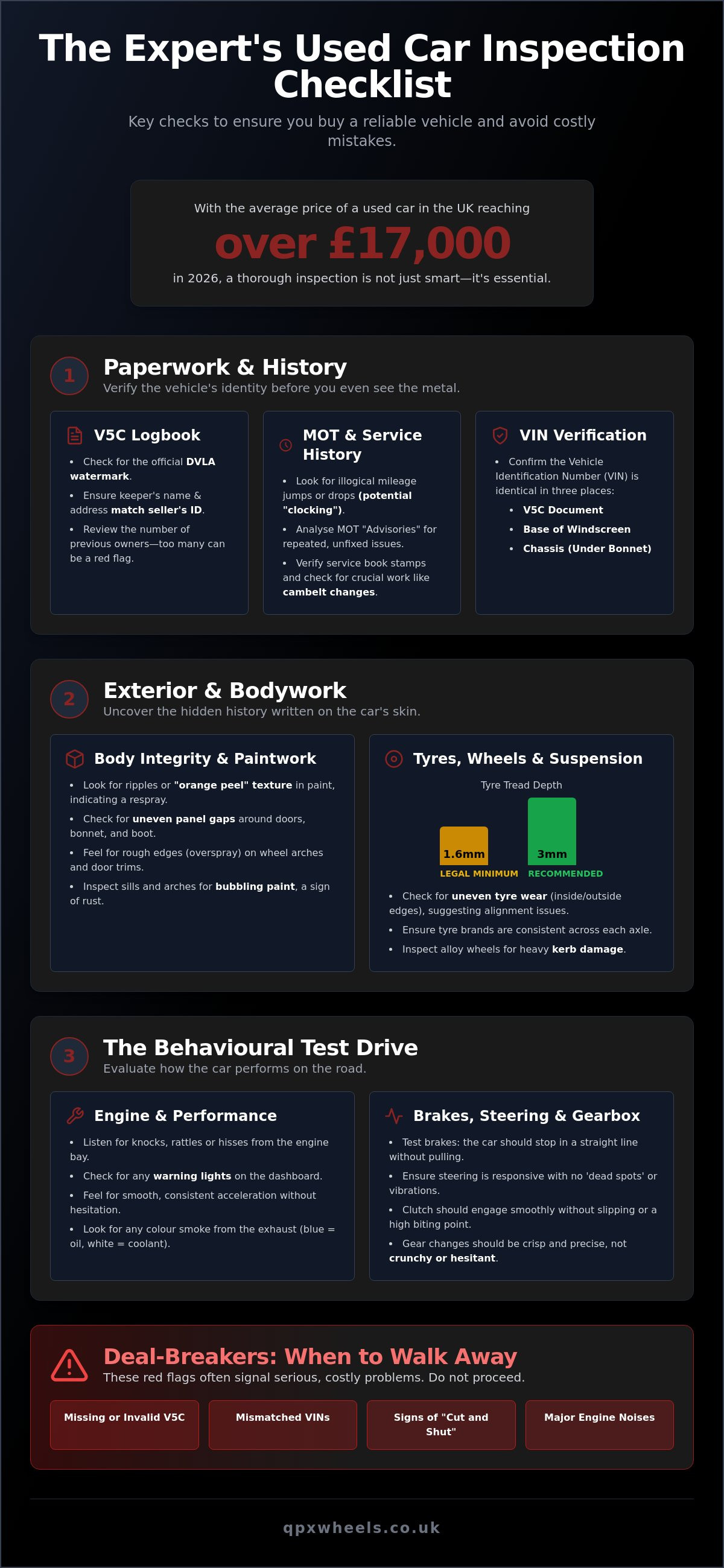
The V5C logbook is the most vital piece of the puzzle. You should always check for the official DVLA watermark by holding the document up to the light. If it feels like standard printer paper or the colours look washed out, be cautious. Check that the registered keeper's name and address match the seller's ID if you're buying from a private individual. Keep in mind that the number of previous owners should align with the advert. A car that has changed hands five times in just a few years might be hiding a persistent mechanical fault that previous owners simply couldn't fix.
MOT History and Service Records
A "fresh MOT" is a great selling point, but the real story lies in the historical data. You can check this online for free, but having the physical certificates allows you to cross-reference mileage easily. Look for a steady, logical increase in miles each year. If the mileage drops or stays exactly the same between two years, the car might have been "clocked." Pay close attention to "advisories" on the certificates. These are faults that weren't quite bad enough to fail but will need money spent on them soon. If you see "brake pad wear" appearing as an advisory three years in a row, it suggests the previous owner was neglectful with basic maintenance.
Don't forget to check the service book for stamps from reputable garages. For many modern cars, the cambelt or timing chain needs replacing at specific intervals, often around 60,000 to 100,000 miles. If there's no proof this was done, you could be looking at a catastrophic engine failure shortly after purchase. Finally, verify the Vehicle Identification Number (VIN). You'll usually find this at the base of the windscreen and stamped onto the chassis under the bonnet. If these numbers don't match each other or the V5C, the car could be a "cut and shut" or stolen. Keeping these details organised in your used car inspection checklist PDF ensures you don't miss a single red flag during the excitement of the viewing.
Exterior and Bodywork: Spotting Hidden Repairs
Once you're satisfied with the paperwork, it's time to step outside and examine the vehicle's "skin." The exterior tells a story that a seller might not want to share. Whilst a few stone chips on the bonnet are expected for a car with average mileage, a perfectly pristine front end on a seven-year-old vehicle could indicate a recent respray to hide accident damage. Having a physical used car inspection checklist PDF in your hand ensures you don't miss these subtle cues while chatting with the seller. Following the official government guidance on buying a vehicle is a great start, but a deep dive into the bodywork is where you'll find the truth.
Body Integrity and Paintwork
Start by looking down the side of the car in natural daylight. You're looking for ripples or "orange peel" textures in the paint, which suggest a non-factory finish. Run your finger along the edges of the doors and wheel arches; if it feels rough, you've likely found paint overspray. Check the panel gaps around the bonnet, boot, and doors. These should be perfectly uniform. If a gap tapers or is wider on one side, the car's frame might have been pulled or poorly repaired after a collision. Don't forget to look for bubbling paint on the sills or wheel arches, which is often a sign of rust creeping through from the inside.
Tyres, Wheels, and Suspension
Tyres are often the most overlooked part of a DIY inspection, yet they're the only part of the car in contact with the road. The legal minimum tread depth in the UK is 1.6mm, but for true safety, we recommend at least 3mm. Check for brand consistency across the axles; a car with four different budget tyre brands suggests the previous owner was cutting corners on maintenance. Look for uneven wear on the inside or outside edges of the tread, as this points to poor wheel alignment or suspension issues. If the alloy wheels are heavily kerbed, it's a sign the car has been driven without much care for precision. If you'd rather skip the stress of spotting these faults yourself, you can explore our range of used cars that have already passed our rigorous 39-point professional inspection.
Finally, inspect the glass and lights. Check the windscreen for any chips or cracks, especially in the area directly in front of the driver, as these can lead to an MOT failure. Look inside the headlight and taillight housings for signs of moisture ingress or "fogging," which can indicate a broken seal or a hairline crack that will eventually short out the bulbs. These small details are easy to miss when you're in a hurry, so take your time and trust your eyes.
Mechanical and Interior: Under the Bonnet and Inside the Cabin
After you've scrutinised the bodywork, it's time to dig into the mechanical heart and the digital brain of the vehicle. This stage of the process requires a bit more "hands-on" effort. Whilst the car might look pristine on the outside, the engine bay and cabin often reveal the true story of how a vehicle has been treated. Bringing a printed used car inspection checklist PDF helps you stay methodical when a seller is trying to rush you through the viewing. It's easy to get distracted by a shiny dashboard, but you need to ensure everything works exactly as it should.
Engine Bay Essentials
Open the bonnet and look for signs of neglect. A very dirty engine bay is honest, but an engine that has been steam-cleaned right before your arrival can sometimes be a tactic to hide fresh oil leaks. You should always check the underside of the oil filler cap. If you spot a thick, creamy white substance (often called "mayonnaise"), it could indicate a failing head gasket. This is a major red flag that often leads to a four-figure repair bill. Check the coolant level and colour; it should be clear and bright, not murky or oily. Don't just look for leaks; use your nose. The sweet smell of hot coolant or the acrid scent of burning oil can alert you to issues that haven't left a puddle yet. Finally, take a quick look at the battery terminals. Excessive white corrosion or loose wires suggest a lack of basic maintenance.
Cabin Comfort and Electronics
Inside the car, your goal is to verify that the "wear and tear" matches the odometer. If the car shows 30,000 miles but the steering wheel is shiny and the rubber on the pedals is worn through to the metal, the mileage might not be genuine. Test every single electronic feature. This includes:
- Air Conditioning: It should blow ice-cold air within 60 seconds of being turned to the lowest setting.
- Infotainment: Ensure the touchscreen is responsive and the Bluetooth connects without fuss.
- Windows and Mirrors: Check that all motors operate smoothly without grinding noises.
Safety equipment is non-negotiable. Pull every seatbelt to its full length to check for fraying and ensure they lock correctly when tugged sharply. The most important check happens when you first turn the key to the "on" position. Every warning light, including the engine, ABS, and airbag symbols, should illuminate. Once you start the engine, they must all disappear. If a specific light doesn't appear at all during the initial check, it's possible a dishonest seller has disabled the bulb to hide a persistent fault. Keeping these points noted on your used car inspection checklist PDF will give you the leverage you need during price negotiations later on.
The Test Drive: Evaluating Performance and Behaviour
The test drive is where the car's personality truly reveals itself. Whilst the previous checks covered the static condition, this is your chance to evaluate its "behaviour" under pressure. Always insist on starting the car from cold. If you arrive and the bonnet feels warm, the seller might be trying to hide a rough idle or a puff of blue smoke that only appears on a cold start. Your used car inspection checklist PDF should have a dedicated space to note any rattles or unusual smells that occur during those first few minutes of idling. Blue smoke usually points to oil burning, whilst thick white smoke can indicate coolant entering the combustion chamber.
Pay close attention to the clutch and gearbox during those first few miles. In a manual car, the bite point should be somewhere in the middle of the pedal's travel. If it's right at the top, the clutch is likely nearing the end of its life and will soon need replacing. Transitions between gears should feel smooth and notch-free. In an automatic, there shouldn't be any thumping or hesitation when the car shifts. These mechanical nuances are easy to miss if you're chatting with the seller, so keep your focus on the car's feedback and keep your radio off to hear every sound.
The Driving Experience
Don't settle for a quick spin around the block. You need to test the vehicle on various road types, including urban stop-start traffic and motorway speeds. At 60mph, listen for a high-pitched "whining" noise, which often indicates a worn gearbox or differential. On a straight, flat road, briefly loosen your grip on the steering wheel to see if the car pulls to one side. If it does, the tracking is out or there's a more serious suspension issue. Any knocking sounds when driving over speed bumps usually point to worn bushes or dampers, which are common advisories on UK MOT tests.
Braking and Emergency Handling
Brakes shouldn't just stop the car; they should do it without drama. If you feel a "juddering" or vibration through the pedal when slowing down, the brake discs are likely warped and will require a trip to the garage. Test the ABS by performing a controlled emergency stop in a safe, quiet area. You should feel a rapid pulsing through the pedal as the system prevents the wheels from locking. Finally, find a hill to test the handbrake. It should hold the car firmly without needing to be pulled to its absolute limit. If you're worried about missing these mechanical subtleties, you can view our pre-inspected stock where our experts have already completed a 39-point behavioural test for you.
Using a structured used car inspection checklist PDF ensures you don't get swept up in the excitement of the drive. It keeps you grounded and objective. Remember, a car that looks great but drives poorly is never a bargain, no matter how low the price seems.
Final Decision: Using Your Checklist and Choosing Quality
By the time you've completed your used car inspection checklist PDF, you'll have a clear, objective view of the vehicle's condition. You're no longer relying on a "gut feeling" or the seller's persuasive stories; you have the facts. The final step is deciding whether the car is a sound investment or a financial trap. It's about weighing up the cost of any identified repairs against the asking price and knowing when a fault is simply too risky to ignore.
Negotiation and Deal-Breakers
Use your findings as a professional tool for negotiation. If you've spotted that the tyres are approaching the 1.6mm legal limit or that a service is due in the next month, it's perfectly reasonable to ask for a price reduction to cover these upcoming costs. Most honest sellers expect a bit of back-and-forth based on genuine wear and tear. However, you must be prepared to walk away if you encounter "red flag" issues. A crunching gearbox, blue exhaust smoke, or a missing V5C logbook are not things you can easily negotiate around. These are signs of deep-seated problems that will likely cost more than the car's value to put right.
One non-negotiable factor is the HPI status. Buying a car with outstanding finance is a massive risk, as the finance company remains the legal owner and could repossess the vehicle even after you've paid the seller. Always ensure the vehicle is HPI clear to protect your investment. Whilst a private "sold as seen" deal might look cheaper on paper, the lack of consumer protection can make it a very expensive mistake if a hidden fault appears a week later.
The QPX Wheels Professional Standard
Whilst a DIY used car inspection checklist PDF is an excellent starting point for any buyer, it can't quite match the depth of a professional workshop assessment. At QPX Wheels, we've spent 16 years refining our standards to remove the anxiety from the buying process. Every vehicle in our stock undergoes a rigorous 39-point professional inspection that covers safety, mechanical integrity, and electrical health far beyond what's visible on a driveway. We don't just look for faults; we fix them before the car ever reaches the showroom.
We believe in total transparency, which is why all our vehicles are HPI clear and come with a free three-month warranty for your peace of mind. This safety net ensures that you're protected against the unexpected, allowing you to enjoy your new car without worrying about hidden bills. If you want to skip the stress of the DIY hunt and move straight to a vehicle you can trust, we're here to help. View our HPI clear, 39-point inspected cars for sale and experience the confidence that comes from buying from a seasoned local expert.
Drive Away with Absolute Confidence
Buying a vehicle should be an exciting milestone, not a source of stress. By verifying the V5C logbook and listening for subtle mechanical behaviours during the test drive, you've already done more than most buyers to protect your hard-earned money. You now have the tools to distinguish between a genuine bargain and a car that's hiding a difficult past. Whilst being thorough takes time, it's the only way to ensure your next car is as reliable as it looks on the screen.
To keep these steps organised during your next viewing, make sure to Download Your Free Used Car Inspection Checklist PDF. At QPX Wheels, we've spent over 16 years building a reputation for transparency. If you'd prefer to skip the DIY checks entirely, remember that every vehicle we sell undergoes a 39-point professional inspection and includes a free three-month warranty for retail sales. Whether you use our guide or choose one of our pre-inspected cars, you're now equipped to make a choice that brings you years of happy motoring. Good luck with your search!
Frequently Asked Questions
What should I look for when buying a used car with high mileage?
You should prioritise a complete service history over the number on the odometer. Check specifically for proof that major components like the cambelt, water pump, and clutch have been replaced at the manufacturer's recommended intervals. High-mileage cars that have spent their lives on motorways often have less wear on the engine and suspension than low-mileage vehicles used solely for short, stop-start city journeys.
Can I take a used car to a mechanic for a pre-purchase inspection?
Yes, you are well within your rights to request a professional pre-purchase inspection from a qualified mechanic. Most reputable dealers and private sellers will welcome an independent check from organisations like the AA or RAC. Whilst a DIY check is a great starting point, a professional can use diagnostic tools to find hidden electronic faults that aren't visible to the naked eye.
How long should a thorough used car inspection take?
A comprehensive inspection typically requires between 45 and 90 minutes to complete properly. You'll need about 30 minutes to work through your used car inspection checklist PDF for static checks, including the bodywork and engine bay. The remaining time should be dedicated to a thorough test drive that covers both urban roads and motorway speeds to ensure the car behaves correctly in all conditions.
What are the most common "deal-breakers" on a used car checklist?
The most serious deal-breakers include signs of engine failure, such as blue smoke or white sludge under the oil cap, and any evidence of structural accident damage. If a vehicle isn't HPI clear or the seller cannot produce a genuine V5C logbook, you should walk away immediately. Using a used car inspection checklist PDF helps you stay objective and prevents you from ignoring these expensive red flags during a viewing.
Is an MOT enough to prove a car is mechanically sound?
No, an MOT certificate only confirms that the vehicle met the minimum legal safety and environmental standards on the day of the test. It doesn't provide any guarantee regarding the health of the engine, the condition of the clutch, or the longevity of the gearbox. A car can pass its MOT whilst still having significant mechanical issues that could lead to a breakdown just a few weeks later.
What documents should a seller provide when I buy a used car?
The seller must provide the original V5C logbook, the current MOT certificate, and the service history record. It's also helpful to see original manuals and receipts for any major repairs or parts, such as new tyres or brake discs. Verifying these documents ensures the car has been maintained properly and confirms that the person selling the vehicle is the legal registered keeper.
What does "HPI Clear" actually mean for a UK buyer?
An HPI clear status confirms that a vehicle has no outstanding finance, hasn't been reported stolen, and hasn't been written off by an insurance company. This is a crucial check because if you buy a car with hidden finance, the lender could legally repossess it from you. At QPX Wheels, we ensure every vehicle in our stock is HPI clear to give our customers total peace of mind.
How do I check if a used car has been in a major accident?
Look for uneven panel gaps, mismatched paint colours, and rough edges that suggest a respray or "overspray" on plastic trim. You should also inspect the "chassis legs" under the bonnet and the floor of the boot for any signs of rippling or welding that isn't factory-standard. These structural clues often indicate that the car has suffered a significant impact and has been repaired outside of a manufacturer-approved centre.


