
Did you know that a single missing service stamp or a misplaced logbook could reduce your car's trade-in value by hundreds of pounds? Selling your vehicle should be an exciting step toward your next purchase, yet many drivers find the administrative side genuinely daunting. It's completely natural to feel anxious about correctly filling out V5C sections or handling outstanding finance settlements. This guide simplifies the process, ensuring you have all the essential documents needed to sell car to dealer UK to secure the highest possible valuation and a seamless, legal transfer.
We'll walk through the 2026 requirements, covering everything from the £25 V5C replacement process to the latest digital MOT record standards. You'll learn how to organise your paperwork to guarantee instant payment and total peace of mind regarding your DVLA notifications. By the end of this checklist, you'll be ready to turn that stack of paper into a fast, high-value sale while avoiding the common pitfalls that often delay a transaction.
Key Takeaways
- Learn why the physical V5C logbook remains the most critical document for a legal transfer and how to handle a missing one efficiently.
- Discover the specific documents needed to sell car to dealer UK if you have outstanding finance on a Hire Purchase or PCP agreement.
- Understand how a well-organised service history and spare keys can protect your vehicle's value from unexpected price deductions.
- Identify the proof of identity and bank details required to facilitate a secure, instant payment on the day of the sale.
- See how partnering with an experienced dealer simplifies the process by letting experts manage the complex DVLA paperwork for you.
The Legal Essentials: V5C Logbook and DVLA Requirements
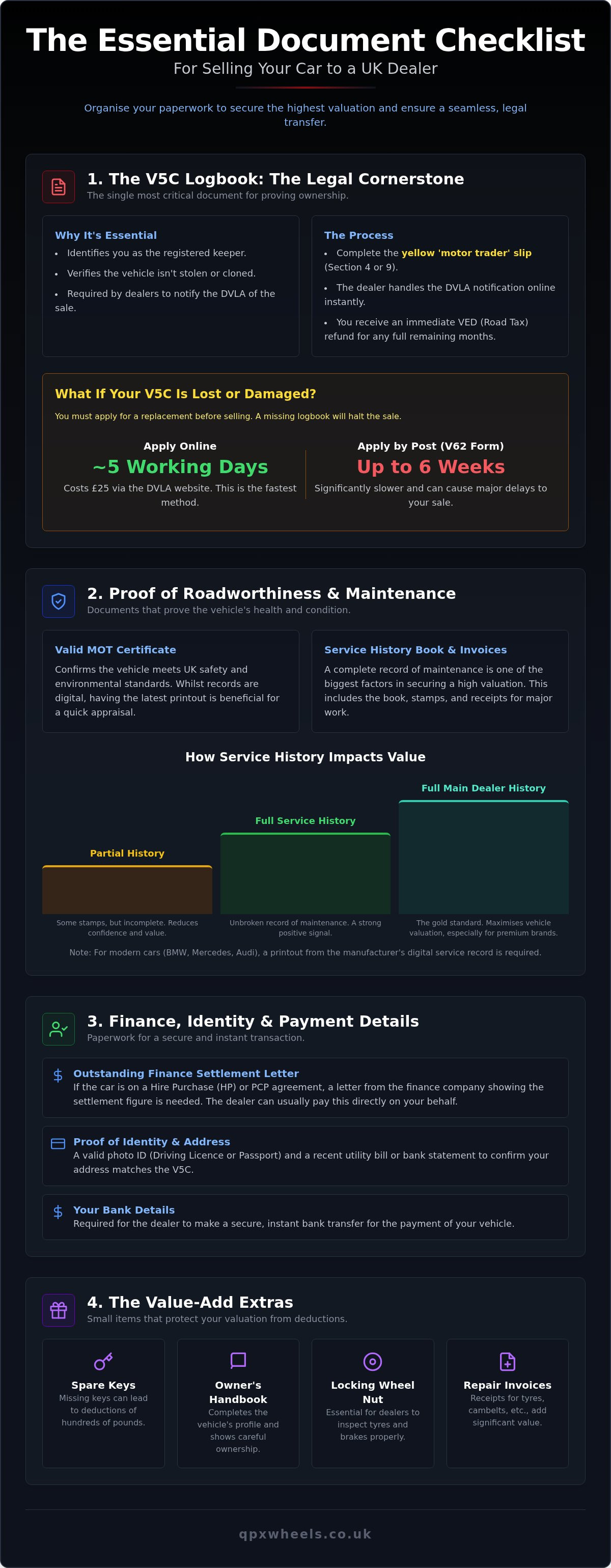
When you start gathering the documents needed to sell car to dealer UK, the V5C logbook is your most important asset. Often referred to as the UK vehicle registration certificate (V5C), this document identifies you as the registered keeper. It's the primary way a dealer verifies that the vehicle isn't stolen or cloned. Without this physical piece of paper, most professional buyers will politely decline the purchase. They need the unique reference numbers to notify the DVLA of the transfer of ownership immediately.
You might wonder why a digital copy isn't enough. In the motor trade, the physical document acts as a security measure. It ensures the person selling the car has physical possession of the vehicle's history. When you're showing your car to a potential trade buyer, keep the logbook safe. It's wise to show the document to prove its existence, but don't let anyone photograph the 11-digit reference number until the deal is finalised. This protects you from logbook cloning, where scammers use your details to create fraudulent documents for other vehicles.
The "Yellow Section" of the V5C is specifically designed for selling to a motor trader. In older logbooks, this was Section 9; in newer versions, it's Section 4. You'll fill this out together with the dealer. They'll keep this part, and you'll keep the rest of the document until the notification is complete. It's a straightforward process that ensures the vehicle is legally moved into the trade category.
Notifying the DVLA: Your Responsibilities
The days of waiting weeks for a paper confirmation are largely over. Most dealers now use the DVLA's online portal to notify the change of keeper instantly. This is beneficial for you because it triggers an automatic refund of any remaining full months of Road Tax (VED). It's a simple step. While the dealer often handles the bulk of the digital submission, the legal liability for the vehicle remains with you until the DVLA receives that notification. Always ask for a printed or emailed confirmation of the transfer before you leave the dealership. This gives you total peace of mind that you're no longer responsible for future parking fines or speeding tickets.
Lost or Damaged Logbooks: The V62 Process
If your logbook has gone missing or is too damaged to read, you'll need to apply for a replacement before selling. Applying for a replacement ensures you have all the documents needed to sell car to dealer UK without delays. You can do this through the DVLA website for a £25 fee. If you apply online, a new V5C usually arrives within five working days. However, if you have to use the V62 postal form, it can take up to six weeks. Most dealers will wait for the new document to arrive before completing the sale. A duplicate logbook doesn't necessarily lower your car's value, but it does mean the dealer has to be extra diligent with their background checks to ensure everything is above board.
Validating Roadworthiness: MOT and Comprehensive Service History
Beyond the logbook, your car's MOT status and service record act as the ultimate proof of its health. A valid MOT confirms the vehicle meets the minimum environmental and road safety standards required in the UK. Whilst the DVLA stores these records digitally, having a printed history provides immediate clarity during a trade appraisal. It's helpful to remember that the maximum fee for a standard car MOT is capped at £54.85, and ensuring your car has a fresh certificate can often make it more attractive to a buyer. For a comprehensive document checklist, refer to industry standards that highlight how roadworthiness documentation underpins the entire sale.
The distinction between a Full Service History (FSH) and a Partial Service History is often where the most significant valuation shifts occur. A vehicle with a complete, unbroken chain of stamps or digital entries proves it has been maintained according to manufacturer schedules. For luxury vehicles or used vans, 'Full Dealer' stamps are the gold standard, as they indicate that only genuine parts and specialist technicians have touched the engine. These are essential documents needed to sell car to dealer UK if you want to achieve the top end of the market price. Don't forget to include the original owner's handbook and technical manuals, as these small items complete the vehicle's profile and suggest a careful previous owner.
The Digital Service Record Trend
Many modern manufacturers, including BMW, Mercedes, and Audi, have moved away from physical service books in favour of online databases. If your car falls into this category, it's a good idea to retrieve your digital records before visiting a showroom. You can usually access these through the manufacturer's owner portal or by requesting a printout from a local main dealer. Having these ready speeds up the appraisal process significantly. If you aren't sure how your car's history affects its worth, using a professional vehicle valuation service can help you understand the market value before you arrive.
Recent Maintenance and Repair Receipts
Whilst a single receipt for a new bulb might seem trivial, a folder full of invoices for tyres, brakes, and major work tells a story of diligent care. Proof of a recent cambelt change or a new set of premium tyres can directly prevent 're-negotiation' during the physical inspection. When a dealer sees evidence of a 'no-expense-spared' approach, they're much less likely to chip away at the initial offer. These receipts serve as the final pieces of the documents needed to sell car to dealer UK, transforming a standard car into a premium, low-risk stock item for the dealership.
Dealing with Outstanding Finance and Proof of Identity
Selling a car with outstanding Hire Purchase (HP) or Personal Contract Purchase (PCP) is a standard procedure, but it requires specific paperwork to ensure the debt is cleared correctly. You don't actually own the vehicle until the final payment is made; the finance company does. Therefore, a dealer must pay the lender directly to clear the title. This is a vital part of the documents needed to sell car to dealer UK, as it protects both parties from future legal disputes. To start this process, you must request an official settlement letter from your finance provider. This document is different from a regular statement; it provides a final payoff figure that usually remains valid for 12 or 30 days.
Identity verification is equally critical. Professional dealers are highly vigilant about vehicle 'cloning' and identity fraud. You'll typically need to provide two forms of identification. A valid photo driving licence is the preferred primary ID, though a passport is also accepted. To support this, dealers require a proof of address, such as a utility bill or bank statement dated within the last three months. These checks ensure that the person selling the vehicle is the same individual named on the registration documents.
The Finance Settlement Process
Once you provide the settlement letter, the dealer calculates your 'equity'. If your car is valued at £15,000 and your settlement figure is £12,000, you have £3,000 in positive equity to use as a deposit or receive as cash. If the car is worth less than the settlement, you're in 'negative equity'. In these cases, you'll need to pay the difference to the dealer so they can clear the finance in full. As an FCA-authorised specialist, QPX Wheels ensures these transactions are handled with the highest level of security and transparency.
Proof of Address and Ownership
The name on your V5C must match your photo ID and bank details perfectly. If there's a discrepancy, such as a change of name through marriage, you'll need the supporting legal certificates to bridge the gap. Anti-money laundering regulations are incredibly strict in the UK motor trade. This is why dealers cannot pay into a third-party bank account; the funds must go to the registered keeper. If you're selling a vehicle on behalf of a deceased relative, you'll need to provide the original Grant of Probate amongst the other documents needed to sell car to dealer UK to prove you have the legal right to dispose of the asset.
Maximising Your Valuation: The 'Value-Add' Documents
While the V5C and MOT are non-negotiable, other documents needed to sell car to dealer UK can significantly boost your final payout. One of the most overlooked items is the spare key. In 2026, modern car keys are sophisticated electronic devices. If you're missing a second key, a dealer will likely deduct between £200 and £500 from your valuation to cover the cost of a replacement and reprogramming. Similarly, the locking wheel nut key is a small but vital component. Without it, a dealer faces a logistical headache if they need to change a tyre or service the brakes, which can lead to further price chipping during the physical appraisal.
Providing the original purchase invoice is another excellent way to demonstrate provenance. It proves exactly which optional extras were fitted at the factory, ensuring you get credit for that premium sound system or upgraded leather interior. If your vehicle is still covered by a manufacturer or aftermarket policy, bring the warranty documentation. Being able to transfer an existing extended warranty to the next owner adds tangible value to the car in the dealer's eyes, making it a much easier 'sell' on their forecourt.
Electric Vehicle (EV) Specifics
As the used electric car market grows, so does the need for specific technical evidence. A 'Battery Health Certificate' is becoming a standard requirement for used EVs. This document provides a transparent percentage of the battery's remaining capacity, alleviating the buyer's fear of 'range degradation'. You should also provide certificates for home charger installations and proof of ownership for all charging cables. For modern 'connected' vehicles, having a record of software updates ensures the dealer that the car's operating system is current and secure. These specific documents needed to sell car to dealer UK are essential for achieving a premium price in the evolving secondary market.
The Presentation Factor
First impressions are powerful. Presenting your car in a clean condition alongside a neatly organised folder of paperwork creates a 'halo effect'. It suggests that if you've been this meticulous with the records, you've likely been just as careful with the mechanical maintenance. Dealers are far less likely to nitpick over minor cosmetic issues when they see a flawless set of records. This level of transparency builds immediate trust, often resulting in a faster transaction and a more generous final offer. It turns the sale from a negotiation into a simple, professional verification of a well-kept asset.
Selling Your Vehicle with QPX Wheels: A National Solution
Gathering the documents needed to sell car to dealer UK is often the most stressful part of the process. At QPX Wheels, we've spent over 16 years refining a service that removes this friction entirely. We believe that selling your vehicle should be a clear, logical transaction rather than a source of anxiety. Whether you're selling a compact city car or a fleet of used vans, our team provides a professional vehicle valuation service that respects your time and your vehicle's true condition.
One of the biggest hurdles for many sellers is the administrative complexity of finance settlements and DVLA notifications. As an FCA-authorised specialist, we handle these tasks on your behalf. We communicate directly with your lender to obtain the final settlement figure and ensure the debt is cleared instantly upon sale. This level of support ensures legal peace of mind, allowing you to walk away from the transaction knowing every technical detail has been finalised correctly. We take the seasoned guide role seriously, ensuring you don't have to navigate the fine print alone.
Our reach is truly nationwide. You don't need to worry about the logistics of getting your car to a specific showroom or dealing with local buyers. We offer nationwide collection across the UK, bringing our expertise directly to your doorstep. This convenience is part of our commitment to being a supportive partner in your selling journey, ensuring that even the most complex secondary-market transactions feel straightforward and secure. It's about providing a professional assurance that the value we quote is the value you receive.
The QPX Wheels Valuation Journey
We move away from the 'computer says no' approach common in the industry. Our valuation journey begins with a transparent online appraisal, but it's our human expertise that makes the difference. We understand that every car has a unique history that an automated algorithm might miss. During the final physical inspection, we look for the value-add items we've discussed, such as a meticulous service folder or a valid battery health certificate. Because we deal with all types of cars, from budget automatics to luxury vehicles, we can offer competitive prices that reflect current UK market trends and the specific documents needed to sell car to dealer UK that you've prepared.
Ready to Sell? Next Steps
If you've gathered your V5C, MOT history, and service records, you're already ahead of the curve. Using our checklist ensures there are no delays, allowing us to process a same-day payout or a seamless part-exchange for one of our used cars. Our national team is ready to guide you through the final steps, providing a seasoned perspective that simplifies the entire trade-in experience. Don't let paperwork stand in the way of your next vehicle purchase.
Get a professional vehicle valuation from QPX Wheels today
Secure Your High-Value Car Sale Today
Preparing your paperwork is the most effective way to ensure a fast, legal, and profitable transaction. By gathering the essential documents needed to sell car to dealer UK, including your V5C logbook and comprehensive service history, you remove the common barriers to an instant payout. You've learned that transparency regarding outstanding finance and vehicle health certificates not only builds trust but also protects you from unnecessary price negotiations during the final appraisal.
Our team at QPX Wheels is here to simplify every step of this journey. With over 16 years of automotive expertise, we provide the professional assurance you need when parting with a significant asset. We are FCA authorised to manage complex finance settlements and offer a convenient nationwide vehicle collection service, meaning you don't even have to leave your home to complete the sale.
Start your stress-free car selling journey with QPX Wheels
Take that first step today and turn your well-maintained vehicle into a seamless, high-value success.
Frequently Asked Questions
Can I sell a car to a dealer without a V5C logbook?
You usually cannot sell a vehicle to a professional dealer without the original V5C logbook. Dealers require the physical document to verify the registered keeper and to use the 11-digit reference number for the official transfer. If your logbook is missing, you'll need to apply for a replacement from the DVLA for a £25 fee. Whilst some specialist buyers might consider a purchase without one, it often leads to significant delays and a much lower valuation.
Do I need a valid MOT to sell my car to a dealership?
You can sell a car without a valid MOT, but it will drastically reduce the amount a dealer is willing to pay. Most dealerships prefer at least three months of MOT remaining so they can resell the vehicle without immediate maintenance costs. If the MOT has expired, the car cannot be legally driven on public roads. This means the dealer must factor in the cost of professional recovery and the risk of potential repairs needed to pass a new test.
What happens to my insurance when I sell my car to a dealer?
Your car insurance does not automatically cancel when the vehicle is sold; you must contact your provider to end the policy or transfer it to a new car. Once the dealer takes possession and the DVLA is notified, your legal responsibility for the vehicle ends. Cancelling promptly ensures you aren't paying for a car you no longer own and protects your No Claims Bonus from any incidents involving the new owner.
Can I sell a car with outstanding finance (HP or PCP)?
You can absolutely sell a car with outstanding Hire Purchase or PCP finance to a dealer. The dealership will require an official settlement letter from your lender that shows the final payoff figure. As part of the documents needed to sell car to dealer UK, this letter allows the dealer to pay the finance company directly. Any remaining equity is then paid to you or used as a deposit for your next vehicle.
Do I need to provide service history when selling to a trader?
You aren't legally required to provide service records, but failing to do so will negatively impact your car's trade-in value. A complete history proves that the vehicle has been maintained according to manufacturer standards, reducing the risk for the dealer. A car with a missing or incomplete history is often valued lower because the buyer must assume that essential maintenance, such as oil changes or cambelt replacements, may have been neglected.
What documents do I need for a part-exchange in the UK?
The documents needed to sell car to dealer UK for a part-exchange are the same as a standard sale, including the V5C, MOT, and service history. However, you'll also need to provide additional identification for the new vehicle's paperwork. This typically includes your photo driving licence and a proof of address, such as a utility bill or bank statement dated within the last three months, especially if you are taking out a new finance agreement.
How do I notify the DVLA that I have sold my car to a motor trader?
You notify the DVLA by using the "Sold a vehicle to the motor trade" service on the GOV.UK website. You will need the 11-digit reference number from the yellow section of your V5C logbook to complete this. Most modern dealerships will perform this digital notification whilst you are in the showroom. This triggers an automatic refund of any full months of remaining Road Tax and provides you with an instant email confirmation of the transfer.
Do I need to give the buyer my car insurance details?
No, you do not need to provide your insurance details to the dealer or any subsequent buyer. Your insurance policy is a private contract that does not stay with the vehicle once it is sold. Professional dealers have their own trade insurance policies that cover any vehicle in their possession. Your only task is to ensure your own policy is cancelled or updated once the keys have been handed over and the sale is finalised.


