
Imagine standing on a rain-slicked driveway, looking at a gleaming SUV that seems like a bargain, only to discover weeks later that it carries a hidden Category S structural marker or a tampered odometer. It is a stressful scenario that thousands of British motorists face every year, especially as the used market saw over four million transactions in the first half of 2026 alone. You likely feel that familiar mix of excitement and deep-seated anxiety about missing a mechanical red flag or getting tangled in confusing paperwork like the V5C logbook. This used car inspection guide before purchase UK is here to replace that uncertainty with professional assurance and clear, practical advice.
We promise to help you master the art of vehicle appraisal with a comprehensive, UK-specific checklist that ensures your next car is safe, legal, and truly worth your hard-earned money. You will learn how to spot hidden faults under the bonnet, verify digital MOT histories, and handle negotiations with private sellers or dealers with total confidence. From checking tyre tread depths against the legal 1.6mm limit to understanding the latest VED rates for electric vehicles, this guide provides a logical, step by step sequence to protect your investment. By the end of this article, you will have the expertise to either seal a fair deal or walk away from a lemon without a second thought.
Key Takeaways
- Learn how to verify V5C watermarks and cross-reference VIN numbers to ensure your potential vehicle is legitimate and legal.
- Master the 'finger-width' test and identify paintwork colour inconsistencies using this used car inspection guide before purchase UK to reveal hidden accident damage.
- Understand why insisting on a 'cold start' is vital for assessing engine health and how to check fluid levels for signs of contamination.
- Discover how to match cabin wear to the recorded mileage and test electrical systems to avoid inheriting costly mechanical gremlins.
- Gain the confidence to negotiate a fair price based on your findings and compare HP or PCP finance options for a secure transaction.
Essential Paperwork: Verifying the Vehicle's Identity and History
Before you even lift the bonnet, you must scrutinise the vehicle's biography. A mechanical marvel is worthless if the paperwork is fraudulent or if the car is legally owned by a finance company. This used car inspection guide before purchase UK starts with the paper trail because it is the foundation of a safe transaction. Buying from a reputable dealer often removes this stress, as professionals typically verify these details before the car reaches the forecourt.
Spotting V5C Red Flags
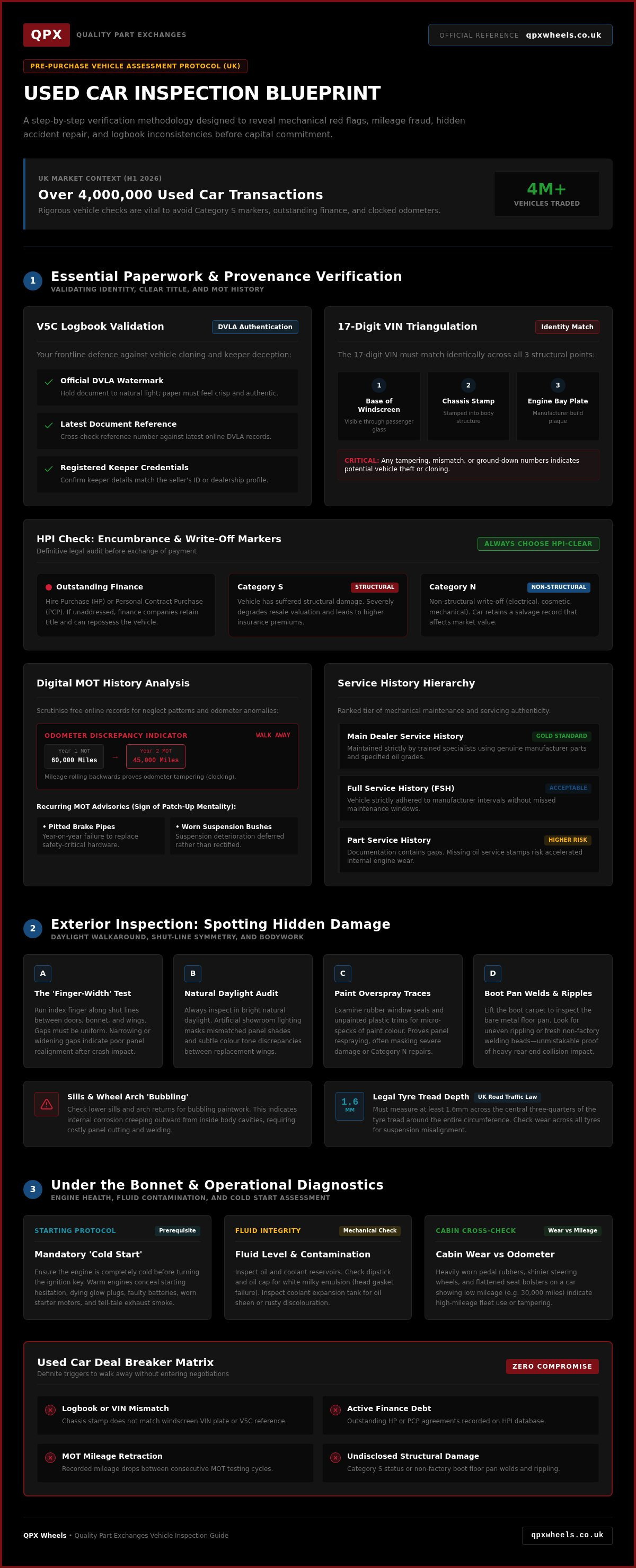
The V5C logbook is your primary defence against vehicle cloning. Hold the document up to the light to check for the official DVLA watermark; it should feel crisp and professional. It is vital to ensure you are looking at the most recent version, as a seller might try to use an old logbook to hide a recent change in keepers or a change in the vehicle's status.
- Check the document reference number matches the latest DVLA records.
- Ensure the 'registered keeper' details align with the seller's identification or the dealership's credentials.
- Verify that the 17-digit VIN on the V5C matches the stamps on the chassis, the base of the windscreen, and the engine bay plate.
The Power of the HPI Check
An HPI check is the definitive safeguard against hidden vehicle debt or theft. It reveals if a car has outstanding Hire Purchase (HP) or PCP finance, which could lead to the vehicle being repossessed even after you have paid for it. Beyond debt, these checks highlight 'Category' markers. A Category S (Structural) or Category N (Non-structural) write-off affects the car's resale value significantly and can impact your insurance premiums. We always recommend choosing HPI-clear vehicles to ensure long-term peace of mind.
The digital era has made verifying a car's health much easier. By checking the UK MOT test requirements and history online, you can spot recurring advisories that a previous owner might have ignored. Look for patterns of neglect, such as 'pitted brake pipes' or 'worn suspension bushes' appearing year after year. These suggest a 'patch-up' mentality rather than proper maintenance.
Mileage discrepancies are another major red flag. If the MOT history shows 60,000 miles one year and 45,000 the next, you should walk away immediately. Finally, differentiate between service records. A 'Full Service History' means the car followed the manufacturer's schedule perfectly. 'Part' history suggests gaps that could lead to premature engine wear. 'Main Dealer' stamps remain the gold standard, showing the car was maintained by specialists using genuine parts and the correct oil grades.
Exterior Inspection: Spotting Hidden Damage and Poor Repairs
The physical inspection begins with the car's shell. Minor scratches are expected on used vehicles, but inconsistent panel gaps or mismatched paint suggest a history of significant accidents. This used car inspection guide before purchase UK focuses on identifying these high-risk areas before you commit your funds. Professional dealers typically reject vehicles with poor structural repairs, but in the private market, the burden of discovery falls entirely on you.
Bodywork and Structural Integrity
Start by walking around the vehicle in natural daylight. Artificial showroom lighting often hides subtle colour variations. Run your index finger along the 'shut lines' between the doors, bonnet, and wings. These gaps should be perfectly uniform. If a gap narrows or widens significantly, the car has likely been dismantled and poorly reassembled.
Check the sills and wheel arches for 'bubbling' paint, which indicates rust creeping from the inside out. Lift the carpet in the boot and look for rippling or fresh welding on the floor pan. This is a classic sign of a rear-end impact that hasn't been professionally repaired. You can cross-reference these physical findings with official GOV.UK vehicle checks to see if any safety recalls or stolen markers have been logged against the chassis.
Look closely at rubber window seals and plastic trim for 'overspray', which are tiny specks of body colour. This proves the panel has been resprayed. While a minor cosmetic touch-up is fine, a full door respray might hide deeper structural damage or a previous Category N incident.
Tyres, Wheels, and Suspension
Tyres are your only contact with the road, so their condition is paramount. Perform the '20p test' by inserting a 20p coin into the tread grooves. If you can see the outer band of the coin, the tyre is approaching the legal 1.6mm limit. For safety, we recommend at least 3mm of tread across the entire breadth of the tyre.
- Look for uneven wear on the inner or outer edges, which suggests the wheel tracking is out or the suspension components are worn.
- Check the alloy wheels for deep 'kerbing' or hairline cracks that could lead to slow air leaks.
- Test the shock absorbers by pressing down firmly on each corner; the car should bounce once and settle immediately without any creaking.
If the car is fitted with budget tyres from four different brands, it suggests the previous owner may have cut corners on general maintenance. Choosing to buy cars from a professional dealership ensures these safety checks are completed by experts before the vehicle is listed for sale. Finally, inspect the glass for chips in the driver’s line of sight and check the light clusters for internal condensation, as both can lead to a failure during the annual MOT.
Under the Bonnet: Assessing Mechanical Health and Engine Condition
Once you are satisfied with the paperwork and the bodywork, it's time to get your hands dirty. The engine is the heart of the vehicle; while a scratch can be buffed out, a blown head gasket or a worn timing belt can cost thousands of pounds to rectify. This used car inspection guide before purchase UK helps you identify these risks before money changes hands. Professional dealers will have already performed these checks, but if you are buying privately, you must be your own mechanic for the day.
Always insist that the engine is stone-cold when you arrive. A warm engine can mask starting issues, rattling sounds, or smoke that only appears when the car is first turned over. If you touch the bonnet and it feels warm, the seller might be hiding a fault that only presents itself during a cold start. Don't be afraid to walk away if the seller refuses this request.
The Engine Oil and Coolant Test
Unscrew the oil filler cap and look at the underside. If you see a thick, white, creamy substance often called 'mayonnaise', it suggests coolant is mixing with the oil, which usually points to a failed head gasket. Next, check the coolant expansion tank. The liquid should be a clear, bright colour, typically pink, blue, or green. If it looks like muddy water or has oily 'scum' floating on top, the cooling system is contaminated. Clean oil and clear coolant are the primary indicators of a well-maintained engine.
Listening to the Engine's Rhythm
Start the car and let it idle. Listen for any sharp 'ticking' or heavy 'knocking' sounds. These often signal internal wear or that the engine has suffered from oil starvation in the past. Whilst the car is running, walk to the back and check the exhaust smoke. Blue smoke indicates the engine is burning oil, white steam (once the car is warm) suggests a coolant leak, and heavy black smoke usually means the car is over-fuelling. Ensure the cooling fan eventually kicks in to prevent overheating, especially if you are following the Citizens Advice guide on buying a used car for extra consumer protection.
Inspect the rubber hoses for any signs of perishing or cracks. Squeeze them gently; they should be firm but flexible. Look at the fan belt or auxiliary belts for fraying or glazing. If the battery terminals are covered in white, crusty corrosion, it suggests a lack of basic maintenance. Finally, look for any 'bodge jobs' in the wiring, such as loose wires or electrical tape, which might indicate poorly installed aftermarket accessories that could cause a short circuit.
The Interior and Test Drive: Testing Functionality and Performance
Stepping inside the cabin provides the best opportunity to verify if the car's condition truly matches its history. This used car inspection guide before purchase UK recommends looking closely at high-contact areas like the steering wheel, gear stick, and rubber pedal covers. If a car shows only 20,000 miles but the steering wheel is worn smooth and the brake pedal rubber is through to the metal, the mileage may have been tampered with. It's a common red flag that warrants further investigation into the service records we discussed earlier.
Testing the Interior Features
Don't be shy about pressing every button. Turn the air conditioning to its lowest setting; it should blow ice-cold within a minute. Conversely, ensure the heater functions on all vents to rule out a blocked heater matrix. Modern infotainment systems can be temperamental, so test the sat-nav and pair your phone via Bluetooth to check for software glitches or connectivity drops. Verify that every electric window operates smoothly and that all seatbelts retract with sufficient tension. These might seem like minor issues, but they are effective negotiation points when finalising a deal.
The 15-Minute Test Drive Routine
The test drive is your most critical appraisal tool. Start by checking the dashboard during the ignition 'self-test'. Every warning light should illuminate briefly and then extinguish. If the ABS or engine management light stays on, or if they don't appear at all, the seller may have disabled them to hide a persistent fault. Once on the road, find a quiet stretch to assess the clutch 'bite point'. A high bite point often indicates a worn clutch nearing the end of its life, which can be an expensive repair on modern vehicles.
Ensure you take the vehicle on a dual carriageway to test stability at 70mph. Listen for wheel bearing whines or steering wheel vibrations that suggest poor wheel balancing. In a safe, clear area, perform an emergency stop to feel the ABS pulse through the pedal and ensure the car doesn't pull to one side. Finally, drive over speed bumps at a moderate speed to listen for 'clunks' or 'knocks' from the suspension bushes. If you'd prefer to skip the stress of a private test drive, you can view our quality-checked used cars where every vehicle is professionally road-tested before being listed for sale.
Making the Decision: Negotiation, Finance, and Secure Payment
Once you have completed the physical checks, it's time to talk numbers. Using this used car inspection guide before purchase UK ensures you have the evidence needed to justify a fair price. If you found that the tyres are near the legal limit or a service is overdue, these aren't just faults; they're leverage. A set of new premium tyres can cost over £400, so it's perfectly reasonable to ask for a price reduction to cover that upcoming expense. Approach the conversation calmly, focusing on the facts you've gathered rather than being confrontational.
Dealer vs Private Purchase
Choosing where you buy is as important as what you buy. When you purchase from a professional dealer, you're protected by the Consumer Rights Act 2015. This gives you a statutory 30-day right to reject the car for a full refund if it's found to be of unsatisfactory quality. Private sales operate under 'caveat emptor', meaning let the buyer beware; you have almost no recourse if the car develops a fault the next day. Dealers also offer extended warranties, which act as a long-term safety net against mechanical failure. For those who find the perfect vehicle further afield, nationwide delivery allows you to access high-quality, HPI-checked stock without the stress of a long journey.
Understanding Finance Options
Many buyers now choose to spread the cost. Hire Purchase (HP) is straightforward; you pay a deposit and fixed monthly instalments, owning the car outright once the final payment is made. Personal Contract Purchase (PCP) offers lower monthly payments but includes a larger 'balloon' payment at the end if you want to keep the vehicle. Both options are available through professional brokerage services, providing more flexibility than a standard bank loan. Always ensure the finance company is FCA-regulated to protect your interests.
Finalising the Paperwork
Never pay in cash. It's untraceable and offers zero protection. Use a bank transfer or, for added security, pay at least a portion on a credit card to benefit from Section 75 protection. Once the funds are sent, ensure you get a dated receipt that includes the seller's address, the agreed price, and the car's VIN. You must complete the 'new keeper' part of the V5C logbook, and the seller should notify the DVLA immediately online. This ensures the new V5C arrives at your door within a few days, confirming you as the legal registered keeper.
Ready to find your next vehicle? Browse our HPI-clear used cars and vans with nationwide delivery.
Driving Away with Confidence
Buying a vehicle is a major milestone, and having the right knowledge transforms a stressful transaction into an empowering experience. This used car inspection guide before purchase UK has equipped you with the professional tools to spot hidden structural damage, verify digital MOT histories, and assess engine health through simple checks like the oil filler cap test. By focusing on transparency and methodical verification, you can now distinguish between a genuine bargain and a costly mistake.
Whilst performing these checks yourself provides peace of mind, choosing a reputable dealer offers a higher level of security. With 16 years of automotive excellence, we ensure every vehicle is HPI-clear and quality-checked before it reaches our forecourt. We handle the complexities of the paperwork and offer flexible HP and PCP finance solutions to suit your budget. Whether you require nationwide delivery for ultimate convenience or an extended warranty for long-term support, we are here to guide you every step of the way. Secure your next quality used vehicle today at QPX Wheels and enjoy the road ahead with total confidence.
Frequently Asked Questions
What is the most important thing to check when buying a used car in the UK?
The most important thing to check is the vehicle's history and paperwork, specifically the HPI status and V5C logbook. A car that appears mechanically perfect is a high risk if it has outstanding finance or a hidden insurance write-off marker. This used car inspection guide before purchase UK emphasises that verifying the legal identity of the vehicle protects you from repossession or buying a stolen asset. Professional dealers ensure these checks are completed before listing any vehicle.
Is it worth paying for a professional car inspection before I buy?
Paying for a professional inspection is often worth the investment when buying from a private seller, as it provides an unbiased mechanical report. However, when you buy from an established dealership with 16 years of experience, these comprehensive quality checks are usually performed as standard. Reputable dealers provide HPI-clear vehicles and often include extended warranties, which offer a more robust safety net than a one-off pre-purchase inspection from a third party.
How do I check if a used car has outstanding finance?
You can check for outstanding finance by performing a comprehensive HPI check or a similar vehicle history report. This search queries databases from finance companies to see if there is an active Hire Purchase (HP) or PCP agreement linked to the car. Because the finance company remains the legal owner until the final payment is made, buying a car with hidden debt could lead to the vehicle being seized without compensation or refund.
What should I do if the seller doesn't have the V5C logbook?
If a seller does not have the V5C logbook, you should walk away from the deal immediately. The V5C is the only official document that proves the vehicle’s identity and allows you to register as the new keeper with the DVLA. Never accept excuses about the document being lost or "in the post". Without it, you cannot verify the VIN or be certain the person selling the car has the legal right to do so.
Can I return a used car if I find a fault after buying it?
Your right to return a used car depends on who you bought it from. Under the Consumer Rights Act 2015, buying from a dealer gives you a 30-day "short-term right to reject" for a full refund if a fault is found. In a private sale, the principle of "caveat emptor" applies, meaning you have very little legal recourse unless the seller actively misrepresented the car. This is why many buyers prefer the protection of a professional dealership.
What are the signs that a used car's mileage has been 'clocked'?
Signs of mileage 'clocking' often appear as a mismatch between the odometer reading and the physical wear inside the cabin. Look for heavily worn rubber pedal covers, a smooth steering wheel, or a frayed driver's seat bolster on a car that supposedly has low mileage. You should also check the online MOT history; if the mileage drops between years or stays suspiciously static, the vehicle's odometer has likely been tampered with to inflate its value.
Should I buy a used car that has a 'Category' marker (Cat S or Cat N)?
Buying a car with a 'Category' marker involves significant risks to both safety and future resale value. Category S indicates structural damage, whilst Category N refers to non-structural issues. These vehicles are often 20% to 40% cheaper, but they can be difficult to insure and may have hidden defects from poor repairs. For total peace of mind, we always recommend sticking to HPI-clear vehicles that have no history of serious insurance claims or structural damage.
How long should a test drive be to properly assess a used vehicle?
A test drive should last at least 15 to 30 minutes to allow the engine to reach its full operating temperature. It is essential to drive on various road types, including town centres for low-speed manoeuvring and dual carriageways to check stability at 70mph. This duration gives you enough time to listen for unusual noises, feel the clutch's biting point, and ensure the cooling fan functions correctly once the vehicle is warm and the engine is under load.


