Why are you letting your hard-earned capital sit on your driveway in a depreciating asset when it could be working for your business elsewhere? Many sole traders and fleet managers feel that buying a vehicle outright is the safest path, yet tying up thousands of pounds often creates unnecessary pressure on your monthly cash flow. It is completely natural to feel hesitant about used van finance if you are worried about inconsistent trading history or the complexities of VAT reclaim. We understand that you simply want a reliable tool for your trade without the financial headache.
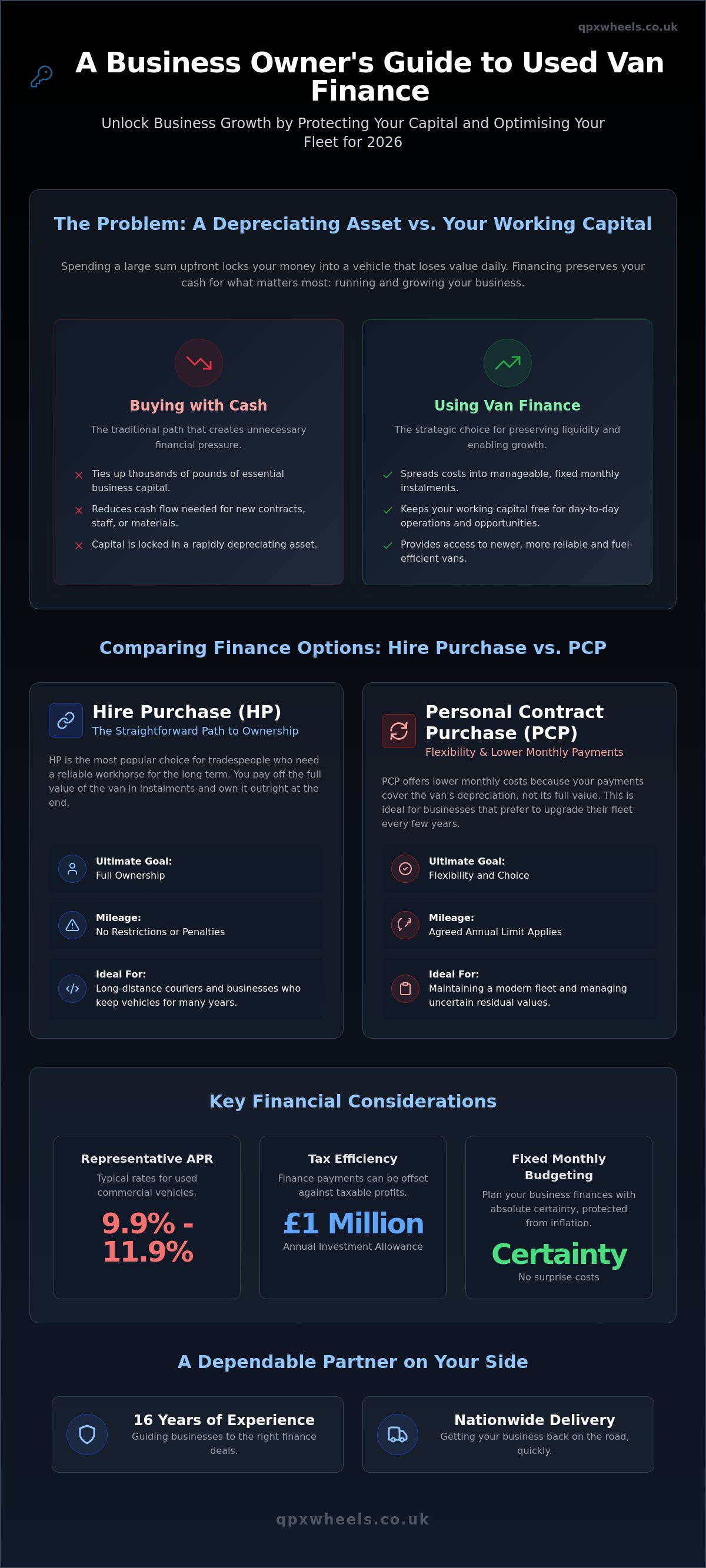
In this guide, we will show you how to secure the most competitive deals for 2026, whether you are looking for the long-term ownership of Hire Purchase or the flexibility of PCP. You will learn how to navigate representative APRs, which currently sit between 9.9% and 11.9% for many used models, and how to use the £1 million Annual Investment Allowance to your advantage. We will walk through everything from fixed monthly budgeting to nationwide delivery, ensuring you have the clarity needed to upgrade your fleet with absolute confidence whilst keeping your bank balance healthy.
Key Takeaways
- Learn how used van finance protects your business capital by spreading costs into manageable monthly instalments rather than a single large outlay.
- Compare the benefits of Hire Purchase for full ownership against PCP for lower monthly commitments and flexible end-of-term options.
- Navigate the complexities of VAT and tax efficiency to ensure your vehicle acquisition supports your long-term budgeting goals.
- Streamline your application by understanding the specific documents and credit factors lenders look for during the approval process.
- Benefit from a dependable guide with 16 years of experience, offering nationwide delivery to get your business back on the road quickly.
Understanding Used Van Finance: Why It Makes Sense for Your Business
At its core, used van finance is a structured credit agreement that allows your business to acquire a vehicle immediately while spreading the cost over a set period. Instead of a large capital outlay, you pay manageable monthly instalments that fit your specific budget. This approach is particularly relevant in 2026 as businesses face a complex economic environment where liquid cash is a valuable safety net. By choosing to finance, you aren't just buying a vehicle; you are making a strategic decision to protect your business liquidity.
Choosing finance over a cash purchase offers several practical advantages for a growing company:
- Fixed monthly costs: You can plan your budget with certainty, protecting your business from the volatility of rising vehicle prices or general inflation.
- Tax efficiency: Monthly finance payments can often be offset against your taxable profits, reducing your overall tax liability at the end of the financial year.
- Capital preservation: You keep your money where it can grow, rather than sinking it into a depreciating asset.
The Opportunity Cost of Buying with Cash
Spending £15,000 upfront on a van might seem like the cheapest route because you avoid interest. However, that money is then locked into a vehicle that loses value every single day. If a lucrative new contract requires you to hire extra staff or purchase raw materials suddenly, you might find your growth stalled because your capital is tied up in a van. Maintaining an emergency fund while still upgrading your commercial fleet ensures you're prepared for the unexpected. Used van finance preserves your working capital for day-to-day operations, allowing you to react to market opportunities without delay or financial strain.
Asset Management in a Changing Market
The UK automotive market is shifting rapidly. With the Zero Emission Vehicle (ZEV) mandate requiring a higher percentage of zero-emission sales in 2026, the residual values of older diesel vans can be unpredictable. Finance agreements, particularly a Personal Contract Purchase (PCP), can offer a level of protection against sudden drops in vehicle value by providing flexible options at the end of the term.
Choosing used van finance also allows you to access a newer, more fuel-efficient model than you might be able to afford with cash alone. This doesn't just lower your daily running costs through better MPG; it ensures your business image remains professional. A modern, reliable van serves as a mobile billboard for your company. It tells your clients that you're a successful, dependable partner who invests in the right tools for the job.
Comparing Hire Purchase (HP) and PCP for Commercial Vehicles
Selecting the right path for your used van finance agreement depends largely on your long-term goals and how many miles you intend to cover. While both options help you avoid the capital drain discussed in the previous section, they serve different business models. You need to decide if you want the certainty of ownership or the flexibility of lower monthly outgoings. Each structure has its own set of rules regarding mileage, maintenance, and what happens when the final payment is made.
Hire Purchase: Simple Ownership
Hire Purchase (HP) remains the most popular choice for independent tradespeople across the UK. It is a straightforward route where you pay an initial deposit, followed by fixed monthly instalments. Once the final payment and a small "option to purchase" fee are settled, the van is yours. It becomes a permanent asset on your business balance sheet, which is a significant win for long-term stability.
The primary advantage for many is the lack of mileage restrictions. If you're a long-distance courier or a national contractor, you don't want to worry about financial penalties for working hard. Because you are paying towards full ownership, the lender isn't concerned with the van's residual value at the end of the term. This makes HP a dependable, "no-surprises" option for those who plan to run their vehicle into the ground over many years.
PCP: Flexibility and Lower Outgoings
Personal Contract Purchase (PCP) is often chosen by businesses that prefer to refresh their fleet every few years. Your monthly payments are typically lower than HP because you aren't paying off the full value of the van. Instead, a large portion of the cost is deferred to the end of the agreement. This is known as the Guaranteed Minimum Future Value (GMFV) or the "balloon" payment.
At the end of a PCP agreement, you have three clear choices:
- Pay the balloon payment to keep the van permanently.
- Hand the keys back and walk away (subject to mileage and condition).
- Trade the van in and use any "equity" towards your next vehicle.
You should be mindful that PCP comes with strict mileage limits and "fair wear and tear" conditions. For a work vehicle that might see heavy use on building sites, these charges can add up. However, for a business that needs to keep its monthly overheads as low as possible, PCP is a powerful tool. While the UK has its own specific incentives for electric fleets, looking at global standards like the Commercial Clean Vehicle Credit shows how finance structures are evolving to help businesses access newer, more efficient technology. If you are unsure which path fits your trade, feel free to view our latest stock and see the different payment structures available for each vehicle.
Navigating VAT, Deposits, and Monthly Budgeting
Budgeting for a new vehicle requires a clear view of the total cost of ownership. It isn't just about the monthly payment; you must factor in insurance, maintenance, and the annual Vehicle Excise Duty, which for the 2026/27 tax year is £360 for standard light goods vehicles. When arranging used van finance, understanding how these moving parts fit together helps you avoid any unwanted surprises down the road. A well-planned budget ensures your van remains a tool for profit rather than a drain on your resources.
VAT for Sole Traders vs. Limited Companies
The biggest initial hurdle for many is the VAT. In the UK, the standard rate is 20%, and most commercial finance agreements require this amount to be paid in full as part of your deposit. If your business is VAT-registered, you can typically reclaim 100% of this cost on your next return, provided the van is used for business purposes. This makes the cash flow impact temporary, though it still requires the liquid capital to be available on day one. For businesses not registered for VAT, this 20% becomes a permanent part of the vehicle's cost.
A VAT deferral option allows businesses to pay the tax element at the start of the agreement and then reclaim that full amount back from HMRC usually within three months. This bridges the gap for companies that don't want to sink their trading capital into tax payments indefinitely. While you are navigating these terms, understanding your rights with hire purchase is essential to ensure you're entering an agreement that is fair and transparent. It's always better to ask your lender exactly how the VAT is handled before you sign the final paperwork.
Finding the Sweet Spot for Your Deposit
Your deposit size is the most powerful lever you have for controlling your monthly costs. While some lenders offer low-deposit options to get you on the road quickly, aiming for a 10% to 20% contribution is generally considered the healthy centre of a finance plan. A larger deposit reduces the total amount you borrow, which in turn lowers the amount of interest you pay over the life of the agreement. It's a simple way to make your money go further.
There is often a direct relationship between your deposit and the APR you are offered. Lenders see a larger upfront commitment as a sign of financial stability, which can sometimes unlock more favourable interest rates. If you're looking to keep your monthly outgoings as lean as possible, putting down as much as you can comfortably afford is the smartest move. This proactive approach to used van finance ensures your business remains agile and isn't weighed down by unnecessarily high debt repayments.
How to Secure Approval: Requirements and Credit Considerations
Securing used van finance doesn't have to be a stressful experience. While the thought of a credit check can cause anxiety, especially for those with an inconsistent trading history, the process is designed to ensure the agreement is affordable and sustainable for your business. Most applications follow a logical progression from your initial enquiry through to the final sign-off and vehicle collection. Having a clear understanding of what a lender needs will help you move through these stages with confidence.
Lenders typically look for signs of stability, but you don't always need three years of audited accounts to get approved. Many specialist lenders understand the needs of startups and can base their decisions on recent bank statements or the personal credit history of the directors. This flexibility is vital for new tradespeople who need a reliable van to start generating revenue. We act as a seasoned guide in this process, using our 16 years of experience to match your business profile with the right lender from our extensive panel.
The Essential Documentation Checklist
To keep the application moving quickly, it is helpful to have your paperwork organised before you begin. Lenders generally require a standard set of documents to verify your identity and assess affordability. You should have the following ready:
- Proof of identity: A valid UK driving licence for the primary user and proof of address for directors or sole traders.
- Bank statements: Usually three to six months of business bank statements showing consistent income and outgoings.
- Business details: Your Company Registration Number or evidence of your self-employed status with HMRC.
Managing Your Credit Profile
Understanding how credit searches work is key to protecting your financial standing. A 'soft' search allows a lender to check your eligibility without leaving a permanent mark on your credit file. In contrast, a 'hard' search is a full application that other lenders can see. We always recommend being completely transparent about any previous credit blips. Most finance declines happen because of hidden information rather than the credit score itself. Lenders value honesty, and many are willing to work with businesses that have had past challenges if the current affordability is clear.
Consistent business behaviour, such as paying your suppliers on time and maintaining a healthy bank balance, improves your chances of securing better rates in the future. If you are ready to take the next step and see what options are available for your business, you can apply for finance online through our secure portal and receive a decision quickly.
Choosing QPX Wheels for Your Next Used Van Finance Agreement
Choosing the right partner for your used van finance is just as important as choosing the vehicle itself. At QPX Wheels, we have spent over 16 years building a reputation as a seasoned, dependable guide for businesses across the UK. We understand that a van is more than just a purchase; it is the backbone of your daily operations. This is why we prioritise transparency and clarity over aggressive sales tactics. Our goal is to alleviate the typical anxieties associated with secondary-market purchases by providing a supportive, customer-centric environment where your business needs come first.
Our approach is built on a foundation of trust. We move away from the frantic urgency often found in the automotive trade, opting instead for a steady and methodical process. Whether you are looking for a rugged budget workhorse or a luxury commercial vehicle, our diverse inventory is curated to meet high standards of reliability. We position ourselves as a partner that handles the complexities of the transaction so you don't have to, ensuring every detail of your agreement is clear and ethical.
Seamless Nationwide Delivery and Remote Finance
Distance should never be a barrier to securing a quality vehicle for your trade. We have refined our nationwide delivery service to ensure that your new van arrives at your office or home address safely and on time. Many of our customers now choose to manage their entire acquisition from their desk. Using secure e-sign technology, you can complete your used van finance agreement whilst on the go, without the need for multiple trips to a showroom. This modern, efficient communication style respects your time and focus, allowing you to stay productive whilst we handle the logistics. Every vehicle undergoes a rigorous verification process before it leaves our centre, providing you with absolute peace of mind regarding quality and safety standards.
Support Beyond the Sale
Our relationship with you does not end when the keys are handed over. We offer extended warranties and ongoing advice to ensure your fleet remains reliable and your business stays moving. This commitment to long-term satisfaction is why so many of our customers return to us when they are ready for their second, third, or fourth fleet vehicles. We feel that our role is to act as a seasoned expert, simplifying the process and providing a stable foundation for your business growth. If you are ready to upgrade your fleet with a team that values your trust and your time, you can explore our current used vans for sale and finance options today.
Secure Your Business Growth with the Right Finance
Navigating the complexities of vehicle acquisition doesn't have to be a burden on your time or your cash flow. By understanding the differences between Hire Purchase and PCP, and preparing your documentation in advance, you put your business in a position of strength. Whether you are reclaiming VAT as a limited company or managing your first trade as a sole trader, the right used van finance agreement acts as a catalyst for growth rather than a financial strain. It allows you to preserve your working capital for the day-to-day operations that truly drive your profit.
At QPX Wheels, we use our 16 years of industry expertise to ensure you receive a transparent, supportive service from your first enquiry to the moment your van is delivered to your door. We offer comprehensive HP and PCP solutions tailored to your specific trading history and budget. We are here to help you get back on the road with a reliable vehicle and a payment plan that feels comfortable and clear. View Our Latest Used Vans and Apply for Finance Online Today to take the next step in scaling your business with confidence. We look forward to helping you move your business forward.
Frequently Asked Questions
Can I get used van finance if I am self-employed?
Yes, you can secure finance for a commercial vehicle even if you are self-employed. While you might not have years of audited accounts, lenders can often assess your eligibility using recent business bank statements or your personal credit score. This allows sole traders to access the same competitive rates and vehicle options as limited companies, ensuring you have the right tools to grow your business from day one.
What is the difference between HP and PCP for a commercial van?
The main difference lies in ownership and monthly outgoings. Hire Purchase (HP) is a direct path to owning the van once all payments are made, with no mileage restrictions. Personal Contract Purchase (PCP) offers lower monthly instalments by deferring a large 'balloon' payment to the end of the term. You then choose whether to pay the balloon to keep the vehicle, trade it in, or return it to the lender.
Do I have to pay the VAT upfront on a financed van?
Most commercial finance agreements require the full 20% VAT to be paid upfront as part of your deposit. However, for VAT-registered businesses, there is often a VAT deferral option available. This allows you to pay the tax at the start and then reclaim it from HMRC, usually within three months. This helps bridge the gap and keeps your initial cash outlay manageable while you wait for your tax return.
Can I get finance on a used van with a poor credit history?
Yes, having a poor credit history does not automatically disqualify you from securing used van finance. We work with a panel of specialist lenders who look beyond a simple credit score to understand your current affordability and business stability. Transparency is essential during the application process. Being honest about past challenges allows us to find a lender that matches your specific circumstances rather than relying on automated decisions.
Is there a mileage limit on used van finance agreements?
Mileage limits depend entirely on the type of agreement you choose. Hire Purchase agreements typically have no mileage restrictions because you are paying towards full ownership of the vehicle. In contrast, PCP agreements include a set annual mileage limit because the vehicle's future value is calculated based on its expected wear and tear. If you exceed this limit on a PCP plan, you may face additional charges at the end of the term.
How long does the finance approval process usually take?
The finance approval process is often very quick, with many decisions reached on the same day or within 24 to 48 hours. Once you provide the necessary documentation, such as proof of ID and bank statements, the lender will conduct their assessment. Having your paperwork organised in advance is the best way to speed up the process. We aim to keep you informed at every stage so you can plan your fleet upgrade with certainty.
Can I settle my van finance agreement early?
You can usually settle your finance agreement early by requesting a settlement figure from your lender. This figure includes the remaining capital balance and any interest due up to that point, though some lenders may apply a small early exit fee. Settling early can be a good option if your business circumstances change or if you want to upgrade to a newer model sooner than originally planned.
Does QPX Wheels offer nationwide delivery for financed vans?
Yes, QPX Wheels provides a nationwide delivery service for all our financed vans to any address in the UK. This means you can browse our inventory, secure your used van finance, and sign your documents remotely using secure e-sign technology. We handle the logistics of transport so you don't have to take time away from your business. Your vehicle is thoroughly verified and safely transported directly to your door.


