
The amount spent on modifications isn’t the same as the value they add. Getting an accurate valuation for a modified car means looking beyond an online estimate to the quality of the work, buyer demand and evidence behind each upgrade. If standard valuation tools don’t reflect your car’s non-standard parts, or your receipts and fitting records are scattered, it can be hard to know where to start.
A fair appraisal considers the car as it is, rather than assuming every modification raises its value. Some upgrades may appeal to a particular buyer; others may make little difference or narrow the market. Asking prices for similar cars offer context, but they don’t show what those vehicles actually sold for.
This guide explains how to organise specifications, receipts and installation records, compare online estimates with other valuation methods, and present your car clearly for an evidence-led appraisal. QPX Wheels brings over 16 years of industry experience to its vehicle valuation and buying service. You’ll learn what supports a credible valuation and how to distinguish a realistic sale value from an ambitious advert price.
Key Takeaways
- Getting an accurate valuation for a modified car starts with evidence of what’s been changed and how the work was completed.
- Record each modification’s type, brand, fitting date and installer where known, then gather receipts and supporting records.
- Use online guides and comparable adverts as reference points, not proof of a car’s final sale value.
- Present the car clearly and disclose modifications, known faults and unfinished work for a more informed appraisal.
- Compare the evidence with an individual valuation to understand your options for a potential sale.
Why getting an accurate valuation for a modified car takes more than an online estimate
An accurate valuation is a reasoned estimate of what a particular car may be worth, based on its specification, condition and relevant market evidence. For a modified car, that means looking beyond make, model, age and mileage. A standard online guide can provide a useful starting point, but it may not recognise specialist parts, unusual combinations of options or the quality of individual workmanship.
General valuation methods consider factors such as a vehicle’s condition and market context, as outlined in Car valuation. An automated estimate may treat a modified example much like a standard one. It might not distinguish a carefully fitted, reputable component from a poorly matched part, or account for how a change affects the car’s appeal to prospective buyers.
Be clear about what figure you’re seeking. A sale valuation estimates what the car may achieve in a current market transaction. An advert’s asking price is what a seller hopes to achieve, not confirmation of the final sale price. An insurance figure serves a different purpose, while a sentimental estimate reflects personal attachment rather than what buyers are likely to pay.
Which modifications can influence a car’s market appeal?
Changes that are relatively easy to reverse, such as a set of wheels or a vinyl wrap, can give a future owner more flexibility than substantial alterations to the bodywork. Mechanical or interior changes may also influence appeal, but their effect depends on the car, the work and the audience. A well-integrated upgrade may suit some buyers; an unusual specification may appeal strongly to a smaller group.
Workmanship and compatibility matter. Parts that fit properly and work cohesively with the vehicle can be easier for a buyer to assess than a collection of unrelated changes. A modification that raises questions about fit, usability or the condition of affected components may make a buyer more cautious. There’s no automatic increase or reduction: demand and the finished car both count.
Why modification costs do not automatically increase value
Invoices show what you paid for parts and labour. They’re useful evidence of what was fitted and, where recorded, who completed the work. But they don’t prove that a buyer will pay the same amount on top of the car’s value. Spending and resale value measure different things.
For example, imagine an owner spends £1,000 on custom interior trim. The receipt verifies the expenditure, but a buyer who prefers the original finish may place little extra value on it. Another buyer might appreciate the detail, yet still compare the car with alternatives and take its age and condition into account. The trim’s cost remains £1,000; its contribution to a sale price depends on the market, not the invoice.
Personal taste is part of the equation. A modification chosen to make the car distinctive may be exactly what another buyer wants, or it may narrow the pool of interested people. Getting an accurate valuation for a modified car means weighing documented work against condition and likely demand, rather than adding the cost of every upgrade to a standard guide figure.
How to build reliable evidence for a modified-car valuation
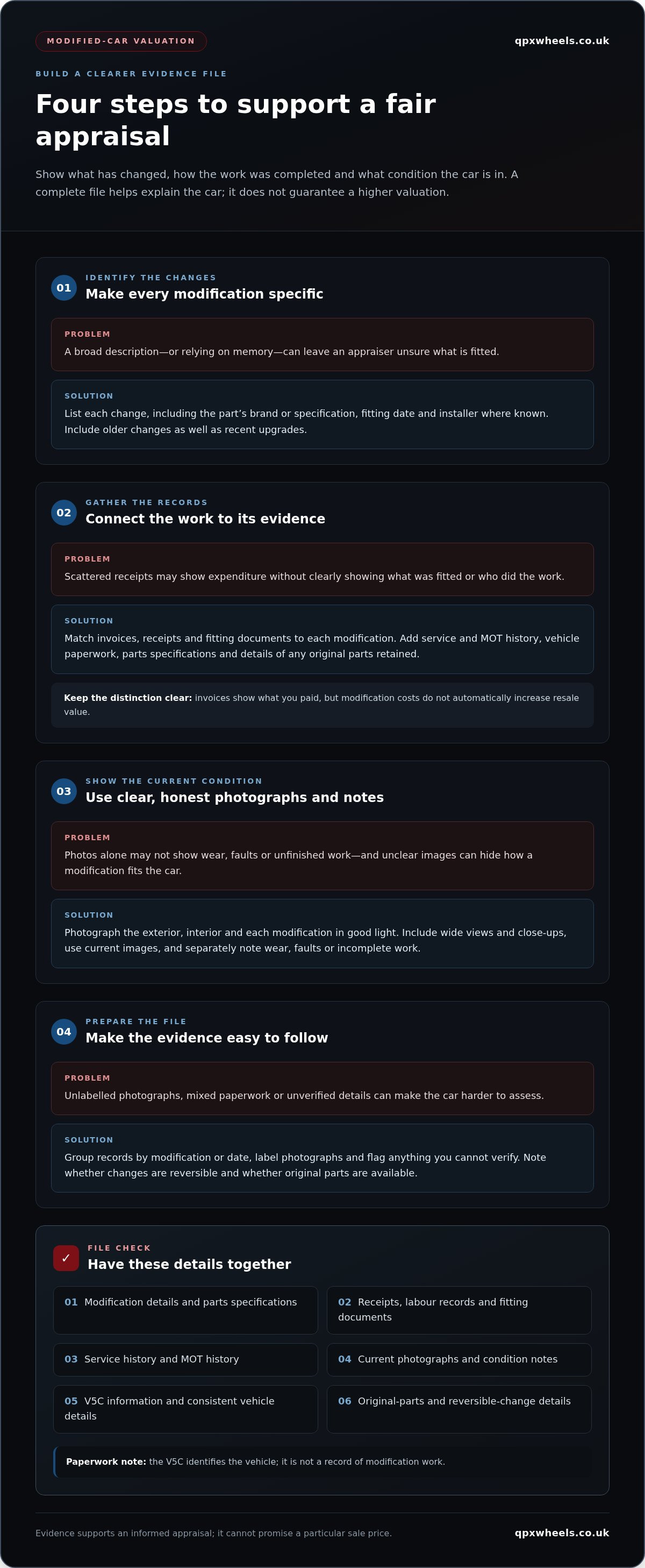
A clear evidence file helps an appraiser understand what has changed, how the car has been maintained and its current condition. Work through the process in order: identify the modifications, gather records, document the car’s condition, then present everything for an appraisal. This helps separate confirmed details from estimates or memories and gives the assessment a sounder basis.
- List each modification. Record what was changed, the part’s brand or specification, when it was fitted and who installed it, where known. Include older changes as well as recent upgrades.
- Collect supporting records. Match invoices, receipts and fitting documents to the relevant item. Add service and MOT history, plus vehicle paperwork that helps identify the car.
- Document the current condition. Take clear photographs and make a separate note of wear, faults or unfinished work that images may not show fully.
- Organise the file for appraisal. Group documents by modification or date, label photographs and flag anything you can’t verify. Complete evidence helps explain the car, but doesn’t guarantee a higher valuation.
Create a complete modification and ownership file
Keep parts specifications alongside receipts so the records show what was fitted as well as what was spent. Include available fitting documents and note whether original parts are still retained. If a change can be reversed, record that too. Keep service history, MOT history and V5C details with the file. Check that the vehicle’s identifying details are consistent, while remembering that the V5C identifies the vehicle and isn’t a record of modification work.
Quick checklist: Prepare modification details, parts and labour records, service and MOT history, V5C information, original-parts details and a note of reversible changes.
Show the car’s current condition clearly
Photograph the exterior, interior and each modification in good light. Include wide views that show how changes fit with the whole car, as well as close-ups of distinctive parts. Use current photographs and avoid angles or editing that hide marks. Images support your description, but can’t explain every issue, so note wear, faults or incomplete work plainly.
Be precise about what you know. If you have no receipt for an older part, identify it as unverified rather than guessing its brand or fitting date. This helps an appraiser distinguish documented facts from recollection. Keep records easy to follow by grouping paperwork with the relevant parts and labelling images clearly. A concise file makes details easier to locate and helps explain how the current specification came about.
Once your information is organised, it’s easier to discuss the vehicle as part of a valuation. QPX Wheels’ vehicle valuation and buying service provides an appraisal and a route to a potential sale.
Compare valuation methods without mistaking asking prices for car values
No single reference tells the whole story of a modified car. Online guides, adverts and an individual appraisal each offer different information. Use them together, and be clear about what each figure represents. An advertised price is a seller’s starting point, not proof that a buyer paid that amount or an offer you’re certain to receive.
| Method | What it can tell you | Where it falls short |
|---|---|---|
| Online valuation guide | A broad reference based on details such as make, model, age and mileage. | Standard inputs may not reflect bespoke work, specialist parts or the effect of modifications. |
| Comparable adverts | How sellers are pricing cars with similar specifications. | Advertised prices are asking prices, not confirmed sale values or guaranteed offers. |
| Individual appraisal | A considered view of the specific car, its condition, records and market appeal. | The assessment is an estimate, not a promise of a particular sale outcome. |
When online valuation tools are useful, and where they fall short
Online estimates are useful for establishing a starting point for an otherwise similar standard car. They can show how factors such as age and mileage shape a baseline. But a set of unusual parts, bespoke interior work or specialist specification may not fit the tool’s standard categories. Use the result as context, not a definitive figure for a modified vehicle.
For a better comparison, look for several cars close in age, mileage, model, specification and condition. Then compare the modifications: a similar-looking car may have different parts, workmanship or completeness. One advert alone can distort your impression, especially if its specification is rare or its asking price is ambitious.
What an individual appraisal can add
An individual appraisal brings the vehicle’s details together with its present condition and supporting documents. This context helps distinguish a documented, well-integrated modification from one whose quality or effect is harder to assess. A professional buyer may also consider whether likely buyers will value the changes, rather than treating their original cost as added resale value.
Insurance assessments answer a different question from sale valuations. An insurer’s assessment relates to the purpose and terms of a policy, whilst a sale valuation considers a possible market transaction. The figures may differ because their purpose and basis differ. Neither an insurance figure nor an advert should automatically be treated as the amount a buyer will pay.
To get an accurate valuation for a modified car, compare online guidance and like-for-like adverts, then use the vehicle’s evidence to inform an individual assessment. QPX Wheels’ vehicle valuation and buying service offers a practical next step, drawing on over 16 years of industry experience. The valuation remains specific to the car and its circumstances.
Prepare your modified car for a fair, evidence-led appraisal
Preparation makes it easier to assess the car as it stands, rather than relying on incomplete details or assumptions. Bring together a concise vehicle summary, modification information and an honest account of its condition. Clear, organised records help an appraiser follow the facts and understand what supports each claim. They don’t guarantee a higher valuation, but they can make the assessment better informed.
What to share before the valuation
Start with the basics: make, model, age, trim and current mileage. Add a short list of modifications, noting installation details, available records and any standard components you’ve kept. Be direct about known faults, wear and unfinished work. If a part’s brand or fitting history is unknown, say so rather than presenting it as verified.
- A concise vehicle summary, including mileage and trim
- A modification list with supporting records where available
- Details of retained standard parts and known condition issues
- Clear photographs that show the car and its modifications
Accurate disclosure supports a more informed appraisal. Describe the car consistently in conversation, paperwork and photographs, including details that may affect a buyer’s view. The V5C helps identify the vehicle, but it doesn’t replace records of modifications or establish who completed the work.
How to compare the valuation with your expectations
If the figure differs from what you expected, consider how the car’s condition, specification, modifications and market evidence shaped the assessment. Compare it with genuinely similar vehicles, allowing for differences in age, mileage, condition and equipment. A higher advert price alone doesn’t establish a stronger sale value, particularly if the car’s specification or presentation differs.
Keep your expectations separate from the evidence. You may value the time and care invested in a build, but an appraisal considers the vehicle and its appeal to likely buyers. If you’re weighing up a part-exchange, a guide to maximising part-exchange value can help you consider that decision separately from the valuation.
Before the appraisal, check that the information you provide is complete and easy to follow. Put the vehicle details at the front of your file, group related records together and make any gaps clear. This gives the assessor a straightforward way to connect the car’s specification with its condition, rather than relying on an unstructured collection of paperwork.
Clarity matters more than trying to present every change as an advantage. If you’re ready to discuss your vehicle with a buyer, request a vehicle valuation through QPX Wheels’ valuation and buying service. The assessment can consider the car’s details and evidence without guaranteeing a particular figure or sale outcome.
Get a modified-car valuation and decide on your next step
You’ve done the groundwork: organised the records, described the modifications and condition honestly, and compared relevant market references. The next step is to use that information to support an appraisal of the car as it is. Clear, consistent details help make the discussion about value more useful, especially where a standard online estimate cannot reflect the full specification.
QPX Wheels provides a vehicle valuation and buying service, drawing on over 16 years of industry experience. An appraisal considers the vehicle and its circumstances, but doesn’t guarantee a particular figure or mean you have to proceed with a sale. Treat it as a practical reference for deciding what to do next.
What happens after you receive a valuation?
Review the assumptions behind the figure. Check that the make, model, trim, mileage, modifications and condition have been described accurately. If a detail was missing or has changed, clarify it before relying on the assessment. You can also ask how the vehicle’s specification and relevant market evidence informed the valuation.
A valuation is a basis for discussion, not a guarantee that a sale will be completed at that amount. The final decision depends on the vehicle and the terms agreed between the parties. If you’re ready to explore a sale, understand each stage and follow sensible steps for selling a car securely.
Choose the next step that suits your plans
You might use the assessment to consider a private sale, a sale to a buyer or a part-exchange. These routes can involve different priorities, so decide what matters most to you, such as convenience, timing or the amount you hope to achieve. Keep the valuation alongside your comparable references, but remember that an advert price or insurance figure may not represent a sale value.
If the result differs from your expectation, return to the evidence rather than assuming the modifications should add their full cost to the car. Check whether the appraisal reflects the correct specification and condition, and whether your comparisons genuinely match the vehicle. A calm review can help you understand the difference and decide whether to accept the assessment, seek further context or wait before making a decision.
Getting an accurate valuation for a modified car means combining reliable records, an honest description and relevant market context. You remain in control of what happens next. Explore QPX Wheels’ vehicle valuation service to discuss your car and consider whether a potential sale is right for you.
Take the next step with confidence
A valuation doesn’t have to make the decision for you. Use it as a starting point for weighing up your options, whether you’re considering a sale, a part-exchange or simply want a better understanding of your car’s position in the market. If the figure surprises you, consider the evidence and the factors that shaped it before deciding how to proceed.
Getting an accurate valuation for a modified car is about understanding how your particular vehicle may be viewed, not finding a single figure that suits every owner or buyer. QPX Wheels provides a vehicle valuation and buying service, backed by over 16 years of industry experience. If you’re ready to discuss your car, explore QPX Wheels’ vehicle valuation service and choose the next step that feels right for you.
Frequently Asked Questions
Do modifications increase a car’s value?
They can, but an upgrade doesn’t automatically add value. A buyer may appreciate a modification that suits the vehicle and is fitted neatly, whilst another may prefer an original specification. For example, a practical infotainment upgrade could appeal to someone seeking that feature, but a highly individual interior finish might limit interest. The effect depends on the car, its condition and the preferences of likely buyers, not simply the parts bill.
How do I get an accurate valuation for a modified car?
Start with the car’s correct details, including trim, mileage and current condition, then describe each modification as precisely as you can. Include the part or brand where known, and distinguish documented facts from details you’re unsure about. Compare the car with genuinely similar examples, then use an individual appraisal to consider its complete specification. A clear account helps avoid assumptions, such as treating an unverified upgrade as a professionally fitted part.
Can I use an online car valuation tool for a modified vehicle?
Yes. An online tool can give you a useful baseline, especially if you enter accurate details for the vehicle in its standard specification. Treat the result cautiously if the modifications don’t fit the tool’s available options. For instance, a bespoke suspension setup may not be represented by a basic make, model and mileage form. Use the estimate as one reference, then compare it with similar vehicles and the car’s actual condition.
What documents should I provide when valuing a modified car?
Provide available receipts, invoices, parts specifications and fitting records, alongside the service history, MOT history and V5C details. These documents have different roles: an invoice may show a purchase or installation, whilst the V5C identifies the vehicle and isn’t a modification log. If paperwork is missing, say so rather than implying the work is documented. Records for retained original parts can also help explain what could be returned to standard.
Should I tell the buyer about modifications to my car?
Yes. Give the buyer a clear account of the changes, including known faults, unfinished work or uncertainty about who fitted a part. Omitting an alteration can lead to confusion when the vehicle is inspected or its records are reviewed. For example, if the exhaust has been changed but you don’t know the exact specification, describe what you can verify and make the uncertainty clear. Straightforward disclosure supports an informed discussion.
Why is my modified car’s valuation lower than its advertised prices?
An advertised price is a seller’s chosen asking figure, not proof of the amount a buyer will pay. The cars you’ve found may also differ in mileage, condition, trim, modification quality or how long they’ve been advertised. A comparison is more useful when it matches the details that affect a buyer’s decision. Check whether the examples are genuinely similar, and treat unusually high asking prices as market context rather than confirmed sale evidence.
Does an insurance valuation match a sale valuation for a modified car?
Not necessarily. An insurance assessment is made for insurance purposes and may use a basis that differs from an estimate of what the car could sell for. The figures can therefore vary without either being a guaranteed sale price. Check what vehicle details and modifications the insurance figure assumes, and keep it separate from your sale research. If the car’s specification changes, make sure your records and assessment information reflect those changes.


