
An online car valuation is a useful starting point, but it isn’t a promise of the amount you’ll receive. If you’re searching for “value my car online UK”, it’s natural to want a clear figure and to wonder how closely it will match your car’s actual condition.
An estimate can help you understand where your vehicle may sit in the market, but its usefulness depends on the accuracy of the details you provide. The eventual sale figure may differ once the car’s condition, history and other individual factors are considered. That doesn’t make an online valuation pointless. It gives you a reference point before you decide what to do next.
In this guide, you’ll learn which vehicle details can influence an estimate, what information and documents to gather, and why an initial valuation may differ from the final sale figure. QPX Wheels has over 16 years of industry experience in vehicle valuation and buying, and we’ll help you understand what to expect before making a decision.
Key Takeaways
- When you value my car online UK, treat the estimate as a guide, not a confirmed sale amount.
- Accurate details, including the registration, model, trim, mileage and MOT information, help describe your car clearly.
- An estimate, an updated assessment and a final agreed sale amount can differ because they may be based on different information.
- Use a practical checklist to prepare your vehicle details before deciding what to do next.
- If you’re considering selling, QPX Wheels’ vehicle valuation and buying service gives you a route to explore, backed by over 16 years of industry experience.
What does an online car valuation in the UK actually tell you?
An online car valuation gives you an early indication based on information about your vehicle. It can’t confirm every detail of the car’s condition or history. If you’re searching “value my car online UK”, treat the result as a guide for planning rather than a guaranteed offer.
An online car valuation is an indicative estimate of a vehicle’s potential market value based on the information available, not a guaranteed sale price. It can give you a useful starting point, but its meaning depends on the details you enter and how the valuation service calculates and presents the figure. For a general overview of the subject, see Car valuation in the UK.
Online estimate, market value and sale offer: what is the difference?
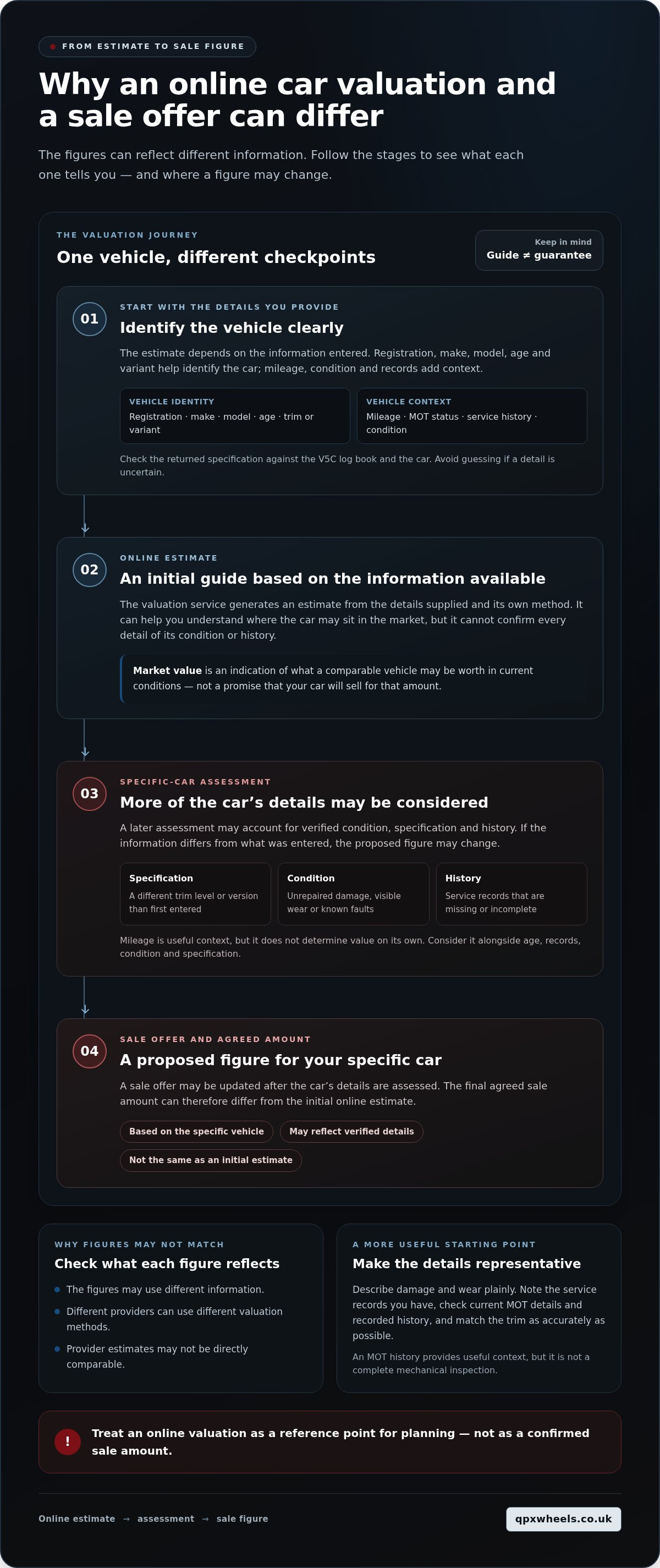
These terms are related, but they don’t necessarily mean the same thing. An online estimate is generated from the information supplied. Market value is an indication of what a comparable vehicle may be worth in current conditions. A sale offer is an amount proposed for your specific car, which may be updated after its details are assessed.
- Online estimate: An initial guide based on the vehicle information entered and the valuation service’s method.
- Market value: An indication of how your car may compare with similar vehicles, not a promise that it will sell for a particular amount.
- Sale offer: A proposed amount for your car that may take account of verified condition, specification and history.
For example, an estimate may use the make, model, age and mileage you provide. If a later assessment identifies a different trim level, unrepaired damage or missing service history, the proposed figure may change. Different providers can use different methods, so their estimates may not be directly comparable. Check what information each figure reflects before treating them as like-for-like.
What can an online valuation help you decide?
An estimate gives you a reference point before you commit to selling. It can help with early budgeting, inform whether selling fits your plans, and give you a basis for comparing routes such as a private sale or selling to a dealer. Each route has different considerations, so an estimate alone won’t tell you which is right for your circumstances.
Use the result to guide your next questions:
- Does the estimate broadly fit your expectations for the vehicle?
- Have you entered enough accurate information to make it useful?
- Are you ready to explore a sale, or are you researching for now?
A valuation can be useful even if you’re not ready to sell. QPX Wheels provides vehicle valuation and buying services, giving you a first step if you decide to explore a sale. Base your decision on complete, accurate vehicle details, and remember that an initial figure isn’t the final agreed amount.
Which details shape an online car valuation in the UK?
A valuation is only as useful as the information behind it. Registration, make, model, age and variant help identify the vehicle, while mileage, condition and records add context. If you’re looking to value my car online UK, gather these details first. Even a small specification difference can mean the estimate relates to a different version of the car.
Before starting a valuation, prepare your registration, make, model, age, trim or variant, mileage, MOT status, service history and an honest description of the car’s condition. You may not need every detail for every valuation, but having them ready makes it easier to provide a consistent picture.
Why registration, model and specification matter
A registration can help identify a vehicle’s age and original configuration, but check the returned details rather than assuming they capture every feature. The model is the broader vehicle name; trim describes a version within that range, while optional specification refers to extra features fitted when new. Compare the information with the V5C log book and the car itself, especially if it has been modified or the trim isn’t obvious.
Small distinctions can matter. Two cars may share a model name but have different engines, equipment or trim levels. Choose the closest accurate match rather than selecting a higher specification because it looks similar. If a detail is missing or uncertain, avoid guessing. An incorrect answer could make the estimate less representative.
How mileage, condition and MOT history add context
Mileage helps describe how much a vehicle has been used, but it doesn’t determine value on its own. Consider it alongside age, service records, condition and specification. A car with higher mileage and a well-documented service history has a different profile from one with lower mileage but incomplete records.
Describe damage and wear plainly, including bodywork marks, interior wear and known faults. Modifications may also distinguish your car from the standard version, so include them where the valuation process asks. Missing information doesn’t automatically mean a vehicle is worth less, but it can make an estimate less precise because there’s less detail to assess.
- Service history: Note which records you have, such as a service book or invoices. Only describe the history as complete if the records support that.
- MOT status: Check the current MOT details and recorded history using the UK government’s MOT history service. This provides useful context, but it isn’t a complete mechanical inspection.
- Condition: Report visible damage and wear accurately rather than relying on a broad label such as “good”.
For clarity, the Valuation Office Agency’s UK government valuation practices relate to its own remit, including property valuation and services to HM Revenue and Customs. They aren’t a guide to valuing cars, so don’t treat them as the method behind an online vehicle estimate.
Once you’ve gathered the details, you can make a more informed decision about whether to explore a sale. QPX Wheels’ vehicle valuation and buying service gives you a way to take that next step.
Online car valuation versus a sale offer: why can the figures differ?
An online estimate is a helpful reference, but it isn’t automatically a guaranteed offer. A later figure may differ once more is known about the specific car. That doesn’t mean every estimate will change, or that any change must go in one direction. Understand what each figure represents before relying on it to plan a sale.
If you’re searching “value my car online UK”, keep these three stages distinct. The exact terms and methods vary between valuation services, so use this comparison as a general guide rather than a universal process.
| Figure | What it represents |
|---|---|
| Online estimate | An indicative figure based on the information entered and the valuation method used. |
| Updated assessment | A revised view that may take account of clarified vehicle details, condition or history. |
| Final agreed sale amount | The amount agreed for a specific sale, if both parties proceed on the stated terms. |
What may change after the vehicle details are reviewed?
Differences are easier to understand when you compare the original information with what is later established. For instance, selecting the wrong trim could mean the estimate is based on a different specification. An inaccurate mileage entry may also affect how closely the figure reflects your car. Unreported damage or incomplete service records can add context that wasn’t included in the original details.
These examples don’t mean a later figure will necessarily be lower. Clarifying a vehicle’s specification or history can change the comparison in either direction, or leave it broadly similar. Be consistent and candid from the start: check the details you provide, describe the condition honestly, and keep relevant records available. This helps reduce avoidable surprises without guaranteeing a particular outcome.
How to compare valuation routes fairly
Before comparing figures, make sure they relate to the same car profile, including condition, mileage, model, trim and service history. Also consider what each figure assumes about the sale. An indicative estimate and an amount linked to a particular buying service may reflect different sale routes, so they aren’t automatically like-for-like.
- Compare equivalent vehicles: Check that the specification, mileage and condition are similar.
- Identify what the figure means: Is it an initial estimate, an updated assessment or an agreed amount for a specific sale?
- Read the assumptions: Note which details were supplied and whether the figure depends on information being verified.
When comparing an online estimate with an in-person appraisal, focus on what information each assessment uses and whether the vehicle’s condition has been reviewed. QPX Wheels’ vehicle valuation and buying service is a next step if you decide to explore selling. An initial estimate is a guide, not a confirmed sale amount.
How to value your car online accurately: a UK checklist
Checking your vehicle information before starting can make an online estimate more useful. Gather the details and records that describe the car accurately. This won’t guarantee a particular figure, but it can reduce avoidable errors and give you a clearer basis for considering your options.
Prepare the vehicle details and paperwork
Keep the V5C log book and any service records nearby. Check key identification details against the vehicle, and use the official MOT history service to review its recorded MOT information. Having the documents to hand makes it easier to enter consistent information and spot anything you’re unsure about.
- Check the registration. Enter it carefully, then make sure any vehicle details returned match your car. Don’t assume a registration result captures every trim or optional feature.
- Confirm make and model. Compare the vehicle’s identification details with the V5C and the car itself. If a registration lookup doesn’t provide a clear match, use the most accurate make and model information available.
- Identify the trim or variant. Look for the exact version rather than selecting a better-equipped model that seems close. If you’re uncertain, check paperwork or original vehicle information before choosing.
- Record the mileage. Read the current odometer and enter the figure consistently. Avoid rounding if the valuation form asks for a precise reading.
- Review MOT details. Check the current status and recorded history using the official UK MOT history service. Treat this as useful background, not a complete assessment of the car’s mechanical condition.
- Gather service and maintenance records. Note which documents you hold, such as a service book or invoices. Describe what the records show accurately, including any gaps.
Enter details consistently and review the result
Before submitting your information, compare it with your records. Describe visible wear or damage plainly, including marks to the bodywork or interior, and disclose meaningful modifications. If you can’t verify a detail, don’t guess. An inaccurate trim selection or omitted damage can make the result less representative of your actual car.
Keep a note of the details you entered alongside the estimate. This gives you a clear reference if you revisit the valuation or consider a sale later. If something in the result doesn’t appear to match your vehicle, review the original information before drawing conclusions. Consistent inputs make it easier to understand what the estimate is based on.
If you’re ready to explore selling after preparing your vehicle details, you can explore QPX Wheels’ vehicle valuation and buying service. QPX Wheels has over 16 years of industry experience, and an initial estimate should be treated as a guide rather than a guaranteed sale amount.
From online valuation to selling your car with QPX Wheels
Once you’ve reviewed an estimate, you can decide whether to take the idea of selling further. Start by checking what the estimate is based on and making sure the vehicle details are accurate. Then consider whether a sale suits your plans. Searching “value my car online UK” doesn’t commit you to selling. A valuation is information to help you decide.
Decide whether selling now is right for you
Think about the estimate alongside the car’s role in your life. Do you rely on it for regular journeys, or are your needs changing? Consider its ongoing usefulness, the effort of keeping it, and what you’d do if you no longer had it. These practical factors matter alongside the valuation when deciding whether to explore a sale now or keep the figure for reference.
You’re not obliged to act on an estimate. If you want to compare options, use the same accurate vehicle details each time and be clear about what each figure represents. An online estimate can inform your thinking, but it doesn’t confirm the amount you’ll receive from a specific buyer. Take time to weigh up the information without feeling pushed into a decision.
Explore QPX Wheels’ vehicle valuation and buying service
QPX Wheels is an independent dealership offering vehicle valuation and buying services to customers across the UK. With over 16 years of industry experience, we provide an option for owners who have reviewed their car’s details and are considering selling. A valuation is a starting point, not a promise of a guaranteed sale amount.
Before moving forward, use these checks to keep your expectations grounded:
- Review the estimate: Make sure you understand that it is indicative, and note the information it reflects.
- Confirm your vehicle details: Check the registration, specification, mileage, condition and history you supplied.
- Consider your plans: Decide whether you’re ready to explore a sale or would rather use the estimate as a reference for now.
If selling feels like the right next step, you can explore QPX Wheels’ vehicle valuation and buying service. Treat an online figure as a starting point, make your decision using the best information available, and proceed at a pace that feels right for you.
Choose the next step that suits your plans
A valuation is most useful when it helps you make a decision that fits your circumstances. Rather than chasing a single perfect figure, decide what you need to know: whether selling is worth exploring, whether to wait, or whether you’re simply planning ahead. Your priorities give the estimate context.
If you searched “value my car online UK”, use the result to inform your choice without letting it make the choice for you. Take time to consider how selling would affect your day-to-day needs and what you’d want from the next stage. You don’t need to move forward until you feel ready.
When you’d like to explore selling, QPX Wheels’ vehicle valuation and buying service is a practical place to continue. Review your car’s details, consider your options, and take the next step at a pace that feels right. Explore QPX Wheels’ vehicle valuation and buying service.
Frequently Asked Questions
How much is my car worth online in the UK?
Your car’s online value depends on its identity, specification and the information entered, so there isn’t one figure that applies to every vehicle of the same age. To value my car online UK, use the correct registration or vehicle details and check the mileage and trim before submitting them. Treat the result as an estimate for planning, not a confirmed amount. A similar car’s advertised price may not reflect what you could receive for yours.
Is an online car valuation accurate?
An online valuation can be a useful guide if the details you provide are accurate, but it can’t confirm every aspect of your individual car. For example, a tool may not know about a recent repair, a dent or missing service records unless you provide that information. The estimate isn’t a guaranteed sale amount. Its accuracy is best judged by how closely the vehicle information and assumptions match your car and circumstances.
Can I value my car online without the registration number?
Possibly, depending on the valuation tool. Some services may let you search by selecting the make, model and other vehicle details instead of starting with the registration. Identify the car as precisely as you can, including its age and version, because broad or uncertain choices can make the result less relevant. If you don’t know the trim, check the vehicle documents or manufacturer information rather than guessing.
Do I need my V5C log book to value my car online?
You may not need the V5C simply to begin an online valuation, but it can help you check the vehicle’s recorded details. Compare the registration and identifying information on the log book with the car before entering them. This is separate from paperwork that may be relevant if you later decide to sell. Keep your documents secure, and don’t share sensitive information unless it’s required for a specific, legitimate purpose.
Can I get an online valuation for a van as well as a car?
Some valuation services cover vans as well as cars, but the vehicle types supported vary by tool. QPX Wheels offers used vans alongside its vehicle valuation and buying service. For a useful estimate, identify the van accurately, including its make, model, age and version, and provide relevant details such as mileage and condition. A passenger car and a commercial van shouldn’t be treated as equivalent, even if they share a manufacturer or model name.
Can I sell a car with outstanding finance after getting an online valuation?
An online valuation doesn’t settle outstanding finance or confirm what you’d receive after any finance is taken into account. The position depends on your agreement and the amount still owed, so check your current settlement information with your finance provider before making plans to sell. Compare that figure with any sale amount you’re considering, and make sure you understand the implications before agreeing to proceed.
Does a car’s MOT history affect an online valuation?
MOT history can add useful context, such as recorded test dates, outcomes and advisories, but it isn’t a full mechanical assessment of the car today. A history entry may prompt you to check whether an advisory was addressed or whether you have records of related work. Share relevant information accurately if asked. The car’s present condition still matters, as it may have changed since its last MOT test.


