
A vivid paint colour may catch a buyer’s eye, but it doesn’t automatically add value. If you’re wondering how vehicle colour and condition affect valuation, the distinction is simple: colour can influence buyer appeal, while visible wear gives an indication of the vehicle’s current state.
An unusual shade, a scratch or tired upholstery may affect how a vehicle is perceived, but no single appearance detail determines its value. Age, mileage, specification and market demand also matter. A distinctive finish isn’t necessarily a disadvantage, and a thorough clean or cosmetic repair isn’t always the right first step.
This guide explains how colour preferences can shape buyer interest, which appearance-related details may be relevant to an assessment and what to prepare before seeking a valuation. It also covers how to decide whether cleaning or cosmetic repairs are worthwhile. QPX Wheels offers a vehicle valuation and buying service, giving you a practical way to understand your vehicle’s value and consider a sale.
Key Takeaways
- Understand how vehicle colour and condition affect valuation, and why buyer appeal and visible wear are assessed differently.
- Consider how a colour’s appeal may vary by vehicle type and buyer, rather than assuming it will always help or harm interest.
- Describe cosmetic marks separately from more substantial damage, without guessing how each one changes value.
- Note the colour, any paint changes, visible wear and known repairs. A straightforward clean and clear photographs can help show the vehicle as it is.
- Use accurate vehicle and condition details when taking the next step with QPX Wheels’ valuation and buying service.
How vehicle colour and condition affect valuation: the short answer
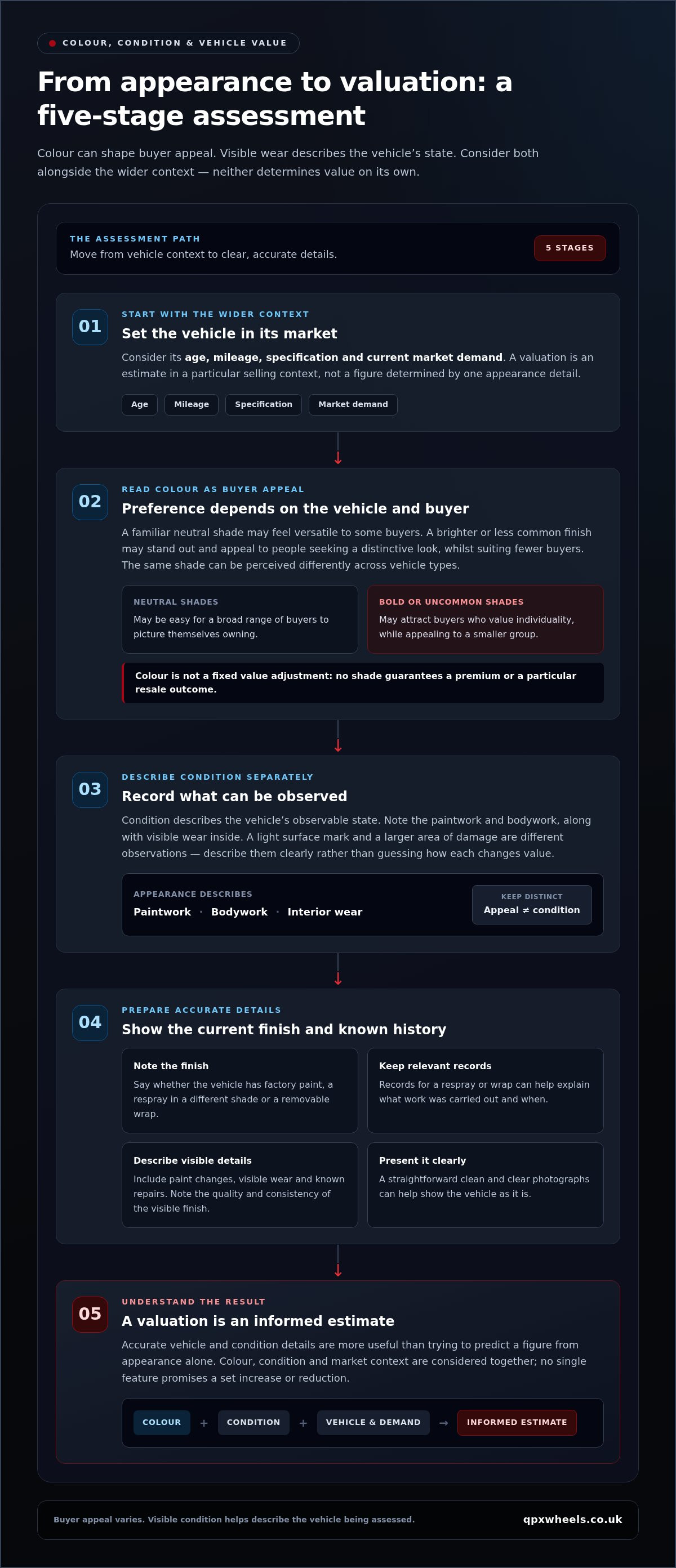
Both colour and condition can matter, but neither determines a valuation on its own. Colour may affect how widely a vehicle appeals; condition describes its observable state. A shade that suits one buyer may not suit another, while paintwork and interior wear help show how the vehicle has been kept. Colour can influence appeal, but condition gives a picture of the vehicle being assessed.
To understand how vehicle colour and condition affect valuation, consider them alongside age, mileage, specification and current market demand. Their relative importance depends on the particular vehicle and the context in which it is being valued.
What does a vehicle valuation assess?
A valuation is an estimate of a vehicle’s worth in a particular selling context. It isn’t a fixed figure based on one detail, such as paint colour or a single scuff. The vehicle’s characteristics are considered alongside market conditions relevant to its make, model and type of sale.
Colour and condition are parts of this wider assessment, not standalone formulas. This Car valuation overview describes some of the wider factors involved. In practice, the vehicle’s details and current buyer demand help shape how its features are viewed. The same car may attract different levels of interest depending on what buyers are seeking.
Providing accurate information is more useful than trying to predict a figure from appearance alone. A valuation is an informed estimate, not a promise that any one feature will add or subtract a set amount.
Why colour and condition are not the same factor
Colour is mainly a matter of buyer preference. A familiar shade may feel like a straightforward choice to some people, while a less common colour might appeal strongly to a smaller group. Neither response applies to every vehicle: the shade, vehicle type and likely buyer all affect how the colour is perceived. A distinctive colour on one model may look entirely natural on another.
Condition, by contrast, describes what can be observed on the vehicle. This includes the state of its paintwork and bodywork, along with visible wear inside. A light surface mark and a larger area of damage are different observations, although neither tells the full story by itself. Clear, accurate descriptions help distinguish them.
A popular colour doesn’t guarantee a higher valuation, just as spotless presentation doesn’t guarantee a particular result. Colour may affect the breadth of buyer interest; condition helps describe the vehicle being assessed. Keeping the distinction in mind makes it easier to share relevant details without overestimating the influence of one feature.
How vehicle colour can influence valuation and buyer appeal
Colour can affect how many potential buyers are drawn to a vehicle, but its influence depends on the car and the people considering it. A familiar neutral shade may suit buyers looking for a low-key, versatile option. A brighter or less common colour may stand out and appeal to someone seeking a distinctive look, while being less attractive to buyers with different tastes.
This is about appeal, not a fixed adjustment to value. No colour guarantees a premium or a particular resale outcome. Make, model and specification, along with current demand, shape the context in which buyers respond to a vehicle’s finish. Published colour comparisons should also be treated carefully: research may reflect a particular mix of vehicles, time period or way of measuring resale performance. It can offer context, but it can’t predict the value of an individual vehicle.
The same shade can feel quite different across vehicle types. A bold finish might suit a sporty model and form part of its character, while someone considering a practical family car may prefer a more understated appearance. Individual preferences vary, too. Broad claims that one colour is always “best” for resale are rarely a reliable guide to a specific car.
Do neutral and bold colours affect buyer interest differently?
Common neutral shades can be easy for a broad range of buyers to picture themselves owning. That familiarity may help a vehicle appeal, but it doesn’t make neutral colours universally superior. Bold shades can attract buyers who value individuality and help a particular model stand out. The trade-off is that a smaller group may share that preference. Treat colour as one part of the vehicle’s appeal, not a valuation multiplier.
For an example of how vehicle values can draw on several kinds of information, Kelley Blue Book outlines factors used in valuation. Its guide is a useful reminder that colour alone can’t tell the whole story.
What if the original colour has changed?
A vehicle may still have its factory paint, have been resprayed in a different shade or have a removable wrap. These are different finishes, so describe the current appearance accurately rather than presenting a changed colour as original. The quality and consistency of the visible finish, and what can be seen of the paint beneath it, may also be relevant to an assessment.
If you have records for a respray or wrap, keep them with your vehicle information. They can help explain what work was carried out and when, without implying that a colour change will raise or reduce the valuation by a set amount.
In short, how vehicle colour and condition affect valuation depends partly on how a particular vehicle is presented to likely buyers, not on a universal colour ranking. Share clear, accurate details about the current finish and any changes. If you’re considering selling, QPX Wheels’ vehicle valuation service is a practical next step, without assuming that colour alone decides the outcome.
How vehicle condition and paintwork affect valuation
Visible wear can affect how a vehicle is presented and what can be observed during an assessment. A scratch, dent or worn seat is useful information, but it doesn’t tell the whole story on its own. The extent and location of wear, the finish around it and the rest of the vehicle provide context.
This distinction matters when considering how vehicle colour and condition affect valuation. Cosmetic imperfections may affect appearance, while more substantial damage or signs of inconsistent repair may prompt closer consideration. Don’t translate a mark into a guessed deduction: a valuation depends on the vehicle as a whole and the details available.
Cosmetic wear, paint damage and bodywork
Start by separating what you can see into clear observations. Paintwork may have small stone chips, light scratches, fading or areas where the finish looks different. Body panels may show a shallow dent or a deeper crease. Inside, common signs of use include scuffed trim, worn seat fabric and marks on surfaces regularly touched by the driver or passengers.
Not every blemish has the same significance. A small chip in a less prominent area is different from extensive peeling or a dent that changes a panel’s shape. Visibility, location, size and the appearance of the finish around the mark can all affect how it is viewed. The aim is not to judge each mark in isolation, but to give a balanced picture of the vehicle’s presentation.
Describe each item plainly: where it is, what it looks like and whether it appears limited to the surface or more substantial. If you’re unsure, avoid labelling damage as minor or serious. A factual description is more useful than trying to predict what it means for the valuation.
Repairs, repainting and condition evidence
Repaired or repainted areas can be considered alongside the surrounding panels. Differences in colour, texture or finish may be visible, while a consistent finish may present differently. These observations don’t establish what caused the work or whether there is hidden damage. Describe what you can see and what you know, rather than assuming a particular history.
If you know about repairs, explain what was done and keep relevant records, such as invoices or repair documents, with the vehicle information. Documentation can provide context about known work. Without it, avoid claims about the repair’s scope or quality that you can’t support. Equally, the absence of paperwork isn’t proof of concealed damage.
For a clear assessment, be open about marks and repairs, and distinguish what you know from what you’ve simply noticed. This gives a more accurate account of the paintwork, panels and cabin wear, while leaving the overall valuation to reflect the vehicle’s full condition rather than one isolated imperfection.
Prepare for a vehicle valuation with a practical colour and condition checklist
A little preparation can make it easier to describe your vehicle clearly and support an informed assessment. You don’t need to make it look flawless or guess how each mark will affect the result. Focus on recording what’s there, gathering relevant information and presenting the vehicle honestly. This helps you explain how vehicle colour and condition affect valuation without treating appearance as the only factor.
A simple pre-valuation appearance checklist
Use this ordered checklist to make a consistent record before requesting an assessment:
- Note the vehicle details. Record its make, model, year, mileage and specification, along with its current colour.
- Walk around it in good light. Check each side, the front and rear for visible chips, scratches, dents, fading or differences in the finish. Note where each mark is instead of estimating its effect.
- Record changes to the finish. Note any respray, colour change, removable wrap or paint protection you know is present. If you know when or why the work was done, include that information without guessing.
- Check the cabin. Note visible wear on seats, trim and other interior surfaces. Distinguish general signs of use from specific damage.
- Take clear photographs. Photograph the exterior and interior in good light, then take closer images of areas that may need explanation. Use current images without filters or angles that conceal marks.
- Gather relevant records. Set aside available invoices, repair details and other documents that help explain known work or the vehicle’s details.
A straightforward record helps keep your description specific and consistent. If you’re uncertain about a mark or repair, state what you can observe and leave conclusions to the assessment.
When should you clean or repair cosmetic issues?
A simple clean can make paintwork, body panels and the interior easier to see. Remove loose items and ordinary dirt, but remember that cleaning improves visibility, not the vehicle’s underlying condition. Clear photographs and an honest description are more useful than trying to make signs of wear disappear.
Think carefully before arranging cosmetic work solely in the hope of changing a valuation. Consider the scope of the repair and whether it makes sense for your circumstances; don’t assume its cost will be reflected in the outcome. If work has already been completed, keep invoices or repair details available so you can describe it accurately.
Once your notes and records are ready, request a vehicle valuation from QPX Wheels and share clear information about your vehicle’s appearance and known repairs.
Get a vehicle valuation and understand your next step with QPX Wheels
Once you’ve considered how vehicle colour and condition affect valuation, use that understanding when seeking an assessment. QPX Wheels offers a vehicle valuation and buying service, helping owners move from gathering information to considering whether a sale is right for them. Clear details about your vehicle’s appearance and history can support an informed assessment, but they can’t guarantee a particular figure or outcome.
There’s no need to present a flawless picture. An accurate account of the vehicle as it is, including visible wear and paintwork changes, is more useful than trying to predict what an assessor might think. QPX Wheels has over 16 years of industry experience, and its valuation service provides a practical starting point for owners weighing up their options.
What to have ready when seeking a valuation
Before you begin, bring together the information that helps describe the vehicle clearly. Check details such as make, model, age, mileage and specification for accuracy. Prepare a straightforward account of its condition, including marks, interior wear and known repair work. Separate what you know from anything you’re unsure about.
- Have current photographs available, with clear views of the exterior, interior and any areas that may need explanation.
- Keep repair records or invoices to hand if they help explain completed work.
- Describe repainting, a colour change or a wrap openly, rather than implying the current finish is factory-original.
- Note visible damage plainly, without concealing it or overstating what it means.
These details can make it easier to explain the vehicle consistently. If you don’t have a record for a particular repair, be clear about what you do and don’t know. Accurate information supports a transparent conversation about the vehicle’s condition and avoids relying on assumptions.
From valuation information to a possible sale
A valuation gives you information to consider alongside your plans. You might use it to decide whether selling makes sense now, or simply to understand your vehicle’s potential worth before choosing what to do next. Receiving a valuation doesn’t mean you have to proceed with a sale, and the assessment shouldn’t be treated as a guaranteed sale price.
QPX Wheels’ valuation and vehicle-buying service offers a direct route to explore selling if that’s what you decide. Share the relevant vehicle details and an honest description of its appearance, including known paintwork changes or repairs. This gives the assessment useful context without promising a specific result, timeframe or increase in value.
If you’re ready to take that first step, request a vehicle valuation from QPX Wheels. Use the information to consider your options at your own pace.
Take the next step with confidence
You don’t need to settle every question about your vehicle’s appearance before seeking a valuation. A clear, honest description gives you a sound starting point, and the assessment can help you decide what to do next. Understanding how vehicle colour and condition affect valuation is useful, but your vehicle’s worth is best considered in context, not guessed from one feature.
QPX Wheels offers a vehicle valuation and buying service, backed by over 16 years of industry experience. Use the information you’ve gathered to begin a straightforward conversation about your vehicle and explore whether selling feels right for you. There’s no need to assume a particular figure or outcome before taking that first step.
Request a vehicle valuation from QPX Wheels and move forward with a clearer picture of your options.
Frequently Asked Questions
Does metallic paint add value to a used car?
Metallic paint doesn’t automatically add value to a used car. If it was a factory option, it may form part of the vehicle’s original specification, but buyer appeal and demand still matter. A well-kept metallic finish may present differently from one with visible scratches or mismatched repairs. Share the paint type if you know it, but don’t assume it guarantees a higher valuation.
Can paint protection film improve a vehicle's valuation?
Paint protection film doesn’t guarantee a higher valuation. Its relevance depends on the vehicle’s overall presentation and the state of the paintwork. If film is already on the car, mention it and explain which areas it covers, if known. Don’t remove it solely to influence an assessment.
Does passing an MOT mean a vehicle is in good condition?
No. A current MOT pass records that the vehicle met the required test standard on the test date; it isn’t a full account of its cosmetic or mechanical condition. A car can pass and still have scratched paint, a worn seat or other issues that aren’t reflected in the test result. Treat MOT history as useful background, not a complete condition report.
Can I get a vehicle valuation without a full service history?
Yes, you can seek a valuation without a complete service history. Provide the records you do have, such as recent service invoices, and be clear about any gaps rather than trying to fill them with assumptions. Available maintenance evidence can provide context, but it doesn’t replace an assessment of the vehicle itself. Accurate details help keep expectations realistic.
Is an online vehicle valuation final if paintwork has damage?
Not necessarily. An online estimate based on supplied information may not account fully for damage that hasn’t been described or shown. A significant scratch, dent or repaint could affect how the vehicle is assessed once its condition is reviewed. Describe the mark accurately and provide clear photographs if requested. A later assessment may differ if the actual condition doesn’t match the information provided.
Should I disclose a previous colour change when selling my vehicle?
Yes. State that the vehicle’s colour has changed and clarify whether it was resprayed or covered with a removable wrap, if you know. This distinguishes the current appearance from the original finish and avoids confusion when details are reviewed. If you have records of the work, keep them available. Be factual about what was done, and don’t speculate about the reason or quality.


