
The differences between buying from a car supermarket and independent dealer can affect how you browse, the support you receive and how clearly finance and other options are explained. A larger forecourt doesn’t automatically mean a better buying experience. You’ll want to understand the vehicle’s condition and history, as well as what happens after you buy.
The right choice depends less on the seller’s size and more on whether the vehicle and buying process suit your needs. This guide compares stock, customer support, finance, part exchange, delivery and warranties, so you can weigh up specific options rather than rely on stereotypes.
We’ll also cover practical checks and questions to consider whichever type of trader you visit, including how to review a car’s history and understand your consumer rights. QPX Wheels is an independent dealership offering used cars and vans, HP and PCP finance, nationwide delivery and optional extended warranties.
Key Takeaways
- Compare the differences between buying from a car supermarket and independent dealer by looking beyond stock size to the buying process and support that suit you.
- Use your must-haves, budget and preferred vehicle type to narrow your search before comparing individual cars.
- Review vehicle information, finance terms, warranty options and after-sales arrangements side by side, as these can vary between sellers and vehicles.
- Follow a clear five-step process to move from setting your priorities to making a considered purchase decision.
- See how an independent dealership such as QPX Wheels brings together used cars and vans, finance options and nationwide delivery.
Car supermarket vs independent dealer: what does each option mean?
Both types of seller can suit used-car buyers. A car supermarket may appeal if you want to browse a broad selection in one place. An independent dealer may suit you if you value a direct conversation about particular vehicles. These are general differences, not guarantees: stock, the buying process and support depend on the business.
What is a car supermarket?
A car supermarket is a large-scale used-vehicle retailer, usually organised around a wide stock display and a structured browsing and buying process. Seeing different makes and models together can make it easier to compare options in one visit. Retailers such as CarMax illustrate this large-scale retail format. A broad selection alone doesn’t tell you what the buying experience will be like, as each business sets its own process and support.
What is an independent car dealer?
An independent car dealer is a separately operated business that sells used vehicles outside a manufacturer’s franchise network. You may be able to discuss an individual car and how it fits your needs directly with the dealer. Independent dealers vary: one may focus on a particular type of vehicle, while another offers a broader mix. Stock, service and purchase terms differ between businesses.
The table gives a useful starting point for understanding the differences between buying from a car supermarket and independent dealer. Treat each row as a typical pattern to investigate, not as a promise about a particular seller.
| What to compare | Car supermarket | Independent dealer |
|---|---|---|
| Typical scale | Large-scale retailer, often with a broad selection. | Independently operated business; scale and stock vary. |
| Shopping experience | Structured browsing and purchase process, which differs by retailer. | May involve a more direct discussion about specific vehicles and needs. |
| Stock | Choice across multiple vehicles may make side-by-side browsing convenient. | Selection depends on the dealer’s focus and current stock. |
| Buyer interaction | Support is shaped by the retailer’s process and staff. | Conversation may be centred on the individual car, but service varies. |
Neither format is automatically the better choice. Use the labels to understand how a seller is set up, then compare the vehicles and purchase arrangements themselves. The next step is to consider how browsing, questions and vehicle information can differ in practice.
How the buying experience differs at a car supermarket and independent dealer
The format can shape how you find and assess a car, but it doesn’t guarantee a particular level of choice or support. A large retailer may make it convenient to browse several vehicles in one place, while an independent dealer may offer a more focused selection and a direct conversation about individual cars. In either case, judge the vehicle and the information provided, not just the seller’s label.
Choice, browsing and finding the right vehicle
A car supermarket’s broad display can help you compare different makes, models and specifications during a single visit. An independent dealer may hold fewer vehicles or concentrate on a particular mix, making browsing feel more targeted. Neither format guarantees the right match. Start with your needs, such as passenger space, an automatic gearbox or a van, then compare available vehicles against them.
Online listings can help you shortlist before travelling. Check the listing details and arrange to view the vehicle you want to see. Ask how the seller organises viewings and test drives, as processes vary. One retailer may use a set viewing procedure, while another may arrange a discussion around a specific car.
Personal support and the purchase process
At a larger retailer, assistance may follow a structured sales process. At an independent dealer, you may speak more directly with someone familiar with the vehicle. These are possibilities, not rules. What matters is whether you can get clear, vehicle-specific answers and understand each step before deciding.
Use the same practical questions at either type of seller. Ask about the vehicle’s history, preparation and any information supplied with the sale. Confirm what is included in the purchase, how the test drive is arranged and what administration is required to complete the transaction. If something is unclear, take time to get the detail explained in writing.
The seller label alone cannot establish a vehicle’s condition or whether it suits your needs. Review the car’s information and assess its condition for yourself. Check that the advert and documents are consistent, and make sure you understand the purchase arrangements before proceeding. The differences between buying from a car supermarket and independent dealer matter, but the specific vehicle and clarity of the process matter just as much.
To see an independent dealer’s selection, browse QPX Wheels used cars and vans.
Comparing vehicle checks, finance and after-sales support
A large stock display or a one-to-one conversation won’t tell you exactly what a car’s history, finance agreement or warranty includes. Compare the details for the specific vehicle and sale. These practical differences between buying from a car supermarket and independent dealer matter when you’re weighing up the full purchase.
| What to compare | What to check with either seller |
|---|---|
| Vehicle information | Check the advert and seller-provided documents for details such as age, mileage, service records and known history. |
| History and condition | Review the MOT record and available history information. Inspect the vehicle and get clear answers about its condition. |
| Warranty | Find out whether cover is included or optional, then read its scope, exclusions and duration in the actual terms. |
| Finance | Compare the deposit, payments, interest and total amount payable, as well as any end-of-agreement obligations. |
| After-sales contact | Understand who to contact about a query or problem after purchase, and what process applies. |
Vehicle history, condition and purchase information
Read the vehicle’s history information and MOT record, then compare them with the seller’s description and documentation. Ask about anything that’s unclear, including service history or recorded damage. Arrange a suitable inspection and take time to assess the car rather than relying on a reassuring sales process. The US Federal Trade Commission’s guide to buying a used car offers general prompts about inspections and written information, but its US-specific documents and rules don’t apply in the UK.
A seller’s format tells you how the business is organised; vehicle-specific evidence tells you about the car.
Finance, warranties and support after purchase
With hire purchase (HP), you generally pay towards the vehicle in instalments, with ownership following completion of the agreement. Personal contract purchase (PCP) usually has a different payment structure, with an optional final payment if you want to own the car. Compare the written agreement, including the deposit, payment schedule, total payable and what happens at the end. The exact terms and eligibility depend on the finance agreement. If a dealer arranges finance, FCA rules require disclosure of commission received for arranging it.
A warranty is separate from your statutory consumer rights. The Consumer Rights Act 2015 applies to consumer purchases from traders; any additional warranty cover depends on its written terms. Neither seller type promises the same warranty or after-sales process, so read the documents for the vehicle and agreement in front of you.
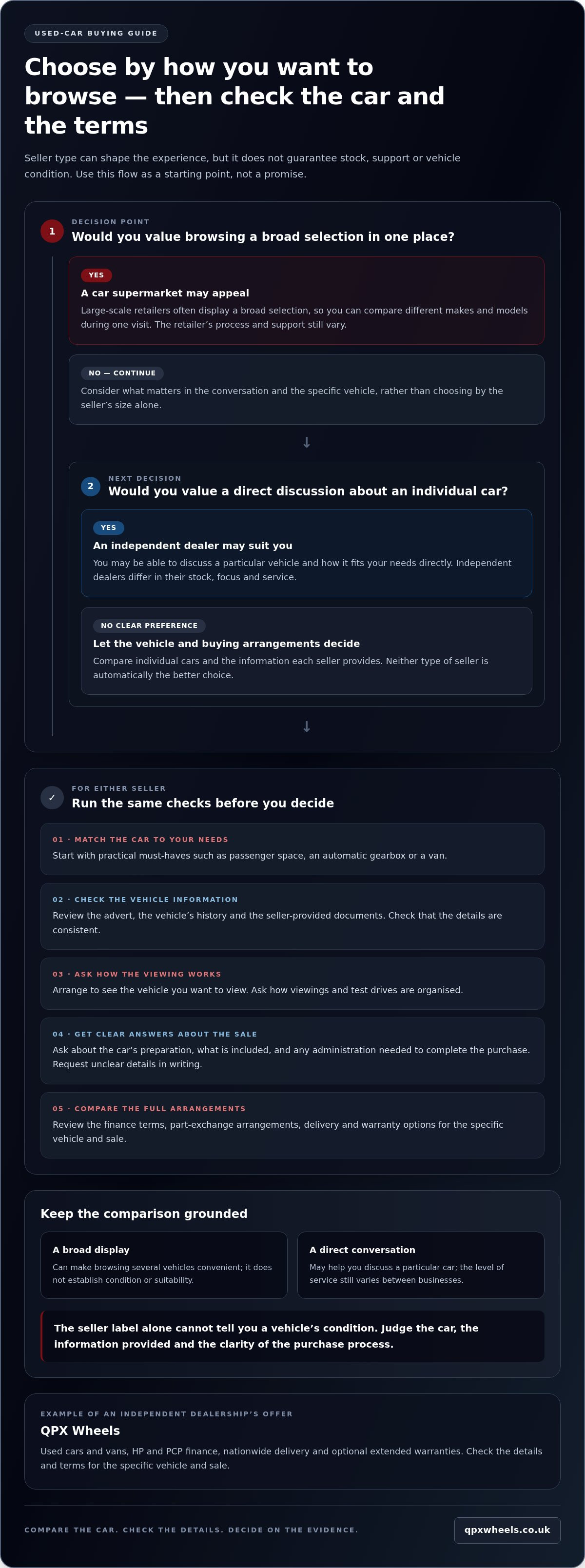
How to choose between a car supermarket and an independent dealer
The best choice is the seller with a vehicle and buying process that fit your needs. Use these five steps to compare specific options instead of relying on assumptions about either type of business.
A five-step comparison before you commit
- Define your needs. Decide what type of vehicle you need, which features are essential and how you’ll use it. Set a realistic spending limit that includes the overall cost of ownership.
- Shortlist vehicles. Compare cars that meet your requirements, whether you’re looking for an automatic, a van or a particular feature. Consider the actual range available, not the size of the forecourt alone.
- Compare the information. Review each vehicle’s condition, history, MOT record and specification. Note unanswered questions and differences between the advert and the documents.
- Review the terms. Read the written purchase details. If using finance, compare the deposit, payment structure, total payable and end-of-agreement obligations. Check any warranty’s terms and cover.
- Take time to decide. Make sure you understand the information and arrangements before committing. If a point is unclear, get an explanation before moving ahead.
Which seller type may suit your priorities?
If you want broad browsing, focus on the vehicles you can actually view and how easily you can compare them. If direct guidance matters more, pay attention to how clearly the seller discusses the particular vehicle and your requirements. Convenience might mean viewing several options in one place, or finding a focused selection that fits your search. The differences between buying from a car supermarket and independent dealer are useful context, but neither label guarantees the right car or experience.
Before committing, use this checklist:
- Does this vehicle meet my essential needs and fit my budget?
- Have I reviewed its history, MOT record, condition and specification?
- Are my questions about the vehicle answered clearly?
- Do I understand the written purchase terms and any finance obligations?
- Have I read the actual warranty terms, if a warranty is offered?
- Do I know what to expect for viewing, a test drive and after-sales contact?
Use your answers to compare the whole purchase, not just the advertised vehicle. Browse QPX Wheels used cars and vans as you put this framework into practice.
Buying from an independent dealer: what QPX Wheels offers next
There isn’t one right choice for every used-car buyer. A car supermarket may suit someone who wants to browse a broad display, while an independent dealer may appeal if a focused selection and direct discussion are priorities. The meaningful differences between buying from a car supermarket and independent dealer come down to the individual vehicles, the information available and the purchase arrangements that fit your needs.
QPX Wheels is an independent used-car and van dealership. Apply the same comparison approach here as you would with any seller: shortlist vehicles that meet your requirements, review their details and make sure you understand the purchase terms.
A practical next step for comparing used vehicles
Start with what you need the vehicle to do. If you’re considering a car or van, compare each option against your intended use, essential features and budget. Look at the details for the specific vehicle rather than assuming that a dealership’s size or format guarantees a particular standard or experience.
QPX Wheels offers nationwide delivery, giving customers across the UK an option to consider when purchasing. Whether you’re viewing in person or arranging delivery, compare the vehicle information and purchase terms carefully so you can make an informed decision.
Explore QPX Wheels stock and buying options
QPX Wheels offers HP and PCP finance options. Finance agreements have individual terms and eligibility requirements, so review the details, payment structure and obligations that apply to the option you’re considering. Optional extended warranties are also available; the written terms explain the cover for the relevant vehicle.
Take your time and choose the car or van that best matches your priorities. Explore used cars and vans at QPX Wheels.
Choose the vehicle and buying process that fit you
The differences between buying from a car supermarket and independent dealer are a useful starting point, but neither format guarantees the right car or support. Compare the specific vehicle’s history and condition, ask for clear answers and read the finance and warranty terms before deciding. The best choice is the one that fits your needs, budget and preferred way of buying.
QPX Wheels is an independent used-car and van dealership offering nationwide delivery, HP and PCP finance, and optional extended warranties, each subject to the relevant terms. Explore the vehicles available to find an option that suits your search.
Explore used cars and vans at QPX Wheels and take your next step with confidence.
Frequently Asked Questions
What is the difference between a car supermarket and an independent dealer?
A car supermarket is a large-scale retailer that typically displays a broad range of used vehicles and follows a structured buying process. An independent dealer is a separately operated business selling used vehicles outside manufacturer franchise networks. The main differences between buying from a car supermarket and independent dealer are often the scale and focus of the stock, how you browse and the way you discuss particular vehicles. The actual experience varies between businesses.
Is buying from a car supermarket better than buying from an independent dealer?
Neither is automatically better; the right choice depends on the vehicle and the experience you prefer. A supermarket may make it convenient to browse a wider selection in one place, whilst an independent dealer may offer a more direct conversation about specific vehicles. Compare the cars themselves, their history and condition, and the purchase terms. A seller’s size or category alone can’t guarantee better value, service or suitability.
Are cars from independent dealers checked before sale?
There isn’t one check standard that applies to every independent dealer or vehicle, so ask what checks and preparation relate to the specific car. Review the MOT record, service information and vehicle history, and compare these with the advert and seller-provided documents. Inspect the car and arrange an independent inspection if you want additional reassurance. Clear, vehicle-specific evidence is more useful than assuming a car has been checked because of who sells it.
Can you negotiate when buying from a car supermarket or independent dealer?
You can ask whether there’s flexibility on the advertised price or other parts of the deal, but negotiation isn’t guaranteed at either type of seller. Policies and pricing approaches differ between businesses and individual vehicles. Before discussing changes, compare the car’s condition, history, specification and total purchase or finance terms. Consider the complete deal rather than focusing only on a possible discount, and make sure any agreed changes appear in the written paperwork.
Do car supermarkets and independent dealers offer the same finance options?
No, finance options can differ between sellers and specific vehicles. Compare the written agreement, including the deposit, payment amounts, interest, total payable and any obligations at the end. HP generally involves paying for the vehicle in instalments, whilst PCP has a different payment structure and may include an optional final payment to own the car. QPX Wheels offers HP and PCP finance; terms and eligibility depend on the agreement.
Are warranties available when buying from an independent dealer?
Some independent dealers offer warranties, but availability and cover vary by seller, vehicle and agreement. Check whether a warranty is included or optional, then read its written terms for the cover, exclusions, duration and claims process. A warranty is separate from your legal rights when buying from a trader. QPX Wheels offers optional extended warranties, with the relevant terms setting out the cover for the vehicle.
What should I check before buying a used car from any dealer?
Review the car’s history, MOT record, service information, condition and specification, and check that these details match the advert and documents. Ask about anything unclear, arrange a viewing and test drive, and consider an independent inspection. Read the written purchase terms, including finance obligations and any warranty details. In the UK, the Consumer Rights Act 2015 provides protections for consumers buying from traders, so keep your paperwork and raise any concern promptly.


