
What if the protection you’re relying on isn’t actually a warranty at all? If you’re asking what is covered under statutory warranty for used cars, the distinction matters: consumer law gives you rights when you buy from a trader, whether or not you’ve bought an optional written warranty. Those rights set a legal baseline, but they don’t mean every fault or repair is automatically covered.
It’s understandable to wonder whether an older car or one with higher mileage is still protected, and what to do if a problem appears soon after purchase. The car’s age, mileage, price and condition all help shape what a reasonable buyer could expect. Normal wear is different from a fault that means the vehicle wasn’t of satisfactory quality when sold.
This guide explains the standard a trader-sold used car must meet, how statutory rights differ from an extended warranty, and which remedies may apply. It also covers the 30-day and six-month timeframes, plus practical steps for reporting a fault and keeping useful evidence. A clear record of what happened and when can help you explain your concern to the seller.
Key Takeaways
- Statutory rights are legal protections, not a standard named warranty, and apply to eligible purchases from traders.
- To understand what is covered under statutory warranty for used cars, focus on whether the vehicle met the required standard when supplied, taking its age, mileage and description into account.
- An optional extended warranty is contract-based cover, separate from your statutory rights. Its terms and the legal remedies available are different.
- If a fault appears, prioritise safety, record what has happened and contact the selling trader with clear evidence.
- Keep the advert, purchase documents and any inspection or repair evidence so you can explain your concern clearly.
What does a statutory warranty for a used car actually mean?
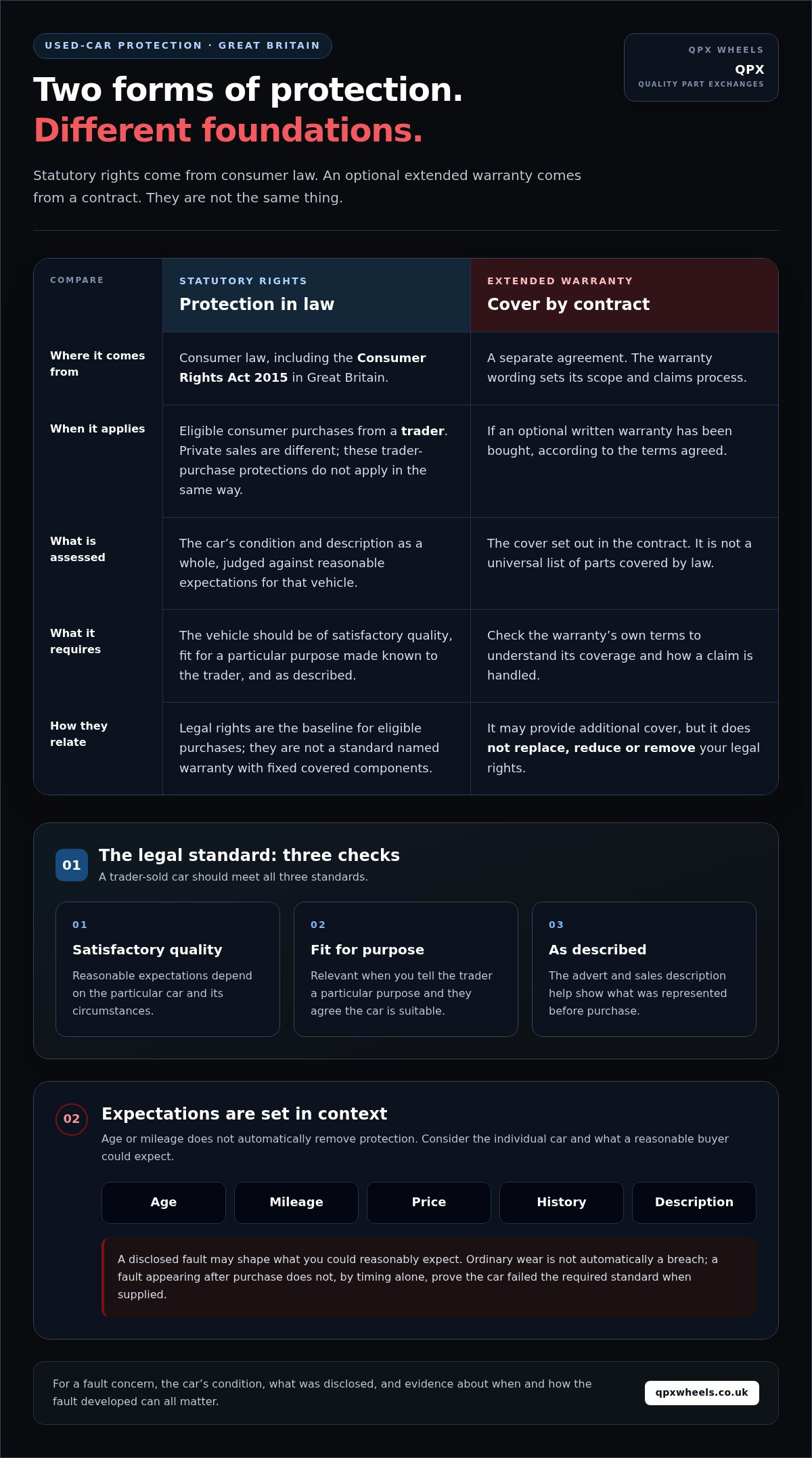
Statutory rights are legal protections, not a standard named warranty with a fixed list of covered parts. In Great Britain, the Consumer Rights Act 2015 applies when a consumer buys a car from a trader. The car must meet reasonable expectations, judged in context. Relevant factors include its age, mileage, price and description.
A fault isn’t automatically covered just because it appears after you buy the car. The key question is whether the vehicle met the required standard when it was supplied. A fault caused by later damage or ordinary wear may be treated differently from a problem indicating that the car wasn’t of satisfactory quality at the time of sale.
These protections apply to trader-to-consumer sales. Buying privately is different: the Consumer Rights Act protections for purchases from traders don’t apply in the same way, and the buyer’s options may be more limited. Great Britain’s rules should also be distinguished from Northern Ireland’s separate legal framework.
Is a statutory warranty the same as a used-car warranty?
No. Statutory rights come from the law, while a written or optional warranty is based on a contract. An extended warranty may provide additional cover, but it doesn’t replace, reduce or remove your legal rights. Its scope and claims process depend on the wording of the warranty.
So, asking what is covered under statutory warranty for used cars can be misleading if it suggests a standard warranty covering named components. Statutory rights concern the condition and description of the car as a whole, rather than a universal list of parts. The US term Lemon Law is sometimes used for laws addressing defective vehicles, but it isn’t the name of the protection provided by UK consumer law.
What does satisfactory quality mean for a used car?
Satisfactory quality is assessed against what a reasonable person would expect from that particular car. Age, mileage, price, history and information given in the advert or during the sale can all matter. A relatively new, low-mileage car may reasonably be expected to be in better condition than an older, heavily used vehicle. Neither age nor mileage automatically removes protection.
Information disclosed before purchase matters, too. For example, if a trader clearly tells you that a car’s air conditioning isn’t working and you buy it knowing this, it may be harder to argue that this particular fault failed to meet your expectations. That doesn’t decide every case: the exact wording, what was agreed and the vehicle’s wider condition all matter. The same fault can lead to different outcomes in different circumstances.
Which faults may breach your statutory rights when buying a used car?
The key question is whether the car met the required standard when the trader supplied it. A fault appearing later may point to a problem that was already present, but timing alone doesn’t prove that. The car’s condition, the information given before sale and evidence about when and how the fault developed all matter.
Under the Consumer Rights Act 2015, a trader-sold car should be of satisfactory quality, fit for a particular purpose you made known to the trader, and as described. For example, if you explained that you needed a car to tow a particular type of trailer and the trader agreed it was suitable, that conversation may be relevant to whether it was fit for that purpose. The advert and sales description matter as well: a vehicle that differs from what was represented may raise a separate concern.
How do age, mileage, price and description affect cover?
Expectations depend on the individual car. A serious engine fault in a newer, low-mileage vehicle may raise different questions from the same fault in an older car with high mileage and a lower price. That doesn’t mean an older or cheaper car has no protection. It means its reasonable condition and expected durability are assessed in context.
Compare what you were told with what you received. Keep the advert, invoice and messages, then note the fault and when it first appeared. If the listing described a feature or condition the vehicle doesn’t have, that may be relevant alongside the mechanical evidence.
Are wear and tear or disclosed faults covered?
Routine deterioration isn’t automatically evidence that the trader breached your rights. A used car can show wear consistent with its age and mileage. By contrast, an undisclosed problem that substantially affects the car’s quality or use could raise concerns, depending on when it arose and what the evidence shows.
A clearly disclosed defect can shape reasonable expectations. If the advert specifically stated that a window mechanism wasn’t working, that known issue may be treated differently from an unmentioned fault discovered after purchase. The outcome depends on the wording and circumstances, not simply on whether a part has failed.
For comparison only, the US FTC consumer advice discusses American used-car sales and warranty terms; it doesn’t explain UK rights. For a UK assessment, focus on the sale documents, the car’s condition and evidence about the fault. If you’re comparing vehicles, explore used cars for sale and review the available descriptions before deciding.
Statutory rights vs an extended warranty: what is the difference?
Statutory rights and an extended warranty can both matter if a used car develops a fault, but they come from different places. Statutory rights are legal protections for eligible purchases from a trader. An extended warranty is contract-based cover, and what it offers depends on the policy wording. What is covered under statutory warranty for used cars isn’t a set list of components: the legal question is whether the car met the required standard when supplied.
| Point of comparison | Statutory rights | Extended warranty |
|---|---|---|
| Source | Consumer law, including the Consumer Rights Act 2015 in Great Britain. | A separate contract, with terms agreed for the cover. |
| Scope | Whether the car was of satisfactory quality, fit for a disclosed purpose and as described. | Depends on the contract. It may specify covered components, exclusions and conditions. |
| Time limits | Remedies depend on when the fault appears. The short-term right to reject is generally available for 30 days; different remedies may apply after that. | Any applicable cover period and claim deadlines are set out in the contract. |
| Process | Raise the issue with the selling trader and explain why you believe the car failed to meet the legal standard. | Follow the contract’s claim procedure and requirements. |
| Potential remedies | Depending on the circumstances and timing, repair, replacement, rejection or a price reduction may be relevant. | Remedies or benefits depend on the policy terms and whether its conditions are met. |
What can an extended warranty add?
An extended warranty may provide additional protection for faults covered by its contract. Read the terms carefully: they explain which components are included, what’s excluded and how to make a claim. Component cover is different from the legal quality standard that applies when the car is supplied. Don’t assume a particular fault is covered without checking the policy wording.
Can a dealer warranty replace your statutory rights?
No. A contractual warranty doesn’t remove applicable statutory rights. If a fault arises, consider the relevant route: raise a potential breach of your statutory rights with the selling trader, or make a warranty claim if the fault appears to fall within the contract. The warranty’s process doesn’t limit your separate legal protections.
For clarity, the Federal Trade Commission’s Used Car Rule concerns US dealer disclosures, not the law in Great Britain. Check the relevant UK rules and your own policy documents when assessing your options.
What should you do if a used car develops a fault?
Act methodically. If the car may be unsafe, stop driving it and arrange a safe way to deal with the problem. Record what you’ve noticed, then contact the trader who sold it to you. Explain the fault, when it began and what you’re asking the seller to do. When considering what is covered under statutory warranty for used cars, remember that the legal route is a complaint about the car’s condition under your statutory rights, not necessarily a warranty claim.
What evidence should you gather before contacting the seller?
Gather the relevant evidence before you write or call. A clear record helps the seller understand the issue and makes it easier to explain your concern.
- Note when the fault first appeared, what happened and whether it has changed.
- Record warning lights or dashboard messages, and take photographs or videos where useful.
- Save the advert, invoice, vehicle description, disclosed faults and messages with the seller.
- Keep inspection reports, recovery details and any repair-related evidence.
Describe the symptoms rather than presenting a definite diagnosis unless an appropriate inspection supports it. Avoid authorising repairs yourself before speaking to the trader, unless an urgent safety issue means action is necessary. Keep a record of any steps taken and why.
What happens after you report the fault?
In Great Britain, if you reject a qualifying faulty car within the first 30 days, the short-term right to reject may entitle you to a refund. After that period, the usual first step is to give the trader an opportunity to repair or replace the car. If that remedy is unsuccessful, unavailable or not provided appropriately, you may be entitled to a price reduction or final rejection, depending on the circumstances. The precise remedy depends on the fault and the relevant statutory requirements.
If a fault appears within six months of delivery, the law generally presumes it was present when the car was supplied, unless the trader can show otherwise. This presumption doesn’t apply where it would be incompatible with the nature of the goods or the fault. It also doesn’t mean every problem automatically proves a breach: the evidence and circumstances still matter.
Give the selling trader a clear opportunity to respond to your statutory complaint, and keep a written record of what you report and the response. To see the vehicles and buying information available, explore QPX Wheels’ used vehicles and buying support.
How to understand your rights before choosing a used car
Before you buy, keep the two protections clear: statutory rights are the legal baseline for eligible purchases from a trader, while an optional extended warranty is separate, contract-based cover. If you’re asking what is covered under statutory warranty for used cars, remember that statutory rights aren’t a fixed list of components. They relate to whether the vehicle met the required standard when supplied. Any extra cover depends on the warranty’s own terms.
QPX Wheels sells pre-owned cars and vans, with optional extended warranties. Review the vehicle information and keep a record of what you relied on when making your decision. A considered purchase starts with understanding what the advert says and which protection comes from law and which comes from a separate agreement.
What should you check in the vehicle description and paperwork?
Compare the car you’re considering with its advert and sale documents. Check the stated mileage, described condition and any known issues, then make sure the information matches the vehicle supplied. Keep copies of the advert and invoice, along with written answers or messages that influenced your decision. If a detail matters to you, having it in writing can make the agreed description clearer.
Read any optional warranty terms separately. Look for the components covered, exclusions, conditions and claim procedure, and don’t assume that a warranty changes your statutory rights. Keeping the paperwork together makes it easier to understand which route may be relevant if a concern arises.
When should you seek advice about a disputed fault?
If you and the trader disagree about when a fault developed, whether it was disclosed or what remedy applies, consider seeking independent legal or consumer-rights guidance. Bring the advert, purchase documents, messages and any inspection evidence so you can explain the timeline clearly. This can be helpful where the facts are disputed or the issue is complex.
The legal framework in Northern Ireland differs from that in Great Britain, so make sure any guidance you seek applies to where you bought the car. For your next purchase, explore used cars and vans from QPX Wheels and review the vehicle information and available buying support.
Choose your next used car with confidence
Statutory rights are the legal baseline when you buy a used car from a trader in Great Britain. They aren’t a standard warranty covering a fixed list of parts. The car’s age, mileage, price, description and condition all help determine whether it met the required standard when supplied. That’s the essential answer to what is covered under statutory warranty for used cars.
If a fault appears, keep your purchase records and contact the selling trader promptly. The remedy depends on the timing and circumstances. An optional extended warranty is separate: its cover and claims process depend on its contract, and it doesn’t replace your statutory rights.
QPX Wheels sells pre-owned cars and vans, with optional extended warranties and nationwide delivery. Review the vehicle information and take your time finding a car or van that suits you. Explore used cars and vans from QPX Wheels and make your next step with a clear understanding of your rights.
Frequently Asked Questions
Is there a statutory warranty on a used car in the UK?
There isn’t a standard statutory warranty with a fixed term or list of covered parts. In Great Britain, when you buy a used car from a trader, the Consumer Rights Act 2015 gives you legal rights if it isn’t of satisfactory quality, fit for a purpose you made known, or as described. Private sales are different. Northern Ireland has a separate legal framework, so check the rules that apply there.
What is covered under statutory warranty for used cars?
Statutory rights aren’t component cover. They concern whether the car met the legal standard when supplied, including being of satisfactory quality, fit for a particular purpose you told the trader about, and consistent with its description. The car’s age, mileage, price, history and any faults disclosed before purchase can affect reasonable expectations. A fault appearing after purchase doesn’t automatically establish that the trader breached your rights.
Can I reject a used car if it develops a fault?
Possibly. In Great Britain, you may have a short-term right to reject a faulty car within 30 days of delivery if it doesn’t meet the required standard. Tell the selling trader clearly that you’re rejecting it and keep a record of your communication. After the initial period, the usual route is to give the trader an opportunity to repair or replace the car before seeking a further remedy, depending on the circumstances.
Are used-car faults covered after six months?
Your rights don’t automatically end after six months, but proving your case may become more difficult. During the first six months, a fault is generally presumed to have been present when the car was supplied, unless the trader can show otherwise or the presumption doesn’t fit the nature of the fault or goods. After that, you’ll generally need evidence that the problem existed at supply. The fault and supporting evidence matter.
Does an extended warranty replace statutory rights?
No. An extended warranty is separate, contract-based cover and doesn’t remove statutory rights that apply to your purchase. Its terms set out matters such as covered components, exclusions and the claims process. If a fault develops, consider whether it may involve the car’s legal standard at the time of sale, whether it falls within the warranty terms, or both. Keep the routes distinct and retain relevant documents.
Are wear and tear covered by a statutory warranty on a used car?
Ordinary wear and deterioration aren’t automatically a breach of your statutory rights. The reasonable condition expected depends on the particular vehicle, including its age, mileage, price and description. A worn item on a high-mileage car may be viewed differently from the same issue on a newer, low-mileage vehicle. If you’re concerned, compare the fault with the advert and disclosures, and gather evidence about when the problem arose.
Do the same used-car statutory rights apply in Northern Ireland?
Don’t assume the rules are identical. The Consumer Rights Act 2015 framework discussed in this guide applies in Great Britain, while Northern Ireland has a separate legal framework. Consumer protections may address similar issues, but the applicable legislation and details can differ. If you bought a car in Northern Ireland or live there, seek guidance that specifically covers Northern Ireland before relying on Great Britain’s rules or deadlines.


