
What if an engine warning you notice on a test drive is a reason to pause, rather than panic? Checking engine health during a used car test drive can feel daunting when you’re worried about an expensive fault or unsure which sounds, smells or dashboard lights matter. You don’t need to diagnose the engine yourself. A calm, repeatable check can help you spot signs that deserve closer attention.
This practical checklist explains what to look and listen for before you set off, while driving and after you return. You’ll learn what common warning signs may indicate, which details to ask the seller about and when it makes sense to arrange an independent inspection. A test drive can reveal clues, but it can’t confirm every aspect of a car’s condition. Taking time to check concerns gives you a clearer basis for deciding whether to proceed, ask more questions or walk away, without feeling pressured to commit before you’re ready.
Key Takeaways
- Checking engine health during a used car test drive can help you notice warning signs, but a short drive can’t rule out hidden or intermittent faults.
- Ask whether the engine is cold before starting, then check which dashboard warning lights remain on after the car starts.
- On a safe route, pay attention to how the engine responds and note any hesitation, unusual noises, smoke or temperature changes.
- Record when symptoms occur and ask the seller about relevant service records, repair invoices and unresolved warnings.
- Use your notes alongside the vehicle history and documents. If concerns remain, consider an independent inspection before deciding.
Checking engine health during a used car test drive: what you can realistically assess
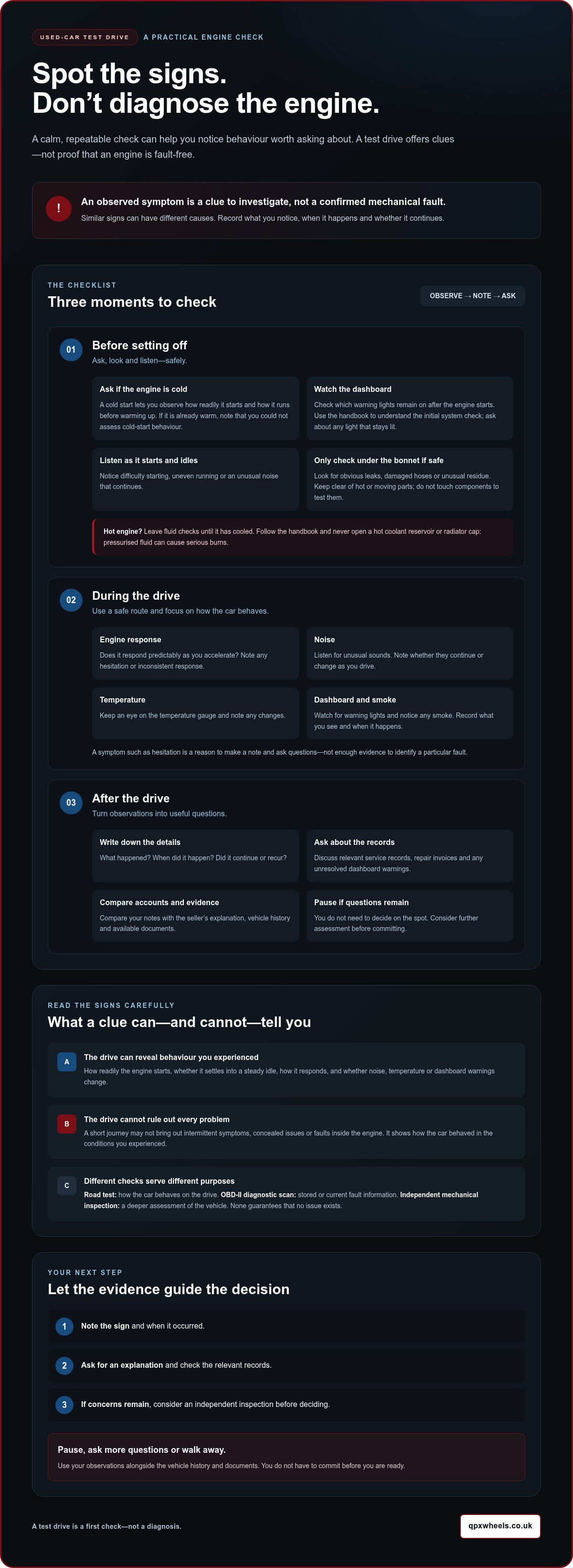
Checking engine health during a used car test drive means observing how the car starts, idles and responds on the road, then noting any warning signs and when they occur. Listen for changes in engine noise, watch the temperature gauge and dashboard, and notice whether acceleration feels smooth and consistent. These clues can help you decide what to ask next, but they aren’t a diagnosis.
A single symptom can have several possible causes. Hesitation, for example, is a reason to make a note and ask questions, not enough evidence to identify a specific fault. An observed symptom is a clue to investigate, not a confirmed mechanical fault. Compare what you notice with the seller’s description and the available service history or repair records. For broader background on what an inspection can involve, see this overview of vehicle inspection.
Think of the drive as a practical first check. It can help you identify inconsistencies and decide whether to pause, seek more information or arrange further assessment. It can’t establish that an engine has no hidden problems, and this checklist isn’t intended to diagnose repairs.
What a test drive can reveal about an engine
Notice whether the engine starts readily, settles into a steady idle and responds predictably as you accelerate. Keep an eye on the temperature gauge and dashboard warnings, and listen for noises that continue or change as you drive. Record what happened and when, then compare those observations with the vehicle’s records and the seller’s account. Treat unusual behaviour as a prompt for questions, not proof of a particular fault.
What a test drive cannot prove
A short journey may not bring out intermittent symptoms, concealed issues or faults inside the engine. A road test shows how the car behaves in the conditions you experienced. An OBD-II diagnostic scan reads stored or current fault information, while an independent mechanical inspection can assess the vehicle in greater depth. These checks have different purposes, and none guarantees that no issue exists.
Consider further investigation if a symptom recurs, the seller can’t explain it, or the vehicle’s behaviour doesn’t fit its history. Ask about relevant service records, repair invoices and any unresolved dashboard warnings. If the answers or documents leave important questions open, you don’t need to decide on the spot. An independent inspection can provide more evidence before you commit.
Before setting off: check the engine, fluids and warning lights safely
Before turning the key or pressing the start button, ask the seller whether the engine is cold. A cold start gives you a chance to notice how readily it starts and whether unusual noises or an uneven idle appear before it warms up. If it’s already warm, don’t assume anything is wrong, but note that you couldn’t assess its cold-start behaviour.
Watch the dashboard as the ignition is switched on and the engine starts. Warning lights may illuminate during the initial system check, so check the vehicle handbook to understand what should happen next. If a warning remains lit, note its symbol and ask the seller about it. A warning light is a signal to investigate, not something to ignore or guess at.
Cold-start and dashboard checks
Listen for difficulty starting, uneven running or an unusual noise that continues after the engine has started. These are observations, not a diagnosis, as different issues can produce similar symptoms. Compare what you hear and see with the seller’s explanation and the vehicle information. If a warning remains on, record it and ask for clarification rather than assuming what it means.
Visible checks under the bonnet
Only open the bonnet if it’s safe to do so, and keep clear of hot or moving parts. Look for obvious leaks, damaged hoses or unusual residue, but don’t touch components to test them. If the engine is hot, leave fluid checks until it has cooled and follow the handbook’s instructions.
Oil and coolant checks vary between vehicles, so use the correct procedure and make sure the car is parked safely on level ground. Never open a hot coolant reservoir or radiator cap, as pressurised fluid can cause serious burns. Discoloured fluids or signs that fluids may have mixed are reasons to ask questions and seek professional assessment. They don’t confirm a specific fault on their own.
As you work through checking engine health during a used car test drive, keep your notes factual: what you noticed, when it happened and whether it continued. Ask the seller about anything unclear, including warning lights or maintenance records, before deciding how to proceed. If you’re comparing vehicles, you can also review QPX Wheels’ used cars and vans as part of your search.
During the drive: compare engine noise, response and temperature
A useful part of checking engine health during a used car test drive is noticing whether the engine behaves consistently in ordinary driving. Agree a safe, legal route with the seller that allows gentle acceleration, steady-speed driving and a normal stop. Keep your attention on the road. If you’re not driving, ask a passenger to note observations. Otherwise, pull over safely before writing anything down.
Acceleration, engine sound and exhaust observations
As you accelerate gently, notice whether the engine responds smoothly or hesitates, surges or seems to lose power. Listen for knocking, rattling or other persistent noises, and look for unusual exhaust smoke. Record what you actually notice rather than trying to name a fault. For example, note whether a sound happens only during acceleration or whether smoke continues once the car is moving.
Compare the car’s behaviour with the seller’s description. If a symptom repeats, ask whether it’s known and whether service records or repair invoices explain it. An unclear answer isn’t proof of a mechanical problem, but it is a reason to gather more information.
Temperature, warning lights and changing symptoms
Check the temperature gauge and dashboard messages as you drive, using the handbook for guidance specific to that vehicle. Note whether a change appears after the engine warms up, at steady speed or under acceleration. If the temperature indication rises unusually or a warning appears, stop somewhere safe when you can and ask the seller what to do next. Don’t continue just to complete the route if the car appears unsafe.
Use these notes to keep questions specific:
Observation: Hesitation during gentle acceleration. Ask: Has this happened before, and is it recorded in the service or repair history? Seek assessment: If it recurs, remains unexplained or affects how the car drives.
Observation: Knocking or rattling that persists, or unusual smoke from the exhaust. Ask: Is the behaviour known, and has it been investigated? Seek assessment: If it continues or the seller can’t explain it clearly.
Observation: Rising temperature indication or a new dashboard warning. Ask: What does the handbook say, and has the warning been addressed? Seek assessment: Before proceeding if it remains on, returns or is unexplained.
A sound, warning or change in response can have more than one possible explanation. The point of the drive is to identify patterns and questions, then decide whether the available information is enough or an independent professional assessment makes sense.
After the drive: use the signs to decide what to check next
Before details fade, write down what you noticed and when it happened. Record whether a noise, hesitation, warning light or temperature change appeared during starting, acceleration or steady-speed driving, and whether it happened once or repeatedly. Specific notes help you ask focused questions instead of relying on a general impression that the engine “felt wrong”.
Match each question to the evidence. Ask for relevant service records or repair invoices, and request an explanation of any dashboard warning that remains on or appeared during the drive. An OBD-II scan can reveal diagnostic information stored by the vehicle, but a code isn’t a complete mechanical assessment. It may need to be interpreted alongside the symptoms and records.
When to pause and ask for more evidence
Pause before making a decision if a warning light stays on, the temperature behaviour concerns you or a symptom recurs. Ask the seller for supporting details rather than relying on reassurance alone. If a serious warning appears while driving, stop safely as soon as you can and seek appropriate assistance. Don’t continue the journey just to finish the test drive.
When an independent inspection makes sense
If symptoms remain unexplained, the records don’t fit what you observed or you’re still unsure, consider arranging an independent inspection by a qualified professional. Share your notes and ask them to assess the reported behaviour and review relevant diagnostic information. An inspection provides additional evidence, but can’t guarantee that a vehicle will remain fault-free indefinitely.
Use this sequence to move from observation to a considered decision:
- Clarify: Ask the seller about each specific symptom or warning.
- Verify: Compare the explanation with service records, repair invoices and any diagnostic information available.
- Arrange an inspection: If concerns remain, ask an independent professional to assess them before you commit.
- Decide: Weigh the evidence and the seller’s answers. Proceed only when you’re comfortable, or pause if important questions remain.
Checking engine health during a used car test drive is most useful when observations lead to clear follow-up checks, not rushed conclusions. If you’re ready to continue your search, browse used cars from QPX Wheels and review the available vehicle information as part of your decision.
Choose your next step with confidence when buying a used car
Make your decision from the full picture, not one reassuring answer or one worrying sound. Bring together your test-drive notes, vehicle history, service documents and any findings from an independent inspection. Compare them with the seller’s explanations. If a symptom you noticed isn’t covered by the records, ask for clarification before agreeing to buy.
Finance availability doesn’t confirm engine condition, and neither does the availability of a warranty. If an extended warranty is offered, read its terms, exclusions and eligibility requirements in writing before purchase. Check what it says about the type of concern you have rather than assuming a particular fault or repair would be covered.
Questions to resolve before agreeing to buy
Keep your questions specific and tied to what you’ve observed. Ask what servicing or engine-related work has been completed and request any available records. Clarify warning lights, unusual noises, visible leaks or symptoms during the drive, including whether they’re known and have been investigated. Check that the written vehicle details match what you’ve been told, and review any relevant warranty information before deciding.
How a retailer can support an informed decision
A retailer should be able to discuss the vehicle information available and answer questions about a specific listing. Take the time you need to compare those answers with your notes and documents. If an important point remains unclear, it’s reasonable to ask for more information or seek independent advice before committing.
QPX Wheels sells used cars and vans. You can review its current vehicles and ask about the details of a specific listing, then consider whether the vehicle’s information and condition suit your needs. The right choice is one you can make with a clear understanding of the evidence, not under pressure.
Checking engine health during a used car test drive is one part of a careful purchase, not a guarantee about future performance. If the seller’s answers, vehicle records and inspection findings align, you’ll have a stronger basis for deciding whether to proceed. If they don’t, pause until you’re comfortable with what you know.
Make your next used-car decision with confidence
Checking engine health during a used car test drive gives you useful clues, not a guarantee that every fault has been found. Note what you observe, ask clear questions and compare the answers with the vehicle history and service records. If a symptom remains unexplained, an independent inspection can provide more evidence before you decide.
QPX Wheels is an independent dealership with over 16 years of industry experience, selling used cars and vans with nationwide delivery. Optional extended warranties may also be available, but review the written terms, exclusions and eligibility carefully. A warranty is not proof of engine condition.
Take the time you need to choose a vehicle that fits your needs. Browse used cars and vans from QPX Wheels and review the details of any listing that interests you. A calm, informed decision is a strong start to your next journey.
Frequently Asked Questions
Can you tell if an engine is healthy from a test drive?
A test drive can reveal clues, but it can’t prove an engine has no hidden or intermittent faults. You may notice difficult starting, unusual noises, hesitation, warning lights or abnormal temperature behaviour. Treat these observations as reasons to ask questions and check the vehicle’s records, not as a diagnosis. If a symptom repeats or remains unexplained, consider an independent inspection before deciding whether to buy.
What engine noises should I listen for during a used car test drive?
Listen for unfamiliar or persistent sounds, such as knocking, rattling or rough running, and notice whether they change with engine speed. Some vehicles have sounds that are normal for their design, so a noise alone doesn’t confirm a fault. Note when it occurs, such as during acceleration or at idle, and ask the seller about it. If the explanation or records don’t resolve your concern, seek an independent assessment.
Should I insist on a cold start when viewing a used car?
A cold start can show how the engine behaves before it has warmed up, so ask whether the car has been driven recently. Difficulty starting or unusual noises are observations to discuss, not proof of a specific fault. A warm engine doesn’t automatically mean there’s a problem, but record that you couldn’t assess a cold start. Consider this limitation alongside the test drive, vehicle records and any independent inspection.
What does it mean if the engine warning light stays on during a test drive?
A warning light that stays illuminated needs to be identified and investigated before you buy. Check the vehicle handbook for the light’s meaning, then ask the seller for an explanation and any relevant diagnostic or repair records. Don’t guess at the cause or assume that resetting the light has resolved the issue. If the reason remains unclear, consider an independent assessment and base your decision on the evidence.
Is an OBD-II scan enough to check a used car engine?
No. An OBD-II scan can show diagnostic information stored by the vehicle, but it doesn’t assess every mechanical component or guarantee that a fault will be found. Treat scan results as one part of the evidence, alongside your test-drive observations, service history and a physical inspection. If symptoms remain unexplained or you’re uncertain about the findings, ask a qualified independent inspector to assess the vehicle.
What should I do if a used car overheats during a test drive?
If the temperature indication rises abnormally or a temperature warning appears, stop somewhere safe and follow the vehicle handbook. Don’t open the coolant system while it’s hot, as the contents may be pressurised and cause burns. Tell the seller what happened and don’t assume the issue is resolved without evidence. Seek appropriate professional assessment before proceeding with a purchase, particularly if the warning returns or the cause is unclear.
Should I buy a used car if the engine seems fine on the test drive?
A smooth test drive is encouraging, but it can’t prove the engine has no hidden or intermittent faults. Review the vehicle history and service records, ask about anything you noticed, and consider an independent inspection if questions remain. Make your decision using all the evidence, including the written vehicle details. If an extended warranty is offered, check its terms and exclusions separately rather than treating it as proof of engine condition.


