
What if the most useful clue about a used car’s condition is under the bonnet, but you’re not sure what you’re looking at? Knowing what to inspect under the bonnet of a used car can feel daunting when fluids, hoses and engine components are unfamiliar. A dusty engine bay alone doesn’t tell the whole story, but a calm, repeatable check can help you spot visible concerns and decide what to ask next.
This step-by-step checklist explains what to examine, how to check visible fluid levels and which findings are worth raising with the seller. You’ll also learn when to pause and ask a qualified mechanic for advice rather than trying to diagnose a fault yourself. Treat a bonnet check as an initial screen, not a replacement for a professional pre-purchase inspection. It can help you ask clearer questions and decide what to do next with greater confidence.
Key Takeaways
- Before opening the bonnet, make sure the car is parked on level ground, switched off and cool.
- Learn what to inspect under the bonnet of a used car by checking visible fluid levels against their marked ranges and using the handbook to identify reservoirs.
- Look for leaks, damaged hoses, frayed belts, corrosion and disturbed wiring, then ask the seller about anything that concerns you.
- Use a consistent checklist to keep your viewing organised, including a look at the battery and the general condition of the engine bay.
- Compare what you see with the test drive, paperwork and vehicle history. Consider an independent inspection if you need a more thorough assessment.
What to inspect under the bonnet of a used car before you start
A visual bonnet check can flag signs that deserve a closer look, but it can’t confirm a car’s mechanical condition or predict whether a fault will develop. Use it alongside the test drive and paperwork. For a fuller assessment of the car’s structure, safety systems and powertrain, a Pre-purchase inspection can go beyond what you can see during a viewing.
To understand what to inspect under the bonnet of a used car, look over the engine bay without trying to diagnose anything. Check for visible fluid leaks or residue, inspect accessible fluid levels, and look at visible belts and hoses for damage. Notice the battery’s general condition and any corrosion around its terminals. Labels may show service or maintenance details, but check them against the vehicle’s records rather than treating them as proof on their own.
How to prepare for a safe bonnet inspection
Ask the seller’s permission before opening the bonnet, then follow the vehicle handbook’s instructions for releasing and supporting it. Park on level ground, switch off the engine and wait until it has cooled. Never remove a coolant cap or touch hot components. If visibility is poor, use a torch, keeping your hands, clothing and tools clear of moving parts. Don’t force covers or components if access isn’t obvious.
Some modern cars have limited access to the engine bay, and some don’t have a visible oil dipstick. Don’t assume a part is missing or try to reach into a restricted area. Check the handbook or ask the seller how that vehicle’s oil level is monitored. If you can’t safely see or access something, make a note and ask for clarification.
What a quick visual check can and cannot tell you
Appearance can suggest a concern, but it rarely establishes the cause. A damp patch might need investigation, while a cracked-looking hose or heavily corroded battery terminal is worth asking about. A clean engine bay doesn’t prove that the car has been well maintained. Equally, dirt alone doesn’t confirm a fault.
Keep your observations specific. Note where you saw a mark, which component appeared damaged or which level you couldn’t check. Share these points with the seller and, if you want a more thorough mechanical assessment, an independent mechanic. Treat unclear answers or areas you couldn’t inspect as questions to resolve before deciding how to proceed.
How to check engine oil, coolant and brake fluid
When deciding what to inspect under the bonnet of a used car, fluid levels are a practical place to focus, provided you can check them safely and identify each reservoir correctly. Use the handbook or the vehicle’s markings, not guesswork. Some cars display oil levels electronically or have limited access to the engine, so don’t remove covers or reach into restricted areas.
Where markings are visible, check the level against the minimum and maximum range. Note anything below the range, staining around a reservoir or signs of residue. These are reasons to ask questions, not enough to diagnose a fault. Ask the seller when each fluid was last checked or changed, and whether service records or receipts are available. Capital One’s guide to all good under the hood also discusses visible engine-bay checks.
Checking engine oil and looking for signs of leaks
If the car has a dipstick, follow the handbook’s procedure. Depending on the vehicle, this may involve parking on level ground, switching off the engine and allowing time for the oil to settle. Remove and wipe the dipstick with a clean cloth, reinsert it fully, then check that the level sits within its marked range. If there’s no dipstick, consult the handbook for the correct electronic check.
Look at accessible engine surfaces for fresh oil or heavy, built-up residue, but don’t assume colour alone proves a problem. If the oil level is low, you see wet patches or you’re unsure what you’re looking at, ask the seller for an explanation and supporting maintenance records.
Checking coolant and brake fluid safely
Only inspect coolant when the engine is completely cool. Find the expansion tank using the handbook, then check the visible level against its markings. Never remove the coolant cap, as the system may be hot and pressurised. For brake fluid, locate the reservoir and read its level against the markings without opening it.
A low level, staining around a reservoir or fluid that looks contaminated needs follow-up from a qualified mechanic. Appearance alone can’t establish the cause. Don’t top up fluids during a viewing or assume the vehicle needs a particular type. Ask when the fluids were last checked or changed and whether the records confirm it. If you’re comparing vehicles, you can also browse used cars and ask clear questions about the history and condition of any car you’re considering.
Which under-bonnet warning signs matter most on a used car?
As you consider what to inspect under the bonnet of a used car, focus on observations you can describe clearly rather than trying to name a fault. A wet patch, damaged hose or corroded connection can have different explanations. Treat each as a prompt to ask questions and, if needed, arrange an expert assessment.
| Observation | Question to ask | Sensible next step |
|---|---|---|
| Fresh drips or wet patches beneath visible components | Has the area been checked, and is there a record of any work? | Note where you saw it and ask an independent mechanic to assess it. |
| Cracked or damaged hoses, or loose-looking connections | Has this been identified or replaced before? | Don’t pull or move anything. Ask for an expert opinion before progressing. |
| Fraying on a visible belt | Is there maintenance documentation relating to the belt? | Record what you can see and have its condition checked professionally. |
| Corrosion around the battery or other visible areas | Has the corrosion been assessed or addressed? | Ask for details and seek advice if it is extensive or unexplained. |
| Wiring that looks damaged, loose or disturbed | Has electrical work been carried out, and is there paperwork? | Avoid touching it; request a qualified assessment. |
Leaks, residue and damaged components
Look from a safe position for fresh drips or wet patches beneath visible components. Don’t reach into the engine bay to investigate. Note the location and appearance, but don’t assume a particular stain or smell proves a specific mechanical fault. The same applies to cracked hoses, loose-looking connections or wiring that appears out of place. These are observations for the seller and an expert to clarify, not a diagnosis.
Context matters. Ask whether the seller knows about the sign and whether there are relevant service records or invoices. A clear explanation supported by documentation may help you understand what you’re seeing, but unresolved concerns still need checking.
When should a buyer pause the viewing?
Pause if you find a significant concern that the seller can’t explain, or if you aren’t allowed reasonable checks. Warning lights, unusual smells or smoke also need clarification and professional assessment, rather than reassurance based on appearance alone. Don’t feel obliged to decide on the spot.
A bonnet inspection can’t replace a road test or an independent vehicle inspection. If concerns remain, ask a qualified mechanic to assess the car before you commit. This gives you a better basis for deciding whether to continue, ask further questions or walk away.
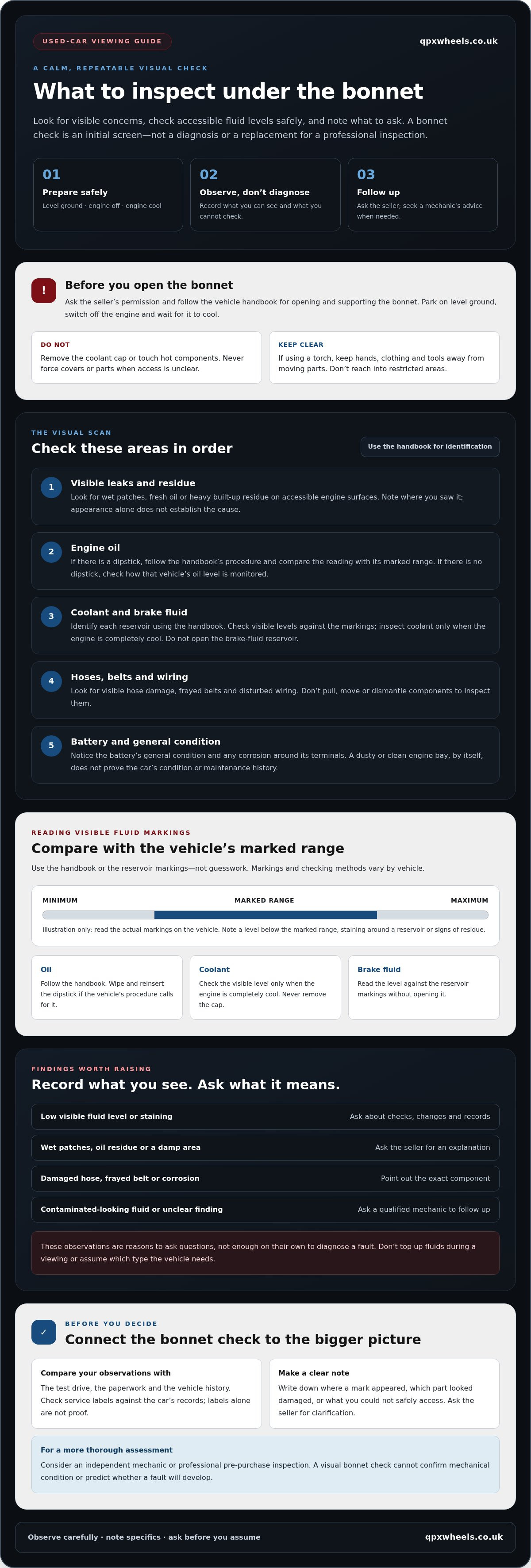
A used-car bonnet checklist to follow during the viewing
A fixed order makes it easier to check the engine bay calmly and remember what you want to ask. Use this checklist as a prompt, not a pass-or-fail test. If you can’t safely see a component or aren’t sure what a marking means, leave it alone and ask the seller or an independent mechanic.
The step-by-step checks to complete
- Get permission and check safe access. Ask the seller before opening the bonnet. Make sure the car is on level ground, switched off and cool, and follow the handbook’s instructions. Don’t force the bonnet or reach near moving or hot parts.
- Scan the general condition. Look for obvious damage, loose-looking items, heavy residue or areas that appear unusually disturbed. A tidy engine bay doesn’t prove good maintenance, so compare what you see with the car’s records.
- Check accessible fluid levels. Use the handbook or reservoir markings to identify fluids. Where a level is visible, compare it with the marked range. Don’t open a coolant cap or remove components to improve access.
- Look for leaks. From a safe position, check for visible drips or wet patches under accessible areas. Note where you see them rather than trying to trace their source.
- Inspect visible hoses, belts and the battery. Look for apparent damage, fraying or corrosion without touching or moving parts. Some components may be hidden, so don’t treat limited visibility as evidence that they’re missing or faulty.
- Write down anything unclear. Record what you observed and ask the seller for an explanation or relevant paperwork before deciding what to do next.
Questions to ask the seller about the engine bay
Keep questions neutral and specific. Ask whether the car has had recent repairs, whether any warning signs have recurred and what service records are available. If documents refer to work or maintenance, check that they relate to the vehicle you’re viewing. Ask about anything you can’t match to what the seller has told you.
For a vehicle you’re considering, you can browse QPX Wheels’ used vehicles and ask for details relevant to that car. Confirm its history and condition directly. Don’t assume every vehicle has the same inspection records or warranty terms.
A checklist can help you organise what to inspect under the bonnet of a used car, but it can’t verify a fault or replace a fuller assessment. If an answer is unclear or a concern remains, note it and arrange appropriate checks before making a decision.
What to do after inspecting under the bonnet of a used car
A bonnet check is one useful piece of evidence, not a verdict. Weigh your notes alongside how the car behaves on a test drive, its service documents and its vehicle history. A tidy engine bay can’t confirm the car is mechanically sound, just as one mark doesn’t prove a serious fault. Look for a consistent picture and follow up anything that doesn’t add up.
Before agreeing to buy or arranging finance, resolve questions about visible concerns, missing records or explanations that don’t match the paperwork. A vehicle history check can help verify recorded details, but it isn’t a hands-on assessment of the car’s current mechanical condition. Keep those checks distinct, and don’t rely on one to replace the other.
When to arrange an independent inspection
Consider an independent inspection if you’re unsure what you saw, have concerns or simply want a more thorough mechanical assessment. A qualified professional can investigate issues a visual check can’t confirm and assess areas that aren’t accessible during a viewing. Agree access and arrangements with the seller before booking. If they can’t accommodate a reasonable inspection, take time to consider whether you’re comfortable proceeding.
Choose your next step with confidence
Read through your written checklist and the seller’s responses. Compare the car’s condition and documentation with what you need from a vehicle, rather than relying on appearance or reassurance alone. If questions remain, ask them before making a decision. Where a concern needs further assessment, arrange it first and use the findings to decide whether to continue.
Knowing what to inspect under the bonnet of a used car helps you ask focused questions, but the best next step depends on what you’ve found. You can explore QPX Wheels’ used cars and vans, then request information about the history and condition of a specific vehicle before progressing. Check any vehicle-specific records and warranty terms directly, and consider warranty options separately from the inspection itself.
Take your next step with confidence
Knowing what to inspect under the bonnet of a used car helps you spot questions to follow up, not certify the vehicle’s condition. Check visible fluids and components safely, note anything unusual, and compare your observations with the seller’s answers, service documents, vehicle history and test drive. If you’re unsure or want a fuller mechanical assessment, consider an independent inspection before deciding.
Take time to resolve unanswered questions about a specific car before agreeing to buy or arranging finance. QPX Wheels is an independent used-vehicle dealership with over 16 years of industry experience. Nationwide delivery is available, and extended warranty options are offered. Check the terms for the vehicle you’re considering. These options are separate from assessing its condition, so ask for the relevant vehicle-specific information.
Ready to compare vehicles? Explore QPX Wheels’ used cars and vans and ask about a vehicle. With clear questions and the right checks, you can make your next decision with greater confidence.
Frequently Asked Questions
What should I check first under the bonnet of a used car?
Start with safety: park on level ground, switch off the engine and let it cool before opening the bonnet. Look for obvious leaks, damage or loose-looking components without touching hot parts. Then check accessible fluid levels against their markings, using the handbook to identify components if needed. Make a note of anything unusual. These observations can guide questions for the seller or a mechanic, but they can’t provide a complete mechanical diagnosis.
Should I check the oil when the engine is hot or cold?
Follow the vehicle handbook, because the correct oil-checking procedure varies between models. Many dipstick checks require the car to be parked on level ground with the engine switched off for a period, but don’t assume this applies to every vehicle. Some cars use an electronic level check or have no visible dipstick. If the instructions aren’t clear, ask the seller or a qualified professional rather than guessing or removing components.
How can I tell if a used car has an oil leak?
Look for fresh wet patches or drips around accessible areas and beneath the parked car, without reaching into the engine bay. Residue may be old or have more than one possible cause, so its appearance alone can’t confirm a fault. Note or photograph what you see, then ask the seller for an explanation and any relevant records. If the concern remains unclear, arrange a professional assessment before deciding whether to proceed.
Is it safe to open the coolant cap when inspecting a used car?
No, don’t open the coolant cap while the engine is hot or even warm. The cooling system may be pressurised, and escaping hot coolant can cause serious burns. Wait until the engine is fully cool, then check the visible level in the expansion tank against its markings without removing the cap. If the level looks low or you notice residue, ask the seller about it and seek professional advice rather than attempting to diagnose the cause.
What does milky residue under the oil cap mean?
Milky-looking residue can have several explanations, so don’t treat it alone as proof of a serious engine problem. Ask when the car was last driven and serviced, and whether there are other concerns or relevant maintenance records. If the residue persists, other signs are present or you’re unsure what you’ve found, pause before committing and ask an independent mechanic to inspect the vehicle. A visual clue needs context and, if necessary, professional assessment.
Can I tell if an engine is healthy just by looking under the bonnet?
No, a visual check can’t confirm an engine’s internal condition. It may reveal visible leaks, damage, low fluid levels or other points to investigate, but some faults won’t be apparent while the car is stationary. Consider what to inspect under the bonnet of a used car alongside its service history, vehicle records and test drive. If you want greater confidence before buying, arrange an independent inspection by a qualified professional.
Should I buy a used car if I see a leak under the bonnet?
Don’t decide until you understand what the leak might involve and have had any concern assessed. A visible leak is a reason to ask the seller for details and consider an independent inspection. Appearance alone can’t establish its cause or what work may be needed. If there’s no clear explanation or the concern remains unresolved, pause before committing. You can then arrange further checks or compare the car with other suitable options.


