
What if the best test drive isn’t the longest one, but the one that gives you the clearest evidence? Learning how to test drive a used car like a professional can help you make a short drive count. It’s understandable to worry that you’ll miss a fault, misread a strange noise or feel rushed into a decision before you’ve had time to compare.
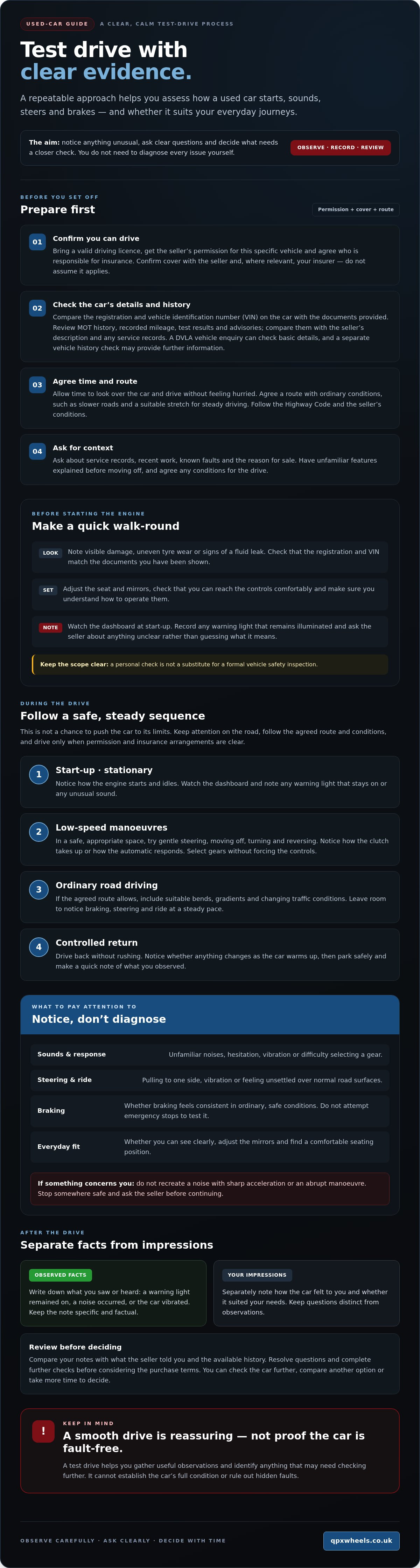
A calm, repeatable process helps you focus on how the car starts, sounds, steers and brakes, and whether it suits your everyday journeys. You don’t need to diagnose every issue yourself. The aim is to notice anything unusual, ask clear questions and decide what needs a closer check.
This guide explains how to prepare, what to bring and how to assess a car in realistic driving conditions. You’ll learn how to note warning lights, handling and unfamiliar noises, and what to do if something doesn’t feel right. By the end, you’ll have practical next steps, whether that means checking the car further, comparing another option or taking more time to decide.
Key Takeaways
- Prepare before the appointment by confirming you have the right licence, permission and insurance arrangements for the drive.
- Use a safe, steady sequence to assess the car, following the Highway Code and the seller’s agreed conditions.
- Learn how to test drive a used car like a professional by distinguishing normal behaviour from signs that need an explanation or further checks.
- Record what you notice straight after the drive, keeping observable facts separate from your personal impressions.
- A smooth drive is reassuring, but it can’t confirm the car is fault-free. Review your notes, resolve questions and complete further checks before considering the purchase terms.
How to prepare for a used-car test drive before you set off
A structured check helps you use the drive well, but it can’t establish a car’s full condition or rule out hidden faults. The aim is to gather useful observations and identify anything that may need checking further. Knowing how to test drive a used car like a professional starts before you turn the key.
Arrange an appointment with enough time to look over the car and drive without feeling hurried. Before setting off:
- Bring a valid driving licence and ask the seller for permission to drive the specific vehicle.
- Agree who is responsible for insurance. Confirm with the seller and, where relevant, your insurer that you’re covered for this test drive. Don’t assume cover applies.
- Ask which documents and vehicle details will be available. Compare the registration and vehicle identification number (VIN) on the car with the details in the documents provided.
- Check the car’s MOT history using the GOV.UK MOT history service. Review recorded mileage, test results and advisories, then compare these with the seller’s description and any service records. You can also use the DVLA vehicle enquiry service to check basic vehicle details. Consider a separate vehicle history check if you need further information.
- Agree a route that includes ordinary driving conditions, such as slower roads and a suitable stretch for steady driving. Follow the Highway Code and the seller’s conditions.
What to check before starting the engine
Walk around the car and note visible damage, uneven tyre wear or signs of a fluid leak. Check that the registration and VIN match the documents you’ve been shown. Before setting off, adjust the seat and mirrors, check that you can reach the controls comfortably and make sure you understand how to operate them. At start-up, watch the dashboard warning lights and note any that remain illuminated. Ask the seller about anything unclear rather than guessing what it means. A personal check is not a substitute for a formal vehicle safety inspection.
Questions to ask the seller before the drive
Ask about service records, recent work, known faults and the reason for sale. Ask the seller to explain unfamiliar features before you move off, and agree the route and any conditions for the drive. Confirm permission and insurance arrangements first. Clear answers give you useful context, but they don’t replace your own observations or any further checks the car may need.
Keep your notes factual: record what you saw or heard, then list your questions separately. This makes it easier to compare the car’s condition and history with what you were told, without feeling pressured to decide during the appointment.
How to test drive a used car safely, step by step
A useful test drive is calm and consistent, not a chance to push a car to its limits. Follow the Highway Code, stick to the route and conditions agreed with the seller, and only drive when permission and insurance arrangements are clear. Keep your attention on the road. If someone comes with you, ask them to note observations so you’re not distracted.
Use this sequence to assess the car in a controlled way:
- Start-up: With the car stationary, notice how the engine starts and idles. Watch the dashboard as the car starts, and note any warning light that stays on or any unusual sound.
- Low-speed manoeuvres: In a safe, appropriate space, try gentle steering and manoeuvres such as moving off, turning and reversing. Notice how the clutch takes up or how the automatic responds, and select gears without forcing the controls.
- Ordinary road driving: If the agreed route allows, include suitable bends, gradients and changing traffic conditions. Leave room to notice how the car brakes, steers and rides at a steady pace.
- Controlled return: Drive back without rushing. Pay attention to whether anything changes as the car warms up, then park safely and make a quick note of what you noticed.
What to notice when pulling away and driving slowly
Focus on whether the car responds smoothly to light inputs. Listen for unfamiliar noises, and notice hesitation, vibration or difficulty selecting a gear. Don’t try to recreate a sound by accelerating sharply or making an abrupt manoeuvre. If anything concerns you, stop somewhere safe and ask the seller about it before continuing.
How to assess the car on ordinary roads
On a suitable route, notice whether the car pulls to one side, vibrates or feels unsettled over normal road surfaces. Check that braking feels consistent in ordinary, safe conditions. Don’t attempt emergency stops to test it. Also consider whether you can see clearly, adjust the mirrors and find a comfortable seating position. Try climate controls or other features only when parked, or ask your passenger to operate them.
Compare what you experience with the car’s age, mileage and the seller’s description. A sound or handling characteristic isn’t proof of a fault, but it’s worth recording and asking about. To test drive a used car like a professional, follow a repeatable process and distinguish what you observed from what you suspect.
A test drive shows how a car behaves in the conditions you experienced, not its complete history or overall condition. If you come across overseas buying advice, remember the FTC Buyers Guide relates to US consumer purchases, so it shouldn’t be treated as UK guidance. You can also compare the information you gather with used cars to compare.
How to judge a used car’s condition during the drive
Assess what you notice in context. A car’s age, mileage, condition and service history all matter, as does whether its behaviour matches the seller’s description. A particular noise or vibration can have several possible causes, so one observation isn’t enough to diagnose a fault. Record what happened, ask sensible questions and decide whether further checks are needed.
Sort your observations into three groups: behaviour that seems consistent with the car and its description; signs that need an explanation; and concerns that warrant professional follow-up. This keeps an unexpected sensation from becoming an unsupported conclusion. The Consumer Reports buying guide offers broader used-car advice, though its guidance may reflect the US market rather than UK-specific processes.
| Observation | Question to ask | Sensible next check |
|---|---|---|
| A warning light stays on | Has this appeared before, and is there a record of it being investigated? | Ask for relevant records and consider an independent inspection. |
| Unusual noise or vibration persists | Has the car behaved this way previously? | Note when it occurs and ask a qualified professional to assess it if concerns remain. |
| The car pulls or braking feels inconsistent | Has this been reported or checked before? | Don’t dismiss it; seek professional follow-up before deciding. |
Which driving signs deserve a follow-up question?
Record persistent warning lights, unfamiliar noises, vibration, pulling or inconsistent braking response, including when each occurred. Ask the seller about the behaviour and whether service or repair records can clarify it. A single symptom can have more than one explanation, and a test drive can’t identify the cause. If the answer doesn’t resolve your concern, arrange an independent inspection before proceeding.
How to compare a manual and an automatic used car
In a manual, notice the clutch feel and whether gear changes seem consistent during ordinary driving. In an automatic, observe how it engages and responds as you drive normally. Don’t force controls or try to diagnose transmission problems from a short drive. Focus on whether the car feels comfortable for your usual journeys, such as stop-start traffic or longer trips, rather than assuming one transmission type is automatically better.
To learn how to test drive a used car like a professional, separate what you directly observed from what you think it might mean. That distinction helps you ask focused questions and choose the right next check without jumping to conclusions.
After a used car test drive: checks and decisions
Before the details fade, write down what you observed. Keep facts separate from impressions: “steering wheel vibrated at a steady speed” is more useful than “the car felt wrong”. Note when it happened, whether it happened more than once and what the road conditions were. A passenger’s notes can help, but add your own observations as soon as you can.
A smooth drive is reassuring, but it can’t prove a car is fault-free. A short journey only shows how it behaved during that drive. It doesn’t confirm the vehicle’s full condition or replace checks of its records and history.
How to follow up on anything that felt wrong
Ask the seller about specific observations rather than making a diagnosis. For example, explain when a noise occurred and ask whether it’s been noticed before. If an answer refers to previous work, ask whether supporting service or repair records are available. Check that the explanation makes sense alongside the car’s history and description.
If a concern remains, consider arranging an independent inspection before deciding. A qualified professional can investigate issues that a test drive alone can’t confirm. If the seller can’t clarify a point or provide relevant information, pause and consider what further evidence would help you make a confident decision.
How to decide whether to proceed
Review the car against your needs, your notes, the records you’ve seen and any other vehicles you’ve considered. Does it feel comfortable for the journeys you expect to make? Do the answers match what you observed? Are there unresolved points that could affect your decision? Give yourself time to consider each question.
Pressure to decide quickly, or one positive impression, shouldn’t replace outstanding checks. You can ask for time to review information, compare another car or walk away if the vehicle’s behaviour, documents or explanations still concern you. Before proceeding, make sure you understand the car’s condition as far as you can establish it and the sale terms, including any unresolved points.
Knowing how to test drive a used car like a professional means treating the drive as one part of a considered decision, not as a verdict. If you’re comparing alternatives, browse QPX Wheels’ used cars and assess each against the same needs and questions.
Your next steps after a professional used-car test drive
A test drive is one part of a careful buying decision, not a final verdict on a car. Take time to work through what you observed, check anything that remains unclear and compare the vehicle with other suitable options. A calm process helps you make a decision based on evidence rather than excitement or pressure.
Use this sequence:
- Review your notes. Separate what you directly noticed from your impressions, and identify any unanswered questions.
- Resolve concerns. Ask the seller for clear explanations and any relevant supporting records.
- Complete further checks. Review the available documents and history information, and consider an independent inspection if concerns remain.
- Consider the purchase terms. Once you’re comfortable with the car and your checks, review the terms carefully before agreeing to buy.
What to confirm before agreeing to buy
Make sure the vehicle details and documents you’ve reviewed are consistent, and that you understand the sale terms. Follow up on outstanding questions rather than relying on verbal reassurance alone. If a warranty is included or available as an option, ask for its terms and exclusions in writing, and confirm exactly what applies to that vehicle. Don’t assume cover is automatic or that it replaces checks of the car’s condition.
HP or PCP finance can be considered as part of the purchase, but only after you’ve assessed the car and addressed your inspection questions. Take time to understand the relevant finance terms and make sure they suit your circumstances. A monthly payment shouldn’t persuade you to overlook an unresolved concern about the vehicle.
Finding a used car that suits your needs
Think about the journeys you make, who needs to travel with you, accessibility requirements and which features matter in everyday use. Shortlist vehicles against those priorities, then compare their condition, records and test-drive observations on the same basis. Asking the retailer specific questions about each car can help you understand the differences without treating any single drive as conclusive.
Knowing how to test drive a used car like a professional means leaving with clear next steps, not feeling obliged to commit straight away. You can compare used cars and vans at QPX Wheels against your needs.
Take your next step with confidence
Learning how to test drive a used car like a professional means treating the drive as evidence, not a final verdict. Prepare before you go, follow a safe route and note how the car behaves. Afterwards, check your observations against the vehicle’s documents and history, ask about anything unclear and arrange further checks if concerns remain.
A smooth drive can be reassuring, but it can’t prove a car is fault-free. Take the time you need to compare suitable vehicles and understand the condition and sale terms before deciding. You don’t have to commit simply because you’ve completed a test drive.
When you’re ready to explore your options, QPX Wheels offers used cars with nationwide delivery. Browse used cars at QPX Wheels and take the next step at your own pace. A calm, well-informed decision is a strong start to finding a car that suits you.
Frequently Asked Questions
How long should a used-car test drive take?
There’s no single duration that suits every car or seller arrangement. Allow enough time to check the controls, drive on a safe route with varied, ordinary conditions and review your notes afterwards. Agree the plan in advance, stay within the seller’s permission and insurance arrangements, and don’t rush. Even a longer drive can’t replace reviewing the car’s records or arranging an independent inspection if you have concerns.
What should I check first when test driving a used car?
Before setting off, confirm you’re permitted and insured to drive, and check that the vehicle details match the documents provided. Look over the car for visible damage, tyre wear or leaks, then watch for warning lights during start-up. Ask about known faults and service records. Keep your observations factual. If something is unclear, follow it up with the seller or seek advice from an independent professional.
Can I test drive a used car without insurance?
Don’t assume you’re covered. Before driving, establish who is responsible for insurance and confirm that the policy and the seller’s permission cover your circumstances. If cover is unclear, don’t set off until it’s been resolved. The relevant terms can depend on the policy and situation, so check the details rather than relying on verbal assumptions. If necessary, contact the insurer or seller to clarify the arrangements first.
What should I do if a warning light comes on during a test drive?
Note which light appeared, when it came on and whether it stayed on. Drive safely, and check the vehicle handbook or follow the seller’s instructions if a warning indicates you should stop. Ask the seller for an explanation and any supporting history. Don’t treat a brief drive as a diagnosis. If the warning remains unexplained or concerns you, arrange a professional inspection before making a decision.
Is a test drive enough to know whether a used car is reliable?
No. A test drive shows how the car behaves in the conditions you experience, but it can’t confirm its full mechanical condition or history. A key part of learning how to test drive a used car like a professional is treating the drive as one source of evidence. Consider it alongside available records, vehicle-history checks and document review. If anything concerns you, ask questions and consider an independent inspection.
Can I ask for a different route during a used-car test drive?
Yes, you can ask whether a suitable route is possible, but agree it with the seller beforehand and respect any conditions they set. Choose a safe, legal route that reflects ordinary driving, without taking risks. If the route is restricted, note which conditions you couldn’t assess and discuss an appropriate alternative with the seller. Don’t attempt manoeuvres or road conditions that feel unsafe or fall outside the agreed plan.
Should I buy a used car if the test drive feels fine?
A good drive is encouraging, but it shouldn’t be your only reason to buy. Check the documents and available history, ask about anything you noticed, and consider whether the car suits your needs. Resolve unanswered questions and arrange an independent inspection if appropriate. Take time to review the sale terms. You don’t need to commit simply because the drive went well, and you can compare other cars before deciding.


