
A lower monthly payment can come with a more complicated end point. When comparing hire purchase and personal contract purchase, it’s easy to focus on what leaves your bank account each month and overlook the final payment, ownership and conditions that shape the whole agreement.
The monthly figure matters, especially when you’re working within a budget. But the right option also depends on whether you want to own the car, how far you expect to drive and whether you’d like the choice to return or change it at the end. With PCP, you may need to make a final payment to keep the car. HP follows a different route towards ownership.
This guide explains the practical differences between HP and PCP, including how to compare the full commitment rather than the monthly payment alone. We’ll look at ownership, mileage, vehicle condition and end-of-agreement choices, so you can weigh each option against your plans. QPX Wheels offers both finance options on pre-owned vehicles. Comparing the terms alongside your likely use can help you decide which route fits your budget and plans.
Key Takeaways
- HP is structured towards ownership, while PCP gives you an end-of-agreement choice. Your plans for the car can help guide which structure suits you.
- When comparing hire purchase and personal contract purchase, look beyond the monthly payment and weigh up the full commitment across the agreement.
- Compare written offers on equivalent terms, including the duration, deposit, instalments, fees and any final payment.
- Think about how much you expect to drive and whether you’re comfortable with the mileage and vehicle-condition terms in a PCP agreement.
- Explore pre-owned cars alongside QPX Wheels’ HP and PCP finance options, then consider which agreement fits your intended use and budget.
Comparing hire purchase and personal contract purchase: what is the real difference?
HP is structured towards owning the car once you’ve met the agreement’s terms. PCP usually gives you a choice at the end: pay the final amount to keep it, return it or arrange to change vehicles, subject to the contract. The key distinction is whether your payments are set up to lead towards ownership or leave a decision for later.
With Hire Purchase (HP), you pay an agreed deposit, if required, followed by instalments over the term. Payments are generally structured around the vehicle’s full price, plus applicable interest and charges. Personal Contract Purchase (PCP) payments generally cover an agreed portion of the vehicle’s value during the agreement, with a larger optional final payment if you want to own it. Personal Contract Purchase (PCP) explained gives further background on how this type of finance differs from traditional hire purchase.
Use this as a starting-point comparison. The details, including whether a deposit or final payment applies, depend on the written agreement.
| Feature | HP | PCP |
|---|---|---|
| Deposit | May be required; the amount is set out in the offer. | May be required; the amount is set out in the offer. |
| Monthly payments | Generally repay the amount financed across the term. | Generally cover an agreed portion of the vehicle’s value. |
| Ownership during the agreement | You may be the registered keeper, but that doesn’t by itself make you the legal owner. | Likewise, being the registered keeper doesn’t necessarily mean you own the car. |
| End of agreement | Ownership follows when the agreement’s requirements are fulfilled. | You can usually choose whether to pay the final amount, return the car or change vehicles, subject to the contract. |
How does Hire Purchase work from deposit to ownership?
The usual sequence is an agreed deposit, regular instalments and completion of the finance agreement. During the term, you may be responsible for keeping and using the car as its registered keeper, while the finance company remains its legal owner. Those roles are different. Ownership depends on meeting the agreement’s terms, so read what completion requires before signing.
How does Personal Contract Purchase work at the end?
PCP leaves a decision for the end of the term. You may pay the final amount to keep the vehicle, return it in line with the contract or use any available value towards changing vehicles. Return conditions and any charges depend on the agreement. Read them alongside the payment schedule rather than treating the monthly figure as the whole commitment.
In short, PCP lets you choose whether to keep, return or change the car at the end, subject to your agreement’s terms. When comparing hire purchase and personal contract purchase, weigh that end decision alongside the deposit and instalments. A payment that looks manageable month to month may lead to a different overall commitment depending on what you plan to do next.
How do HP and PCP payments, ownership and end choices compare?
A monthly payment tells you what an agreement may cost each month, not necessarily what you’ll pay across its full term. For a like-for-like comparison, add the upfront deposit, every instalment and applicable fees. If you intend to keep a PCP vehicle, include its final payment too. The total commitment can look very different from the monthly figure alone.
The monthly payment alone can’t settle the comparison: weigh it against the full amount payable and what you want to do with the car at the end. This helps you judge whether an agreement fits both your current budget and your plans for the vehicle.
Which agreement leads to ownership, and when?
With HP, the instalments are structured towards ownership. You don’t own the car outright simply because you’re its registered keeper during the agreement. Ownership depends on completing the required payments and meeting the agreement’s terms. With PCP, ownership generally requires choosing to pay the final amount and satisfying the relevant terms. If you don’t want to keep the car, other end-of-agreement choices may apply.
What should you compare beyond the monthly payment?
Set the written offers side by side and compare the details. Use the same vehicle and agreement duration wherever possible, so you don’t mistake a difference in car or term for a difference in finance structure. If the offers aren’t directly comparable, make a note of what differs.
- Deposit: note the amount due at the start and how it affects the balance financed.
- Instalments: compare the payment amount, number of payments and agreement duration.
- Total payable and fees: review the total shown in the offer and any listed fees. If keeping a PCP car, include the final amount when planning for that outcome.
- PCP mileage: check the annual allowance against how far you expect to drive, including regular journeys. A mismatch could affect your end-of-term decision.
- Return condition: read the contract’s requirements for the car’s condition and any consequences of not meeting them.
These checks matter because your intended use can change which offer feels manageable. For example, if you expect to drive more than the PCP allowance, consider that term carefully. If you’re set on keeping the car, include the final payment in your budget. Agreement terms vary, so use the written offer rather than assumptions about what HP or PCP always includes.
When comparing hire purchase and personal contract purchase, make the same list for each offer and consider the outcome you want, not just the first figure you notice. QPX Wheels offers both finance options alongside pre-owned cars, so you can explore used cars with HP or PCP finance with your ownership plans and expected use in mind.
Which suits you: HP for ownership or PCP for flexibility?
The better fit depends on what you want from this particular car, how you’ll use it and what you’d like to happen when the agreement ends. If you’re considering a pre-owned vehicle for regular, long-term use, keeping it may matter more than having the option to change it. If your plans could shift, an end-of-agreement choice may be more valuable. Neither structure is automatically right for every buyer.
- Ownership is your priority: HP may align with a plan to keep the vehicle and work towards ownership through the agreement. PCP can also lead to ownership, but you’ll need to plan for its final payment.
- Your mileage is high or hard to predict: Check the PCP allowance against your real driving habits, including regular journeys and possible changes. HP may be worth comparing if you’d rather not base your end decision on a PCP mileage allowance.
- You like changing vehicles: PCP may suit you if you value the choice to return or change the car at the end and are comfortable with the contract’s conditions. HP is more directly geared towards keeping the vehicle.
Use this as a first filter, not a final verdict. When comparing hire purchase and personal contract purchase, make sure the offer for the vehicle you want fits both your monthly budget and your likely plans at the end. A lower PCP instalment doesn’t automatically mean a lower overall commitment, particularly if you hope to keep the car and need to make a final payment.
When might HP align better with your plans?
HP may suit you if you’ve chosen a car you expect to keep and eventual ownership is central to your decision. Its scheduled payments can help you plan towards that outcome, provided you can manage the instalments throughout the term. Wanting to own the car doesn’t settle affordability, though. Weigh the full agreement against your budget and other regular commitments.
Think about how long you realistically want to use the vehicle. If you expect to keep it beyond the finance term, a route towards ownership may be more relevant than the option to return it. Your plans can change, so base the decision on what seems likely rather than assuming you’ll feel the same way later.
When might PCP align better with your plans?
PCP may fit if you value a choice at the end and don’t want to decide now that you’ll keep the vehicle long term. That flexibility works best when the mileage allowance and return-condition requirements suit your expected use. Consider whether the final payment would be manageable if you later decide that ownership is the outcome you want.
For instance, if you’re unsure how long you’ll need a particular used car, returning or changing it may appeal. But if your work or family routine could mean more miles than the agreement allows, that option may feel less straightforward. Compare the conditions with your likely use, then assess the full commitment before choosing.
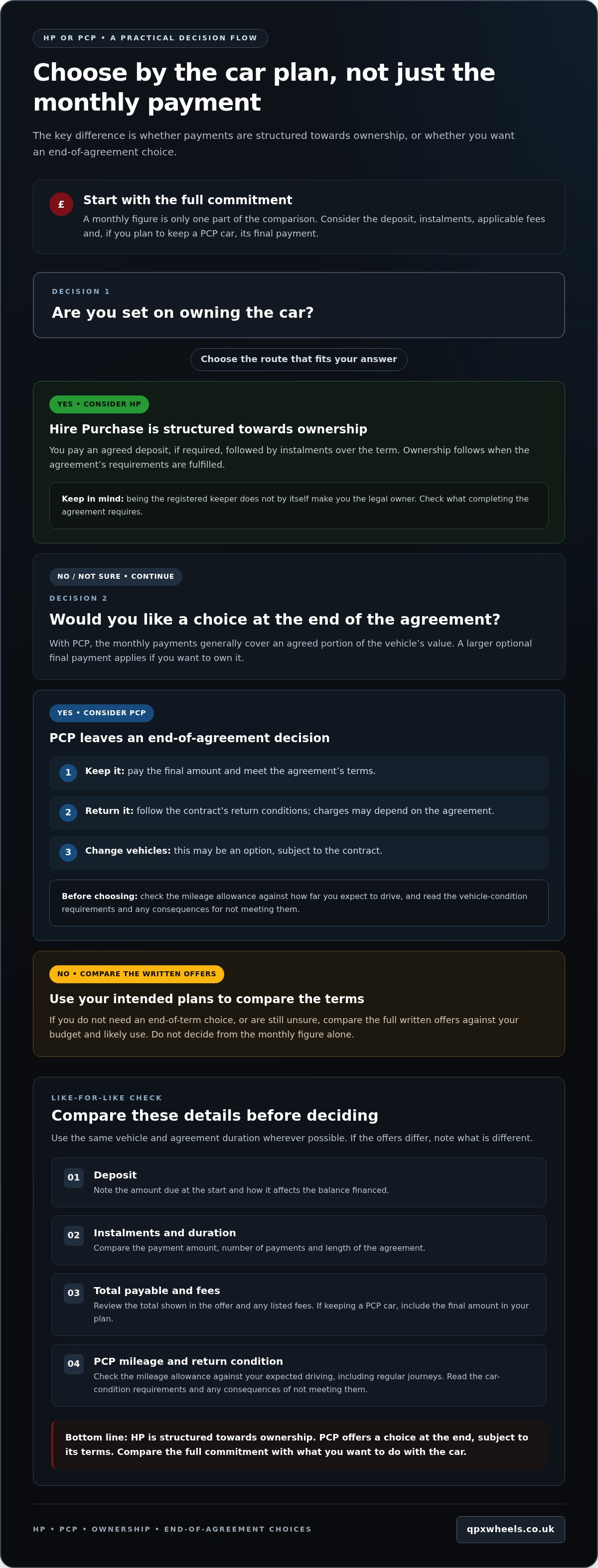
How to compare HP and PCP offers before committing
Use the written offers, not just a showroom conversation or a monthly figure, to compare finance for a specific used vehicle. Keep the vehicle and agreement duration as similar as possible across the HP and PCP options. If either differs, note it clearly. Otherwise, you may be comparing different cars or terms as well as different finance structures.
A consistent review can show whether the agreement fits your real budget and what you want to do with the vehicle. Work through these steps before deciding:
- Match the offers: Compare finance for the same vehicle, or as close a match as possible, and note any differences in agreement duration.
- Record every payment: Write down the deposit, number and amount of instalments, any fees shown and the total payable. For PCP, record the final payment separately and include it when assessing the cost of keeping the car.
- Check the end point: Identify what happens when the agreement finishes. Note which choices require a further payment and what you need to do if you plan to return the vehicle.
- Review PCP conditions: Find the mileage allowance, vehicle-return condition requirements, return process and any charges that could apply under the contract.
- Test the household budget: Consider whether the payments remain manageable alongside regular household bills and motoring expenses, including if your circumstances change.
A practical checklist for reviewing finance agreements
Keep the offer and agreement together, then mark where each payment, fee and end-of-term condition appears. Check that the total payable accounts for the figures stated in the written offer. Don’t overlook a final payment simply because it isn’t part of the regular instalments. For PCP, make sure you understand the return steps and how the agreement treats mileage and vehicle condition.
Questions to resolve before choosing a used vehicle on finance
Ask yourself how long you expect to keep the vehicle, how much you’re likely to drive and whether your circumstances could make the planned payments difficult. If ownership is your aim, consider how you’d manage any PCP final payment. Read the complete agreement before committing. If you’re unsure about the legal meaning of a term, seek independent guidance rather than relying on an assumption.
When comparing hire purchase and personal contract purchase, apply the same checks to both offers, then weigh the figures against the outcome you want. This gives you a clearer basis for choosing than the payment headline alone. To put the comparison into practice, explore pre-owned cars with HP and PCP finance and consider which agreement structure fits your intended use.
Explore used cars with HP or PCP finance through QPX Wheels
The right choice brings together the vehicle you want, how you expect to use it and the ownership outcome that suits you. HP may fit a plan to keep the car and work towards ownership. PCP may suit you if you value an end-of-agreement choice and its conditions fit your likely mileage and vehicle use. In either case, review the written terms and full commitment before deciding.
QPX Wheels sells pre-owned cars and vans and offers both HP and PCP finance options through its finance brokerage. With more than 16 years of industry experience, the dealership brings vehicle options and finance choices into the same buying journey. Reviewing the agreement remains important, but comparing finance alongside the vehicle can give you a practical starting point.
Match your finance preference to the vehicle you want
Start with the type of vehicle that suits your routine, whether that means a car or van. Then consider your expected mileage and how long you plan to keep it. If ownership is the priority, assess how the HP agreement fits your budget. If you want flexibility, look closely at PCP’s end choices, mileage terms and return conditions. Use the written offer to make your final comparison.
What to do next if you are still comparing
There’s no need to decide based on a headline payment. Revisit your comparison notes and identify any unanswered questions about the agreement, including the full amount payable and what happens at the end. Resolve any unclear terms before committing. This measured approach can help you choose with greater confidence, even if you’re still weighing up the vehicle itself.
As you continue comparing hire purchase and personal contract purchase, keep your intended ownership, likely use and household budget in view. A finance option makes sense when its structure suits both the car and your plans for it.
- HP: consider it if keeping the vehicle and progressing towards ownership are central to your plans.
- PCP: weigh the end choices against the mileage and return terms, and decide whether a final payment could be manageable if you want to keep the car.
- Either option: compare the written agreement and total commitment with your budget before accepting.
Explore QPX Wheels’ pre-owned vehicles and HP or PCP finance options when you’re ready to take the next step.
Choose your next step with confidence
A finance decision should leave room for real life, not just fit the plan you have today. Before committing, consider how a change in work, family needs or driving habits might affect the way you use the vehicle or the outcome you want at the end of the agreement. That perspective can help you choose an arrangement that remains workable beyond the first few months.
Use your notes from comparing hire purchase and personal contract purchase to focus on what matters most to you. If a detail in an offer still feels unclear, pause and resolve it before you sign. Taking time to understand the commitment is a sensible part of choosing a car.
QPX Wheels is an independent used-vehicle dealership with more than 16 years of industry experience. Its pre-owned cars are available with HP and PCP finance options, as well as nationwide delivery.
Explore used cars and HP or PCP finance options with QPX Wheels and take your next step with a clear view of the agreement and your plans.
Frequently Asked Questions
Can I get HP or PCP finance on a used car in the UK?
Yes, HP and PCP finance are both available on used cars in the UK, and QPX Wheels offers both options alongside pre-owned vehicles. The terms depend on the specific car and agreement. When comparing hire purchase and personal contract purchase, compare the written offers for the vehicle you’re considering rather than assuming every used car has the same terms.
Do I have to pay a deposit for HP or PCP finance?
Not necessarily. Whether a deposit is required, and how much it is, depends on the particular finance offer. Check the written agreement for the amount due at the start and how it affects the remaining balance and instalments. A smaller deposit doesn’t automatically make an agreement more affordable overall, so assess the regular payments and total payable against your budget too.
Can I end a PCP agreement early, and what should I check first?
You may have ways to end a PCP agreement early, but the process and amount payable depend on your agreement and circumstances. Before making a decision, contact the finance provider for a written settlement figure and compare it with the remaining payments and any final amount. Check for relevant charges and understand what happens to the car. Don’t simply stop payments or hand back the keys.
Can I voluntarily terminate a car finance agreement in the UK?
Voluntary termination may be available for certain regulated HP and PCP agreements in the UK, but it’s different from simply returning a car. Whether it applies, what you may still owe and what steps to follow depend on your agreement and payment history. Ask the finance provider for a written explanation before acting. If you’re unsure about your legal position, seek independent guidance before making a decision.
Does applying for HP or PCP finance affect my credit file?
An application may involve a credit search, and the type of search and how it appears can depend on the lender and application process. If you’re considering several offers, check whether an initial enquiry or a full application is being made before proceeding. Repayments and missed payments may also be recorded. Review the finance provider’s information about credit searches and make sure the proposed payments fit your budget.
Can I change my annual mileage after taking out PCP finance?
You can ask the finance provider whether your mileage allowance can be changed, but a change isn’t guaranteed and the agreement’s terms will determine what happens. Contact the provider as soon as your driving needs change, rather than waiting until the agreement ends. Ask for any revised terms in writing, including whether the change affects payments or return conditions, and keep a copy with your finance documents.
What happens if I want to sell a car that is still on finance?
First, check who legally owns the car under your agreement. With HP or PCP, you generally don’t own the vehicle outright during the agreement, so selling it without following the finance provider’s process may cause problems. Request a written settlement figure and ask how the finance must be cleared before ownership can be transferred. Don’t rely on the car’s sale value alone to determine whether the balance will be settled.


