
What are you agreeing to when the car is on your drive, but it isn’t legally yours yet? Understanding hire purchase agreements for vehicles means looking beyond the monthly instalment to the ownership rules, total amount payable and what happens if your plans change.
With hire purchase (HP), you use the vehicle while making the agreed payments, but ownership generally transfers only after you have completed the required payments and met any other conditions, such as paying an applicable option-to-purchase fee. The monthly figure alone won’t show the full commitment, and missed payments or ending the agreement early can have important consequences.
This guide explains how the deposit, instalments and fees contribute to the total, which terms to review, and what to understand about arrears, voluntary termination and early settlement. It also compares HP with PCP, so you can consider which option better fits your budget and vehicle plans. QPX Wheels offers HP and PCP finance options on used cars and vans.
Key Takeaways
- Build your understanding hire purchase agreements for vehicles by separating who owns the car, what you’ll pay and how the agreement can end.
- Look beyond the monthly instalment: check the deposit, amount of credit, interest and total amount payable in the written terms.
- If payments become difficult, read the agreement and any finance provider notices carefully before deciding what to do.
- Compare the vehicle details and finance agreement with the offer documents before signing.
- Consider whether HP’s structured route towards ownership suits your plans, budget and need for flexibility.
What is a hire purchase agreement for a vehicle, and who owns it?
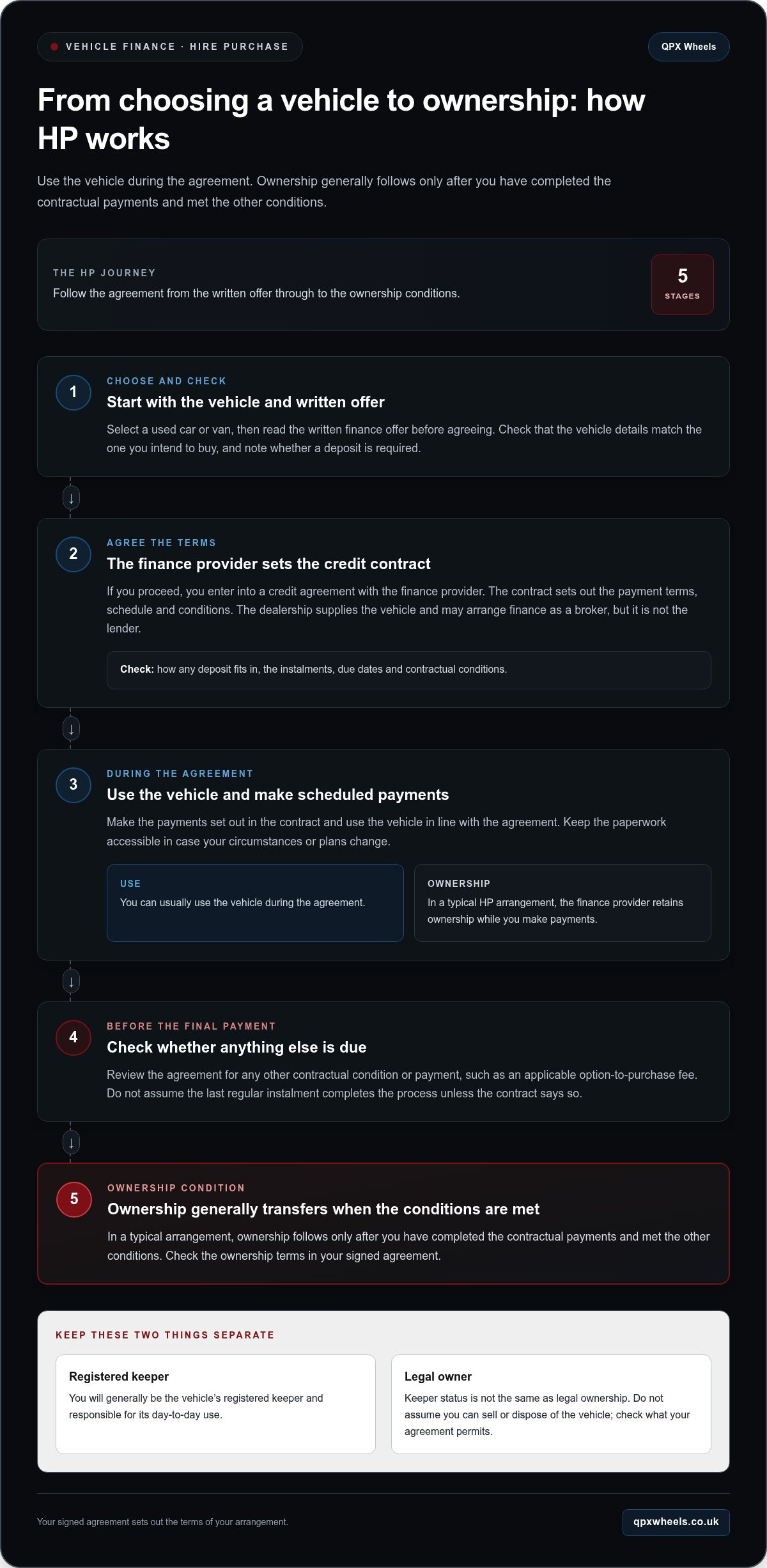
A hire purchase agreement lets you pay for a vehicle over time through instalments set out in a contract. It explains the payment schedule and the conditions you must meet. An upfront deposit may be required, depending on the offer. You can usually use the vehicle during the agreement, but having it in your possession doesn’t automatically make you its owner.
In a typical arrangement, you choose a vehicle, review the finance offer and, if you decide to proceed, enter into a credit agreement with the finance provider. The dealership supplies the vehicle and may arrange finance as a broker, but it isn’t the lender. The finance provider sets the credit contract, including its payment terms. This overview of hire purchase agreements explains the broad principles, but your signed agreement sets out the terms of your arrangement.
In short, possession lets you use the vehicle during the agreement; ownership generally follows only when you’ve completed the contractual payments and met the other conditions. Understanding hire purchase agreements for vehicles starts with keeping those two ideas separate.
How does vehicle hire purchase work from start to finish?
Once you’ve selected a used car or van, read the written finance offer before agreeing to it. Check that the vehicle details match the one you intend to buy, and note whether a deposit is required. The contract should show how any deposit fits into the arrangement, along with the instalments, due dates and conditions.
During the term, you make the scheduled payments and use the vehicle in line with the agreement. Keep the paperwork accessible so you can refer to it if your circumstances or plans change. Before making the final payment, check whether any other contractual condition or payment, such as an option-to-purchase fee, applies. Don’t assume the last regular instalment completes the process unless the contract says so.
Who owns a car during an HP agreement?
In a typical HP arrangement, the finance provider retains ownership while you make payments. You’ll generally be the vehicle’s registered keeper and responsible for its day-to-day use, but keeper status is not the same as legal ownership. Read the ownership terms in your signed agreement rather than relying on a verbal summary.
This distinction matters if you want to sell, transfer or otherwise dispose of the vehicle. Don’t treat it as yours to sell simply because it’s in your possession or you’ve paid a number of instalments. Check what the agreement permits and whether you’ve acquired the right to ownership before taking action. Understanding this timeline can help you assess the commitment alongside the payment terms.
What do HP payments, interest, and total amount payable mean?
Understanding hire purchase agreements for vehicles means reviewing the full set of figures, not just the monthly instalment. The deposit, amount of credit, interest and repayment period all affect what you pay overall. Your written agreement should show how these figures fit together, giving you a basis to assess the commitment before accepting the offer.
Which figures should you find in an HP agreement?
Start with the vehicle’s cash price and any deposit. The amount of credit is the sum financed under the agreement. Check the instalment amount, how often it’s due and how many payments are planned. The agreement should also disclose the interest, APR, total amount payable and any applicable charges. These figures vary by offer, so use your own paperwork rather than assuming another buyer’s terms apply.
APR, or annual percentage rate, is a measure intended to help compare the cost of credit across offers. It’s useful, but it doesn’t replace the agreement’s actual figures and terms. Compare the total amount payable, repayment period and any disclosed charges, rather than looking at APR or monthly instalments in isolation.
How do the figures fit together?
This simple example uses placeholders only. It isn’t a quote or a forecast of QPX Wheels’ finance terms:
- Cash price: [vehicle price]
- Deposit: [deposit, if required]
- Amount of credit: [amount financed]
- Repayments: [instalment amount] × [number of payments], due [frequency]
- Interest and disclosed charges: [amounts shown in the agreement]
- Total amount payable: [total stated in the agreement]
A lower monthly instalment may come from spreading repayments over a longer period. That can make each payment easier to manage, but it also extends the commitment and can increase the total cost of credit. Check the term as well as the instalment, and use the agreement’s stated total to assess the overall cost.
How can you assess whether repayments fit your budget?
Set the instalment against your regular outgoings and consider the full repayment period, not only the first few months. Include other vehicle costs, such as insurance, fuel and maintenance, in your budget. Then consider two separate questions: can you manage each payment, and are you satisfied with the overall amount payable? An affordable instalment doesn’t automatically mean the credit suits your plans.
Compare the total amount payable as carefully as the monthly instalment, because the monthly figure alone doesn’t show the full cost or length of your commitment. If you’re exploring finance for a used car or van, explore QPX Wheels’ vehicle finance options and consider HP alongside PCP.
What happens if you miss payments or want to end an HP agreement?
A missed HP instalment can have serious contractual and credit consequences. What happens next depends on the agreement, your circumstances and the finance provider’s actions, so don’t assume one missed payment automatically leads to a particular outcome. Read any notice you receive carefully and respond promptly. Understanding hire purchase agreements for vehicles includes knowing what to do if your finances or plans change.
What should you do if you think you may miss an instalment?
Contact the finance provider as soon as you think a payment may be difficult. Explain the situation and ask what options, if any, are available under your agreement. Ignoring a payment or the provider’s notices can leave you with less time to understand your position. Keep copies of messages and letters, and notes of calls, including any agreed next steps. Make sure you understand what has been agreed in writing.
Missed payments may be reported to credit reference agencies and could affect your credit record, depending on the circumstances and applicable reporting rules. Check any notice for the amounts, dates and actions requested. Seek independent debt or legal guidance if you’re unsure how to respond. This is general information, not legal advice.
What is the difference between early settlement and voluntary termination?
Early settlement means paying off the outstanding finance before the scheduled end of the agreement, using the settlement figure calculated under the applicable rules and contract. Ask the finance provider for a written figure and check how long it remains valid. Paying it is intended to settle the finance; it’s different from returning the vehicle under a termination right.
Voluntary termination is a separate statutory route that may apply to eligible regulated HP agreements. Under Section 99 of the Consumer Credit Act 1974, a consumer can generally give notice to end an eligible agreement after paying at least half of the total amount payable. If less than half has been paid, the difference may need to be paid to reach that threshold. Check the agreement for the relevant amount and conditions, and give notice in writing.
Termination can also raise questions about the vehicle’s condition and any liability under the agreement. Don’t assume that returning the vehicle removes every possible payment obligation. Eligibility, calculations, notice requirements and condition-related liabilities depend on the agreement and current UK rules, so verify the details before acting. Early settlement and voluntary termination are not interchangeable: one settles the outstanding finance, whilst the other is a route to end an eligible agreement. If your circumstances change, review the contract and get appropriate guidance before deciding what to do.
How to review a vehicle HP agreement before signing
A careful review gives you the chance to spot differences between what you were told and what the contract says. Read the agreement alongside the finance offer and any written explanations you received. If a figure or condition is unclear, pause and get it explained before you commit. Understanding hire purchase agreements for vehicles means checking both the costs and the responsibilities attached to the car.
Which contract details deserve a careful check?
Work through the paperwork in order. Confirm the vehicle description and the names of the customer and finance provider, then check that the financial terms and ownership conditions are clear. Pay close attention to conditions about using, caring for, insuring or making changes to the vehicle. The agreement sets out the terms for your particular finance.
Use this short review process:
- Match the vehicle: Check the make, model and other identifying details against the vehicle you intend to buy.
- Check the parties and deposit: Confirm the customer and finance provider details, and whether a deposit is required and recorded correctly.
- Review the payment commitment: Compare the instalment amount and frequency, agreement duration, interest, disclosed charges and total amount payable with the offer documents.
- Read the conditions: Find the terms on vehicle use, care, insurance and alterations. Make sure you understand your responsibilities throughout the agreement.
- Locate the key procedures: Identify the sections on missed payments, early settlement, complaints and termination, and note how the agreement says to act.
- Check ownership and completion: Find out exactly what must be paid or otherwise completed before ownership transfers.
What questions should you resolve before committing?
Ask yourself whether the instalments fit your budget for the full term, not just at the start. Do the written figures match the explanations and offer you received? Do you understand the ownership conditions, what happens if a payment becomes difficult, and how to raise a complaint or request settlement information? If the answers aren’t clear, don’t sign yet.
Check any regulated-credit rights and disclosures against current Financial Conduct Authority (FCA) and official guidance, as well as the terms of your own agreement. Rules and individual circumstances can affect how a right applies. This guide is general information, not a substitute for checking current requirements or getting advice about your situation.
Before signing, be clear on the vehicle, all payment figures, the full term, your responsibilities, and what completing the agreement requires. Taking time to check these points is a sensible part of choosing finance for a used car or van. If you’re considering HP, explore QPX Wheels’ vehicle finance options.
Is hire purchase right for your vehicle plans?
Hire purchase may suit you if you want a structured route towards owning a used car or van and feel confident you can manage the agreed payments throughout the term. It gives you a clear payment schedule, but it’s still a financial commitment. Consider the full cost, the length of the agreement and the restrictions that apply whilst the finance provider owns the vehicle. Missed payments can have serious consequences, so think about how the commitment fits your budget and circumstances, not just your plans today.
Understanding hire purchase agreements for vehicles can help you decide whether the route to ownership matches how you expect to use the vehicle. HP isn’t automatically the right choice for every buyer. Your decision depends on your budget, how long you expect to keep the vehicle and the specific terms in the written agreement.
When might HP suit your plans better than a changing-car arrangement?
If you expect to keep the vehicle and aim to own it after completing the agreement’s requirements, HP may align with that intention. PCP has a different structure and commonly offers choices at the end of the term, subject to its terms. These can include paying a final amount to own the vehicle, returning it or moving to another agreement. Compare the written terms rather than assuming either option will suit you. For a fuller comparison, see the planned guide, Used Car Finance Explained: Choosing HP or PCP.
Consider whether your vehicle needs may change during the agreement. HP’s structure may appeal if you plan to keep the vehicle, while someone expecting to change vehicles may want to understand PCP’s end-of-agreement choices. Neither preference settles the question on its own. The repayment schedule, total payable and conditions should still work for your circumstances.
How can QPX Wheels help you consider vehicle finance?
QPX Wheels sells used cars and vans and offers HP and PCP finance options. As you consider a vehicle, review the finance agreement alongside the vehicle itself: check the payment commitment, ownership conditions and what completing the contract requires. This gives you a clearer basis for deciding whether the option fits your plans.
Before proceeding, ask yourself: do I understand the full payment commitment, can I manage it for the whole term, and does the agreement’s route to ownership fit my plans? If any answer is uncertain, revisit the written terms. You can explore QPX Wheels’ used vehicles and finance options.
Take your next step with confidence
Before choosing a vehicle finance plan, consider how long you expect to keep the vehicle and what level of commitment feels manageable. Understanding hire purchase agreements for vehicles can help you approach that decision with clearer expectations, but the right choice still depends on your circumstances and the terms offered. Take the time you need to make a considered decision.
QPX Wheels is an independent dealership with over 16 years of industry experience, offering used cars and vans with HP and PCP finance options, as well as nationwide delivery. When you’re ready, explore QPX Wheels’ used vehicles and finance options.
A well-informed choice starts with a vehicle and agreement that suit your plans. Explore QPX Wheels’ used vehicles and finance options when you’re ready.
Frequently Asked Questions
Is hire purchase a secured agreement for a vehicle?
Yes, HP is generally secured against the vehicle, which means the finance provider retains ownership until the agreement’s conditions are met. This differs from an unsecured personal loan, where the borrower typically owns the car from the outset. The exact terms depend on your contract and applicable rules. Understanding hire purchase agreements for vehicles means checking what the provider can do if payments aren’t maintained, rather than assuming arrangements are identical across agreements.
Can I sell a car while it is on hire purchase?
Usually, you can’t sell an HP vehicle as though you own it while the finance provider retains ownership. A buyer may not receive clear ownership, and you could breach your agreement. If you need to change cars, contact the finance provider to understand the outstanding balance and permitted options before arranging a sale or transfer. Don’t rely on a private sale to clear the finance unless the provider has explained and authorised the process.
How much deposit do you need for vehicle hire purchase?
There isn’t one deposit amount that applies to every HP offer. Some agreements require a deposit, whilst others may be structured differently. The amount depends on the specific offer and vehicle. Check the written quotation for any upfront payment and how it affects the amount of credit and repayments. Don’t budget using a deposit figure from another advert or buyer, as it may not apply to your agreement.
What happens at the end of a hire purchase agreement?
Follow the contract’s completion instructions. Check whether the final scheduled instalment is the last amount due or whether an additional condition or option-to-purchase fee applies. Once all required payments and conditions are met, ownership can transfer according to the agreement. Keep confirmation of completion and any ownership paperwork with your records. If anything remains unclear, ask the finance provider for a written explanation before making the final payment.
Can I withdraw from a vehicle HP agreement after signing?
You may have a right to withdraw from a regulated credit agreement, but eligibility, time limits and the steps to take depend on current rules and your contract. Withdrawing from the finance agreement doesn’t necessarily cancel the vehicle purchase itself. Before acting, read the withdrawal information provided with your paperwork and contact the finance provider in writing to understand what you must repay and how to handle the vehicle. Check current official guidance for your circumstances.
Does applying for hire purchase affect your credit score?
An application may involve a credit check, and the type of search used can affect what appears on your credit file. A lender’s full application check may be visible to other lenders, while an initial eligibility check may use a different search. The process varies, so read the information provided before applying. If you’re comparing offers, check whether an eligibility enquiry or a full application is being made, and avoid submitting applications without understanding the process.
Can I pay off a hire purchase agreement early?
Often, you can request an early settlement figure from the finance provider, but the amount and process depend on your agreement and applicable rules. Ask for the figure in writing, including its validity period and payment instructions, before sending money. Don’t simply add up the remaining instalments, as the settlement calculation may differ. Once paid, keep confirmation that the finance has been settled and check what further steps, if any, complete the agreement.


