
Before choosing your next car, find out what your current one is worth compared with its finance balance. Settling car finance early before buying a new vehicle can feel uncertain: you may not know the lender’s settlement figure, whether charges apply, or whether the car’s value will cover what you owe.
Get those details clear before committing to another vehicle. If the car is worth more than the settlement figure, the difference may contribute towards your next purchase. If it’s worth less, you’ll need to factor the shortfall into your budget. Knowing where you stand can help you avoid surprises and overlapping payments.
This guide explains how to request and review a settlement figure, compare paying the balance with part-exchanging, and consider other routes. It also shows how to use a vehicle valuation to assess your position before planning your next purchase. Once the figures are clear, you can decide whether a used vehicle and available HP or PCP finance suit your circumstances.
Key Takeaways
- When settling car finance early before buying a new vehicle, start by requesting your lender’s settlement figure and checking how long it remains valid.
- Compare the settlement amount with a realistic vehicle valuation to understand whether you may have positive or negative equity.
- Weigh up settling first, discussing a part-exchange or keeping your current vehicle, and consider the key uncertainty in each route.
- Keep closing your existing agreement separate from planning a new finance agreement, and check that the replacement vehicle fits your budget.
- Once you understand your position, explore whether a used car or van with HP or PCP finance could suit your next step.
Settling car finance early: what changes when you want a new vehicle?
If you want to change your car or van before your current finance agreement ends, first find out what it will take to close that agreement. Settling car finance early before buying a new vehicle means paying the amount calculated by your lender to end the existing finance. It is not the same as simply handing the vehicle over as a trade-in.
Early settlement closes your current agreement; trading in is a way to sell or part-exchange the vehicle. The two can form part of the same changeover, but they are separate steps. Your lender’s settlement figure, the vehicle’s value and any new-finance offer are different amounts. Compare them individually to see what could go towards another vehicle and whether you need to account for a shortfall.
What is an early settlement figure?
An early settlement figure is the amount your finance provider calculates to close your specific agreement before its scheduled end. Request it directly from the lender instead of estimating it from your remaining monthly payments. The calculation depends on your agreement and circumstances, so the instalments left to pay may not equal the settlement amount.
Check the written quote for its validity period and any instructions or conditions. It may apply only up to a stated date. If you’re still arranging a part-exchange or comparing vehicles, make sure you’re using a current figure. Ask your lender to explain any item you don’t understand before deciding what to do.
Why the process can differ between HP and PCP
With Hire Purchase (HP), use the lender’s written settlement amount, not the total of the monthly instalments you think remain. It’s the written figure you should compare with your vehicle’s value when working out your position.
With Personal Contract Purchase (PCP), the current agreement’s settlement calculation is separate from its optional final payment. That final payment relates to keeping the vehicle at the end of the agreement; it is not automatically the settlement figure for closing the finance early. Your agreement and the lender’s calculation determine the amount needed now. For an overview of how PCP is structured, see Personal Contract Purchase (PCP).
With either type of finance, don’t assume a part-exchange alone clears the balance. The settlement still needs to be dealt with as part of the transaction, and the vehicle’s value may not match what’s owed. Comparing the figures gives you a starting point, but the lender’s settlement figure and your agreement’s terms determine what is needed to close the existing finance.
Understanding whether you have HP or PCP can make the figures easier to interpret. The existing guide, Used Car Finance Explained: Choosing HP or PCP, can help clarify the distinction before you compare your settlement position with replacement-vehicle options.
How to calculate your settlement position before choosing another car
Before comparing replacement vehicles, put the lender’s current settlement figure alongside a realistic estimate of your car’s value. This gives you an initial picture of whether the vehicle’s value may cover the finance, leave money towards your next purchase, or fall short of the amount owed.
Which figures and documents should you gather?
Gather the lender’s written settlement figure and note when it was issued, how long it remains valid and any payment instructions. Read your finance agreement for relevant terms, fees and steps before making a payment. To get a useful valuation, have the vehicle’s make, model, age, mileage and registration details ready. Be accurate about its condition, service history and any damage, as these can affect its assessed value.
- Request the settlement figure. Ask your finance provider for the amount needed to close the agreement. Don’t rely on your account balance or add up future instalments.
- Check the date and conditions. Note how long the quote is valid for. If it expires before you act, request an updated figure so your comparison uses current information.
- Estimate the vehicle’s value. Use the car’s current details and condition to get a realistic valuation. The original purchase price does not show what it may be worth now.
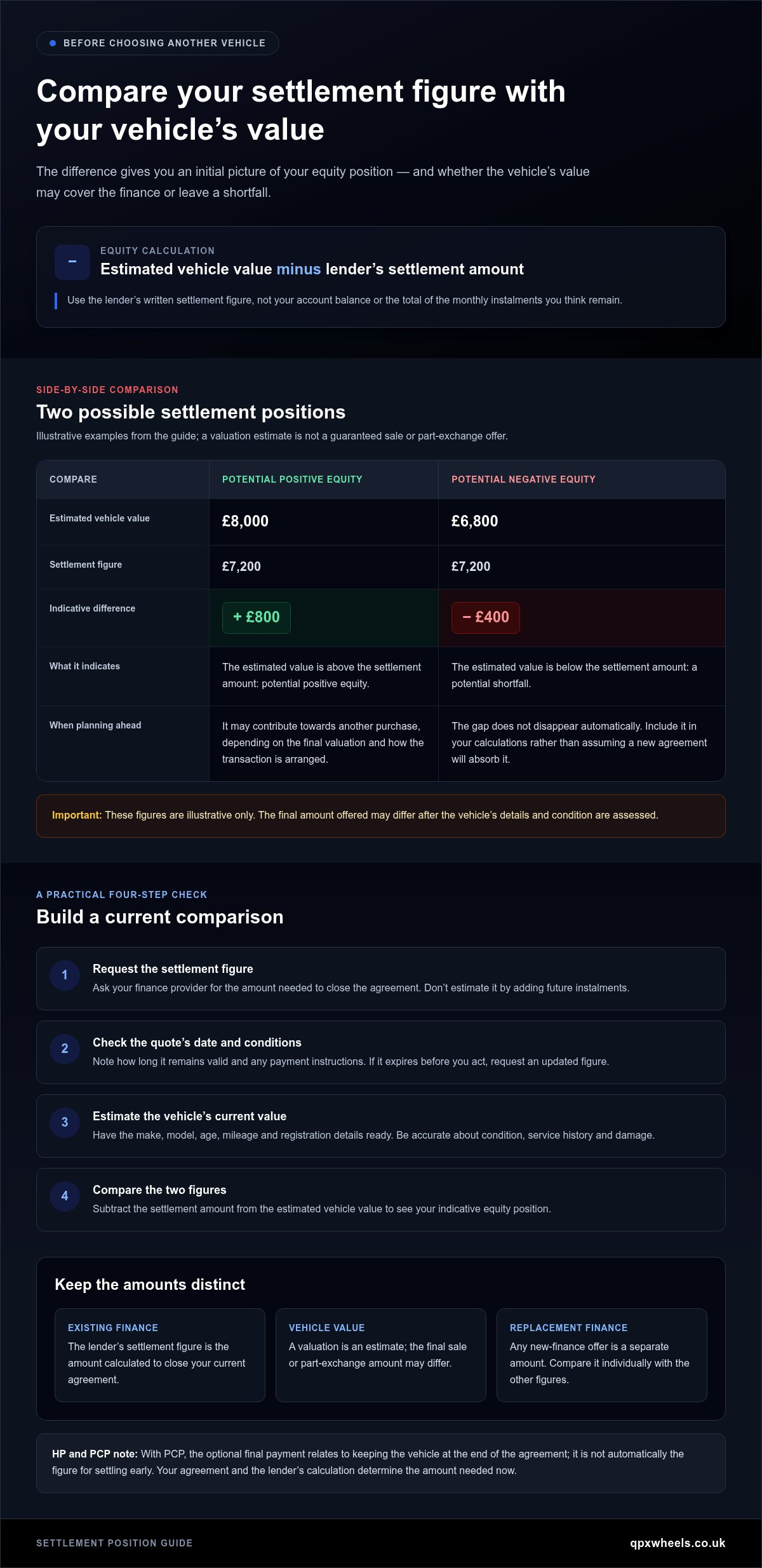
- Compare the figures. Subtract the settlement amount from the estimated vehicle value to see your indicative equity position.
How to interpret positive or negative equity
Equity is the vehicle’s estimated value minus the lender’s settlement amount. A result above zero indicates potential positive equity; a result below zero indicates potential negative equity.
Hypothetical example: if a valuation estimate is £8,000 and the settlement figure is £7,200, the difference is £800 positive equity. If the estimate were £6,800 against the same settlement figure, there would be a £400 shortfall. These figures are illustrative only. An estimate isn’t a guaranteed sale or part-exchange valuation, and the final amount offered may differ after the vehicle’s details and condition are assessed.
Positive equity may contribute towards another purchase, depending on the final valuation and how the transaction is arranged. Negative equity means there’s still a gap between the vehicle’s value and the settlement amount. It doesn’t disappear automatically, so include it in your calculations rather than assuming a new agreement will absorb it.
For a clearer view of the vehicle-value side of the calculation, explore QPX Wheels’ vehicle valuation service. Compare the valuation with the lender’s current figure before deciding how to proceed.
Settle, part-exchange or keep the agreement: compare your options
There isn’t one right route for everyone. Settling car finance early before buying a new vehicle can make the figures clearer, but it doesn’t automatically save money or mean your current car has positive equity. Before committing to a change, compare the settlement amount, a realistic vehicle value and your wider budget.
| Route | What to establish | Potential benefit | Main uncertainty |
|---|---|---|---|
| Settle before buying | The lender’s current settlement figure, payment instructions and how you’ll fund it. | You can see the cost of closing the existing agreement separately from the next purchase. | The final amount and any agreement-specific terms; paying early doesn’t guarantee a lower overall cost. |
| Discuss a part-exchange | A realistic valuation and the lender’s settlement figure, then how any difference will be handled. | The vehicle value may contribute towards the replacement purchase if it exceeds the settlement amount. | The final part-exchange valuation may differ from an estimate, and a shortfall still needs a clear plan. |
| Keep the current vehicle | Your remaining agreement terms, ongoing payments and whether the vehicle still suits your needs. | You avoid making an immediate vehicle change and can reconsider later. | You remain responsible for the existing agreement and its payments, subject to its terms. |
When might settling before buying make sense?
Settling first may suit someone who wants to understand the full cost of closing their current finance before choosing a replacement. It can separate the old agreement from decisions about another car, but affordability depends on the settlement amount, the vehicle’s actual value and your personal budget. Don’t assume an early payment will always reduce the total amount you pay; the lender’s calculation and your agreement terms matter.
How does part-exchange work alongside outstanding finance?
A part-exchange discussion needs both a vehicle valuation and the lender’s settlement figure. If the final value is higher, the difference may contribute towards the next purchase. If it’s lower, the gap remains to be addressed. The exact arrangements depend on the transaction and finance agreement, so don’t treat negative equity as debt that simply disappears or assume it can be added to a new agreement affordably. For valuation factors such as condition and service history, see How Much Is My Car Worth? The Guide to Vehicle Valuations.
Voluntary termination is different from ordinary early settlement and part-exchange. It has separate legal conditions under UK consumer-credit rules. Check current rules and your agreement for eligibility, amounts due and vehicle-return requirements before relying on it. It isn’t simply handing the car back.
A practical checklist before arranging finance for your next vehicle
Once you understand the current agreement and likely equity position, treat the old finance and any replacement finance as two separate decisions. Settling car finance early before buying a new vehicle doesn’t mean you need to arrange the next agreement at the same time. Work through the steps in order, and pause if a figure or instruction is unclear.
In what order should you take the next steps?
- Request and read the settlement figure. Get the amount and payment instructions directly from your lender. Check its validity details and your agreement terms before committing to a changeover.
- Arrange a realistic vehicle valuation. Share accurate details about the vehicle’s mileage, condition and history. Compare the valuation with the settlement figure, allowing for the possibility that a final sale or part-exchange value may differ from an estimate.
- Choose how to handle the current vehicle. Decide whether to settle separately, discuss a part-exchange or keep the vehicle and continue under the existing agreement. If there’s a shortfall, work out how it could be covered without relying on it simply disappearing into a new deal.
- Set a replacement budget. Consider the deposit, likely repayments and other regular household commitments. Leave room for running costs such as insurance and fuel, rather than judging affordability by the finance payment alone.
- Review the vehicle and finance documents. Check that the replacement vehicle suits your needs, then read the full finance offer and lender instructions before agreeing to proceed. Keep records of the settlement and new agreement so you can track them separately.
Before paying off the old finance or entering a new agreement, follow your lender’s current instructions. For general UK consumer-finance information, consult current guidance from the Financial Conduct Authority or MoneyHelper. These resources can help you understand terminology and questions to consider, but your lender’s written figure and your agreement determine the details of your existing settlement.
What should you review in a new HP or PCP offer?
Look beyond the monthly instalment. Check the deposit, agreement duration, total structure of payments and any final payment stated. For PCP, note any mileage conditions and consider whether they fit how you expect to use the vehicle. For HP, understand how the instalments and agreement terms work over the full term. The guides Used Car Finance Explained: Choosing HP or PCP and the relevant HP and PCP explainers can help you compare the agreement types.
Test the proposed repayments against your actual budget, including household bills and vehicle running costs. A payment that looks manageable on its own may feel different alongside other commitments. QPX Wheels offers used cars and vans with HP and PCP finance options, so you can explore used vehicles and finance options once you’ve worked out what fits your circumstances.
Moving on to another vehicle with QPX Wheels
A clear order makes the changeover easier to assess: get the lender’s settlement figure, compare it with your vehicle’s value, weigh up your options and set a budget for what comes next. Settling car finance early before buying a new vehicle doesn’t guarantee a saving or a particular result, but understanding the figures can help you make a more informed choice.
How can a valuation inform your next-vehicle decision?
A current valuation gives you a useful point of comparison against the settlement figure. If the estimated value is higher, there may be a difference to consider towards another purchase. If it’s lower, account for the shortfall in your plans. Treat an estimate as a guide rather than a promise of the final sale or part-exchange amount, which depends on the vehicle and transaction.
QPX Wheels offers vehicle valuations and buys cars, giving you a practical route to explore if you’re considering selling your current vehicle. Share accurate details about its condition, mileage and history to support a more informed assessment. Compare the value discussed with your lender’s figure, then decide whether selling, part-exchanging or keeping the vehicle makes sense for your circumstances.
How to take a considered next step
Start with what you need from your next vehicle, rather than choosing solely on the basis of a finance payment. Consider how you’ll use it, how much space you need and the overall amount you can comfortably budget for repayments and running costs. Shortlist used cars or vans that fit those priorities, then review the finance terms alongside the vehicle itself.
QPX Wheels offers used cars and vans with Hire Purchase (HP) and Personal Contract Purchase (PCP) finance options. Each agreement works differently, so review its full structure and terms, not just the monthly instalment. Consider how the deposit, duration and any stated final payment fit your plans. Finance is subject to the relevant terms and assessment, so exploring an option doesn’t guarantee approval.
There’s no need to rush into another agreement simply because you’re ready for a change. Take time to understand your current settlement, the likely value of your vehicle and the effect of any shortfall on your budget. If the figures don’t feel comfortable, keeping your current vehicle while you review your options may be the more suitable next step.
Once you’ve worked through the figures, explore QPX Wheels’ used vehicles and finance options to see what may suit your needs and budget.
Take your next step at a pace that suits you
Changing vehicles doesn’t have to be an all-or-nothing decision. If the figures or timing don’t feel right, keeping your current car whilst you review your options is valid. The aim of settling car finance early before buying a new vehicle is to understand what the change means for your budget, not to rush into another commitment.
When you’re ready to look ahead, QPX Wheels can help you explore used vehicles and finance options as part of your next-car search. As an independent dealership with over 16 years of industry experience, QPX Wheels offers used cars and vans with HP and PCP finance options, alongside vehicle valuation and buying services. Compare the vehicle and agreement with your needs, and consider the full costs before deciding.
Explore QPX Wheels’ used vehicles and finance options and take the next step when it feels right for you.
Frequently Asked Questions
Can I settle car finance early at any time?
Generally, you can ask your lender for an early settlement figure before your agreement reaches its scheduled end. The amount and process depend on the finance agreement, so read its terms and follow the lender’s instructions. If you’re settling car finance early before buying a new vehicle, request a written figure before making plans around an assumed balance. Ask the lender to clarify any amount or condition you don’t understand.
Does settling car finance early affect my credit score?
Settling an agreement doesn’t automatically mean your credit score will fall. The lender may update your credit file to show the account as settled, but credit reference agencies use their own scoring systems and lenders assess applications differently. A new finance application may involve a credit search, and taking on further borrowing can affect how lenders view your commitments. Check your credit report after settlement if the account status appears inaccurate.
Can I part-exchange a car that still has finance outstanding?
Yes, a car with finance outstanding can often be considered for part-exchange, but the existing agreement needs to be accounted for in the transaction. The lender’s settlement figure and a valuation show the difference to be addressed. Before agreeing, make sure you understand how the finance will be cleared and what happens to any equity or shortfall. Don’t rely on a verbal estimate as confirmation that the old agreement is closed.
What happens if my car is worth less than the settlement figure?
If the car’s value is below the settlement figure, there’s a shortfall, often called negative equity. For example, if the settlement is £6,000 and a valuation is £5,500, the indicative gap is £500. The final valuation may change, so confirm the figures before deciding. You’ll need a clear, affordable plan for the difference; it doesn’t vanish simply because you change cars or arrange another agreement.
Is voluntary termination the same as settling car finance early?
No. Early settlement means paying the lender’s calculated amount to close the agreement, while voluntary termination is a separate route that may apply to regulated HP or PCP agreements. Under current UK rules, it generally involves paying at least half of the total amount payable, or covering the difference to that point, and returning the vehicle in reasonable condition. Check the agreement and current guidance before relying on this right, as conditions matter.
Do I need to settle my current finance before applying for another car loan?
Not necessarily. You can explore a new finance application while your current agreement is still active, but the lender may consider your existing payments and other commitments when assessing affordability. Applying before you know the settlement position can make budgeting harder, especially if the old agreement and new repayments overlap for a period. Work out how the current commitment will be handled and avoid assuming that a new application will be approved.
How long is a car finance settlement figure valid?
There isn’t one validity period that applies to every lender or agreement. Your settlement quote should state the date or period it covers, so check the document rather than relying on a general rule. If you plan to pay after that date, or the transaction is delayed, request an updated figure. The amount can change over time, so use the current written quote and follow the lender’s payment instructions.


