
If a used car develops a fault soon after purchase, being second-hand doesn’t automatically leave you without protection. Understanding consumer rights act 2015 for used vehicles starts with who sold the car: if you bought from a trader as a consumer, the vehicle must be of satisfactory quality for its age and mileage, fit for purpose and as described. A private sale can be treated differently.
This guide explains how to assess a fault, what evidence to keep and how to make a clear complaint. It covers the 30-day short-term right to reject in qualifying cases, and the options that may follow if a repair doesn’t resolve the problem.
You’ll also find practical guidance on dealer and private sales, key deadlines and finance complaints. The aim is to help you understand your position and decide what to do next.
Key Takeaways
- Buying second-hand from a dealer doesn’t automatically remove your statutory rights; who sold the vehicle affects which protections may apply.
- Satisfactory quality, fitness for purpose and the vehicle’s description help you assess whether a fault may breach your rights.
- Understanding consumer rights act 2015 for used vehicles includes knowing how the 30-day short-term right to reject differs from repair or later remedies.
- Keep dated records of symptoms, documents and correspondence, and explain clearly what outcome you’re seeking.
- An optional warranty may offer extra cover, but it doesn’t replace your statutory rights.
What the Consumer Rights Act 2015 means when you buy a used vehicle
A used vehicle doesn’t lose its statutory protections simply because it’s second-hand. If you buy from a trader as a consumer, the vehicle must meet the required standards: it must be of satisfactory quality, fit for a particular purpose you made known to the seller, and match its description. For an overview of the legislation, see the Consumer Rights Act 2015.
When does the Act apply to a used-vehicle purchase?
The key distinction is who sold the vehicle and in what capacity. A dealership sale is generally a consumer-to-trader transaction when you buy as an individual for purposes mainly outside your business. A private sale is different: the protections for trader sales don’t automatically apply in the same way. Consumer protections may also differ if you’re buying wholly for business use, so the circumstances of the purchase matter.
The Consumer Rights Act 2015’s consumer-goods provisions apply in Great Britain. Northern Ireland has a separate legal framework for many consumer matters. If your purchase was made in Northern Ireland, check the relevant local guidance or seek independent advice before relying on a particular right.
What does satisfactory quality mean for a second-hand vehicle?
Satisfactory quality means a used vehicle should meet the standard a reasonable buyer would consider acceptable, taking account of its age, mileage, price, description and any faults disclosed before purchase. It isn’t expected to be equivalent to a new vehicle. Assess the vehicle as a whole and consider what was represented at the point of sale.
That context matters. Wear may be expected in a high-mileage vehicle, while a serious undisclosed fault soon after purchase could raise a different concern. A defect clearly described before you bought may affect what condition you could reasonably expect. A general reference to the vehicle’s age won’t automatically explain every problem. Consider the type of fault, when it appeared and what was said about the vehicle.
Statutory rights are separate from a dealer’s optional warranty. A warranty may provide extra cover under its own terms, but it doesn’t replace your rights under consumer law or remove the seller’s responsibilities. If a problem arises, identify whether you bought from a trader as a consumer, what condition was described and what the fault suggests about the vehicle at the time of sale.
How the Consumer Rights Act tests a used vehicle’s condition and description
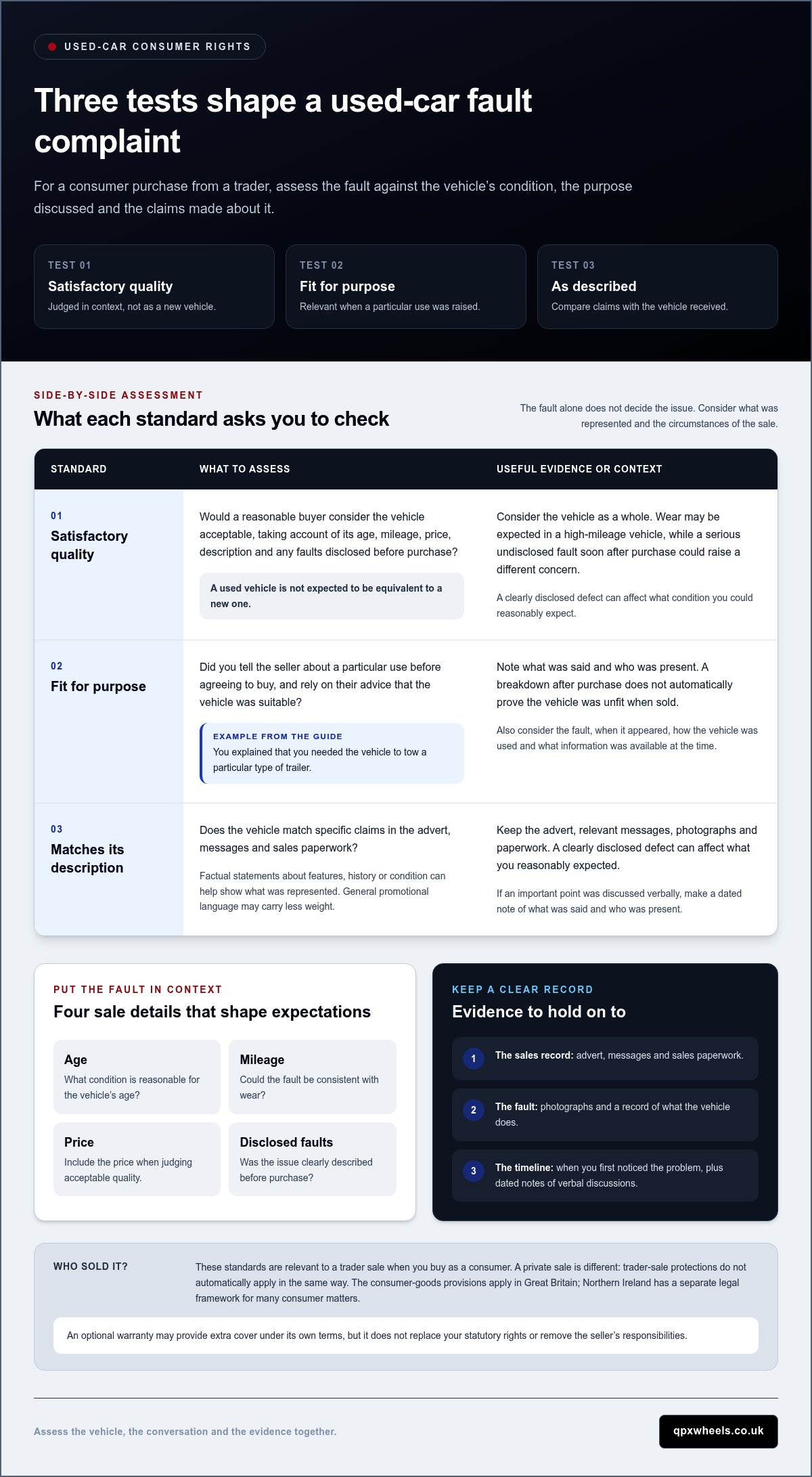
A vehicle complaint isn’t judged by the fault alone. The Consumer Rights Act sets out three standards: satisfactory quality, fitness for a particular purpose and whether the vehicle matches its description. The vehicle’s condition and what was said before the sale help put the fault in context.
Age and mileage shape what a buyer can reasonably expect, but they don’t erase statutory rights. A fault that might be surprising in a relatively recent, low-mileage vehicle could be more consistent with wear in an older, higher-mileage vehicle. Price, advertised features and any defects clearly disclosed before purchase also matter. NI Direct explains that your consumer rights are protected in law when you buy a car from a dealer.
Was the vehicle fit for a purpose you explained?
This standard may be relevant if you told the seller about a particular use before agreeing to buy and relied on their advice that the vehicle was suitable. For example, if you explained that you needed it to tow a particular type of trailer, that conversation could be relevant to whether it was fit for the purpose you raised.
A breakdown after purchase doesn’t automatically prove the vehicle was unfit when sold. Consider the type of fault, when it appeared, how the vehicle was used and what information was available at the time. These details can help distinguish an existing or developing problem from a failure that arose later.
Did the advert or seller’s description match the vehicle?
Compare the vehicle with specific claims in the advert, messages and sales paperwork. Factual statements about features, history or condition can help show what was represented. General promotional language may carry less weight, while a clearly disclosed defect can affect what you reasonably expected. If an important point was discussed verbally, make a dated note of what was said and who was present.
Save the advert before it disappears, along with relevant messages, photographs and paperwork. If a fault develops, record when you first noticed it and what the vehicle does. This evidence can help clarify whether the concern relates to the vehicle’s condition at sale, its description or a particular purpose discussed with the seller. You can also view QPX Wheels’ available used cars.
Repair, rejection or price reduction: which used-car remedy may apply?
The right remedy depends on when the fault appears and what has already happened. For a qualifying purchase from a trader, the Consumer Rights Act sets out a general sequence. A refund isn’t automatic just because something goes wrong: the fault must indicate that the vehicle failed to meet the relevant legal standards, and the details of the sale matter.
| Remedy | When it may apply | What it means |
|---|---|---|
| Short-term right to reject | Within the first 30 days | You may be able to reject the vehicle and seek a refund if it doesn’t conform to the contract. |
| Repair or replacement | Usually the initial remedy after the 30-day period | You can request a repair or replacement, subject to the statutory conditions, including whether the option is possible and proportionate. |
| Final rejection or price reduction | If repair or replacement is unavailable, unsuccessful or not provided as required | You may be able to reject the vehicle for a refund or keep it and seek a price reduction. A deduction for use can apply to a final rejection in some circumstances. |
What is the 30-day short-term right to reject?
This right may let you return a vehicle that doesn’t meet the contract and request a refund, rather than first accepting a repair. The 30-day period generally starts the day after the vehicle is delivered. It’s a statutory remedy, separate from a claim under an optional warranty, and not every complaint qualifies.
If you’re considering rejection, tell the seller clearly and promptly that you’re exercising the short-term right to reject. Keep a written record of your complaint and the date you raised it. Don’t assume that asking for a repair also counts as rejecting the vehicle.
What happens if repair or replacement does not resolve the issue?
After 30 days, repair or replacement is generally the first statutory remedy. If the seller can’t provide it, doesn’t do so within a reasonable time and without significant inconvenience, or the vehicle still fails to conform after repair or replacement, you may be entitled to a final rejection or price reduction, depending on the circumstances.
For faults that appear within the first six months after delivery, the law generally presumes the fault was present at delivery, unless the seller can show otherwise or the presumption doesn’t fit the nature of the fault. This is an evidential rule, not an automatic guarantee of a particular outcome. The remedy, any refund and any deduction for use depend on the facts and applicable law.
How to raise a used-vehicle complaint and protect your evidence
A clear record can make a difficult conversation more straightforward. Focus on what happened, when it happened and how the fault affects the vehicle. Act promptly, particularly if a time-sensitive remedy may apply.
- Stop using the vehicle if it may be unsafe. Don’t continue driving if a fault could put you or others at risk. Note why you stopped and arrange appropriate help.
- Record the symptoms. Write down when you first noticed the problem, what happened, any warning lights and how it affects normal use. Photos or short videos may help if it’s safe to take them.
- Gather your documents. Keep the purchase paperwork, advert screenshots, service history, messages, inspection findings and repair records. Save dated copies of communications with the seller.
- Contact the seller in writing. Include the purchase date and vehicle details, describe the symptoms factually, attach relevant evidence and state the outcome you’re seeking, such as a repair or rejection where applicable.
What evidence should you keep?
Keep original files where possible and organise them by date. Note the mileage when the fault appeared and any changes in its behaviour. If there’s a technical disagreement, an independent inspection may help clarify the likely cause and seriousness of the fault, although it isn’t required in every complaint. Before authorising work that could alter the evidence, tell the seller about the issue and discuss the next steps.
How should you contact the seller and escalate a dispute?
Be calm and specific. Ask the seller to respond and allow a reasonable opportunity, but don’t delay notifying them of a problem or exercising a time-sensitive right. Keep copies of your complaint and any reply. If you can’t resolve the issue, Citizens Advice can explain consumer options and, in England and Wales, may refer relevant information to Trading Standards. In Scotland, Advice Direct Scotland provides consumer support; in Northern Ireland, Consumerline can advise. The appropriate route depends on where you live and the nature of the complaint. Advice or referral doesn’t guarantee a particular outcome.
Good records help you explain the issue clearly, whether you’re dealing with the seller or seeking independent guidance. If you’re comparing vehicles, see QPX Wheels’ available used cars.
Buying from a dealer: understand your rights before choosing a used vehicle
Before agreeing to buy, understand what’s being sold and what’s recorded about its condition. If a problem arises, your position can depend on whether you bought from a trader or a private seller, whether the vehicle meets the standards described above and how soon you raise the issue. Keep the advert and purchase documents from the outset, as remedy deadlines matter.
What should buyers clarify before agreeing to buy?
Read the advert and purchase terms carefully. Check the stated age, mileage, specification and history, and make sure you understand any known faults or limitations. If a particular feature or condition matters to your decision, ask for it to be recorded in writing rather than relying on your memory of a conversation.
A pre-purchase inspection may help you make an informed choice by identifying visible concerns or areas that need further investigation. It doesn’t remove statutory protections if the vehicle later proves not to meet the legal standards. Equally, a used vehicle isn’t expected to be fault-free: its age, mileage, price and disclosed condition shape reasonable expectations. Consider both what you could reasonably expect and what the seller actually represented.
How do finance and warranties relate to Consumer Rights Act claims?
A complaint about a vehicle’s quality and a complaint about a finance agreement are related, but they aren’t automatically the same issue. If you used hire purchase (HP) or personal contract purchase (PCP), the agreement’s terms and the parties involved may affect where a finance complaint should be raised. Don’t assume every agreement gives you the same route or remedy. If your concern is about the finance arrangement itself, raise it with the finance provider and consider whether independent guidance, including from the Financial Ombudsman Service, may be appropriate.
An optional extended warranty may offer additional cover under its terms. It remains separate from your statutory rights, so a warranty claim shouldn’t be treated as the only possible route if you believe the vehicle didn’t meet the legal standards when supplied. Keep the warranty documents as well as the advert, purchase paperwork and any written details of the vehicle’s condition.
Choosing a vehicle is easier when your requirements are clear. Consider how you’ll use it, which features matter and what condition is appropriate for your needs. You can view QPX Wheels’ used cars and vans as you compare your options.
Make your next used-vehicle decision with confidence
Understanding consumer rights act 2015 for used vehicles means considering who sold the vehicle, what condition and description you could reasonably expect, and how quickly you act if a fault appears. Keep the advert and purchase records, describe problems clearly and raise concerns promptly. These steps can help you explain your position and assess which remedy may apply.
A warranty may provide extra cover, but it’s separate from your statutory rights. If you’re using HP or PCP finance, a concern about the vehicle and a complaint about the finance agreement may need to be handled as distinct issues.
When you’re ready to choose your next vehicle, explore QPX Wheels’ used cars and vans, with nationwide delivery, HP and PCP finance options, and optional extended warranties. Review the vehicle information and choose what suits your needs.
Frequently Asked Questions
Is a used car covered by the Consumer Rights Act 2015?
Yes, a used car bought by a consumer from a trader can be covered by the Consumer Rights Act 2015. It must meet the relevant standards for satisfactory quality, fitness for a purpose you made known to the seller and conformity with its description. What’s reasonable depends on factors such as age, mileage, price and disclosed condition. Private sales are treated differently, so identify who the seller was before deciding which protections may apply.
Can I reject a used car after buying it?
You may have a short-term right to reject a car that doesn’t conform to the Act, generally within 30 days of delivery. After this period, repair or replacement is usually the initial remedy, subject to statutory conditions. If the issue isn’t resolved, a final rejection or price reduction may be available. A refund isn’t automatic: the fault and its timing matter. Record the problem and notify the seller promptly.
How long do I have to complain about a faulty used car?
There isn’t one deadline for every situation. The short-term right to reject generally lasts 30 days, while other remedies may apply later. In England and Wales, a six-year limitation period is commonly relevant to bringing a claim, but it isn’t a six-year guarantee that a car must remain fault-free. Limitation rules can differ across the UK, and the correct deadline depends on the claim. Seek advice promptly if you’re unsure.
What happens if my used car develops a fault within six months?
For a consumer purchase from a trader, a fault appearing within six months is generally presumed to have been present at delivery, unless the seller shows otherwise or the presumption doesn’t fit the nature of the goods or fault. This doesn’t mean every fault automatically entitles you to a refund. Tell the seller promptly, explain when the symptoms began, keep relevant evidence and clearly state the remedy you’re seeking.
Does the Consumer Rights Act apply when buying a car privately?
The Act’s trader-to-consumer protections don’t apply to a private sale in the same way. Different legal rules may govern the transaction, so don’t assume dealer protections are available. The advert, messages and agreed description remain important records, as does whether the seller had the right to sell the vehicle. Keep copies of what was represented and agreed. If a serious dispute develops, consider getting independent advice about your circumstances.
Does a used-car warranty replace my rights under the Consumer Rights Act?
No. An optional warranty is separate from your statutory rights, and its cover depends on its terms, exclusions and claims process. It doesn’t by itself remove your rights against a trader if the vehicle fails to meet the Act’s requirements. Read the warranty documents, but also raise a potential statutory complaint with the seller. Keep a written record of both discussions, including dates, the fault described and any response or proposed action.


