
What should you do when a fault appears soon after buying a second-hand car, but you can’t tell whether it was already there? When dealing with pre-existing faults on a second hand car, start by recording the facts. Don’t assume the seller is automatically responsible or that a warranty will cover the problem.
It’s understandable to feel unsure. When the fault appeared, what the advert or seller said, and whether you bought from a trader or a private seller can all affect which rights may apply. A warranty is separate from your statutory rights, so consider them separately.
This guide explains what to record, how to raise the issue clearly and how to keep a useful evidence trail. It also covers the differences between trader and private sales, the rights that may apply and practical next steps if the first response doesn’t resolve matters. Clear records and a measured approach can help you discuss a fair outcome.
Key Takeaways
- Separate what you suspect from what you can evidence: the fault’s symptoms, timing and vehicle history help build a clearer picture.
- When dealing with pre-existing faults on a second hand car, identify whether you bought from a trader or privately, as this affects which legal protections may apply.
- Understand the different roles of a seller complaint, an extended warranty claim and a finance-provider complaint before choosing how to proceed.
- Keep a clear record of the fault, any written assessment and all messages with the seller. This helps you explain your concerns and the outcome you’re seeking.
- Choose your next step based on the evidence, purchase terms and response you receive. The right resolution depends on the circumstances.
Dealing with a Pre-Existing Fault on a Second-Hand Car: Start with the Facts
A fault appearing after purchase doesn’t automatically show who is responsible or when the problem began. First, assess what’s happening and preserve information that may help explain it. If the car feels unsafe to drive, stop using it and arrange suitable assistance rather than risking further damage or injury.
A suspected pre-existing fault is a problem that may have been present when you bought the vehicle, even if it only became noticeable later. A fault discovered after purchase isn’t automatically a fault that existed at sale; evidence linking it to that time strengthens your case. The discovery date alone doesn’t establish when the underlying issue began.
When dealing with pre-existing faults on a second hand car, consider the whole picture: the vehicle’s age and mileage, its price and written description, and the nature of the fault. These details provide context, but don’t prove the cause on their own. The phrase Lemon Law refers to vehicle-defect protections in some jurisdictions; it isn’t the name of the UK’s consumer rights framework.
What counts as a suspected pre-existing fault?
An underlying defect is different from expected wear on an older or higher-mileage car, routine maintenance such as replacing worn components, or damage that occurs after purchase. The distinction depends on the circumstances, including what was described at sale and how the problem developed. A recurring dashboard warning light or mechanical symptom, for example, may need further investigation, but neither can be diagnosed reliably from a description alone.
Start with three practical steps: make the vehicle safe, write down the symptoms and keep the purchase documents. Then build a clear record before deciding what the fault means.
What evidence should you gather first?
Keep the advert, invoice, handover paperwork, messages with the seller and any written description of the vehicle. Record when each symptom occurs, the date and mileage, any warning lights, and whether the issue repeats or changes. Stick to what you observed rather than guessing at the cause.
Save photographs, diagnostic reports, written assessments and repair estimates. A professional diagnosis can describe the fault, but it doesn’t prove by itself when the fault began. Keep relevant parts and paperwork rather than altering or discarding them, and retain copies of all messages. This evidence can help you explain the issue clearly when deciding what to do next.
How Legal Rights Apply to Faults on a Second-Hand Car
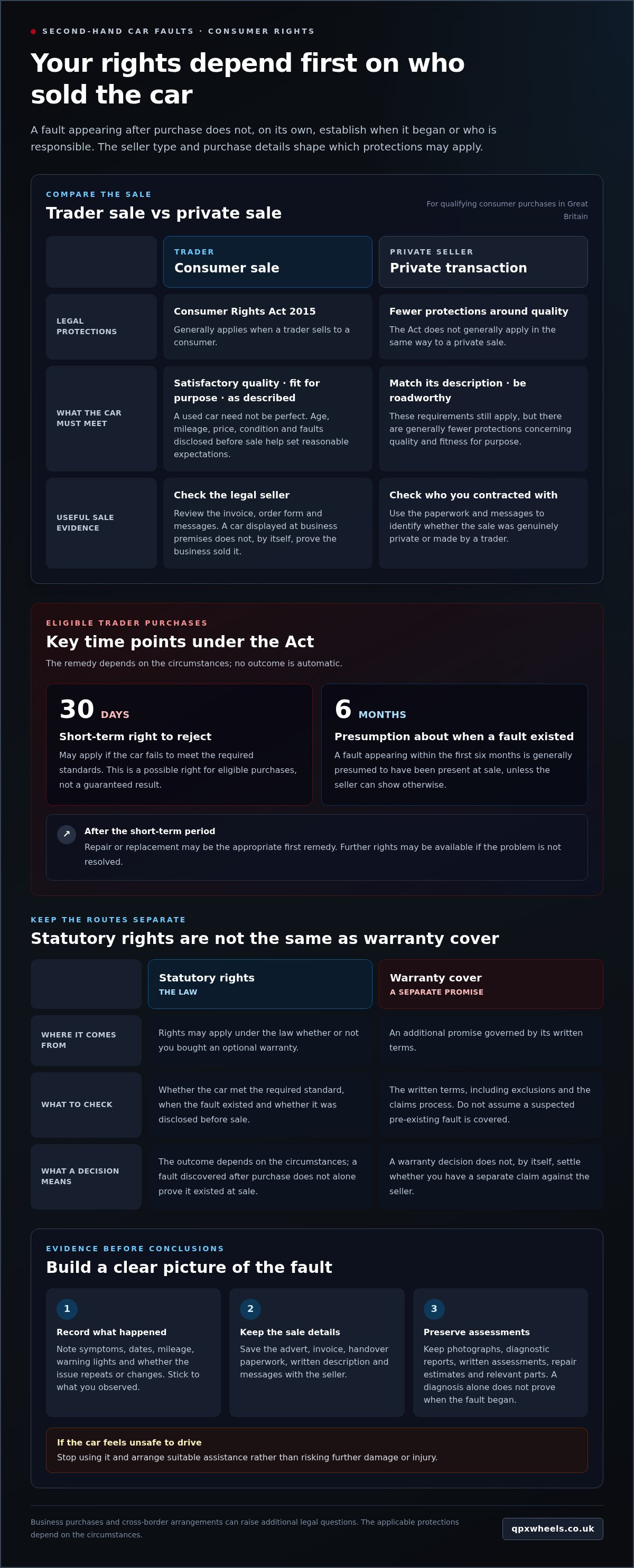
The rules depend first on who sold you the vehicle and whether you bought it as a consumer. For qualifying consumer purchases from a trader in Great Britain, the Consumer Rights Act 2015 says goods must be of satisfactory quality, fit for purpose and as described. A used car isn’t expected to be perfect, but its age, mileage, price, condition and any faults disclosed before sale help set reasonable expectations.
For eligible purchases, the Act may provide a short-term right to reject within 30 days if the car doesn’t meet these standards. After that, repair or replacement may be the appropriate first remedy, with further rights potentially available if the problem isn’t resolved. A fault appearing within the first six months is generally presumed to have been present at sale, unless the seller can show otherwise. The precise remedy depends on the circumstances, so don’t assume any one outcome is automatic.
A complaint turns on whether the car failed to meet the required standard, when the fault existed and whether it was disclosed before the sale. These points connect the vehicle’s condition to the terms of the purchase.
Does it matter whether you bought from a dealer or a private seller?
Yes. Consumer protections under the Act generally apply when a trader sells to a consumer, not in the same way to a private sale. In a private transaction, the car must still match its description and be roadworthy, but the buyer generally has fewer protections around quality and fitness for purpose. Check the invoice, order form and messages to identify the legal seller. A vehicle displayed at business premises isn’t, by itself, proof that the business sold it.
Business purchases and transactions involving a seller or agreement based outside Great Britain can raise additional legal questions. Seek current, tailored guidance if your circumstances involve a business purchase or cross-border arrangements.
How do statutory rights differ from warranty cover?
Statutory rights come from the law and may apply whether or not you bought an optional warranty. Warranty cover is an additional promise governed by its written terms, including exclusions and the claims process. Read those terms before making a claim, and don’t assume a known or suspected pre-existing fault is covered. A warranty decision doesn’t, by itself, settle whether you have a separate claim against the seller.
Clear purchase information matters before you commit, too. If you’re comparing vehicles, review the description and sale paperwork carefully. You can also browse QPX Wheels’ pre-owned cars and consider those details as part of your decision.
Compare Your Options: Seller Complaint, Warranty Claim or Finance Route
There may be more than one route to consider, but each serves a different purpose. If a trader sold you the car, a clear written complaint to the seller is often a practical first step. A warranty claim follows the warranty’s own process, while contacting a finance provider can help clarify your options under the agreement. None guarantees a repair, rejection or refund; the appropriate outcome depends on the facts and applicable terms.
| Route | Purpose | Useful information |
|---|---|---|
| Seller complaint | Raise concerns about the car’s condition, description or sale with the person or business that sold it. | Purchase date, mileage, symptoms, advert or paperwork, supporting evidence and the outcome you’re seeking. |
| Warranty claim | Ask whether the fault falls within the additional cover you purchased. | Your warranty document, claim instructions, fault details and any required diagnostic information. |
| Finance-provider contact | Discuss the fault and understand how your finance agreement may affect the complaint route. | Agreement details, seller information, purchase documents and a record of your communication with the seller. |
When should you raise the issue with the seller?
If the fault may relate to the car’s condition when it was sold, report it promptly and in writing. Keep the message calm and specific. Include the purchase date, current mileage, what the car is doing, when the symptoms occur and copies of relevant evidence. Explain what you’d like the seller to do next, without presenting an unconfirmed diagnosis as fact.
Keep copies of your complaint and every reply, including dates and any proposed next steps. This record helps clarify what you reported and when if you need to refer back to the discussion.
When might a warranty or finance provider be relevant?
Before authorising work, read the warranty’s claim steps and exclusions. Some warranties require you to contact the provider or get approval before repairs begin, but the process depends on the written terms. Don’t assume a suspected pre-existing fault is covered. A warranty decision doesn’t determine your separate statutory rights against a trader.
If you bought the vehicle using HP or PCP, contact the finance provider to explain the issue and ask how to raise it under your agreement. The provider’s role can vary with the finance type and circumstances. Keep making contractual payments unless you’ve received appropriate advice or agreement to do otherwise; stopping payments could have consequences. Consider the implications before arranging costly repairs yourself, too.
When dealing with pre-existing faults on a second hand car, match the concern to the relevant seller, warranty terms or finance agreement. Don’t assume one route automatically replaces the others.
How to Raise a Fault Complaint and Build a Clear Evidence Trail
A calm, well-organised complaint makes it easier for the seller to understand what happened and respond. Take these steps before discussing possible remedies:
- Make the car safe. If you’re concerned it may be unsafe, stop driving it and arrange appropriate assistance. Note why you stopped using it and when.
- Record the symptoms. Write down when the problem first appeared, the mileage, warning lights and what happens when the fault occurs. Photos or short videos may help show intermittent symptoms, provided it’s safe to capture them.
- Request a written assessment. Ask a qualified professional to describe the observed fault, diagnostic findings and recommended next steps. The report can help establish what the problem is, but won’t prove by itself that the fault existed when you bought the car.
- Notify the seller in writing. Keep the message factual, attach relevant evidence and ask how they propose to proceed.
Before discussing remedies, preserve the purchase paperwork, fault timeline, photographs, written assessments and every message with the seller. Keep reports, invoices and notes of calls together, and save confirmation of any inspection or repair arrangements. Consider whether authorising work or discarding relevant parts could affect the seller’s opportunity to assess the vehicle.
What should you include in your written complaint?
Identify the vehicle using details from your paperwork, such as its registration and make or model, then state the purchase date, mileage and seller. Describe the symptoms and when they began. Summarise what any written assessment says, separating confirmed findings from anything still uncertain.
Explain what response you’re seeking, such as an opportunity to discuss the fault and agree a next step. You can ask the seller to reply by a reasonable date, but avoid presenting a particular legal outcome as guaranteed. Keep a copy of the message and attachments.
What if the seller disputes the fault or does not respond?
Ask the seller to set out their position and proposed next step in writing. If the cause or seriousness remains disputed, an independent written report may help. Check what it examines and whether it addresses the fault’s likely cause and possible timing. Its conclusions are evidence to consider, not a guaranteed decision on responsibility.
If you’re unsure how to proceed, consult Citizens Advice or current official consumer guidance for your circumstances. The most relevant route can depend on where the purchase took place and whether you bought from a trader or a private seller.
Clear records are useful whether you’re resolving a complaint or planning a future purchase. You can browse QPX Wheels’ pre-owned cars and review the vehicle information and purchase documents carefully before committing.
Resolving a Second-Hand Car Fault and Choosing Your Next Step
There isn’t one outcome that fits every fault complaint. The evidence you’ve gathered, whether the seller was a trader or private individual, the car’s condition and the purchase terms all help shape what to do next. A repair, rejection, replacement or refund isn’t automatic. Consider the available information together, and seek current consumer guidance if you’re unsure how the law applies to your situation.
How can you decide whether to accept a proposed resolution?
Compare the seller’s proposal with the fault evidence, the vehicle’s condition and any advice you’ve received about your rights. If you reach an agreement, ask for the proposed work, who is responsible and the expected timing to be recorded in writing. If you’re unclear about what the proposal means or you and the seller disagree, pause and seek independent consumer guidance rather than relying on assumptions.
Keep the written agreement and related messages with your purchase documents. A clear record helps you understand what has been agreed and whether the next steps match the proposal.
What can you check before choosing another used car?
Review the advert, vehicle history, MOT history, available service information and purchase documents. Make sure the written description reflects what you’ve been told about the car’s condition. Ask for known faults and any warranty terms offered to be set out clearly, then read the terms to understand their scope and exclusions. These checks support an informed decision, but can’t guarantee a fault-free vehicle.
For anyone dealing with pre-existing faults on a second hand car, the experience can be a reminder to keep descriptions and sale terms in writing, both when raising a complaint and before committing to another purchase. Focus on what the documents say, what the evidence shows and what remains uncertain.
When you’re ready to consider another vehicle, QPX Wheels offers pre-owned cars and vans, along with extended warranties. Review the vehicle information and any warranty terms as part of your decision, rather than assuming a warranty covers a particular fault.
Browse QPX Wheels’ pre-owned cars and vans to explore your options.
Take Your Next Step with Clear Information
When a fault appears, avoid jumping to conclusions. Record what’s happening, keep your purchase documents and evidence, then identify whether you bought from a trader or a private seller. These details can help you understand which rights or other routes may apply. A warranty is separate, and its written terms matter.
Dealing with pre-existing faults on a second hand car can feel uncertain, but a calm, factual complaint gives you a clearer basis for discussing what happens next. Any proposed resolution depends on the evidence, purchase terms and circumstances, so keep agreements in writing and seek independent guidance if you’re unsure.
If you’re considering another vehicle, review its description and purchase information carefully. QPX Wheels offers pre-owned cars and vans, HP and PCP finance options, nationwide delivery and extended warranties. Warranty terms vary, so read them before deciding what cover means for you.
Frequently Asked Questions
Can I reject a second-hand car if it has a fault?
You may be able to reject it, depending on who sold it, when you report the problem and whether the car failed to meet the required standard. For a qualifying consumer purchase from a trader, the Consumer Rights Act 2015 provides a short-term right to reject within 30 days if the car is unsatisfactory, unfit for purpose or not as described. After that, the seller will generally have an opportunity to repair or replace it before further remedies may apply. A refund isn’t automatic.
How can I prove a fault was present when I bought a used car?
Gather evidence that helps establish the fault’s nature and timeline: purchase documents, the advert, messages, dates and mileage, photographs, diagnostic reports and a written assessment. A report can explain what is wrong, but may not establish when it began by itself. For a qualifying purchase from a trader, a fault that appears within the first six months is generally presumed to have existed at sale unless the seller can show otherwise. This can help when dealing with pre-existing faults on a second hand car.
Does a used-car warranty cover pre-existing faults?
Not necessarily. Cover depends on the warranty’s written terms, including its exclusions and claim process. Read these carefully and contact the warranty provider before authorising work if the terms require you to follow particular steps. Don’t assume a known or suspected pre-existing fault is covered. A warranty is separate from statutory rights you may have against a trader, so a warranty decision doesn’t automatically determine whether you can raise a complaint with the seller.
Should I contact the seller or the warranty provider first?
If a trader sold the car and you believe the fault relates to its condition at purchase, a clear written report to the seller is often a practical first step. Include the purchase date, mileage, symptoms and relevant evidence. Also read the warranty claim instructions, as they may require you to notify the provider before work begins. If you bought using HP or PCP, contact the finance provider too. Keep copies of every message and response.
Can I get a refund for a fault on a second-hand car bought privately?
A refund may be possible in some circumstances, but private buyers generally have fewer protections than consumers buying from a trader. The Consumer Rights Act 2015 doesn’t apply to private sales in the same way. The vehicle should still match its description and be roadworthy, but there isn’t the same implied right to satisfactory quality or fitness for purpose. Keep the advert and messages, and seek tailored advice if you believe the car was misdescribed or not roadworthy.
What should I do if a fault makes my car unsafe to drive?
Stop driving it if you believe it’s unsafe. Don’t risk worsening the fault or putting yourself and others in danger. Record what happened, including warning lights, symptoms, date and mileage, then arrange appropriate assistance to assess or move the vehicle. Tell the seller in writing if you’re raising a complaint, and keep any written assessment or recovery records. Avoid authorising repairs before understanding whether the seller or warranty provider needs to assess the car first.
Does PCP or HP finance change what I should do about a car fault?
It can affect who you contact, so check your agreement and tell the finance provider about the problem as well as raising it with the seller. The provider’s role can depend on the finance arrangement and circumstances; don’t assume every agreement creates the same route or remedy. Keep records of your complaint and the provider’s response. Continue contractual payments unless you’ve received appropriate advice or an agreement to do otherwise, as stopping could have consequences.
Explore QPX Wheels’ pre-owned cars and vans, with HP and PCP finance options and extended warranties to consider alongside the vehicle details.


