
What if the secret to securing a fair deal on a pre-owned vehicle isn't aggressive haggling, but simply arriving with the right facts on your side? Many drivers dread the forecourt conversation, fearing high-pressure tactics or the awkward friction of face-to-face bargaining. Mastering the top tips for negotiating price on a used car transforms that anxiety into quiet confidence, turning a stressful confrontation into an informed, collaborative discussion.
It's completely natural to worry that an initial discount might be cancelled out by unexpected mechanical faults or poorly structured finance agreements. You deserve absolute peace of mind when making an investment of this size. In this guide, you'll discover proven, professional techniques to assess market rates accurately, use vehicle provenance checks to your advantage, and negotiate total package value, including warranty cover and finance options. Here is your clear roadmap to securing genuine value whilst staying entirely in control of your budget.
Key Takeaways
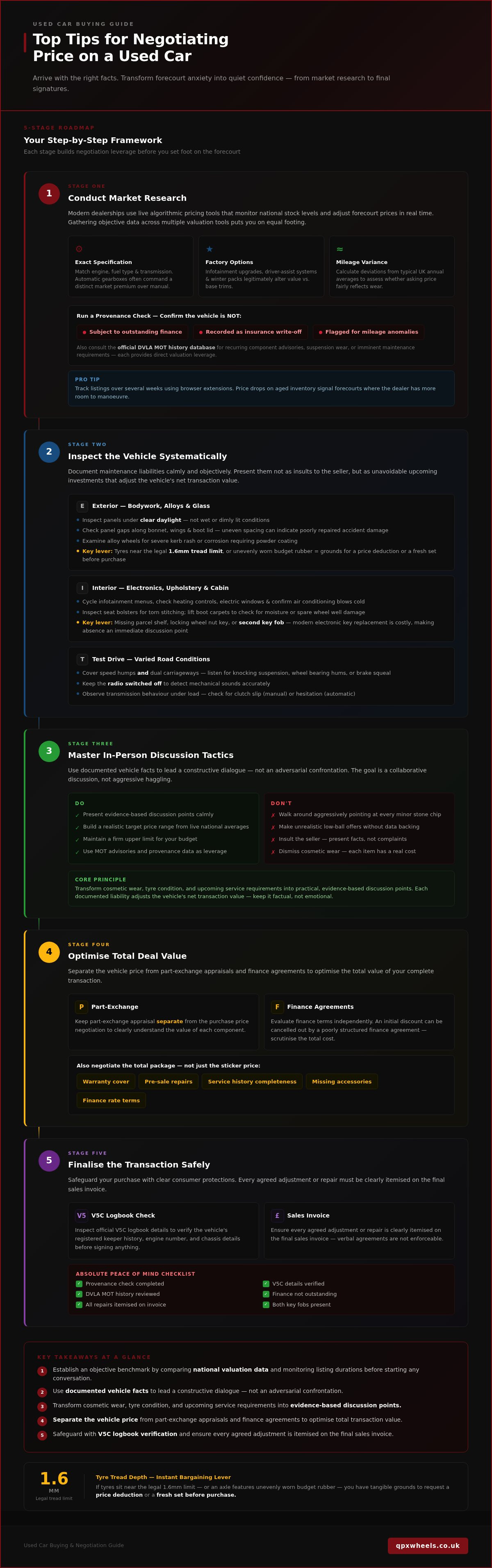
- Establish an objective benchmark by comparing national valuation data and monitoring listing durations before starting any conversation.
- Discover the top tips for negotiating price on a used car by using documented vehicle facts to lead a constructive dialogue rather than an adversarial confrontation.
- Transform cosmetic wear, tyre condition, and upcoming service requirements into practical, evidence-based discussion points during your physical inspection.
- Separate the vehicle price from part-exchange appraisals and finance agreements to optimise the total value of your complete transaction.
- Safeguard your purchase by inspecting official V5C logbook details and ensuring every agreed adjustment or repair is clearly itemised on the final sales invoice.
Conduct Market Research to Establish True Vehicle Value
Modern dealerships rely heavily on live algorithmic pricing tools. These software suites monitor national stock levels and automatically adjust forecourt prices to reflect real-time supply and demand. Understanding this operational reality is central to the top tips for negotiating price on a used car. Instead of viewing an asking price as a fixed figure set on a whim, recognise it as a dynamic benchmark influenced by inventory age and wider availability. Gathering objective data across multiple national valuation tools allows you to enter conversations on equal footing.
Analyse Live Market Listings and Price-Tracking Indicators
To gauge how much room a dealer might have to manoeuvre, track target vehicle listings over several weeks. Browser extensions and tracking tools reveal price drops on aged inventory, highlighting models that have sat on forecourts beyond the standard turnover cycle. When comparing options, account for essential nuances:
- Exact mechanical specification: Match engine capacity, fuel type, and transmission. An automatic gearbox often commands a distinct market premium over a manual counterpart.
- Factory-fitted optional packs: Upgraded infotainment, driver-assist systems, or winter packs legitimately alter vehicle value compared to base trims.
- Mileage variances: Calculate deviations from typical UK annual averages to determine whether an asking price fairly reflects wear.
While the art of bargaining traditionally relied on persuasive rhetoric, modern transactions depend on verified metrics. Building a realistic target price range from live national averages prevents unrealistic low-ball offers whilst establishing a firm upper limit for your budget.
Run Comprehensive Provenance and Vehicle History Checks
Solid market research extends far beneath the cosmetic surface of digital adverts. Before entering any pricing dialogue, commission a thorough provenance check to confirm that the car isn't subject to outstanding finance agreements, recorded as an insurance write-off, or flagged for mileage anomalies. Next, consult the official DVLA MOT history database to scrutinise test records across previous years. Documented vehicle history showing recurring component advisories, suspension wear, or imminent maintenance requirements provides non-negotiable valuation leverage that justifies an immediate price adjustment or agreed pre-sale repairs.
Inspect the Vehicle Systematically to Identify Objective Bargaining Points
Walking around a vehicle pointing aggressively at every minor stone chip damages goodwill and rarely yields results. Professional motor traders take an objective, methodical approach instead. One of the top tips for negotiating price on a used car is documenting clear maintenance liabilities calmly, presenting them not as insults to the seller, but as unavoidable upcoming investments that adjust the vehicle's net transaction value.
Examine Exterior Bodywork, Alloy Wheels, and Glass
Inspect panels under clear daylight rather than wet or dimly lit conditions. Check panel gaps along the bonnet, wings, and boot lid for symmetry, as uneven spacing can indicate poorly repaired accident damage. Examine alloy wheels for severe kerb rash or corrosion requiring powder coating. Tread depth across all four tyres is equally critical. If the tyres sit near the legal 1.6mm limit, or if an axle features unevenly worn, budget rubber, you have tangible grounds to request a price deduction or a fresh set before purchase.
Assess Interior Electronics, Upholstery, and Cabin Functions
Sit inside and test every electrical component methodically before starting the engine. Cycle through the infotainment menus, check heating controls, verify electric window regulators, and ensure the air conditioning blows cold. Inspect seat bolsters for torn stitching and lift boot carpets to check for moisture or spare wheel well damage. Always verify that essential loose items are present, particularly the parcel shelf, the locking wheel nut key, and the second manufacturer key fob. Replacing a modern electronic key is costly, making its absence an immediate point of discussion.
Conduct an Attentive Test Drive Covering Diverse Road Conditions
Take the car across varied road surfaces, including speed humps and dual carriageways. Keep the radio switched off to listen for knocking suspension bushes, wheel bearing hums, or brake squeal. Observe how the transmission behaves under load, checking for clutch slip on manual gearboxes or hesitation in automatics. The steering wheel should track straight without pulling during firm braking.
Understanding your consumer rights when buying a used car provides legal reassurance, but identifying physical or mechanical requirements on a test drive allows you to agree on remedial preparation beforehand. Reputable national dealers welcome this structured inspection. Choosing fully checked vehicles through reputable used car specialists ensures these mechanical checks and preparation standards are completed before you even arrive on the forecourt.
Master Professional In-Person Discussion Tactics and Conversational Framing
Forecourt conversations shouldn't feel like high-stakes confrontations. Reputable dealerships view sales as collaborative relationships built on trust, not adversarial duels. Approaching staff with calm, professional courtesy immediately sets a productive tone. Among the top tips for negotiating price on a used car, mastering conversational framing is essential for achieving a balanced, positive outcome without unnecessary friction.
Present Data-Led Offers Without Confrontation or Lowballing
Unrealistic lowball bids shut down conversations instantly. Rather than plucking an arbitrary figure out of thin air, anchor your opening proposal slightly below your target figure and back it up with documented market evidence. Walk through your rationale calmly, explaining how imminent consumable replacements, such as worn brake pads or aged tyres, factor into your proposal.
Once you state your terms, stop talking. Strategic silence is remarkably effective. Giving the sales advisor time to review your points without interruption demonstrates calm conviction and prevents nervous concessions. Remember this principle: a successful negotiation isn't about defeating the dealer; it's about establishing a transparent agreement grounded in genuine vehicle condition and verified market data.
Negotiate High-Value Inclusions When Cash Discounts Stall
Because digital inventory systems price vehicles tightly against the wider market, dealers occasionally hit an absolute floor on ticket price. When direct cash discounts reach an impasse, pivot the conversation towards high-value inclusions that protect your wallet over the long term. These dealer-added assets carry significant retail value for you while remaining cost-effective for the business to supply:
- Extended mechanical warranties: Request a comprehensive twelve-month or twenty-four-month extended warranty package to safeguard against unexpected electrical or mechanical component failures.
- Pre-collection workshop commitments: Ask for a brand-new MOT certificate alongside scheduled manufacturer servicing before handover.
- Added convenience services: Secure practical solutions such as professional cosmetic valeting, minor paint touch-ups, or doorstep nationwide delivery.
Securing these tangible benefits often saves you more money over the first year of ownership than a modest upfront reduction on the windscreen price.
Optimise Total Deal Value Across Part-Exchange and Vehicle Finance
Fixating solely on the windscreen sticker often leads buyers to miss the bigger financial picture. Real savings emerge when you treat a purchase as an integrated package, balancing vehicle price, trade-in value, and borrowing charges. One of the top tips for negotiating price on a used car is controlling every moving part of the transaction individually so that genuine discounts aren't silently eroded elsewhere.
Decouple Part-Exchange Valuations from the Purchase Figure
Dealerships frequently combine transactions into a single cost-to-change calculation. While convenient, blending figures makes it easy to obscure where value is gained or lost. A sales representative might offer an appealing price reduction on the replacement car, only to balance it out with an underwhelming trade-in appraisal on your old one.
Prevent this by negotiating the vehicle purchase price to an agreed figure before introducing your existing car into the discussion. Obtain independent trade valuations beforehand to establish a clear, documented baseline. If the dealer meets or exceeds that appraisal, proceeding with a part-exchange offers an effortless, same-day handover. If their figure falls short, you maintain total freedom to sell the vehicle separately via private sale or dedicated buying platforms.
Scrutinise Hire Purchase (HP) and PCP Finance Proposals
When discussing finance, sales teams often ask what monthly payment fits your budget. Be cautious here. Extending a loan term from 36 to 48 or 60 months reduces the monthly instalment, but significantly increases the total interest paid over time. Always evaluate the total amount payable and the annual percentage rate (APR) rather than monthly payments alone.
In the UK used car sector, competitive finance rates for strong credit profiles typically sit between 7% and 11% APR. Always compare dealer proposals against external pre-approved personal loans. However, don't dismiss dealer finance outright. Many retailers offer attractive deposit contributions or subsidised interest rates on Hire Purchase (HP) and Personal Contract Purchase (PCP) packages, which can ultimately beat high-street bank terms. If you want structured, budget-conscious packages with transparent terms, explore flexible HP and PCP finance solutions to secure maximum value across your entire purchase.
Finalise the Transaction Safely with Clear Consumer Protections
Reaching a verbal agreement feels rewarding, but a deal isn't truly complete until every detail is securely recorded. One of the top tips for negotiating price on a used car is making sure that every concession, agreed repair, and financial term translates accurately onto your written purchase contract. Clear documentation protects your savings and eliminates misunderstandings before money changes hands.
Review Invoicing, Logbooks, and Statutory Rights
Never rely on informal forecourt promises. Ensure the sales invoice itemises every negotiated inclusion in detail, whether that involves fitting new front tyres, conducting scheduled servicing, or completing a fresh MOT. Next, inspect the official V5C vehicle logbook carefully. Check that the registered keeper details align with the seller's identity and confirm that the 17-digit vehicle identification number (VIN) matches the chassis stamp at the base of the windscreen and door pillar.
Paying a portion of your initial deposit using a credit card activates Section 75 of the Consumer Credit Act, providing valuable joint liability protection from your card issuer. Purchasing through a registered motor retailer also grants you essential legal recourse under the Consumer Rights Act 2015. This legislation gives you a statutory 30-day right to reject a faulty vehicle for a full refund, alongside a six-month window where the selling dealer is entitled to one opportunity to repair or replace a defect that was present at purchase. Crucially, these statutory protections do not apply to private sales.
Secure Comprehensive Warranty Protection and Nationwide Delivery
A genuinely successful negotiation looks well beyond collection day. When arranging extended warranty protection, examine the policy schedule to ensure comprehensive cover for major mechanical and electrical assemblies, including engine components, gearboxes, steering racks, and advanced sensors.
If you prefer to arrange your vehicle purchase remotely from home, opting for professional nationwide delivery brings a pre-inspected car straight to your driveway. Established UK dealerships with over 16 years of industry experience understand that transparent pricing, rigorous provenance checks, and reliable aftercare form the true foundation of customer value. Pairing diligent vehicle research with clear consumer safeguards ensures you secure an exceptional vehicle on terms that protect your budget for years to come.
Take Confident Control of Your Next Vehicle Purchase
Securing genuine value on the forecourt doesn't require aggressive haggling or uncomfortable pressure. By putting these top tips for negotiating price on a used car into practice, you replace uncertainty with verified facts, methodical vehicle checks, and balanced deal structuring across part-exchanges and finance agreements. When you focus on the total transaction rather than just windscreen stickers, you ensure long-term satisfaction and genuine motoring peace of mind.
With over 16 years of trusted UK automotive retail experience, we believe buying your next vehicle should be clear, collaborative, and entirely stress-free. Whether you require tailored HP and PCP finance solutions, comprehensive extended warranty protection, or seamless doorstep handover, professional support makes all the difference. Explore transparently priced used vehicles and national delivery with QPX Wheels today, and take the driver's seat with absolute confidence.
Frequently Asked Questions
How much can you realistically negotiate off a used car price in the UK?
Buyers can typically expect a realistic adjustment of between 2% and 5% off the windscreen price on mainstream models, although this varies depending on vehicle popularity and forecourt dwell time. Highly sought-after vehicles or recently listed models leave minimal margin, whereas aged inventory provides greater flexibility. Knowing realistic margins is one of the top tips for negotiating price on a used car without setting unrealistic expectations.
Is it still possible to haggle on used cars with fixed-price retail dealerships?
Yes, you can still negotiate meaningful value even at dealerships operating transparent, fixed-price models. While cash discounts on the screen price may be off the table, these retailers often have significant discretion around package value. You can successfully request bundled extras, such as an extended warranty, scheduled pre-handover maintenance, a full tank of fuel, or nationwide vehicle delivery to maximise your transaction value.
What should you do if a car dealer refuses to budge on asking price?
Respect their decision calmly, but politely pivot your attention to non-cash value additions or walk away if the car exceeds your budget. Ask if they can include a comprehensive mechanical warranty, arrange workshop preparation, or increase your part-exchange appraisal. If they decline all proposals and the price doesn't align with verified market averages, thank them for their time and leave your contact details in case their pricing policy changes.
Can you negotiate the price of a used car when buying on finance?
You can negotiate both the headline vehicle price and the terms of your borrowing when using car finance. Lowering the agreed purchase price reduces the total amount borrowed, directly decreasing your interest charges and monthly repayments. Additionally, you can request lower APR rates, negotiate deposit thresholds, or explore promotional dealer deposit contributions on Hire Purchase (HP) and Personal Contract Purchase (PCP) agreements to secure optimal value.
What are the best things to ask for if a seller will not lower the price?
Requesting practical ownership benefits is the smartest alternative when dealers reach an absolute floor on ticket price. Ask for a twelve-month extended warranty, a brand-new MOT certificate, or a completed minor service before handover collection. Requesting professional cosmetic detailing, replacement brake pads, or doorstep delivery often saves you substantial out-of-pocket expenses during your initial months of ownership.
Does paying with cash give you more negotiation power when buying a used car?
No, paying with physical cash no longer provides negotiation leverage in the modern UK motor trade. Dealerships face strict anti-money laundering regulations and standard banking charges for handling physical currency. Furthermore, retailers often earn commission through approved lenders when arranging regulated Hire Purchase or PCP finance packages. Showing you have readily available funds helps, but cash payment rarely secures a price reduction on its own.
How does having a part-exchange vehicle affect your car price negotiation?
A part-exchange vehicle introduces a second moving variable that dealers can use to balance their profit margins. Sales teams may agree to a nominal discount on your replacement car while quietly reducing your part-exchange valuation to offset the concession. Following fundamental top tips for negotiating price on a used car means locking down the purchase price first, before evaluating trade-in allowances against independent market valuations.
What happens if you discover undisclosed vehicle faults after agreeing on a price?
If you identify unrecorded defects before handover, you have every right to renegotiate the agreed price, demand full professional repair, or cancel the purchase contract entirely. If faults appear shortly after collection from a registered motor dealer, the Consumer Rights Act 2015 protects you. This statutory legislation provides a 30-day right to reject unsatisfactory goods, alongside a six-month dealer repair obligation for pre-existing faults.


